

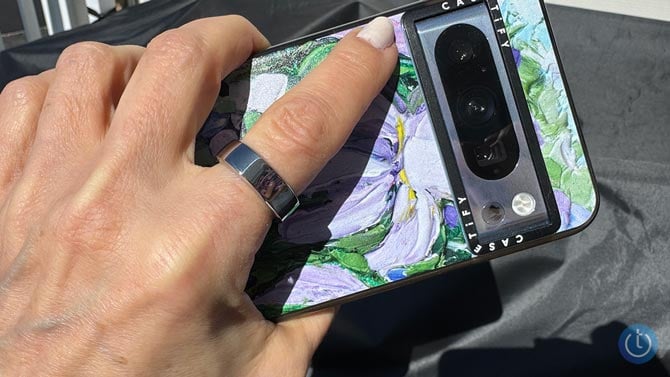
Every March, World Sleep Day serves as a reminder that a lot of us aren't sleeping as well as we think. This year, it nudged me to do something I hadn't done before, actually look closely at the sleep data I'd been passively collecting for months on my RingConn Gen 2 Smart Ring. I used to assume I was a decent sleeper. I'd fall asleep easily, rarely wake up in the middle of the night, and usually felt okay in the morning. A few weeks of paying attention to my overnight numbers told a more complicated story.
Now I understand my sleep in a way I never did when I was going purely by feel. Including one night that genuinely caught me off guard.
Why I chose a ring over a watch
I've tested a lot of smartwatches over the years. Most track sleep, but I've never been able to wear one to bed comfortably. Even lightweight models that I love during the day feel bulky and intrusive at night. I'd end up taking it off before bed, which meant missing the data I actually needed.
A smart ring solves that problem. The RingConn Gen 2 is small and light enough that I genuinely forget I'm wearing it. Because the sensors sit close to the arteries in my finger, it captures heart rate, body movement, and subtle physiological signals throughout the night, the same data a wrist device would collect, in a form factor that doesn't interrupt my sleep to get it.
What the ring is actually tracking
Each morning, the RingConn app greets me with a Sleep Score. That number is the first thing I check, but over time I've learned the score itself isn't the most interesting part. What's behind it is.
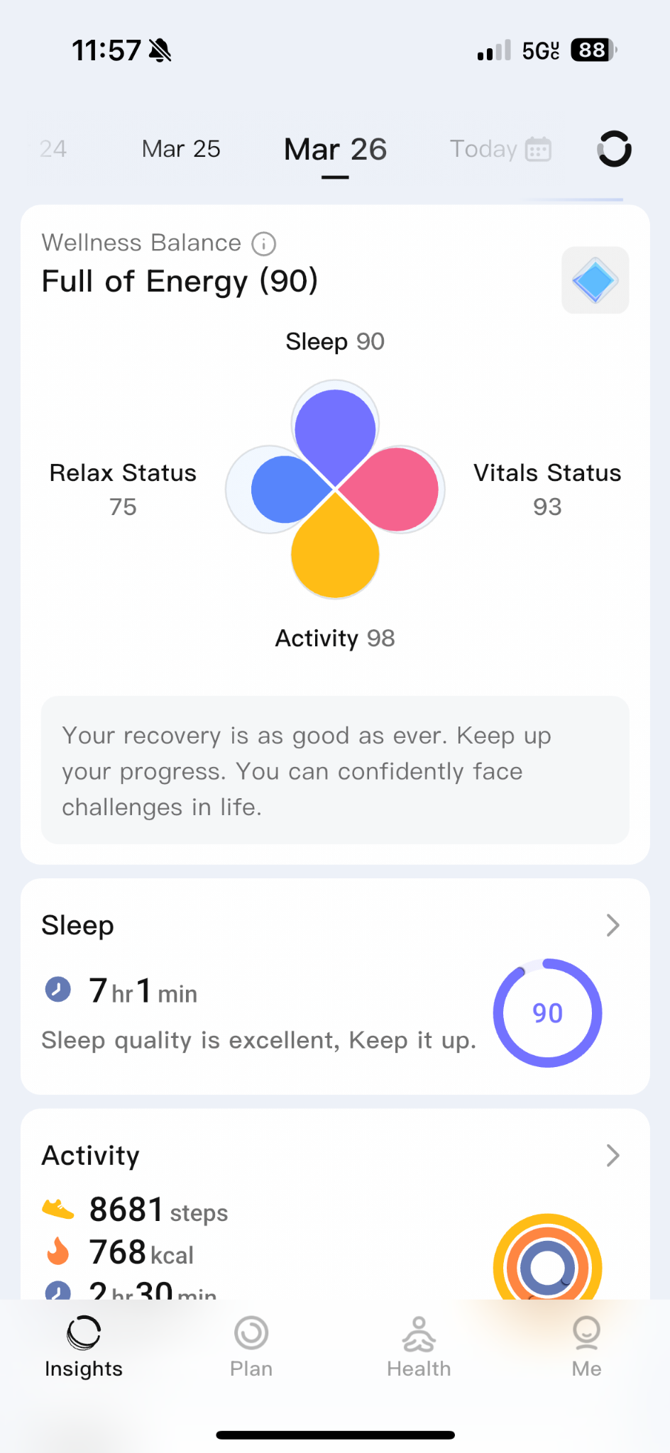
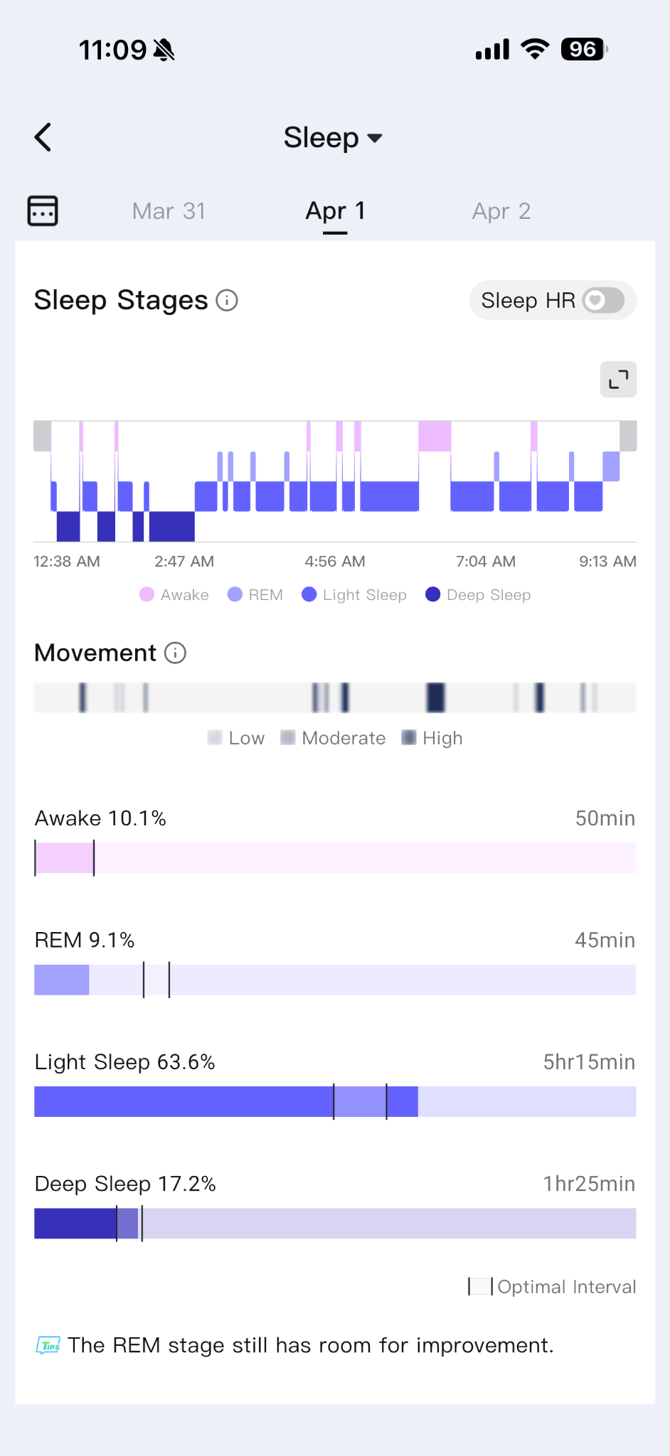
The app breaks down each night into sleep stages: light sleep, deep sleep, and REM. Light sleep makes up the largest portion of most nights and helps the body transition between stages. Deep sleep is where physical recovery happens, muscle repair, immune function, the body doing its maintenance work. REM sleep is tied to memory processing and emotional regulation. How your night is divided among these stages affects how restored you feel the next day.
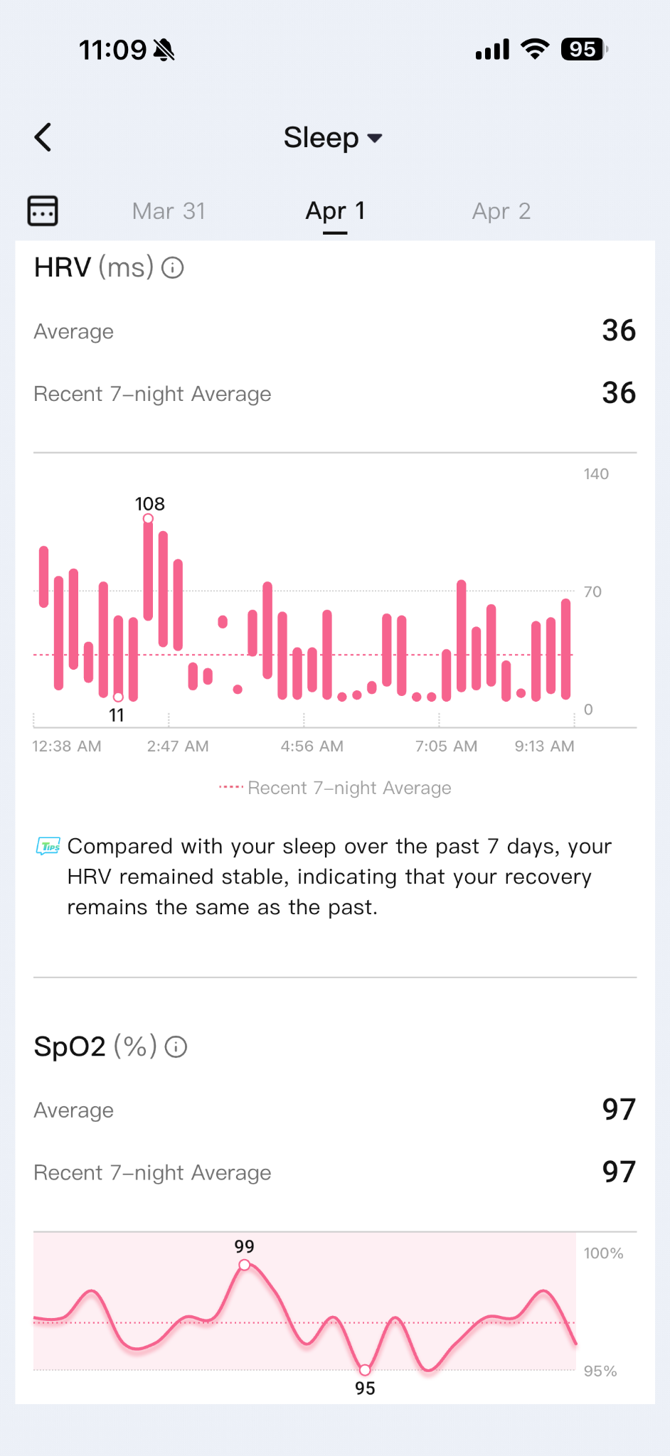
Two other signals I watch closely are resting heart rate and heart rate variability, or HRV. During deep recovery, heart rate typically drops. When it stays elevated overnight, that's usually a sign that something is working against rest, stress, illness, a late meal, or alcohol. HRV measures the variation between individual heartbeats and works as a recovery indicator in the opposite direction. Higher variability generally means your body is well rested, while lower numbers can point to fatigue or strain.
The night the data surprised me
A few weeks into paying closer attention, I had what I thought was a perfectly fine Saturday night. Two glasses of wine with friends, home by 11, solid eight hours in bed. I woke up feeling okay. By early afternoon, I was dragging.
When I checked my data, the story was right there. My overnight heart rate had stayed noticeably elevated compared to a typical night. My deep sleep was lower than usual. My recovery score was down. My body had spent the night working harder than it should have been. I just didn't feel it until six hours later.
Research backs this up. Alcohol raises nighttime heart rate and disrupts sleep cycles even when it doesn't feel that way. But seeing it in my own data, tied to a specific night I remembered clearly, made it land differently than just reading about it.
The alert I didn't expect
Then came a night that made me pay attention in a different way.
I woke up to a sleep apnea risk flag in the app. The RingConn Gen 2 includes monitoring that analyzes patterns in blood oxygen levels, heart rate, and breathing throughout the night, and that morning, it had flagged an elevated risk score. Not a diagnosis or an emergency alert, but a signal that something in my overnight data had looked unusual enough to surface.
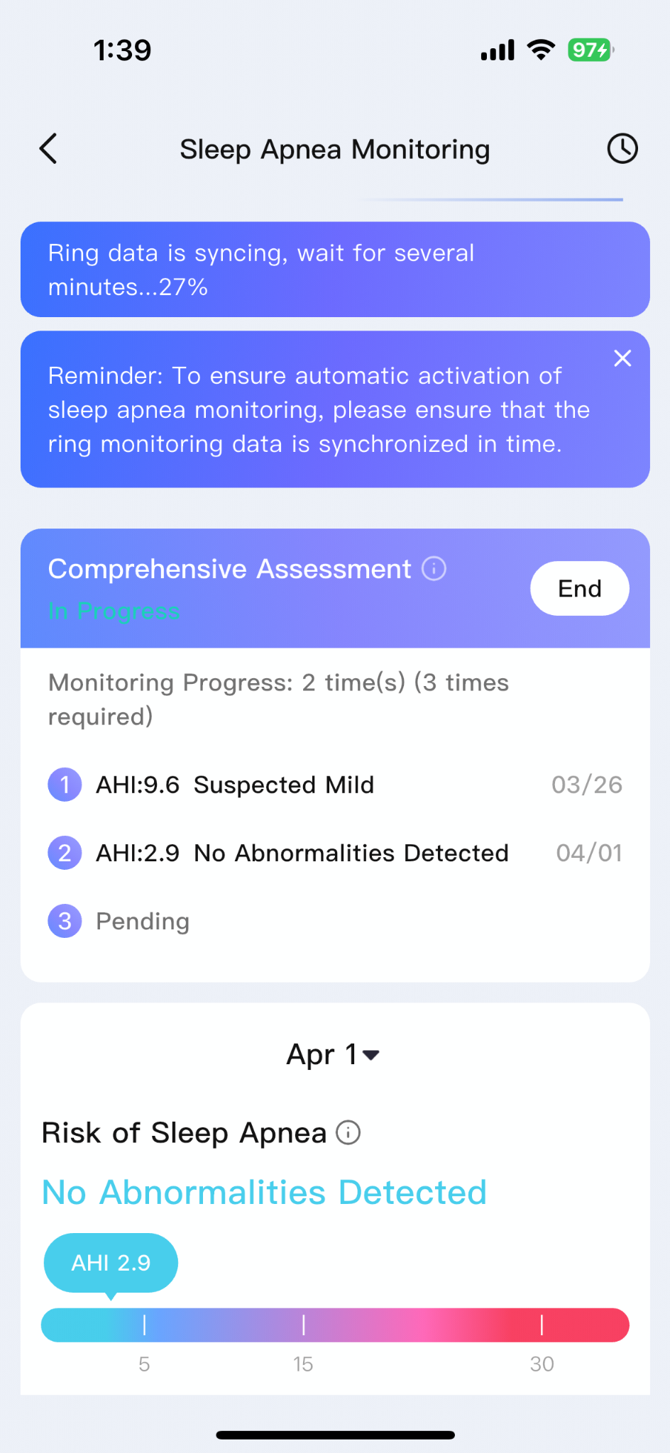
It only happened once and there was no pattern or repeat flags in the nights that followed. But that single alert made me aware of something I never would have noticed on my own, and it prompted me to mention it to my doctor during my next visit. RingConn says the Gen 2 is one of the only smart rings that analyzes trends in blood oxygen, heart rate, and breathing patterns together to offer this type of sleep apnea risk monitoring. After seeing that flag, I understood why that distinction matters.
Sleep apnea affects an estimated 30 million Americans, and many of them have no idea. The condition causes breathing interruptions during sleep that fragment rest and strain the cardiovascular system, often without obvious symptoms beyond daytime fatigue that's easy to chalk up to something else. Traditionally, identifying it has required an overnight sleep study, which many people never pursue because they don't realize they need one. A device that can notice irregularities in your breathing patterns night after night and flag them when something looks off is a meaningful step toward catching a problem that might otherwise go undetected for years.
What the patterns taught me over time
That apnea alert was a one-off, but the broader lesson stuck that the data sees things I can't. Since poor sleep can affect focus, mood, and long-term health, including heart disease and metabolism, I want to be armed with actionable data.
Work travel shows up consistently in my numbers. Flights, late dinners, unfamiliar time zones, all of it pushes my overnight heart rate up and pulls my deep sleep down. I can't always avoid that, but seeing the pattern has made me more intentional about building in a genuine recovery night after I get home instead of pushing straight back into a full schedule.
Bedtime consistency turned out to matter more than I expected. Nights when I go to bed and wake up at roughly the same time tend to show better efficiency and more balanced sleep stages than nights when I stay up later, even when the total hours are similar.
I've also learned my own perception is not a reliable guide. There have been mornings when I was sure I'd slept well, only to see weak recovery numbers. Other nights that felt middling showed stronger scores. The data offers a more honest picture than my gut sense ever did.
What to do with what you learn
Sleep tracking is most useful when you zoom out. A single low score doesn't mean much. A pattern of low scores after late nights, travel, or a stressful week starts to tell you something actionable. An unexpected flag, like my sleep apnea alert, is also worth taking seriously, even if it doesn't repeat.
The data works best as a nudge rather than a verdict. For me, that has meant skipping a drink on nights when I want to feel sharp the next day, going to bed earlier when I see several nights of poor recovery stacking up, and paying attention when the ring notices something I didn't.
Awareness is the real benefit
The RingConn Gen 2 Smart Ring hasn't transformed my sleep overnight. What it has done is make my habits visible, demonstrating a connection between what I do during the day and how I recover at night that is impossible to ignore. Features like sleep apnea risk monitoring can also help flag potential concerns that might otherwise go unnoticed. That kind of awareness is worth more than a perfect sleep score.

