
We may earn commissions when you buy from links on our site. Why you can trust us.

Horizon Go 7 IX Review: Why Prescription Hearing Aids Still Matter
by Stewart Wolpin on January 21, 2026

Normally, we wouldn’t review prescription hearing aids, the $4,000-plus models you’d be tested and fitted for and by an audiologist. But this is less a review of the Horizon Go 7 IX over-the-ear (what hear.com calls BTE, or behind-the-ear, aka receiver-in-canal, or RIC) hearing aids and more of a review of the hear.com At Home Kit: essentially, an audiologist in a box.
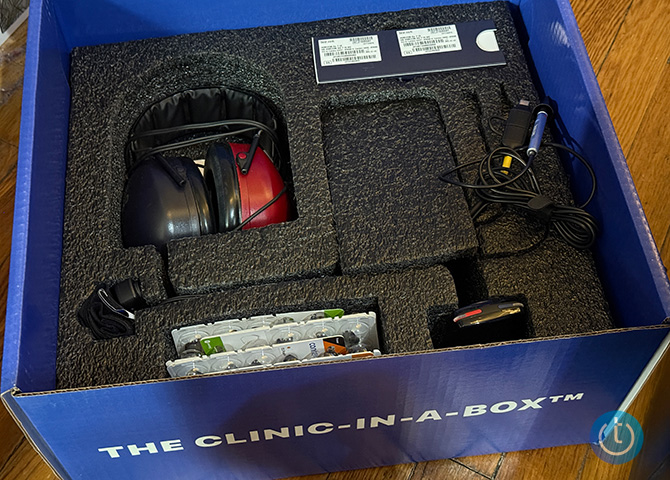
Instead of you having to seek out and travel to an audiologist in your locale, hear.com will, if you qualify, send you the At Home Kit. Inside the box, you’ll find a Microsoft Surface tablet, a dedicated wireless network connector, and several audiologist tools. A hear.com audiologist will, via video televisit on the Surface, guide you through several physical diagnostic and hearing tests. Once all the tests are completed, the audiologist then tunes the Horizon hearing aids of your choice – all from the comfort of your own home.
While my At Home Kit experience wasn’t the smoothest, and the variety of wires connecting all the devices and gadgets got confusingly tangled, the experience certainly is more satisfying and comfortable than visiting an audiologist. I didn’t have to travel anywhere. I was snug as a bug in my own living room. No waiting around in the waiting room. No dauntingly mysterious audiologist examination room that can resemble Dr. Frankenstein’s lab. The whole business, including my incessant reporter/reviewer questions, took less than an hour, and – boom, I had hearing aids tuned and fitted specifically to me.
Hear.com’s At Home Kit may save time and effort, but it’s no less costly than going to a local audiologist. With the Horizon Go 7 IX, the whole shebang would normally cost $4,950. Included are three years of service, which cover an annual checkup and, if necessary, a hearing aid retuning, for which they’d resend the Kit. After three years, further at-home exams run just $50 each.
Why would you opt for this pricy alternative to cheaper over-the-counter (OTC) hearing aids? Because OTC hearing aids are only for those, like me, with mild to moderate hearing loss. If you suffer from moderately severe to severe hearing loss, you’ll need pricier prescription hearing aids from an audiologist.
| + Pros | – Cons | ||
|
|
||
|
|||

At Home Kit Qualification
Hear.com does supply information on the Clinic-in-a-Box “teleaudiology” option on its web site (scroll down to around halfway down on the linked web page. But you must complete an online questionnaire and sit through a sales call before being offered the option to receive the kit.
Be prepared to buy hearing aids, or agree to a “45-day no-risk hearing aid trial.” If you decide to wait, you’ll be bombarded with promotional and sales emails and texts.
You start the buying process by clicking the “Check if you qualify for a no-risk trial” button on the hear.com home page. You’ll then be guided through a series of pre-qualifying questions, including both your hearing and financial health.
If you qualify, you’ll get a phone call from a hear.com representative within 15 minutes (I got my call within five minutes). The sales rep will ask follow-up qualification questions and provide info on the Horizon hearing aids.
Hear.com’s rep then identifies affiliated audiologists in your area, or, if you ask, they’ll send you an At Home Kit. If you want a kit, you’ll be transferred to an At Home Kit specialist.
Atlanta-based Dr. Emily Russell was my assigned At Home Kit audiologist.
At Home Kit Logistics and Process
As noted, hear.com’s At Home Kit includes a Microsoft Surface tablet, a four-jack USB-A outlet strip, a wired pair of what seem to be audiologist-grade headphones, a bone conduction sensor, and an in-ear viewer so the audiologist can see deep into your canals to make sure everything is clear.
For the best results, clear room on a table for all this gear in a private and quiet location with an available AC outlet.
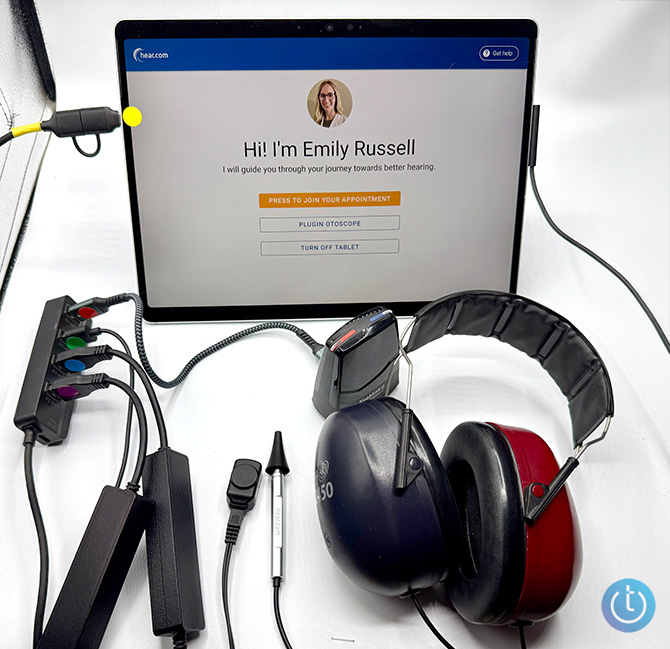
Before the audiologist tests your hearing loss, they conduct physical medical tests to first determine if the source is something other than “natural,” i.e., age-related. (This is a step that’s missed with OTC hearing aids.)
As a result, you’ll be sticking something to your forehead (a bone conduction test), sticking a camera into each of your ears to check for wax or any other blockage (i.e., a tumor), infections, or any damaged or broken eardrum bones.
During the exam, you’ll be able to see on screen what the audiologist sees (yuck). My ears were not clear (double yuck), which is one disadvantage to conducting these tests at home. Dr. Russell discovered my right ear was full of wax (triple yuck). If I were in her physical office, she could have cleaned out my wax-stuffed ear and continued with my exam. Instead, I had to make another appointment with her, then wander over to a local walk-in medical clinic and get someone to clean out my ears.
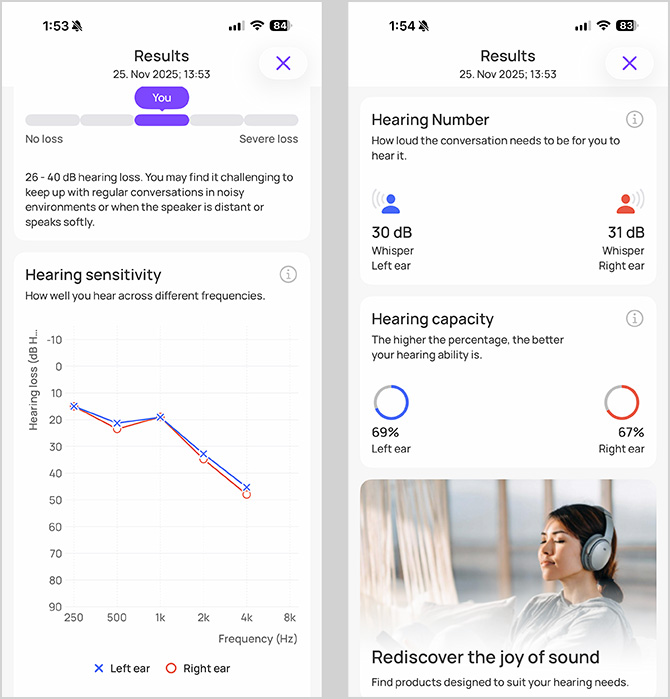
Once any physical issues are cleared up and ruled out, you don the headphones and your audiologist guides you through a hearing test. Along with the usual tone/frequency/volume test for each ear that all smartphone apps run, I also went through 25-word double- and single-syllable word comprehension tests – something I wish smartphone app hearing tests would include. You’ll then get a dB HL score (how loud something needs to be for you to hear it) and an audiogram showing your hearing loss by frequency in each ear (which you can also access from within the Horizon app, as shown below.).
Dr. Russell then tuned the Horizon Go 7 IX RIC hearing aids and had me perform some everyday household activities – fussing with some dishes, turning on the water, and powering on the TV – to make sure they sounded right to me and were working correctly.
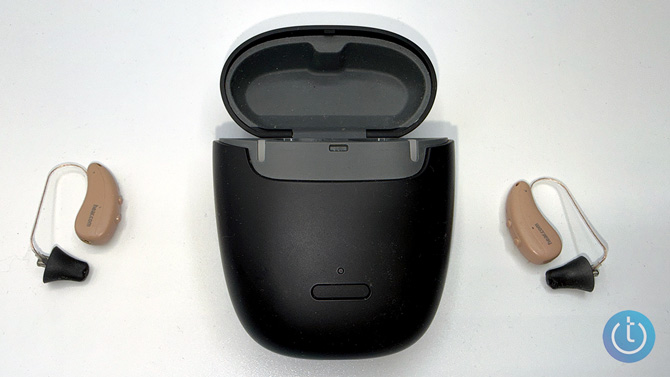
Horizon Go 7 IX Set-up and Logistics
Hear.com sent me the Horizon Go 7 IX. The company does offer a variety of lower-priced – and lower-featured – options starting at $2,975: Horizon 3AX, Horizon 5AX, Horizon 7AX, Horizon 3IX, and the Horizon 5IX.
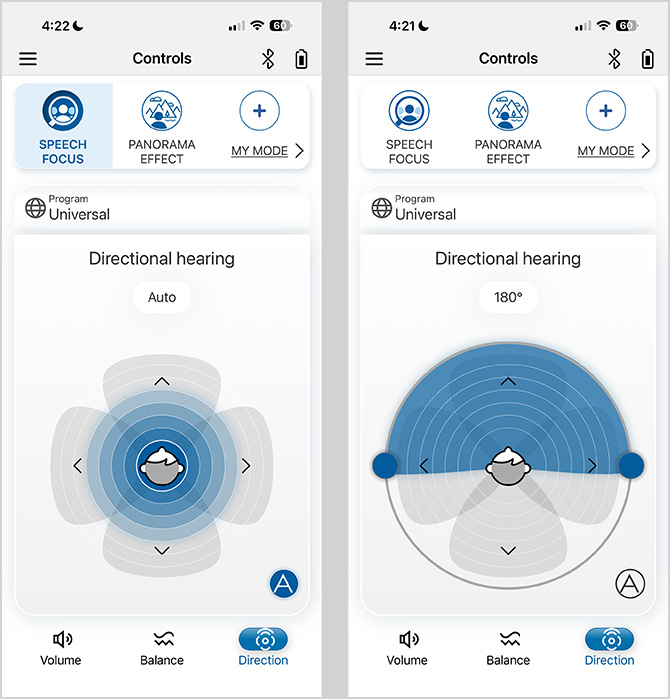
You can also choose the in-the-ear (ITE) rechargeable Horizon Mini IX buds. Unlike the Mini, the more advanced Go 7 IX includes Bluetooth and several app-based sound-specific settings, including speech focus and panorama, each with a customizable 360-degree circular hearing zone adjustment. The Go 7 IX also include physical volume toggles on each bud.
Included with the Go 7 IX are a wide variety of ear tips in different sizes and shapes to ensure a precise fit – far more than are included with OTC hearing aids.
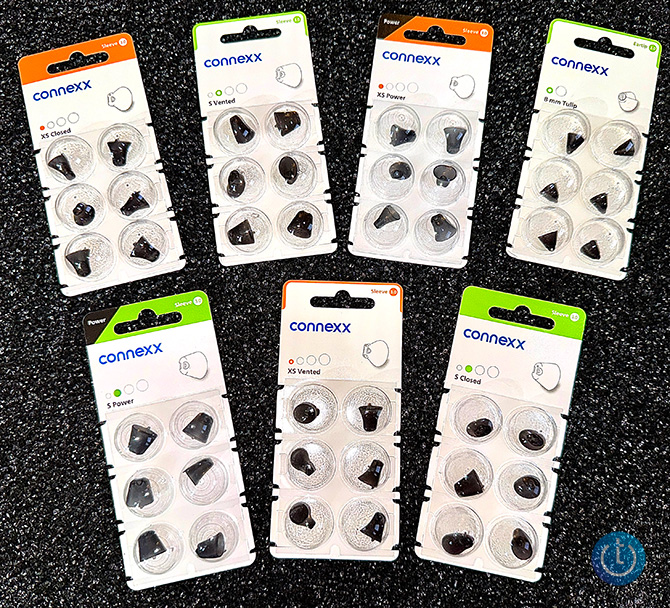
According to hear.com, the Go 7 IX will run for 28 hours on a single charge, with the normal 10% or so battery deterioration each year; even after five years, you should still get around 16 hours of single-charge power. According to Dr. Russell, replacing a dying battery out of warranty probably runs $150 or so, much less than buying whole new hearing aids.
The recharging storage case (approximately 2.5 x 3 x 1 inches) is about twice the size of my favorite OTC hearing aids, the Sony CRE-C20, but still pocketable.
Audio Performance
One performance review caveat: I suffer “just” 40dB HL, not anywhere near severe enough to warrant these far more expensive Horizon and audiologist-assisted hearing aids.
Hear.com claims the Go 7 IX is “the world’s first” hearing aid to include two function-specific processing chips. One for “augmented focus” that can differentiate speech from noise, depressing the latter, including background voices in crowded environments. A second chip handles speech clarification.
Whatever the tech is, the Go 7 IX are, to me, audibly superior to all OTC hearing aids I’ve tested.
Since this is my first long-term experience with a prescription hearing aid, it’s difficult for me to say where Horizon’s performance compares to prescription models from prescription suppliers such as Sonova/Phonak, Starkey, Signia, Jabra, Widex, and others. However, the Go 7 IX performance, even though tuned only for my moderate loss, certainly make it clear why OTC models would prove inadequate for those with severe hearing loss.
Having tested many OTC HAs, the Go 7 IX was a revelation by comparison. First and foremost – no feedback squealing. At all. Zero. Every set of OTC hearing aids I’ve tried suffered from some feedback squealing. Dr. Russell actually ran a feedback test to ensure I wouldn’t suffer from any squealing.
Aurally, the Go 7 IX lack the often artificial quality of an assistive aid – your hearing is boosted but in a totally natural and smooth way. You obviously can feel the hearing aid on your ear, but, after a short while, the presence of the Go 7 IX seems more decorative, like an earring, than anything associated with your hearing. It’s just there, and you can hear like you used to. I frequently tried to stick AirPods in my ears, forgetting that the Go 7 IX were still inserted. Naturally, you get plenty of volume in 15 loudness increments. I can only imagine how cleanly loud they can be when tuned for someone with more severe hearing loss than my own.
As noted above, the Horizon app provides plenty of customizable options for varying environments, sound types, and directional focus. However, these are more subtle, at least to my mild-to-moderate hearing loss.
The Go 7 IX’s Bluetooth was surprisingly good for music. Not that I’d trade them for my AirPods Pro 3 (tuned to my hearing loss, of course) for music listening, but for phone calls, they offer plenty of volume, at least at my end. However, I found the Bluetooth connection spotty. Co-conversationalists often told me they had trouble hearing me or that my voice went in-and-out, forcing me to switch to my phone’s speaker or hold the phone to my ear to complete calls.
One thing the Go 7 IX lack is an ambient noise-canceling mode. Simply muting their amplification would vastly improve music listening since the target customer for the Go 7 IX can’t hear much ambient noise anyway. I’ve sampled prescription hearing aids with excellent noise-canceling capabilities, such as the Phonak Audéo Infinio (Ultra) Sphere, but they’re more expensive.
Ergonomically, the Go 7 IX fit well, but I found my glasses’ temples, as with all BTE hearing aids, bounce against the Go 7 IX’s behind-the-ear module and often produce an amplified click. But the Go 7 IX are light and comfortable, even after hours of wear.
My take
If you suffer from more than mild to moderately severe hearing loss and you’d rather not (or can’t) leave the comfort of your own abode, the hearing.com At Home Kit offers a time-efficient way of getting an audiologist exam. I’ll even go so far as to say it was kind of fun. My at-home exam felt warmer and more personable, like I had the audiologist all to myself rather than just being another patient in a crowded waiting room.
But the At Home Kit comes with limitations – you’d have only the two Horizon models to choose from. Personally, if I needed prescription hearing aids, and since I’d be paying $4,000-$8,000 for them, I’d rather play the field – find an audiologist offering a wider variety of prescription hearing aid options and test as many prescription models from other companies as I could before settling on my final choice. Maybe I’d end up with the Horizon, maybe I wouldn’t. But with the hear.com At Home Kit, they’d be my only option.
[Image credit: Stewart Wolpin/Techlicious]

