

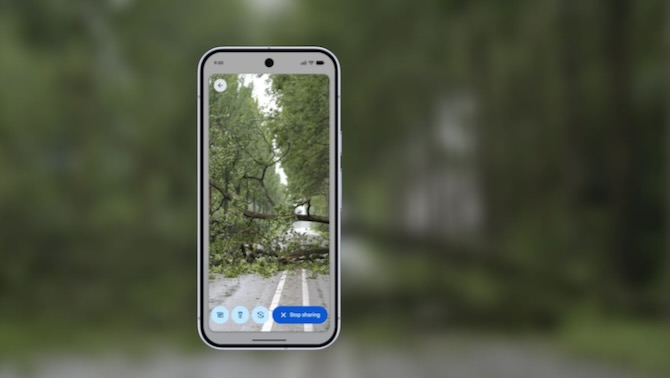
Google has launched Emergency Live Video for Android, giving 911 dispatchers the ability to see what's happening during an emergency call. The feature works thanks to partnerships with RapidSOS and Motorola Solutions. The former claims to cover 99.9% of the US population, while Motorola Solutions’ 911 command center software is used by approximately 60% of North America's public safety answering points.
During an emergency call or text, a 911 dispatcher can send a request to your Android phone to start streaming live video. You'll see a single confirmation prompt, and with one tap, you can share what your camera sees. The video is encrypted by default, and you can stop sharing instantly at any time.
Previously, sharing video with 911 was a multi-step process involving complex permission prompts. The new integration streamlines this so callers can show responders their emergency within seconds.
How It Actually Works
RapidSOS has integrated Google's live video capability into its network connecting more than 22,000 public safety agencies. The video feeds into Motorola Solutions' VESTA 911 and VESTA NXT command center software that dispatchers already use, so they don't need special equipment or Android phones.
Read more: How to Get Emergency Satellite Service for Your Phone (or Watch)
The livestream can be forwarded via mobile app to police, fire, or EMS units that are on the way, so they arrive prepared. Agencies can set incoming videos to blur by default, allowing call handlers to unblur as appropriate. RapidSOS's HARMONY AI can combine the live video with other emergency data in a single view.
The feature is available now in the U.S., plus select regions of Germany and Mexico, on Android phones running Android 8 or newer with Google Play services.
Why This Matters
According to a 2021 study published in BMC Emergency Medicine in Copenhagen, Denmark, dispatchers changed their assessment of patients' conditions in 51.1% of calls after taking a look at live video from bystanders' smartphones. Emergency response protocols were changed in 27.5% of cases. That means the right kind of help got dispatched more accurately. The study, which tested live video with emergency dispatchers from June 2019 to February 2020, found that video transmission succeeded in 82.2% of attempted connections.
Visual context can help a lot in an emergency, whether it's helping a parent perform the Heimlich maneuver for a choking child or providing immediate help during a home invasion when it's unsafe to speak.
Read more: Urgent Android Update Targets Active Exploits – Check Your Phone
Bottom Line
Emergency Live Video brings a significant upgrade to how Android users can communicate with 911. There's no setup required, it has encryption built-in, and the user gets complete control over when video sharing starts and stops. It leverages partnerships that connect directly into the existing dispatch systems. That means all Android users with phones running Android 8.0 (Oreo) or newer will get the ability to provide visual context during emergencies without needing to wait for any infrastructure changes from emergency services.
[Image credit: Google]

