

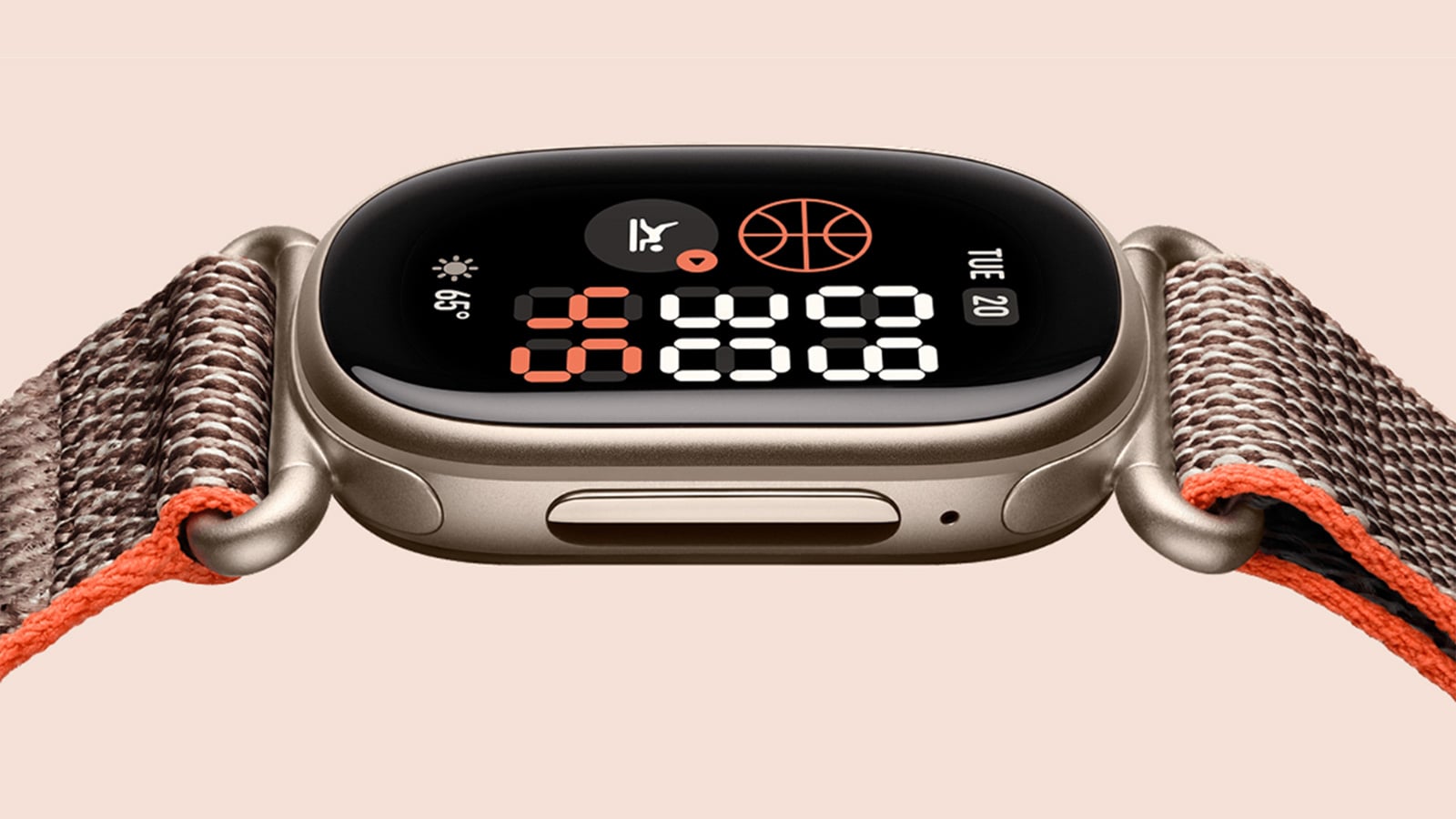
The Google Fitbit Edge Stephen Curry Edition
Image credit: Google
Google’s Fitbit Edge puts a screen back on a Fitbit tracker, and it’s available to pre-order now for $179.99. It reaches shelves October 27, and each purchase includes three months of Google Health Premium, the subscription that powers the Edge's AI-based Health Coach.
Fitbit’s last tracker with a screen, the Fitbit Charge 6, arrived three years ago, and nothing has replaced it. That device, the Charge 6, which Google still sells for $159.99, is seriously dated, with older, less accurate GPS, no altimeter, and sensors that can't keep up with Google Health app features, like blood pressure or insulin resistance trends.
| Feature | Fitbit Air | Fitbit Charge 6 | Fitbit Edge | Pixel Watch 5 |
|---|---|---|---|---|
| Starting price | $99.99 | $159.95 | $179.99 | $399.99 |
| Display | None | Color touchscreen | Color display, adjustable brightness | Domed AMOLED, up to 3,000 nits peak |
| Size | 34.9 x 17 x 8.3mm | 36.7 x 23.1 x 11.2mm | 39.2 x 25.5 x 11.5mm | 41mm round |
| Battery (Google rating) | Up to 7 days | Up to 7 days | Up to 7 days | Up to 30 hours, 48 in Battery Saver |
| GPS | Uses your phone's GPS | ✓ | ||
| Altimeter | No | No | ||
| ECG app | No | |||
| Contactless payments | No | No | ||
| Google Maps | No | Coming soon | ||
| Fall detection and emergency SOS | No | No | No | |
| Works with | Android 11 or newer, iOS 16.4 or newer | Android 11 or newer, iOS 16.4 or newer | Android 11 or newer, iOS 16.4 or newer | Android 12 or newer |
I’ve tested the Fitbit Air for months, and I miss having a display. The Edge is 11.5mm thick, just 3.2mm more than the Air’s 8.3mm, and it adds the screen and a more robust array of health trackers. To me, that's the sweet spot between a full smartwatch and a screenless tracker, the middle ground Fitbit dominated before.
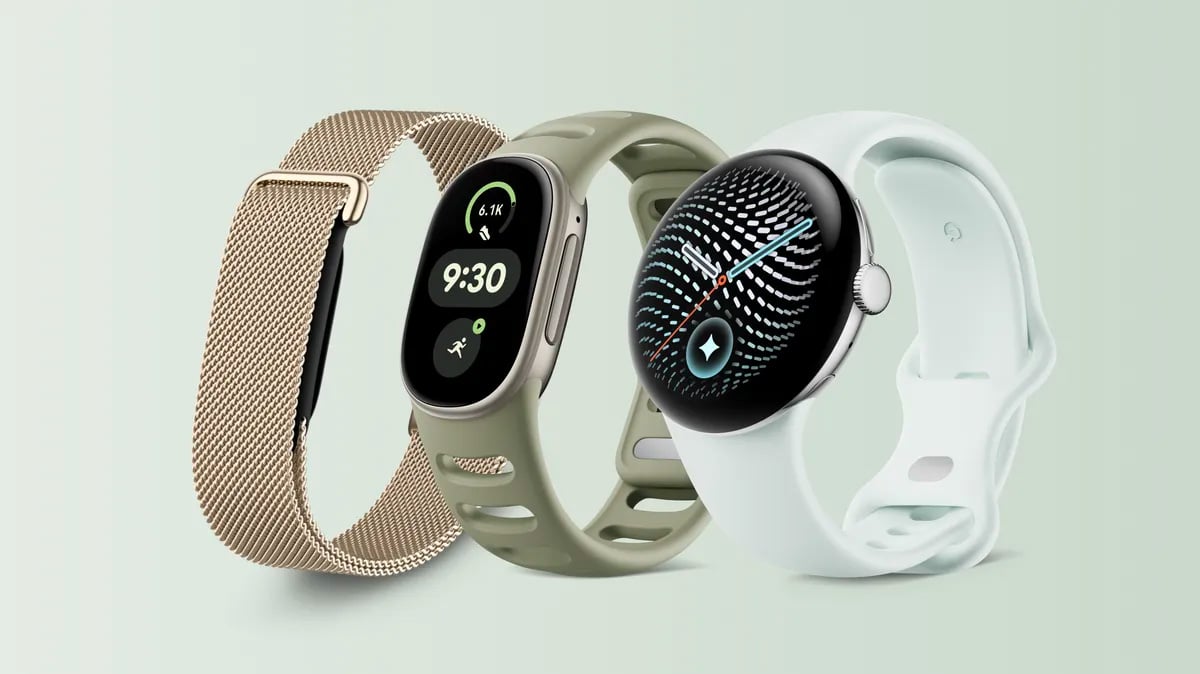
Google's health trackers (from the left): the Fitbit Air, Fitbit Edge, and Pixel Watch 5
Image credit: Google
The screen is the biggest change from the Air. Google says it is the largest and brightest display on any Fitbit tracker, with 46% more viewing area than earlier models and, at 1,000 nits, enough brightness to read outdoors (but not in direct sunlight). A physical side button gives tactile feedback for quick actions like pausing a workout. And at 17.7 grams (without a band), the Edge is almost half the weight of the Pixel Watch 5 and Apple Watch 12, both about 31 grams.
The Edge starts $80 above the Air’s $99.99, and that buys more than a display. It has built-in GPS and can map a run without your phone, while the Air relies on your phone’s GPS. Google says the Edge’s upgraded GPS chipset improves tracking accuracy by up to 40% over earlier Fitbit trackers. An altimeter, which the Air lacks, measures elevation gains on hills and stairs, and the screen shows real-time guidance during workouts, such as heart rate zones for interval training.
The Edge also adds an ECG app, which takes a heart rhythm reading from your wrist and checks for AFib. For regulatory reasons, Google’s fine print limits the app to select countries and says it is meant for people 22 and older.
Much of the rest of the health tracking carries over from the Air. Both track monthly blood pressure and insulin resistance trends and send high and low heart rate alerts; it points users to a medical professional for blood pressure questions. The Edge uses a dedicated skin temperature sensor to track overnight fluctuations and feed a morning recovery score.
Google Health Coach, which Google says adapts your fitness plan and gives you context for conversations with your doctor, requires Google Health Premium. The subscription is sold separately ($9.99 per month or $99 per year) once the three included months end.
Google rates the battery at up to seven days, the same as the Air. A five-minute charge delivers a full day of battery from a low level, Google says, using a 30W adapter that is sold separately.
The Edge carries a 5 ATM rating for water sports, along with an IP68 dust and water resistance rating. Google also calls it the company’s first repairable fitness tracker, with a modular internal design and a replaceable battery.
Style is where the Edge pulls furthest ahead of the Air for me. The Air can’t get away from looking like a fitness tracker, though its Champagne Gold metal mesh band does look somewhat like a bracelet. The Edge, with its metal housing and a Metal Links band, looks like a watch you could wear to any occasion.
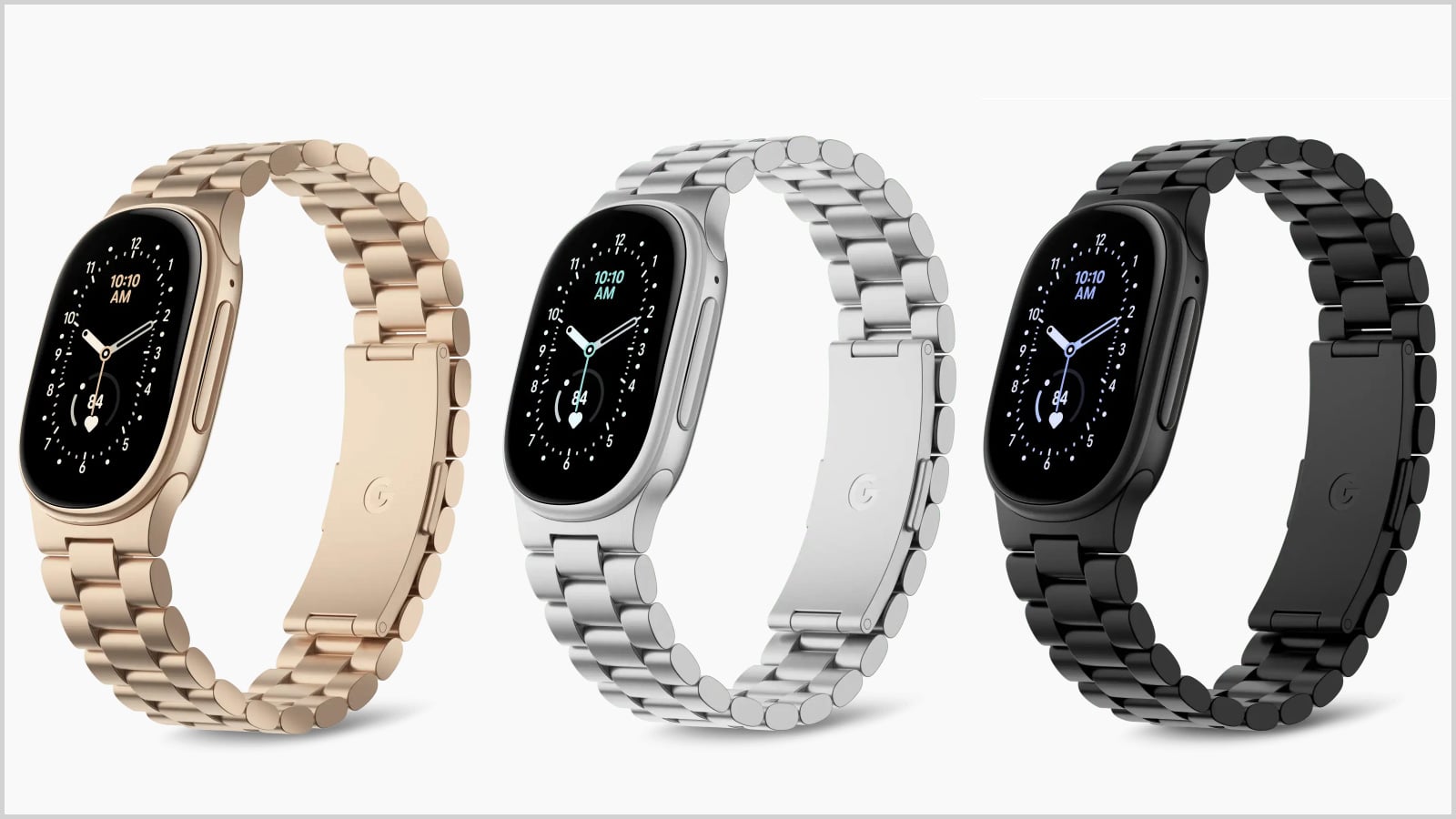
Image credit: Google
The Fitbit Edge comes in Obsidian (matte black), Fog (polished silver), Olive (satin pyrite), and Canyon (warm gold) housing with a silicone Active Band the box. Google sells Active Sport ($39.99), Performance Loop ($49.99), Magnet ($59.99), and Metal Links ($189.99) bands separately as accessories. A Stephen Curry Special Edition costs $219.99.
Fitbit Edge vs. Fitbit Air
The Fitbit Edge is the better buy for most people. At $179.99, it costs $80 more than the Fitbit Air's $99.99 starting price and adds a bright display, built-in GPS, an altimeter, an ECG app, and notifications. It keeps the Air’s seven-day battery rating, and at 11.5mm thick it is only 3.2mm thicker. For me, the $80 is well worth it. A tracker without a screen means pulling out your phone for every stat and to check the time – that gets old fast.
The Air still makes sense if you want the cheapest way into Google’s health tracking and don’t care about a display.
Fitbit Edge vs. Pixel Watch 5
The Pixel Watch 5 starts at $399.99, which is $220 more than the Edge. For that money, the Watch 5 adds contactless payments through Google Wallet, a 4G LTE option, fall detection, emergency SOS, Gemini features, and dual-frequency GPS. If you want your watch to replace your phone, the Pixel Watch 5 is the one to buy.
If you mainly want health and fitness tracking, the Fitbit Edge delivers the core of it for less than half the price: built-in GPS, an ECG app, heart rate alerts, sleep tracking, and a skin temperature sensor. It also lasts far longer between charges. Google rates the Edge at up to seven days, against up to 30 hours for the Pixel Watch 5 with the always-on display (48 hours in Battery Saver mode). And the Edge works with iPhones running iOS 16.4 or newer, while the Pixel Watch 5 supports only Android phones.

