

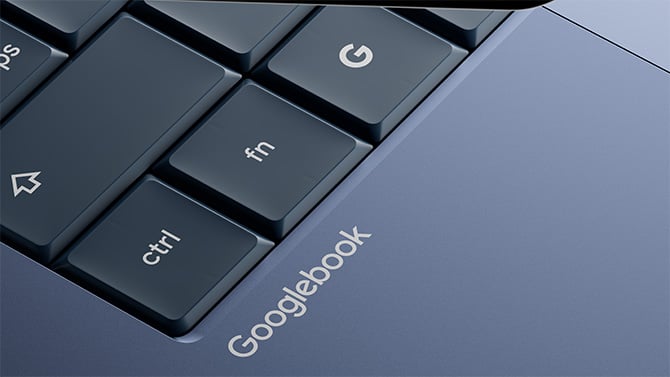
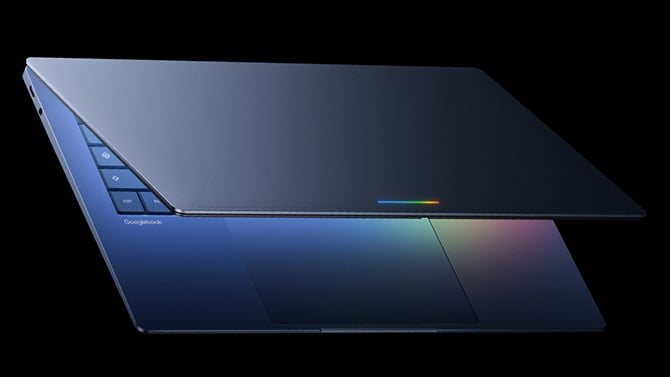
Google has a new kind of laptop. It's called Googlebook, and it's the company's most direct challenge to the MacBook in years. Unlike Chromebooks, which use their own operating system, ChromeOS, the new Googlebooks are built on Android and designed around Gemini AI from the ground up. Backed by major PC manufacturers, the full hardware lineup won't be revealed until later this year, but Google gave a preview today that raises as many questions as it answers.
The short version: Googlebook combines Android's app ecosystem and Google Play with everything Chrome OS brought to laptops – Chrome browser, extensions, security, speed – and adds a layer of Gemini intelligence on top. It runs on the Android technology stack, not a fork of Chrome OS. It is, Google says, a new category of laptop entirely.
The headline feature is Magic Pointer, a reimagined cursor that uses Gemini to understand the context of what's on your screen. Wiggle it over any area and it shows you what you can interact with and what you can do with it. In the demo, a user highlighted two images, and Magic Pointer offered to combine them into a poster, then opened Gemini and produced one. The pitch is that you spend less time prompting and more time doing. Whether it actually works that fluidly in practice is something no one outside Google can verify yet.
Other notable features: Create my widget, already announced for Android phones, comes to Googlebook as well, letting you build Gemini-powered home screen widgets for things like upcoming meetings, reservations, or scripts. Cast my apps lets you summon an Android app from your phone directly onto your Googlebook screen without downloading it, so you can check your food delivery order or finish a Duolingo lesson without losing your place or digging out your phone. The file browser also shows files from your phone natively, meaning a PDF you downloaded on your phone during the day shows up in your laptop's file browser, no emailing it to yourself required.
HP, Dell, Lenovo, Acer, and Asus are all confirmed manufacturing partners for Googlebook hardware. Samsung is not on the list, which is conspicuous given that Samsung already makes Android-based laptops. Google's response to that question was a non-answer: "I would not be surprised if this list expands."
What Google didn't answer
The Chromebook question came up three times during the briefing and never got a straight answer. Google's presenter said Chromebooks will be "supported for their lifetime" and cited 10-year support commitments, particularly for education. But Googlebook is built on Android, positions itself as a full laptop OS, and is launching with major consumer PC brands behind it. That is a Chromebook replacement, even if Google won't say so.
If you own a Chromebook, Google's message is: you're fine for now. What happens after your support window is a different conversation. That's not as bad as it seems because Chromebooks get 10 years of ChromeOS and browser updates, and Google confirmed that new features will continue to roll out.
Pricing, release dates, and the full hardware lineup are all TBD. Google is directing people to googlebook.com for updates starting next week. Given that Google I/O is coming up, expect more detail there, but don't expect devices in stores before the holiday season.
[Image credit: Google]

