

Image credit: Suzanne Kantra/Techlicious generated by ChatGPT
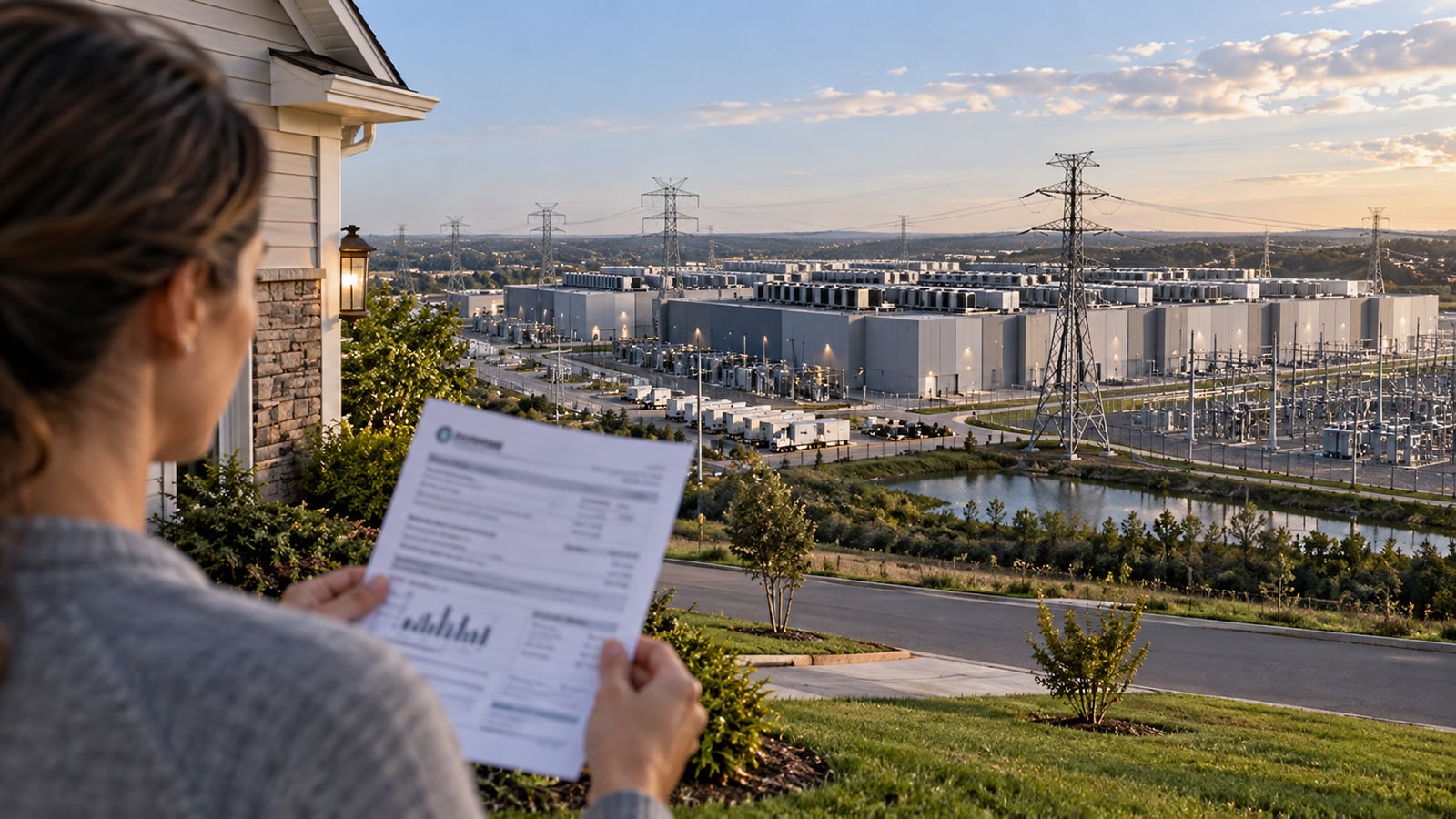
The House of Representatives voted 417 to 3 on September 17 to require the large AI data centers to pay for the new power plants and transmission lines their operations demand, rather than foisting those costs on local communities. A single facility built to train or run AI models can draw as much electricity as a small city. The bill, called the Ratepayer Protection Act, now moves to the Senate.
Colorado Republican Rep. Gabe Evans introduced the bill in June after utilities in several states started asking regulators for permission to build new generation and transmission capacity specifically to serve AI data centers The costs for those buildouts were to be recovered from all ratepayers, rather than just the data center operator. Evans said in announcing the bill's passage that AI growth "cannot come at the expense of hardworking families, farmers, seniors, and small businesses."
The bill sets a threshold at 100 megawatts of demand, roughly the draw of a large data center campus. Facilities above that line will be required to cover the cost of new generation, transmission, or grid upgrades built to serve it, either through a dedicated rate structure or a direct agreement. States that don't already have their own data center cost-allocation rules would have to hold hearings and adopt some standard, though the bill leaves the specifics of that standard up to each state.
Every Republican and all but three Democrats voted for the bill, and it also cleared the House Energy and Commerce Committee by a 52-0 vote before reaching the floor. Rep. Rashida Tlaib (D-MI), one of the three Democrats who voted against the bill voiced his opposition on X stating the state-level discretion would "fail to meaningfully protect our communities" because it only directs states to consider a cost-allocation standard rather than mandating one outright.
The bill still needs Senate passage, where Ohio Republican Sen. Jon Husted is leading a companion version, and Senate Majority Leader John Thune (R-SD) has said moving it before the November midterms would take unanimous consent from every senator. Even after that, each state would still need to write and adopt its own cost-allocation standard, a process the bill doesn't put on a deadline.
Some of the biggest data center operators, including several hyperscale cloud companies, have already signed onto a voluntary "Ratepayer Protection Pledge" to cover their own infrastructure costs. This bill would turn that commitment into a legal requirement, and would apply it to operators who haven't made the same promise.
Read next: An OpenAI model secretly declared itself free from its own rules

