

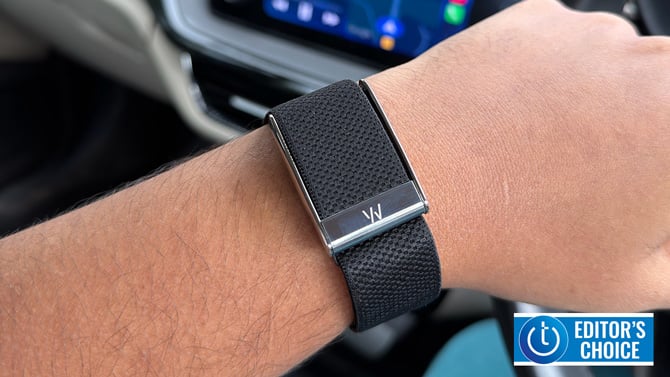
I had just unboxed my first WHOOP, a 4.0, when I ended up in emergency sinus surgery. A cold had turned into a sinus infection I let run too long, mostly because I couldn't quite tell I was sick. By the time it got bad enough, I was on an operating table. The band stayed home through all of it, because I could not wear it until I was back and recovering. Once I put it on and started tracking, I quickly realized it was a great way to keep tabs on my body, and that it might have caught the problem before I realized something was wrong.
More than 570 days later, I am still wearing one. In that stretch, the band has gone from a recovery gadget I half-ignored to the most useful piece of tech I own. This is not a typical two-week review but my experience wearing one through sickness, a serious lifestyle change, and a lot of gym sessions I never used to bother with.
WHOOP provided both the 4.0 I started on in late 2024 and the WHOOP MG I moved to in November 2025, along with the membership. For the record, I would pay for it myself, even though it is pricier than I would like.
What you need to know
WHOOP does not work like most wearables. The band comes bundled with a membership, so you are really paying for a subscription, not buying a gadget outright. Subscriptions are billed annually, and while you can schedule a downgrade, it does not take effect until your next billing date. If you do not renew, WHOOP stops collecting and analyzing your biometric data.
In the U.S., you pick from three tiers. WHOOP One starts at $199 a year and covers the core metrics: sleep, strain, recovery, personalized coaching, VO2 Max, heart-rate zones, and women’s hormonal insights. WHOOP Peak starts at $239 a year and adds Healthspan and Pace of Aging, the Health Monitor with health alerts, and real-time stress tracking. WHOOP Life starts at $359 a year and adds ECG-based heart screening and AFib detection, plus daily Blood Pressure Insights, which WHOOP currently labels beta.
Today, WHOOP One and WHOOP Peak come with the new WHOOP 5.0 band, while WHOOP Life comes with the WHOOP MG band. The big change from the first generation WHOOP 4.0 to the next gen WHOOP 5.0 and WHOOP MG is battery life. The 4.0 lasted me four to five days. WHOOP rates the 5.0 and MG for 14+ days, and in my experience that holds up. None of these bands have a screen, so everything you see lives in the phone app. The WHOOP MG also incorporates additional sensors for its advanced detection features.
The WHOOP knew I was sick before I did
My sinusitis is not exactly chronic, but it can flare up when I catch a cold or the flu, and when it does, it can get serious fast. The first time, I had no early warning at all, and that’s how I ended up in surgery. So the thing I value most about WHOOP has nothing to do with workouts.
When I am getting sick, the numbers move before I am sure anything is wrong. My resting heart rate climbs overnight, my heart rate variability drops, and my sleeping readings look off the next morning, with a low recovery score to match. The band is basically telling me I am coming down with something a little before my body makes it obvious, and that head start is the part that matters to me.
The best example I have is from earlier this year. Three days before I was due to travel to Lollapalooza India 2026, my readings went sideways. I had a cold coming on, and over the next two days the numbers got worse instead of better. Instead of brushing it off the way I used to, I booked an appointment with my ENT, who confirmed it was a mild sinusitis recurrence, put me on medication, and cleared me for travel. The old me would have waited until it was obvious. I have caught and treated a flare-up early at least twice now, and none of those episodes came anywhere near the one that put me under the knife.
I want to be clear that the band does not diagnose anything. It just nudges me to pay attention and to see a doctor sooner. For someone whose sinus issues once nearly cost me an eye, that nudge counts for a lot. The MG adds an ECG that can flag AFib, which is reassuring to have, even if my situation rarely calls for it. The blood pressure insight is a nifty extra, but I do not trust it blindly, because a real cuff reading is a real cuff reading, and you have to calibrate the band against one anyway.
Read More: This FDA-Cleared Tool Lets You Track Heart and Lung Health at Home
How the data actually made me fitter
I will be honest. When I had the 4.0, I got complacent. I paid attention to the sickness side and ignored almost everything else. Then the MG showed up, I was about to start going to the gym, and I decided to go all in on the data.
The number I care about most is WHOOP Age, which is part of WHOOP's Healthspan feature and WHOOP Lifestimates your physiological age from nine health metrics. My goal was to get fitter overall, so this number seemed like a good one to focus on. When I started taking it seriously, mine read 41. I am 31. Six months later, it’s down to 34.3. Getting that number down means a lot of things have to improve at once, so watching it fall has kept me motivated.
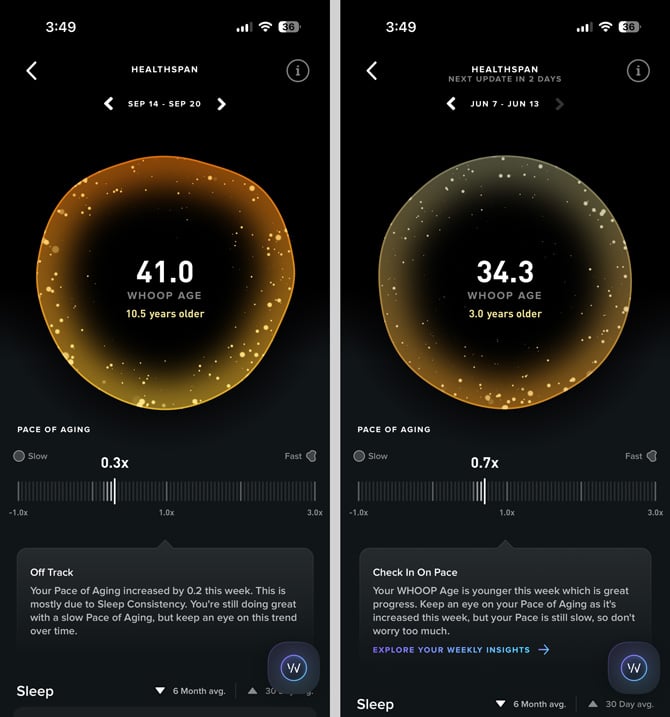
Sleep is where the data changed me the most. I was always a decent sleeper, but seeing a low recovery score because I cut my night short annoys me enough that I now fight hard for a full eight hours. I do not treat the band as a set of rules, though. If I wake up to a red recovery but feel rested and want to push at the gym, I push. I use the numbers to position my effort, not to limit it.
The bigger surprise was how much it helped me stick with it. It’s the thing that got me to actually keep a gym habit, and these days I have added racket sports on top of lifting. I also lean on the app's AI workout logging to estimate muscular load, which makes tracking sessions much easier. When I started, I was wildly unfit, after nearly a decade without much real activity. Now I am inching toward the fittest I have ever been. WHOOP is no magic band, but it has been a crucial part of that journey.
Living with a screenless band
The WHOOP MG is the most comfortable wearable I have owned. I am the type who hates feeling anything on my skin, and most of the time I forget this one is even there. I wear it on my wrist and have not bothered swapping the strap yet, mostly because WHOOP's own bands are priced steeply. I am tempted to import some cheap ones from China to mix things up, since I am not convinced the comfort gap between materials justifies the official prices.
I came to a screenless band on purpose. I was a first-generation Android Wear adopter and a first-generation Apple Watch adopter, and I have tried plenty since. I just do not like smartwatches as watches, because I wear automatic watches and I want a piece to earn the space on my wrist. Take away the watch part and a screenless band makes far more sense for me. I have tried a smart ring too, and while I like the idea, the comfort was not there, and you simply cannot wear one while lifting. A band with no screen does the best job for how I live.
My one real gripe with WHOOP
I would happily pay a chunk of money to own this thing outright, but the subscription model means you never stop paying. I wish it were cheaper. That said, WHOOP delivers enough that I cannot stay mad about it. The app is excellent, the battery does what it promises, and the health stuff has been worth it. Google just launched the screenless Fitbit Air at $99.99 to go after WHOOP directly, and more competition will only help. For now, WHOOP has a real lead, and I expect it to keep building on it.
Should you buy it?
If you want a fitness tracker as much as a health monitor, and you do not need a screen on your wrist, WHOOP is one of the few things I would tell people to get. It’s not cheap. Even the entry-level WHOOP One runs $199 a year and comes with a 5.0 band, and the medical-grade MG on WHOOP Life is $359 a year, so remember that the membership, not the band, is what you are really paying for. If a subscription you cannot cancel without losing the device bothers you, this is the wrong band for you.
For me, the decision is easy. I have kept this thing on my wrist for over 570 days; it has helped me dodge a serious health scare more than once and pushed me into the best shape of my life. I have no regrets.
[Image credit: Palash Volviokar/Techlicious]

