

Artificial intelligence has made it alarmingly easy to create convincing fake videos of real people, including politicians. With elections and public debates increasingly shaped by online video, that raises a serious question: what happens when a deepfake spreads before anyone can stop it?
This week, YouTube announced it is trying to solve that problem by expanding a new detection system designed to spot AI-generated impersonations of public figures. Its likeness detection tool will now be available to a pilot group of government officials, political candidates, and journalists.
The system works a bit like YouTube’s Content ID technology, which identifies copyrighted music or video. Instead of detecting media rights, this tool scans uploaded videos for a person’s facial likeness. When a match is found, the individual can review the video and submit a removal request through YouTube’s privacy complaint process.
The reason for targeting civic figures first is straightforward. “The risks of AI impersonation are particularly high for those in the civic space,” Leslie Miller, YouTube’s vice president of government affairs and public policy, told Axios when describing the effort as a way to protect the integrity of public debate.
There are already examples of how damaging this kind of content can be. In a 2025 U.S. Senate race in Georgia, an AI-generated video circulated online that appeared to show Sen. Jon Ossoff mocking farmers and defending a government shutdown – statements he never actually made.
YouTube’s new system is designed to slow that kind of damage. However, detection does not automatically mean takedown. The company says it will still weigh factors such as satire, parody, and newsworthiness before deciding whether a video should remain online.
Technology alone won’t solve the deepfake problem. Even the best detection tools can miss videos, and platforms are often reluctant to remove content that might fall under satire or political commentary. There’s also the reality that misinformation rarely stays on just one platform. A fake video taken down from YouTube may continue circulating on other social networks, messaging apps, or websites where moderation is less consistent.
Read more: Facebook Account Cloning: How to Spot It and Stop It
The broader issue is that deepfakes are becoming easier and faster to produce than platforms can stop them. Tools like YouTube’s likeness detection system are an important step, particularly during election cycles when manipulated videos can have real-world consequences. But for viewers, the safest assumption remains the same: if a video of a politician saying something shocking suddenly appears online, it’s worth pausing before believing – or sharing – it.
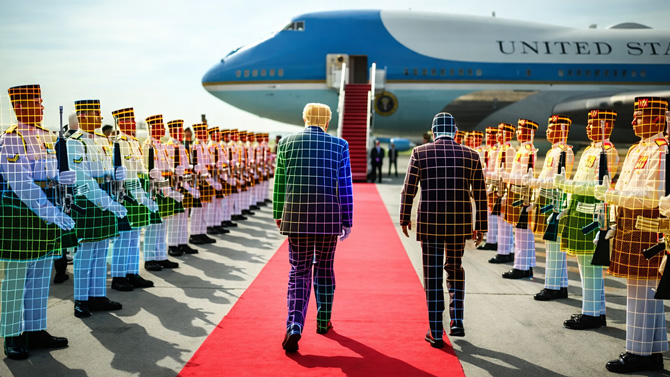
[Image credit: Photo of President Trump bidding farewell to Malaysian officials at Kuala Lumpur International Airport: WhiteHouse.gov, AI overlay via ChatGPT]

