
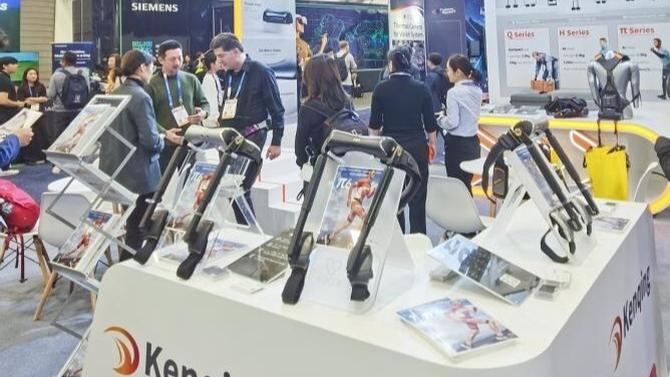
Consumer exoskeletons have been a recurring theme at CES, with companies showing everything from mobility-assist rigs to sport-boosting wearables. But most of what I saw still looked like gear you commit to wearing for a whole activity. The VIGX π6 takes a very different approach. It’s the first exoskeleton I’ve seen that legitimately fits into a small bag, making it the most compact, collapsible design I saw at the show. If you want an exoskeleton you can take with you but don’t want to walk around strapped into one all day, this one stands out.
According to VIGX, the π6 is the world’s first pocket-sized exoskeleton, weighing just 4.2 pounds (1.9 kg) and delivering up to 800 watts of power with 16 N·m of torque. That’s a surprising amount of muscle for something this light. The system can support loads up to 220 pounds (100 kg) and is rated for a maximum range of 25 miles (40 km), helping reduce physical exertion by up to 30 percent. In practice, that means it can give you a real assist on long hikes, runs, or commutes without feeling like a bulky wearable.
For portability, VIGX designed the π6 with a fully modular structure. The detachable power belt houses a 92 Wh battery, and because it functions like a standard power bank, you can even use it to charge a phone or Bluetooth speaker when you’re not leaning on the exoskeleton itself.
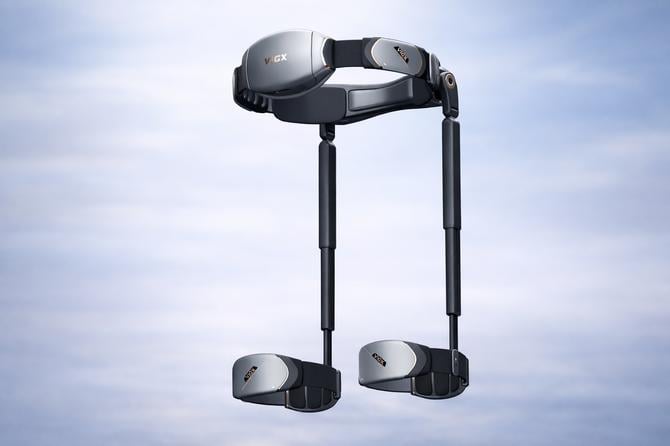
What also sets the π6 apart from many other ultra-portable robotics is its intelligence. The unit is built around a quad-core AI processor paired with a dual-camera vision system that analyzes terrain in real time. VIGX claims a response time as fast as 30 milliseconds, tripling recognition accuracy compared to earlier systems. It actively identifies slopes, uneven surfaces, and changing conditions, adjusting its output automatically to keep each step steady and efficient.
From what I’ve seen at CES this year, the π6 hits a smart middle ground: real assistive power without committing to a full-time wearable. The collapsible telescoping legs make it extremely bag-friendly, which could make exoskeletons far more appealing to people who want the boost only when they need it. It’s a practical take on human-augmentation tech, and one that points to a future where these devices feel more like everyday gear than specialty equipment.
The company expects the π6 to launch in June 2026, creating what it describes as a new category of “pocket-sized exoskeletons.” Visit VIGXrobot.com for more information.