

Image credit: Josh Kirschner/Techlicious
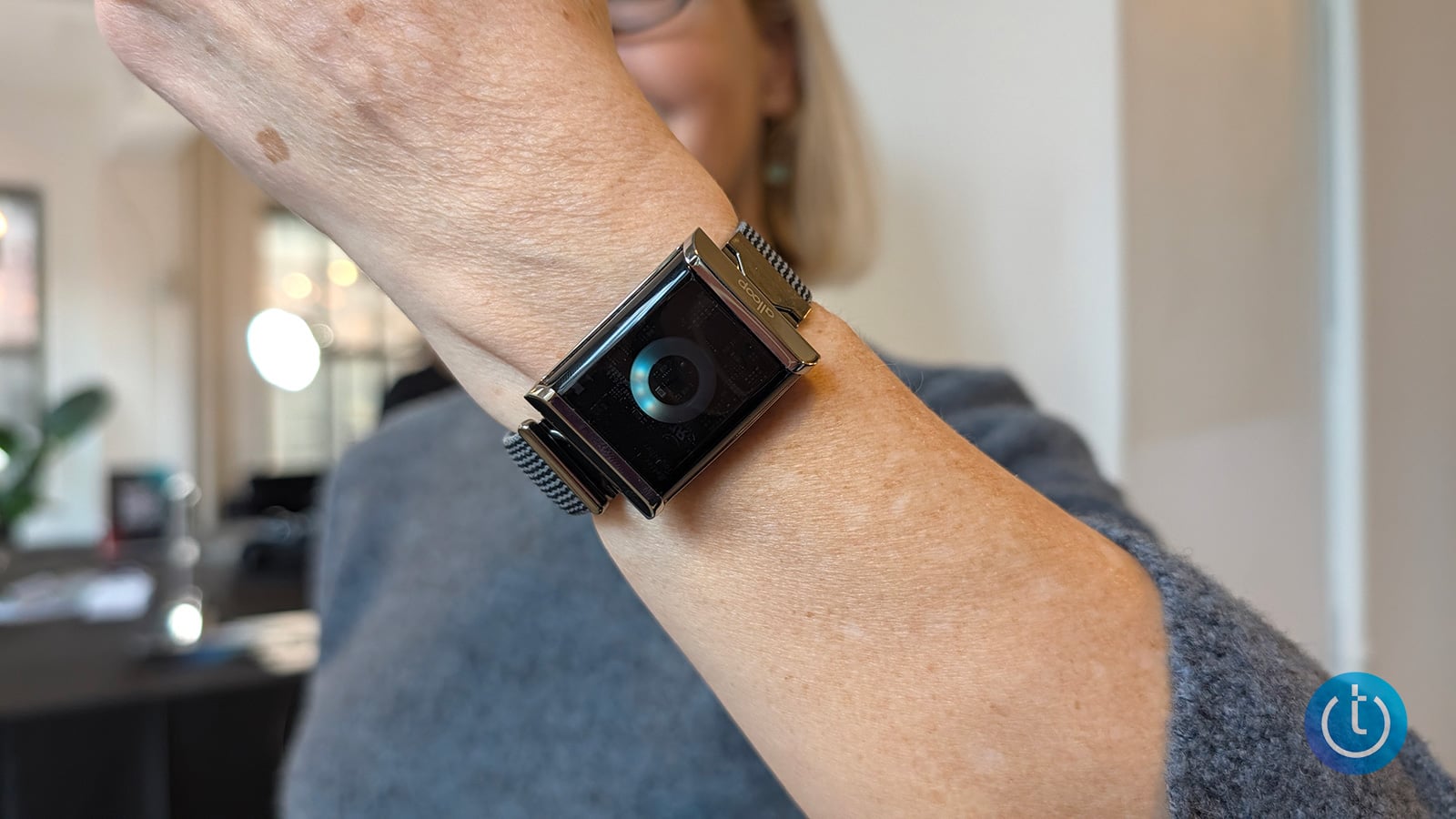
Alloop is unveiling the Trio, a health wearable built around a single sensor that moves between a wristband for daytime and a ring for sleep. You can also talk to it, and that changes what a wearable can do for you.
Your tracker knows your heart rate, your sleep stages, and your step count. It has no idea you skipped lunch, had three coffees, or went into yesterday's workout feeling run down. That missing context is why so much wearable advice feels generic.
The Trio lets you fill in those gaps by talking to it. Tap the device, with no phone needed, and say what you ate or drank, how you're feeling, or how a workout went. According to Alloop, the Trio is the first "agent-native" health wearable, meaning it is built around a Personal Health Agent: the AI assistant that combines what you tell it with what the sensors read to build a more complete picture of your habits, then offers recommendations tailored to you.
The idea behind the Trio goes back to a question that Dr. Tony Wu, Alloop's founder and CEO, kept hearing at his previous company, smart ring maker RingConn. "If I know my sleep score, what should I do next? How can I get a closed loop?", he told Techlicious at the launch event, and that question is the "loop" in Alloop's name.
Alloop's agent aims to supply the next step, and Wu said it follows through over time. Tell it you've started taking a sleep supplement, for example, and it will track the habit and show how your weeks compare. "If we want to develop a habit, maybe we should have some positive feedback," Wu said. "The positive feedback is the data."
The hardware is just as innovative. Today's wearable market is made up of rings and bracelets, and you have to pick one. With the Trio, there's no need to choose. The sensing core, which Alloop calls the Cube, swaps between band and ring in seconds, so you can wear whichever suits the moment: the band for exercise, the ring for comfortable sleep through the night.
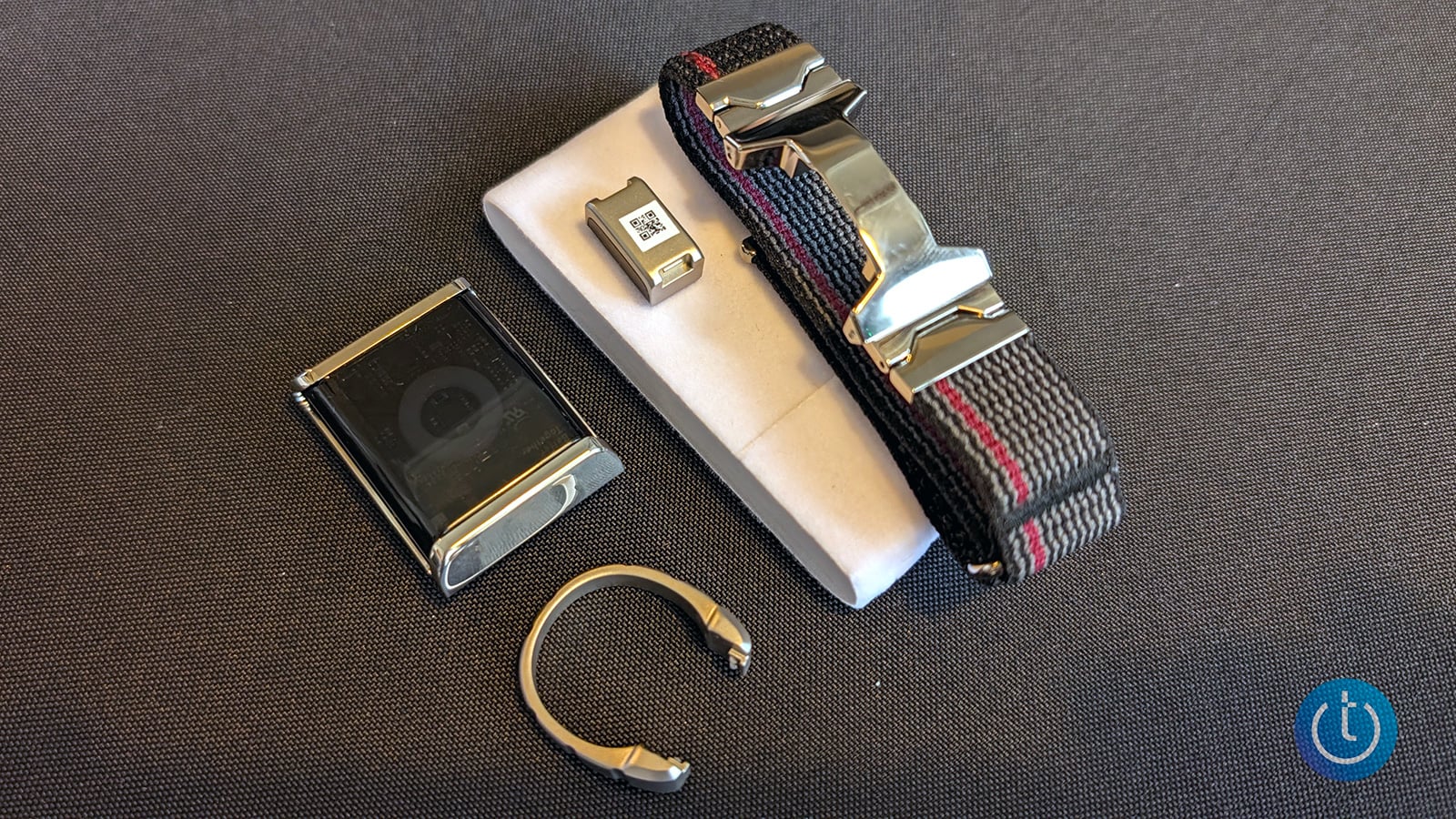
Image credit: Josh Kirschner/Techlicious
The Cube reads your pulse using PPG, short for photoplethysmography, which shines light into your skin and measures how it changes with each heartbeat. Heart rate variability, resting heart rate, blood oxygen, breathing rate, and temperature are among the metrics captured and displayed in the app, alongside sleep, recovery, and strain scores. The Cube is rated to 5 ATM, or 50 meters of water resistance. The band is made of breathable nylon built to resist sweat and odor, with 316 stainless steel parts and a fingerprint-resistant coating.
Halo, the add-on module for the band, gives it more battery life and lets you tap to talk to Alloop's AI agent. It stands in for a screen, using light, color patterns, and haptic feedback to show recording status, reminders, and device information at a glance. Tap to speak, and double tap to start and stop a recording. Halo is rated IP68 for dust and water resistance. Alloop puts battery life at approximately 3 to 7 days depending on configuration.
The kit comes with Halo, the band, and three rings. Rings can be ordered in small (sizes 6, 7, and 8), medium (9, 10, and 11), or large (12, 13, and 14). With three rings in the box, you can move up or down a size if your fingers swell at night or your weight changes. Alloop also says it intends to release selected hardware and ring design files so outside designers can build and customize their own versions. "As a CEO and founder, I can say that open is our DNA," Wu said, adding that Alloop will also open its voice APIs, so you could connect the voice input to your own GPT.
The Alloop app is free for core use, with no required subscription; optional AI add-ons extend it. It runs on iOS and Android and pulls in data from Apple Health, Google Health, other wearables, continuous glucose monitors, lab results, and medical records. Its headline number is Bio Age, built from 18 personalized measurements across six health categories, and you can review, delete, and export your data.
Crowdfunding for the Trio opens November 10 at a planned price of $299, which Alloop says is subject to final confirmation. Backers should receive their units in early January 2027.

