
We may earn commissions when you buy from links on our site. Why you can trust us.

Mini Bluetooth speaker showdown: 8 winners under $100
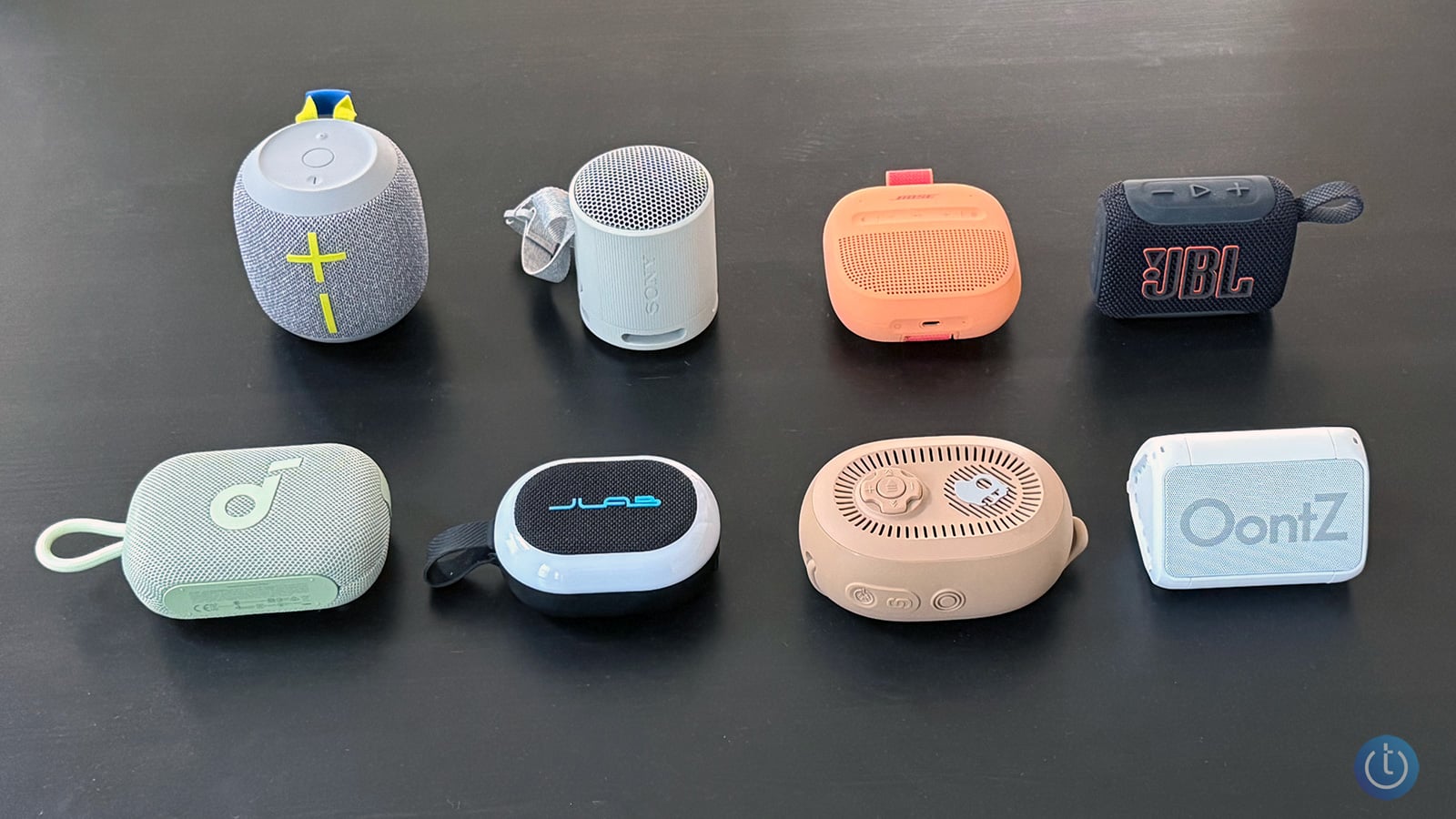
Looking to nab (or gift) a good-sounding, battery-operated Bluetooth loudspeaker that's truly portable and affordable – costing under $100, weighing less than a pound, and sized small enough to fit in a baggy pants or jacket pocket?
These days, there are more than ever before: diminutive entertainers with an oversized spirit, rarin' to pump up (and share) your favorite musical passions, game and movie soundtracks, and podcasts in a surprisingly refined, articulate, and even robust fashion.
Built brawny, these baby Bluetooth speakers can run all day (and sometimes two) on a single charge. They're resistant to accidental drops, rain, and even the occasional dunk in a stream or pool. So they're ever at the ready for adventure, practically begging you to tote one along as you move around your place, go for a bike ride, pack off for college or vacation.
Seriously outpunching their size and weight, most entries that made our Class of '26 "best of" lineup can push the needle on my sound pressure meter up to a 90-decibel peak (measured at one foot) without serious distortion. That's enough sound to make your roommates say "turn it down." And these things can make even more of a ruckus when paired for stereo sound or massed in multiples (of up to 100!) for synchronized party play.
A few also function as speakerphones, pausing the music to answer a call, with decent results.
What's made today's mini-mights so sonically impressive? High-efficiency neodymium magnets now coax extended excursion (for lower-frequency response) and super-fast transients (for added detail) from most of the small-diameter (2 inches or so), ultra-thin drivers found in this species. And if you pry 'em open or put your ear up to the rear grill, you'll also detect a supplemental passive driver kicking up the bass even more. Add a decent amount of wattage, a durable lithium-ion battery, smart digital signal processing, and 30-foot range Bluetooth connectivity, and you're golden.
While they're similarly sized, not all mini speakers sound alike or are tuned alike. Some (from Sony and Edifier) court clarity freaks. Others (think Skullcandy) emphasize the bass or smooth the sound spectrum peaks (Bose) for a more soothing effect. Add-on features – strobing lights (best on the JLab Pop Party), sleep sound app enhancements (Soundcore's forte) and device-securing features (magnets, loops and straps) – likewise hold out special appeals to shoppers.
Quick Picks
Top Bluetooth speakers under $100 |
|
 |
Best all-around speaker Ultimate Ears Wonderboom 4 Jump to details ↓ |
| CHECK PRICE ON AMAZON | |
|
|
|
 |
Best for accurate sound Sony SRS-XB100 Jump to details ↓ |
| CHECK PRICE ON AMAZON | |
|
|
|
 |
Best for personal listening Bose Soundlink Micro 2nd Gen Jump to details ↓ |
| CHECK PRICE ON AMAZON | |
|
|
|
 |
Best pocketable speaker JBL Go 5 Jump to details ↓ |
| CHECK PRICE ON AMAZON | |
|
|
|
 |
Best speaker under $50 Soundcore Select 4 Go Jump to details ↓ |
| CHECK PRICE ON AMAZON | |
|
|
|
 |
Best party expeditor JLab Pop Party Jump to details ↓ |
| CHECK PRICE ON AMAZON | |
|
|
|
 |
Best for your bike Skullcandy Session 540 Jump to details ↓ |
| CHECK PRICE ON AMAZON | |
|
|
|
 |
Best speaker under $50 with speakerphone OontZ Angle Solo Jump to details ↓ |
| CHECK PRICE ON AMAZON | |
|
|
|
How I tested
To suss out the species and steer you right, I've spent two months living with and listening to a bunch of the mini BT speakers. Like your friendly optician, I've worked a lot of quick "which sounds better, this versus that?" playback comparisons of material that I don't mind hearing repeated time and again. It helps that most of these speakers both shut down and reconnect to my iPhone 16 Pro quickly.
On the more honestly revealing, acoustic music front, my challenging content included two Qobuz-sourced versions of the Miles Davis gem "All Blues" – from the trumpeter's own "Kind of Blue" classic and a "Live at the Greek" rendering fronted by Stanley Clarke – that really exposed the speakers' bass mettle. I also hit the repeat button on a silky-sweet new violin and orchestra take on the classical-world perennial "Clair de Lune," and a complicated sung and spoken ensemble piece ("Being Alive") from the 2006 revival of Stephen Sondheim's musical "Company," useful for comparing/contrasting the speakers on orchestral sonorities, voice placements/miking, and overall depth-of-field. And I kept coming back to a head buzzin' (in the best sense) concert session by Gillian Welch and David Rawlings ("Acoustic Reckoning"), jamming the folky best of the Grateful Dead, newly out on Nugs.net. I'm betting Jerry Garcia would be pleased.
To gauge the speakers' heavier-hitting skills (and youth appeal), I also hit the restart button often on a couple of crunchy/breathy/pulsing tracks ("SS26" and "Card Decline") from electro-pop star Charli xcx's latest album, Weezer's guitar rockin' "C.E.O" and the spacey, futur (cq) funk "It's All Good" by the electronic music producer GRiZ.
And to gauge the speakers' lifestyle accommodations, I walked each one around the house, into the shower, out onto the stoop, and to a nearby park. Dropped a couple into a pool, too – one accidentally, another on purpose. Those rated IP67 or IPX7 (all but the JLab) should survive a 3-foot-deep, up to 30-minute dunking in clean (not salty or heavily chlorinated) water. But you must keep rubbery flap doors sealed tight and give some a time-out to dry off.
Here's how the judging went.
Image credit: Jonathan Takiff/Techlicious
Best All Purpose Speaker: Ultimate Ears Wonderboom 4
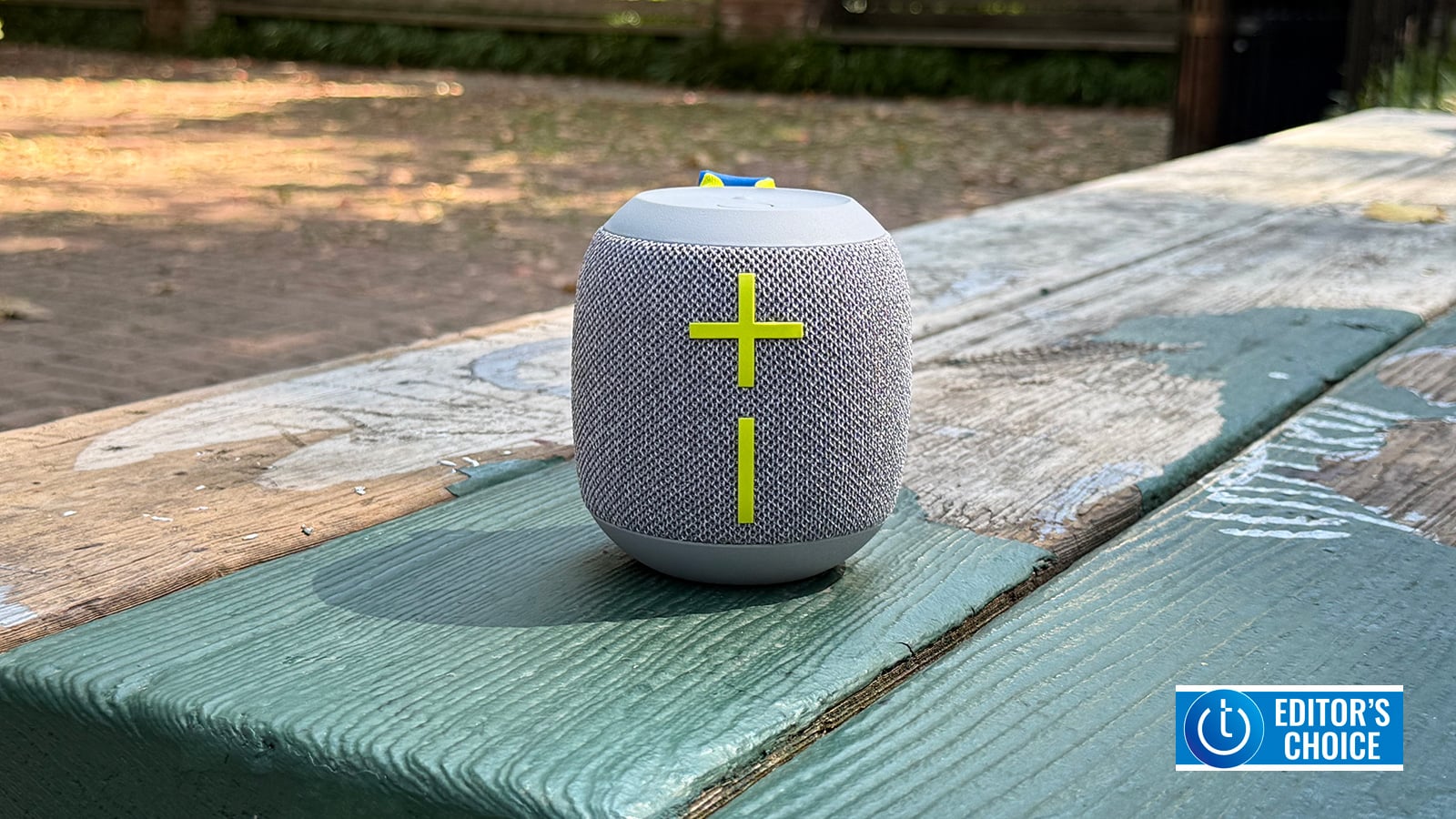
The biggest and weightiest (14.82-ounce) speaker I could squeeze (barely) into a baggy pants pocket also rated as the overall best in my survey. Which makes perfect sense. Its larger, more resonant enclosure (4.09" height, 3.75" width) helps the Ultimate Ears Wonderboom 4 to amplify and broaden a soundscape and also allowed the maker (Logitech) to cram in double the number of drivers normally found in these micro speakers – two 1.47" active drivers and two 1.81" x 2.57" passive radiators. By spreading the workload, Wonderboom 4's drivers are less prone to stress out. Another advantage: the round design and dispersion patterning shoot the music out evenly in all directions.
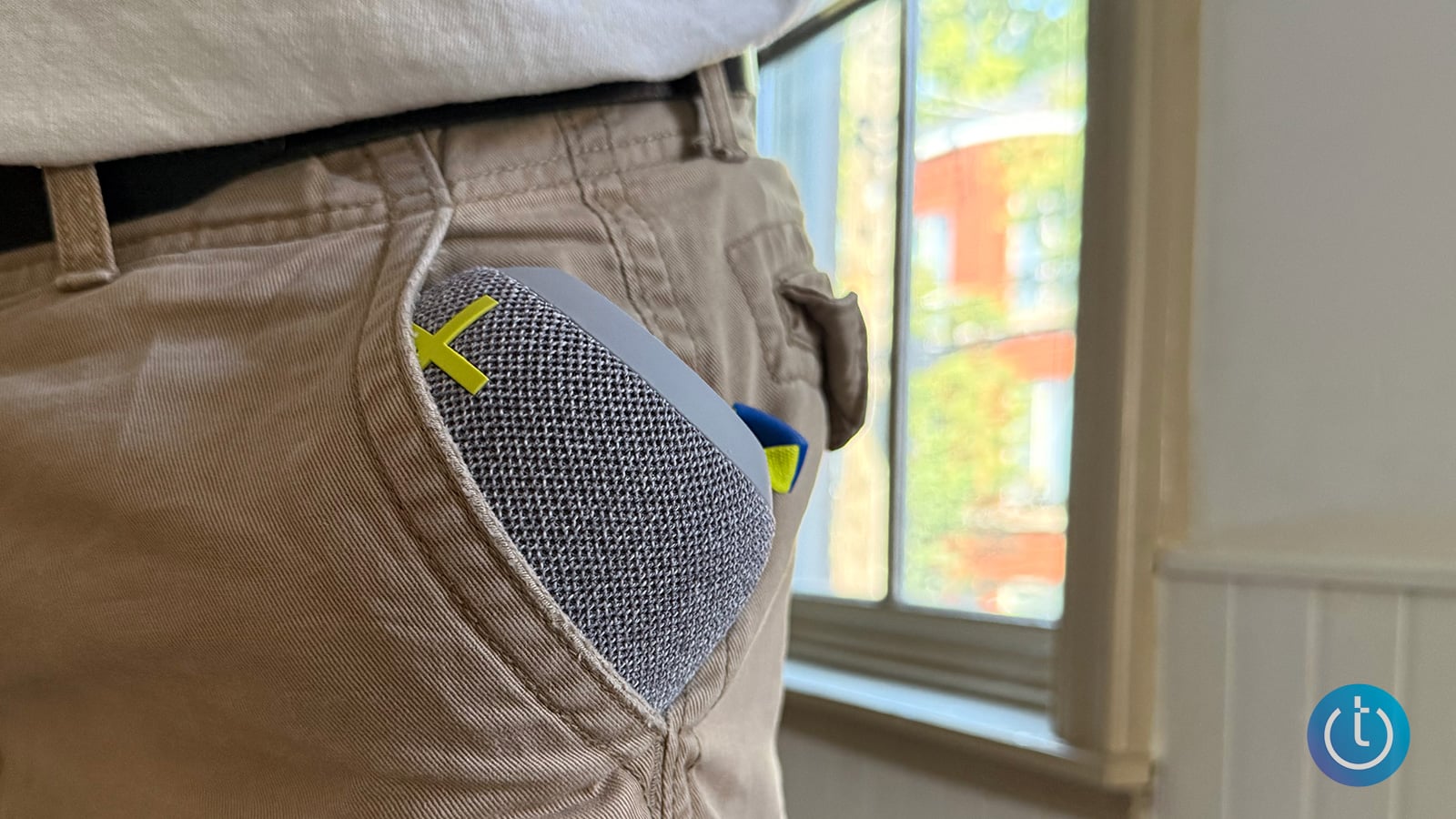
Image credit: Jonathan Takiff/Techlicious
While it's not a showboater with a razor-sharp high-end or super deep/tight bottom, the Wonderboom 4 tacks a middle-of-the-ocean course (and price, $69.99) that feels balanced and natural, satisfying with virtually any kind of music. If I were stuck on a deserted island (albeit with power to recharge my gear), I could make do happily with this baby boomer (and a software-loaded content source) as my one and only sound system.
Ultimate Ears rates the Wonderboom 4 as "drop-proof" from five feet, probably more on desert sand. It's also built to the IP67 standard and floats to the surface when dunked. You can score upwards of 14 hours of playback on a charge, then refill the battery in about 2.5 hours.
Can't say I love the minimalist controls, though. Just one multifunction button on top handles a variety of duties depending on how often and long it's tapped. The large "+" and "-" shaped volume controls decorating the front demand a serious press to work – an intentional inconvenience to avoid accidental changes, I'm guessing. If you're patient, a loooonnnng push on the speaker bottom's indented control (marked with a "tree" icon) activates preset Outdoor Boost or Podcast Modes, the only EQ-altering options. App support? There's none to be had.
Price: $99.99, on sale for $59.99; available in black, blue, light gray, and pink
Image credit: Jonathan Takiff/Techlicious
Best for Sound Accuracy: Sony SRS-XB100
If crisp, finely detailed sound reproduction is your trip, the Sony SRS-XB100 is your ticket to ride.
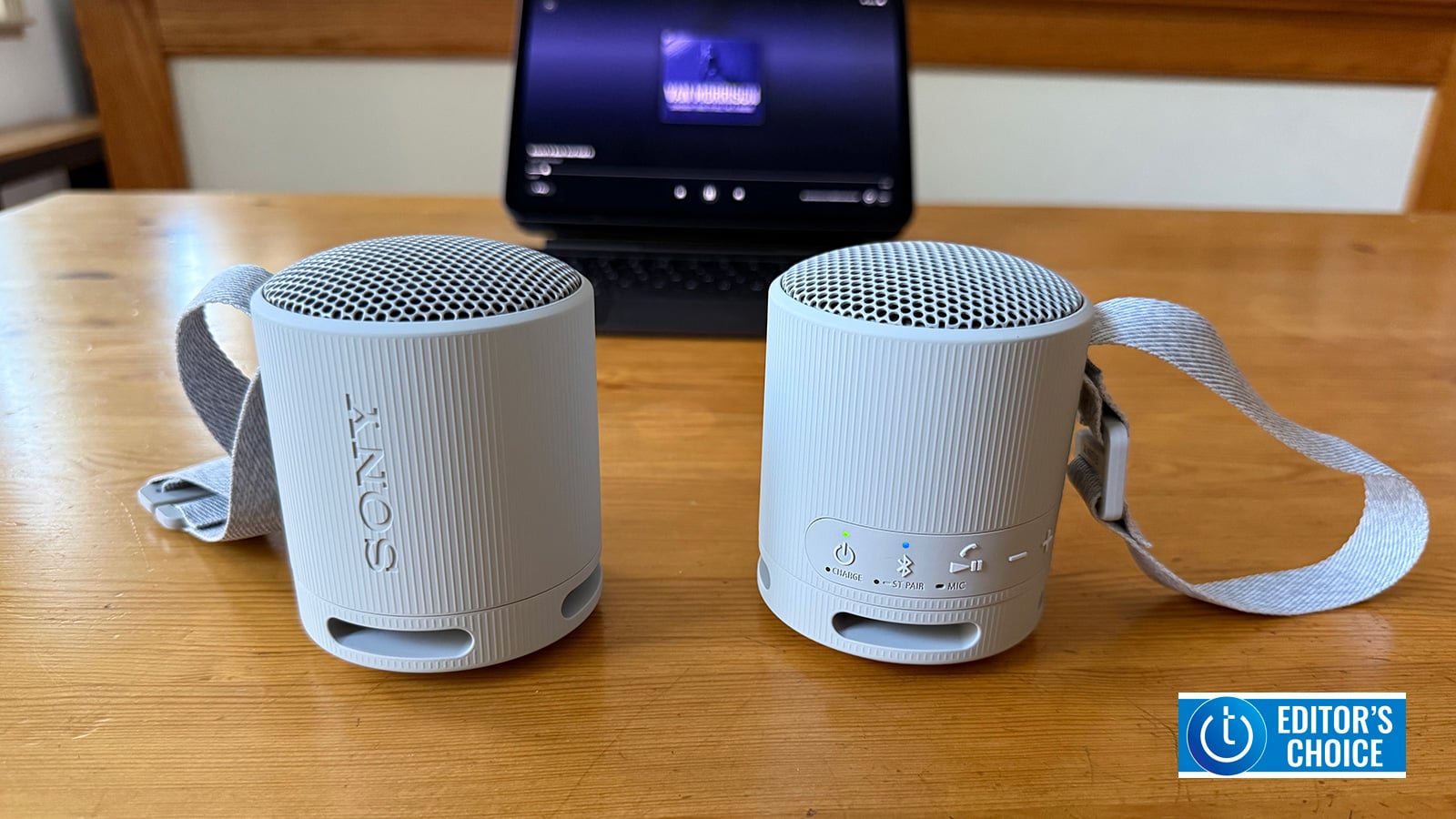
Drums really snap and thump; acoustic guitar strings accurately "ping." Keyboards, horns, and violins exude nice vibes, too. Better defined, honestly, than our overall pick, the UE Wonderboom 4. Both speakers feature a cylindrical design with a 360-degree dispersion pattern, playing fair with all listeners seated or standing around. And both can work cute directional spreading tricks when the speaker is placed in a confined, resonating space. But the Sony is more compact (3" x 3" x ¾") and lighter (10 oz), which makes it easier to stash in a pocket, bag or even a car's cup holder. It's priced better, too – currently $43 to $55, depending on color. The tradeoffs? Bass response isn't quite as bold as on the Wonderboom 4, and the overall impression is of a smaller (though brighter) sound source.
Sony's ergonomic design is superior. Note the tactile, ribbed silicone case wrap with its row of raised buttons – small but so distinctive you can operate the controls strictly by feel. For added fun, I paired two XB100s (takes just a couple of button presses) to go stereo (more dynamic) and raise the peak volume level by 2 decibels – a lot!
The SRS-XB100 also functions as a pleasant-sounding (for both parties) speakerphone. The always-on microphone communicates readily with Siri or Gemini on your smartphone, too.
Lithium-ion battery run time is substantial – about 16 hours at an upper-middle volume level. Sony's IPX7 water-resistance/IPX6 dust-resistance rating is top of the class. Gotta warn – there's no app support or other means to do EQ adjustments. But if it ain't broke, why fix it?
Shopper's note: For comparison's sake, brightness buffs might also do well to inspect the Edifier ES20 ($59.99). This rugged, "mini guitar amp"-styled cube cranks louder than the Sony with an even sharper high-end response. But the Edifier's "warts-and-all" repro-ruthlessness sometimes brings out the sibilance on less-than-perfectly miked vocals. And it falls a tad short of the Sony in the bass response department.
Price: $64.99, on sale for $53.00; available in orange, black, and light gray
Image credit: Jonathan Takiff/Techlicious
Best for personal listening: Bose Soundlink Micro 2nd Gen
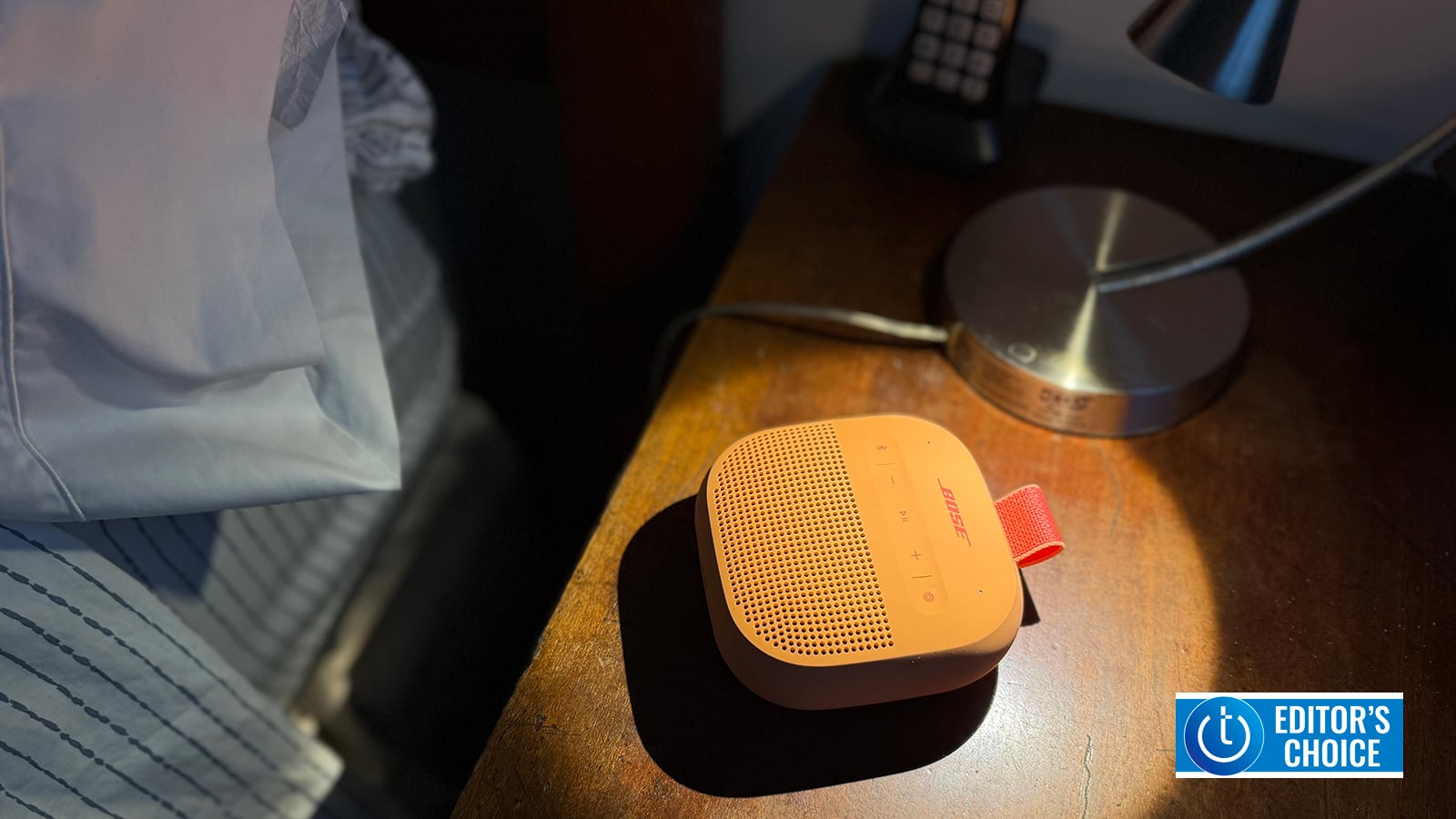
What a difference proximity makes with this speaker. Placed a few feet away in its default, up-firing position, this square, 4-inch box sounds pretty good, though not much better than the cheaper, look-alike knockoffs from Soundcore (Boom Go 3i, $79.99) and Tribit (StormBox Micro 3, $64.99). But move Bose's three-quarter (0.725) pounder close by your side and the Soundlink Micro 2nd Gen turns into a higher breed of species – boasting a sweeter, warmer, fuller presence than I found in any other entry, justifying its slightly higher price of $79.99 to $129 (depending on color). As such, it's become my preferred bedside/night table entertainer, being both convenient to operate (with top and front controls) and the most "chill-friendly," with a soft-touch persona that isn't so in-your-face assertive at lower volume levels. So it doesn't distract as much from that book you're trying to finish.
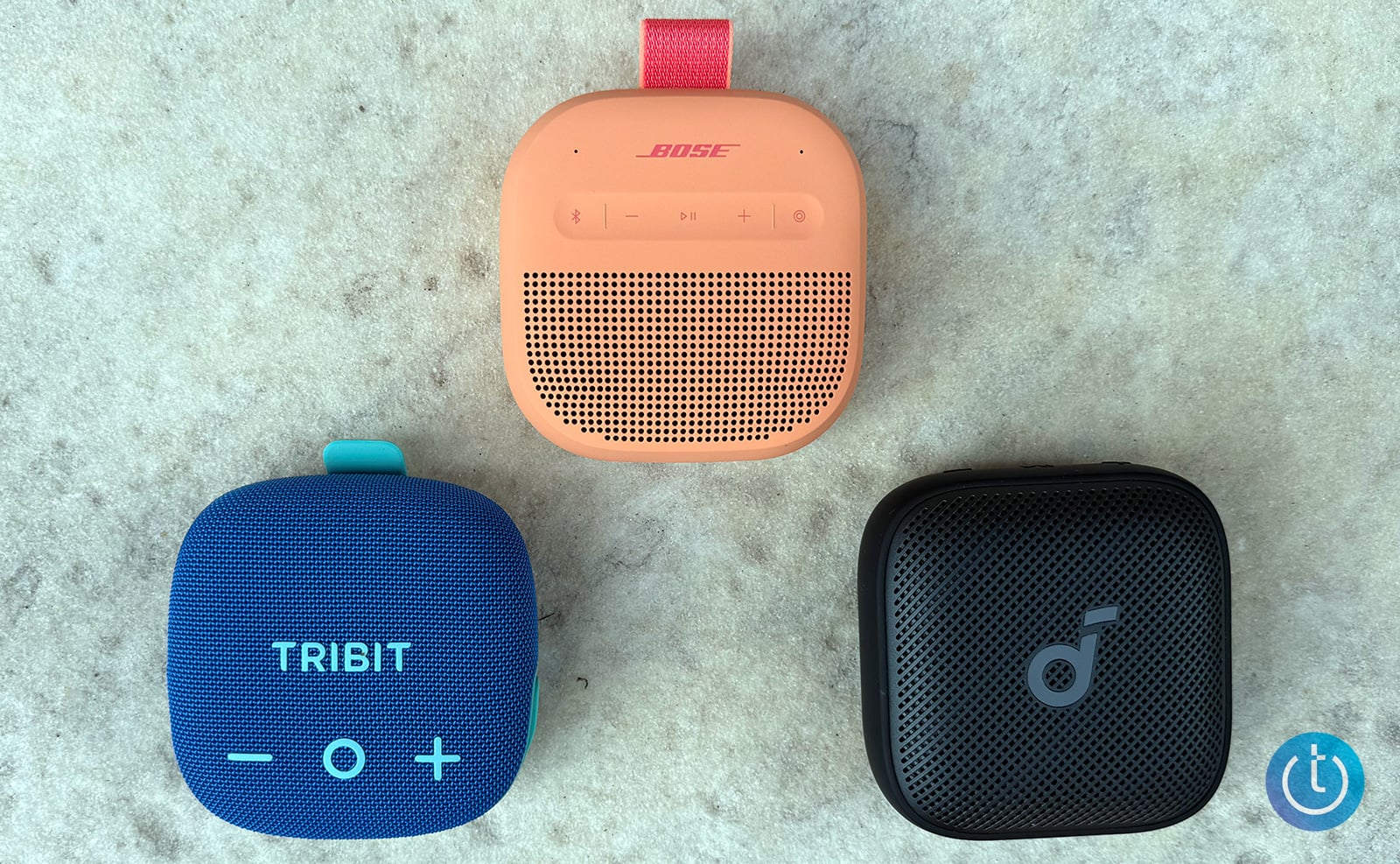
Image credit: Jonathan Takiff/Techlicious
Soundlink Micro 2's musical top end is rounded off to eliminate vocal sizzle, a common shortcoming (and distraction) in mini-BT speakers. And with Bose's customizable three-band EQ options, I can dial down the bass to eliminate any traces of low-end distortion (which this speaker and others are occasionally guilty of) without doing much harm to the nicely articulated sound. Battery life is 12 hours; charge time is 3 hours. It's IP67 waterproof and dustproof.
What about speakerphone/voice assistance use? Sorry. Those prior Soundlink Micro features have been scratched in this second-gen edition.
Price: $129.00, on sale for $82.99; available in black, blue and beige, mint green, light pink, peach, and blue
Image credit: Jonathan Takiff/Techlicious
Best pocketable speaker: JBL Go 5
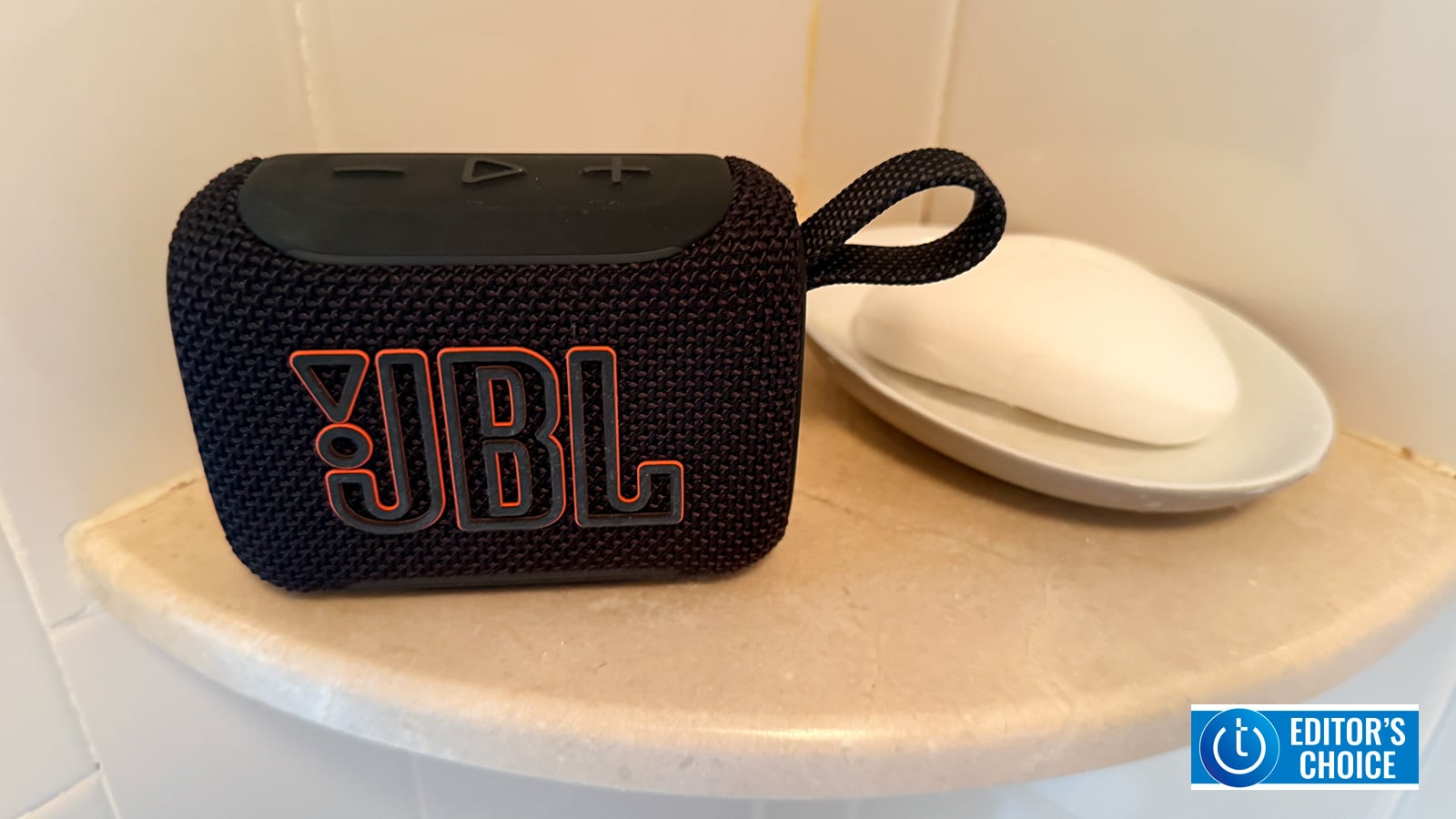
Judged on a performance-per-square-inch basis, there's no beating the JBL Go 5, currently priced at $54.95. The smallest entry to make our hit parade, this go-getter weighs in at 0.51 pounds and measures a scant 3.98" x 3.05" x 1.7". And yet our palm-sized pal puts out a shockingly big, dynamic and entertaining sound that holds its own even when cranked to a peak 93 dB (at one foot removed), a volume level matched in our test only by the Wonderboom 4.
Of course, with the Go 5's downsized enclosure, you're going to get a more compressed, boxier sound. The shortcoming is barely noticeable with spare, laid-back productions – jazz combos, guitar-strumming singer/songwriters, string quartets. But more boisterous content sometimes gets laid on thicker, making it harder to distinguish instruments in a mix and occasionally pushing the "fuzz pedal" when that wasn't intended.
Still, I could survive with this little entertainer as my one and only sonic companion. The tactile fabric and silicone-wrapped, easily-gripped Go 5 packaging is equally inviting, with protective bumpers on all sides. And with an IP68 rating, this small-footprint cutie is my fave to take into the shower (or the closest waterfall).
More to know: Just bumping two Go 5s together ("Air Touch") links them for stereo play. Multiples can be massed via Auracast, if your outputting content source also boasts the Bluetooth LC3 codec upgrade featured here (along with conventional SBC and AAC codec support). Gotta load and open the JBL app named "JBL Portable" to adjust/turn off this speaker's blinking front light bars or change the EQ settings. Maximum play time is 8 hours. Recharge time is 3 hours.
Price: $54.95, on sale for $39.95; available in black, peach, light pink, red, yellow, blue, purple, green camo, teal, and white
Image credit: Jonathan Takiff/Techlicious
Best speaker under $50: Soundcore Select 4 Go
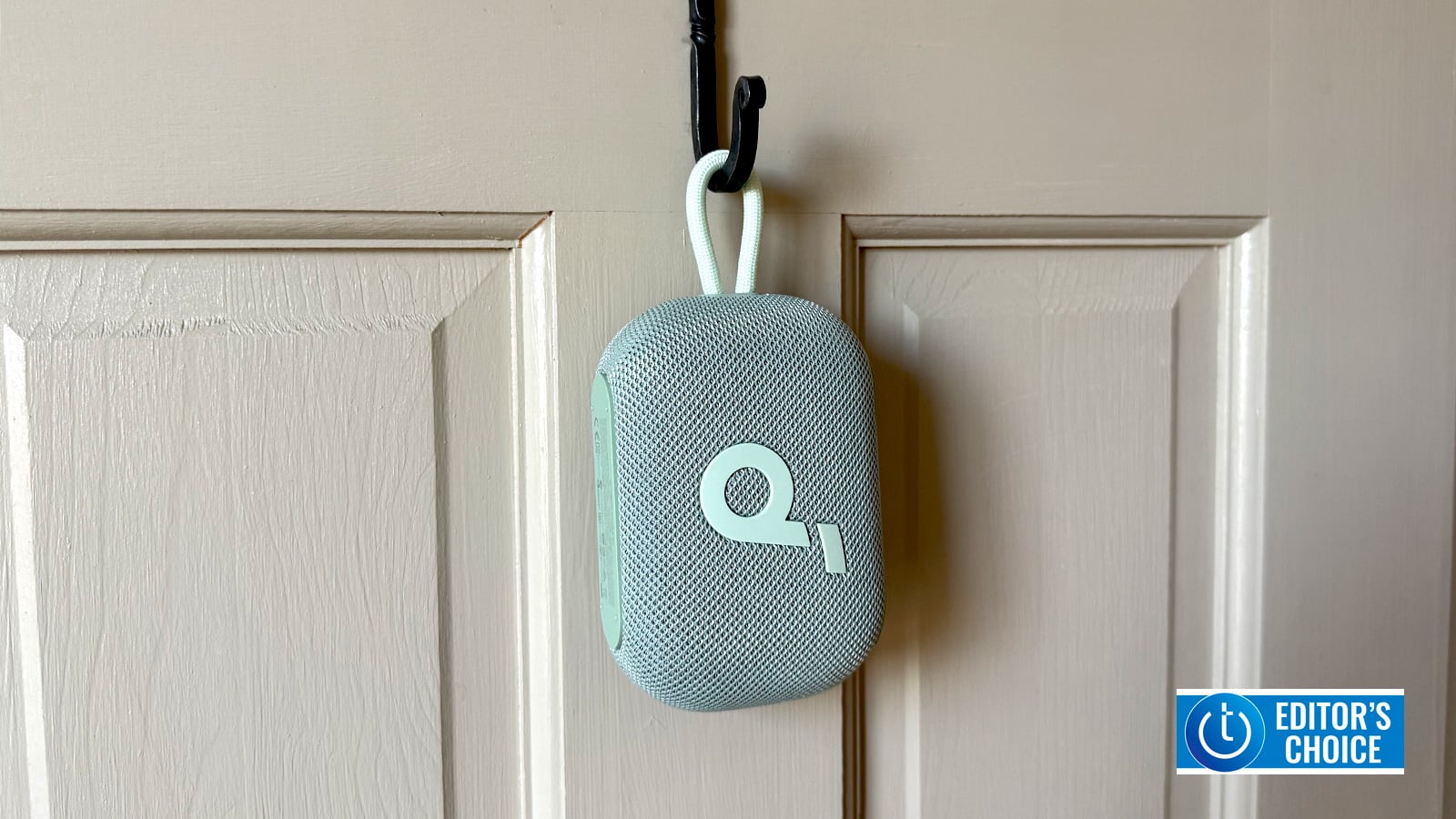
Yes, it's a tad bigger and a little rougher around the sonic edges than the JBL. But the Soundcore Select 4 Go is also a pleasing performer, equally rugged and quite the deal on sale at $21.99 – making it our value buy of the bunch. (You could go hog wild and set up a more dynamic, true-wireless stereo pair for essentially the same tab as one JBL.)
This waterproof speaker floats to the surface, too, and jumps to the head of the class in play time – offering up to 20 hours per charge (if you maintain a modest volume level), and recharging in 4 hours. Fits almost anywhere – measuring 4.72" x 3.23" x 1.89", weighing just 0.53 lb.
The companion Soundcore app is another bonus. Finessed beyond the usual EQ, volume, and content control options, you can summon up blissful "Brainwave Audio" synth scorings and "Snore Masking" nature sounds, helpful for drifting off to sleep.
Downsides: The operation buttons are barely raised and can be hard to read, especially on the monochrome green (icons) on green (case) model I picked up. Track skipping is a tricky operation. And the Select 4 Go is slower to wake up than others. Gotta hold the power button down for two whole seconds before this thing wakes up or goes to sleep. Tsk, tsk!
Price: $34.99, on sale for $21.99; available in black, blue, light green, purple/yellow, white/pink, and white
Image credit: Jonathan Takiff/Techlicious
Best party expeditor: JLab Pop Party
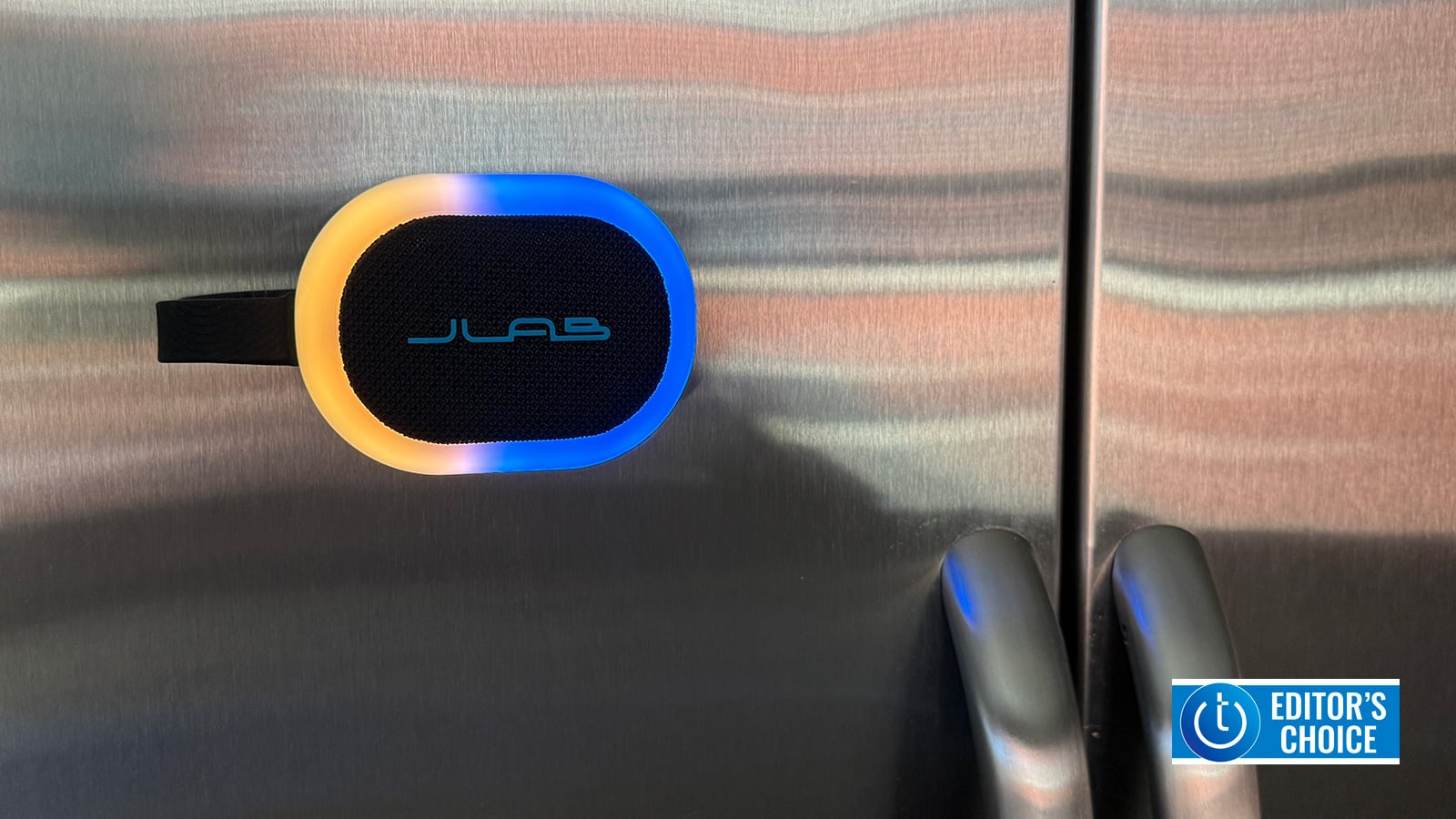
While a flashing light show option is also available on the JBL, Edifier, and larger Soundcore (Boom Go 3i) models we've examined, no other speaker gets the R, G, and B bulbs glowing like the JLab Pop Party, a most jovial entertainer priced right at $23.95.
Evoking a classic Wurlitzer "Bubbler" jukebox, a ring of translucent white plastic surrounds JLab's oval speaker front. Flip a switch in the app, and that ring comes alive with dancing, pulsing, and rotating globs of colored light – in solid colors or rainbow swirl patterns – that match the beat or at least the surges in the music. (I could see it being useful helping small kids get their rhythms together.)
What happens if you're feeling like the light show is too psychedelic, like it might blow your friggin' mind?!!?!! The app lets you tone it down, adjusting brightness and colors to better suit your temperament.
But wait, there's more. With a special communications feature, LabSync, the operator of the lead JLab Pop Party can connect and share synchronized sounds and light with upwards of 100 more Pop Party makers. Rave on!
Helping the cause – a built-in magnet lets you hang this thing on steel doors, shelving, and refrigerators (our Skullcandy and Tribit test models also had that gift). There's also a conventional loop for hooking-on options.
Notwithstanding the costly eye candy, JLab has also made a decent-sounding speaker here. Yes, the Pop Party can get a tad raspy at the high end when pushed, and bass nuancing is just so-so. But nobody's gonna say "Eww… turn those blankety blanks off" when you're blasting one or a bunch, except maybe your neighbors.
Other test notes: with only two control buttons on the case, it takes your music source or the JLab app to work changes. The back-side passive subwoofer on the Pop Party is recessed but exposed and could suffer accidental damage if poke &ndash d. And with its lower IP55 water-resistance rating, this isn't a speaker to toss around in the pool. So be careful out there. Runtime: 5 hours with lights on, 8 hours with lights off. Dimensions: 1.89" x 7.55" x 3.11", weight 8.7 ounces.
Price: $29.99, on sale for $22.49; available in black, pink, and blue
Image credit: Jonathan Takiff/Techlicious
Best on your bike: Skullcandy Session 540
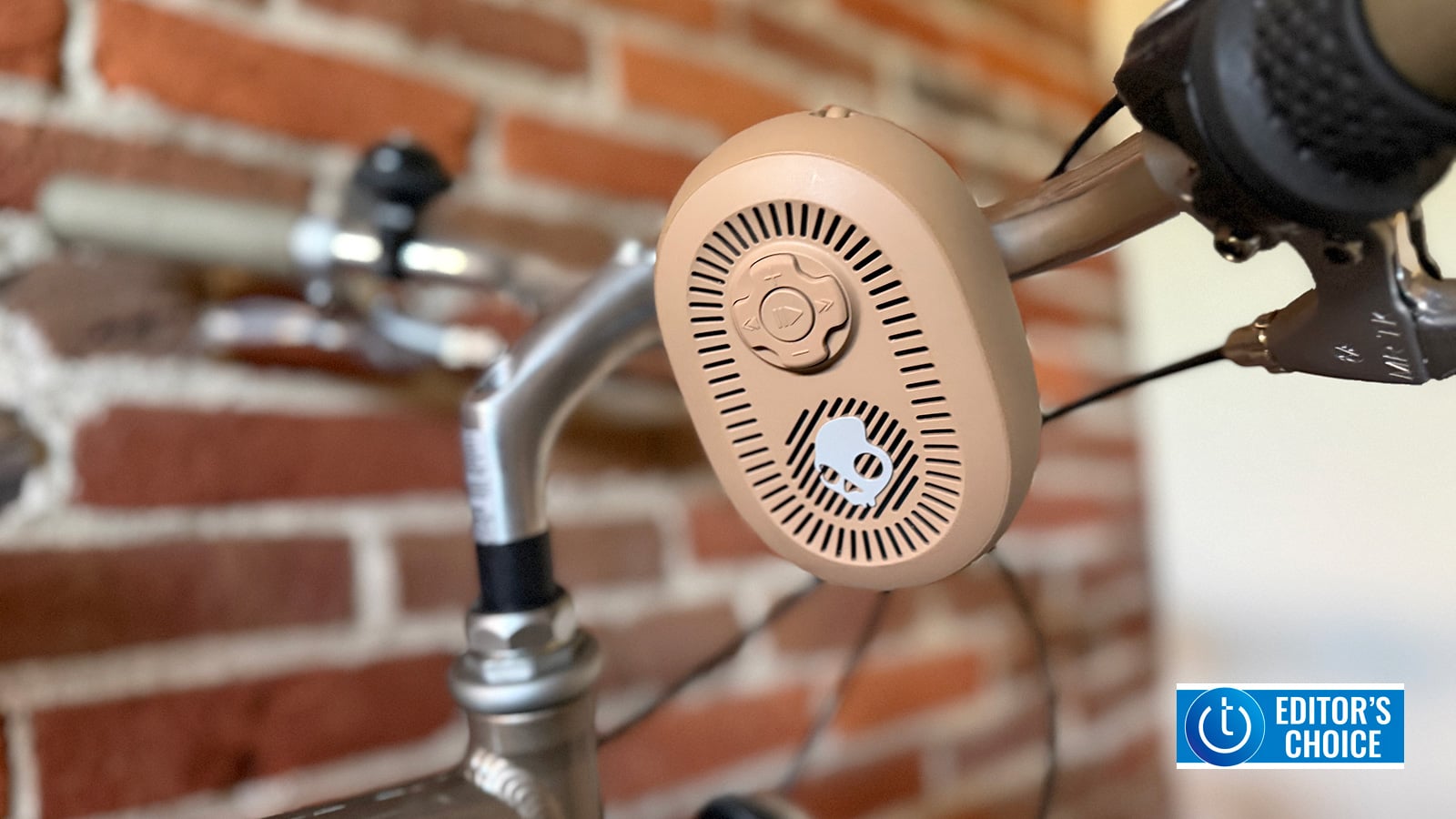
With its aggressive "steampunk" stylin' and sound, you're either gonna love or quickly dismiss the Skullcandy Session 540, priced at $69.99. Bike riders, young (or young at heart), should especially be enthralled by the prospect of toting this chunky (0.71 pound, 5.28" H x 3.55" W x 2.3" D) entertainer along. Its double elastic band-securing rig (on the speaker's rear) is the best of several I tried for hanging a music maker on the handlebar of a bike. In the same spirit, the Session 540's front-positioned, five-way joystick-style controller (plus three more uniquely shaped buttons on the speaker's side) makes this the absolute easiest of our test models to operate by feel. So there's no need to take your eyes off the road.
And speaking of feel, you'll be uniquely sensing the good vibrations, too. The Skullcandy is tuned for a kinetic effect, with extra bass emphasis and a thick-walled, rubber-coated cabinet that actively resonates like no other. When this thing's attached to handlebars, you're literally feeling some musical buzz through the end grips. Not so much that it's annoying, just enough to keep you alert and engaged.
For indoor use, I found the speaker sounded best when plopped on a wooden surface or hanging (magnetized) on the fridge, where it livens up the meal-making/eating and mostly stays out of harm's way (except for agitating the other refrigerator magnets).
A well-wrought Skullcandy App offers custom and preset EQ options and sets you up for true-wireless stereo pairing, multipoint pairing, and a multi-speaker Party Mode networking via Auracast.
Battery is rated for a maximum (at moderate volume) 17 hours of use. A 10-minute Rapid Recharge brings it back to life for another two hours of overtime.
While the open, slatted grillwork on this speaker made me nervous, the IP67 rating dared me to drop the Session 540 into a swimming pool. After retrieval and some shaking off, droplets remaining inside made the driver sputter badly. But after a couple of hours of relaxation and evaporation, the speaker roared back to life. Phew!
Price: $69.99; available in gray, orange, tan, and black
Image credit: Jonathan Takiff/Techlicious
Best bargain multi-tasker: OontZ Angle Solo
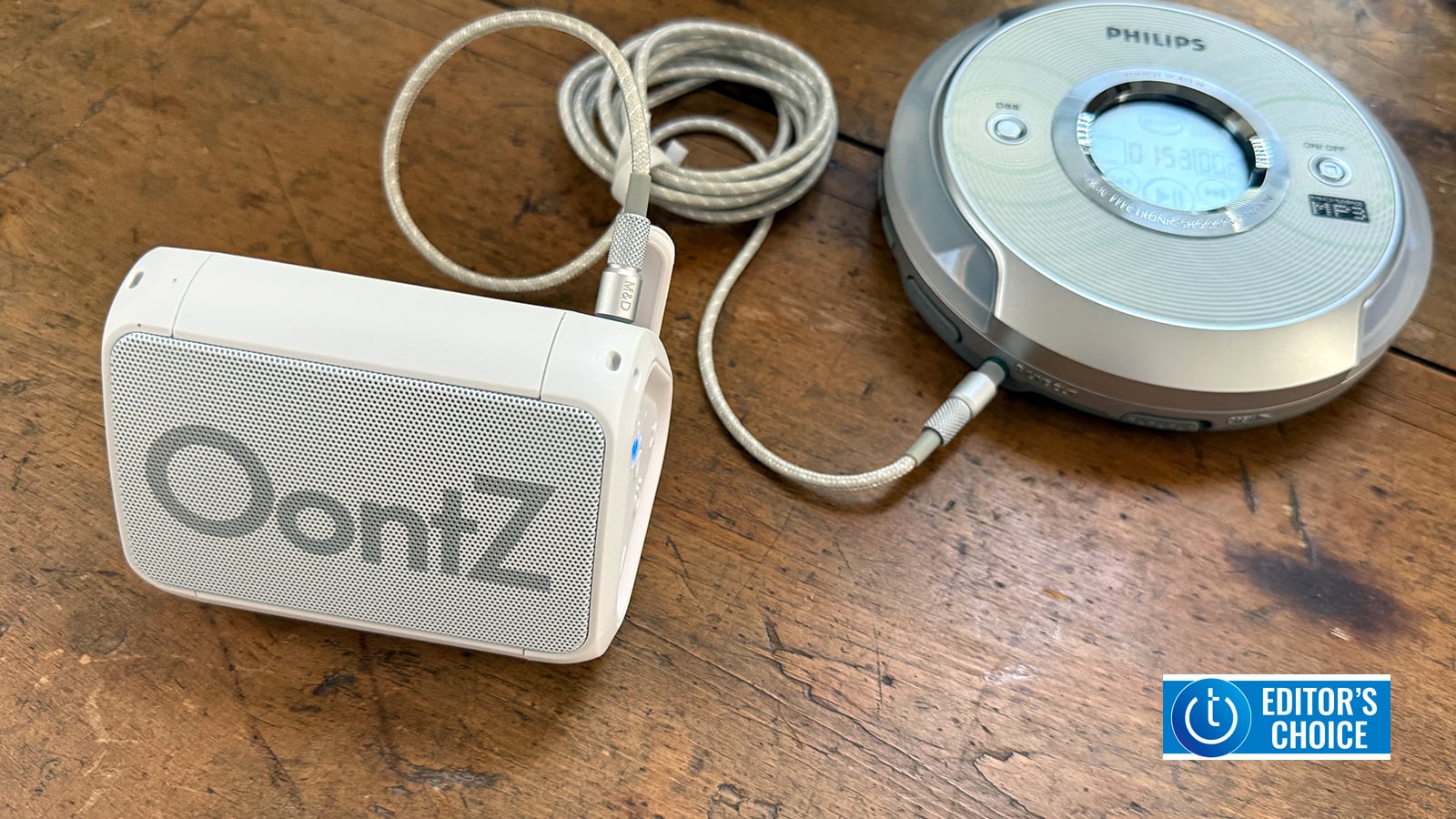
Cambridge Soundworks started making value-conscious audio products in the pre-Bluetooth days, when CD portables, cassette players, your FM Walkman and laptop all required a hard-wired connection to playback gear. Today, the maker still serves owners of that old-school gear. Their current OontZ line of wedge-shaped portable speakers includes a rare 3.5 mm input jack as a second means (besides Bluetooth) for connecting to audio sources.
Case in point – their smallest OontZ Angle Solo – measuring a scant 3.9" x 2.8" x 2.75" and weighing under 8 ounces. As for meeting my "has to sell for under $100" criterion, it doesn't get any "under" than this. An Angle Solo sells for as little as $16 and at most $20 (depending on color).
Let's be clear – the Angle Solo's treble-dominant sound is no Grand Prix winner, harsh with hard-stomping fare. But for casual listening with calmer music and podcasts, the OontZ does qualify as a step-up performer, beating the sound coming out of your laptop or phone's internal speakers in volume, dynamics, and discernable detail.
The enclosure's angled front helps the cause – pointing the driver upward toward the listener's ears and enhancing the sense of the soundfield opening up.
Need more persuaders? The Angle Solo plays for 14 hours at two-thirds volume and has an okay IPX5 splash-resistant rating. End- and side-mounted controls are easy to operate – a good thing as there's no app support.
I should also mention that this mic-equipped tyke functions fairly well as a speakerphone and in give 'n take sessions with your connected smartphone's virtual assistant.
Not bad for the equivalent cost of a burger and fries.
Price: $24.99, currently on sale for $19.99; available in black, blue, red, and white

