

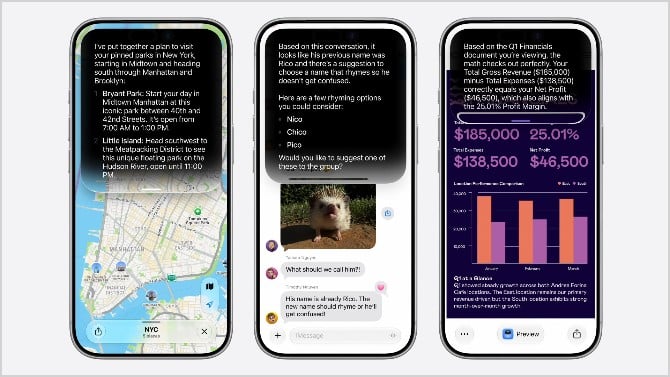
Apple officially introduced its rebuilt assistant, now called Siri AI, at the WWDC 2026 keynote, which was also Tim Cook's last before he steps down. It's the biggest change to Siri since it first landed on the iPhone back in 2011. The headline change is that the new Siri runs on AI built using Google's Gemini, after years of Apple struggling to fix Siri on its own.
The new Siri lives in a standalone app, and it pops out of the Dynamic Island when you ask it something. It can hold an actual back-and-forth conversation now, instead of dumping you into a list of web links, and it pulls from your own stuff, like your reminders, emails, and files, to answer you. It works across iPhone, iPad, Mac, Apple Watch, and even Vision Pro, and you can start something on one device and finish it on another.
What Siri can do now
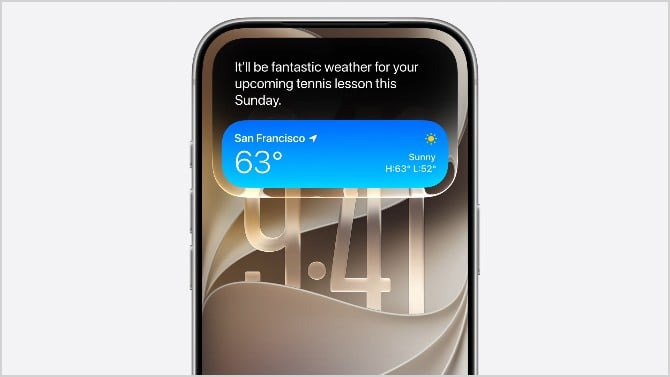
The big shift is that Siri can handle longer, multi-step requests and lean on what's already on your devices. Ask it something and the answer pops out of the Dynamic Island, and it might come back as a reminder, a song, or a map with driving directions, not just a wall of text. You can also hand it a photo or a document and have it work from that.
It pulls hard from your personal context. In one demo, the Mac version helped plan out building a shed by drawing from files already on the computer. It can draft an email based on your past messages, and it can read the nutrition info off a food label using the Camera app. Your conversation history also syncs across devices, so you can ask something on your iPhone and pick the thread back up on your Mac.
Siri AI is in beta now, with a broader release expected around September alongside iOS 27, iPadOS 27, and macOS 27. Apple didn't announce any separate cost for it. Some older phones, like the iPhone 11, drop off the supported list, so you'll want at least an iPhone 15 Pro or an iPhone 16 or newer to actually get Siri AI.
Read More: Why Apple's Gemini-Powered Siri Could Finally Be Useful
So is Google reading your stuff?
That Google connection is the obvious thing to worry about. The short answer is mostly no. Apple didn't just bolt Google's Gemini chatbot onto Siri. It licensed Gemini's underlying technology and used it to build its own model, which it still calls an Apple Foundation Model.
Most of what you ask stays on your phone, or goes to Apple's own private servers. Only the hardest questions get routed out to Google's cloud, and Apple says those are anonymized, stripped of your Apple ID, and that Google is barred from using them to train its own AI. "We're not changing our privacy rules," Tim Cook said on stage. It's not the same as having a fully Apple Siri, but it's a very different arrangement from simply handing Google your data.
Separately, through a feature called Extensions, you'll also be able to set a third-party assistant like ChatGPT, Claude, or even Gemini itself as the one that answers your questions. I'm particularly excited about this feature because Claude is my go-to AI assistant, and I'm looking forward to seeing how well it can integrate into this new Siri.
Keep in mind Siri itself still runs on Apple's Gemini-based model. Extensions just changes which AI actually answers your hardest questions, which would go to Google by default. I think this is the ideal setup if Apple couldn't go with fully independent models to handle the whole process.
Why I'm more hopeful this time
I've used Gemini extensively on Android, and it already does a lot of what people actually want from a phone assistant. It handles natural conversation and pulls from across your apps, while Siri today tends to hit a wall fast and fall back to web results.
What makes me more hopeful than I was is how this is built. Apple's earlier ChatGPT integration was a bolt-on. It asked permission every single time before sending a query out, and it felt disconnected from the rest of the phone. This time the AI is baked into Siri from the ground up, and the privacy handling is part of how it works rather than something tacked on afterward. I'm still not thrilled about Apple leaning this hard on Google. But if the company can pair Google's AI with its own privacy standards, Siri could finally become something you reach for on purpose, instead of just to set an alarm.
Read More: Google's AI Takeover: Assistant Dies, Gemini Rises
[Image credit: Apple]

