

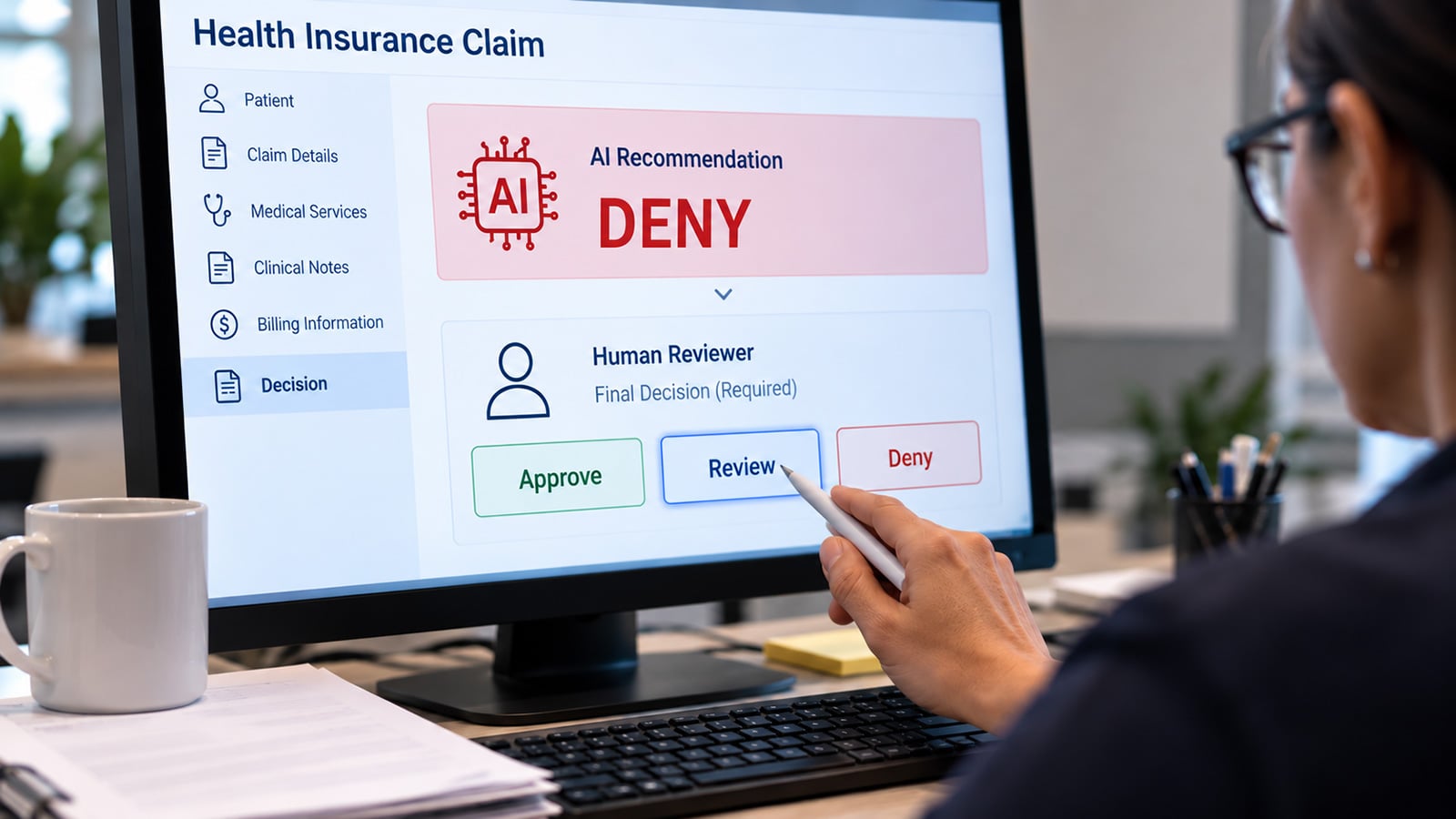
Image credit: Suzanne Kantra/Techlicious generated by ChatGPT
Starting January 1, 2027, no AI system will be allowed to deny a medical claim for state workers or cut a doctor's payment without a person reviewing the decision. The new rules will impact the roughly 270,000 people covered by Connecticut's State Employee Health Plan and the Connecticut Partnership Plan (a similar plan covering municipal and other public-sector employees). Connecticut Comptroller Sean Scanlon announced the new rules this week, using his office's authority over those plans to restrict how insurers can use AI in coverage decisions.
The policy has five parts. Insurers can't let an AI system alone deny a claim or reduce what a plan pays a provider. Member data can't be used to train or develop other AI models. Carriers have to disclose when AI materially shaped a coverage decision. And any AI system a carrier uses has to be validated for accuracy and fairness, with its oversight procedures reported back to the Comptroller's office. "You and your doctor should make your health care decisions, not artificial intelligence," Scanlon said in the announcement.
The rule doesn't name specific insurers, but CT Mirror reported that Anthem administers the affected plans for medical coverage, Cigna for dental, Aetna for Medicare Advantage, and Caremark for pharmacy benefits. Dr. Mariam Hakim-Zargar of the Connecticut State Medical Society and Tom Swan of the Connecticut Citizen Action Group both backed the change in the announcement.
The rule is narrow in its design: it only covers people on those two specific state-administered plans, not the roughly 220,000 other Connecticut residents on state-regulated commercial health plans or those with private insurance. Scanlon's office says it plans to ask the legislature in its 2027 session to extend similar protections to every state-regulated health plan in Connecticut. For now, the rule previews a fight playing out in statehouses nationwide, as insurers increasingly use AI to help process claims and states weigh how much human oversight to require in those decisions.

