
More than 50 million Americans experience some degree of hearing loss, yet adoption of hearing aids remains surprisingly low. Many people delay or avoid hearing support because traditional devices can feel overly medical, hard to operate, or socially stigmatizing. Others struggle with app-heavy interfaces or small controls that make daily adjustments frustrating. At CES 2026, Cearvol is stepping into the space between those worlds with a new generation of hearing wearables designed to feel approachable, intuitive, and genuinely useful in daily life.
Cearvol's three new AI-powered hearing products – Cearvol Wave, Cearvol Liberte, and Cearvol Lyra – each addresses a different use case but are built around the same idea: hearing support should be simple to control, comfortable to wear, and adaptable to real-world environments.
At the core of the new lineup is NeuroFlow AI 2.0, Cearvol’s AI-based hearing platform. Rather than amplifying all sound equally, the system uses a deep neural network to analyze incoming audio in real time. It identifies speech, distinguishes it from background noise, and adjusts amplification accordingly.
This matters because most real-world environments are acoustically complex. Restaurants, offices, public transit, and outdoor spaces all include overlapping sounds. NeuroFlow AI 2.0 continuously evaluates these environments and adapts, improving speech clarity while reducing distracting noise.
Compared to the previous generation, the system delivers stronger speech recognition and deeper noise reduction, while also managing feedback and reducing the harshness of the wearer’s own voice.
Cearvol Wave – a simpler way to control hearing aids
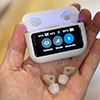
The centerpiece of Cearvol’s CES 2026 showcase is Cearvol Wave, a smart OTC hearing aid designed to make everyday hearing support easier to manage. Rather than relying entirely on a smartphone app, Wave introduces an industry-first touchscreen charging case that puts core controls directly in the user’s hands.
The idea is simple but powerful. Instead of opening an app, navigating menus, and adjusting tiny sliders on a phone screen, users can change volume, switch listening modes, manage calls, and activate noise reduction directly from the charging case. And this is exactly what we experienced when we went hands-on at CES. This tactile, visual interface is especially helpful for first-time users or anyone who prefers physical interaction over app-based controls.

The touchscreen case also functions as a very handy remote microphone. As a remote mic, the case can pick up speech from up to ten meters away and transmit it directly to the hearing aids. This means clearer conversations in meetings, classrooms, or group settings where the speaker isn’t nearby. Instead of struggling to hear across a room, users can place the case closer to the sound source and let the hearing aids do the rest.
Designed for both modern and legacy listening
Wave is also designed to work across a wide range of audio sources. In addition to Bluetooth streaming for calls and music, it includes AUX-IN connectivity, allowing users to plug directly into non-Bluetooth devices such as airplane entertainment systems, older televisions, or legacy audio equipment. This combination of wireless and wired support is unusual in hearing aids and reflects Cearvol’s focus on adaptability to a wide variety of real-world scenarios.
Battery life and everyday reliability
For daily use, Wave is designed to last. The charging case provides up to 22 hours of total use, with fast charging that delivers several hours of listening from a short charge. This makes it practical for long workdays, travel, or back-to-back meetings without constant battery anxiety.
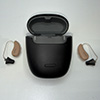
The hearing aids are built in a discreet in-the-ear design that balances performance with comfort, making them suitable for all-day wear.
Cearvol Liberte – the first open-ear hearing aids

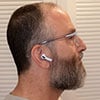
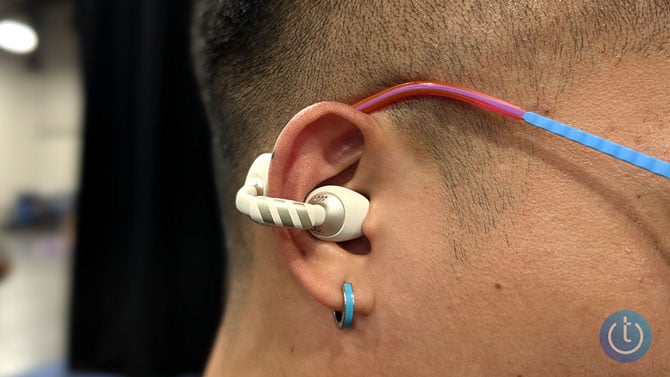
While Wave focuses on control and clarity, Cearvol Liberte takes a different approach to comfort. Liberte is the industry’s first open-ear hearing aid, meaning it does not block the ear canal.
Instead of sitting inside the ear, Liberte uses a flexible open-ring design that rests on the outer ear. This allows ambient sound to pass through naturally, avoiding the “plugged ear” sensation common with traditional hearing aids. The result is greater comfort, better awareness of surroundings, and a more natural listening experience.
Liberte is particularly well-suited to active users, first-time hearing aid wearers, and anyone who prioritizes awareness and comfort alongside hearing support. The lightweight design is intended to mirror the look of normal open ear headphones, and will also have available clip-on plastic design elements allowing you to customize the Liberte to your personal style.
Cearvol Lyra is eyewear that prioritizes hearing
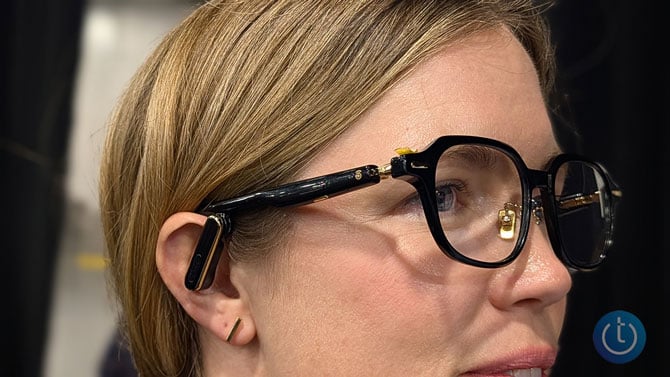
The third product Cearvol is showing at CES 2026 is Cearvol Lyra, a pair of smart hearing glasses that integrate hearing enhancement directly into everyday eyewear. Instead of placing microphones near the ears, as on most smart glasses, Lyra positions them at the front of the frames, closer to where sound naturally originates during conversations. This placement helps prioritize voices directly in front of the wearer, improving conversational focus.
Lyra uses an open-ear design for all-day comfort and supports Bluetooth audio for calls and media. If you’re worried about how the device looks, our personal hands-on opinion from CES is that they look like a regular pair of stylish glasses – which is a good thing. For those with long hair, the hearing elements will largely be hidden in normal wear.
[Image credit: Josh Kirschner/Techlicious]