

Image credit: Josh Kirschner/Techlicious
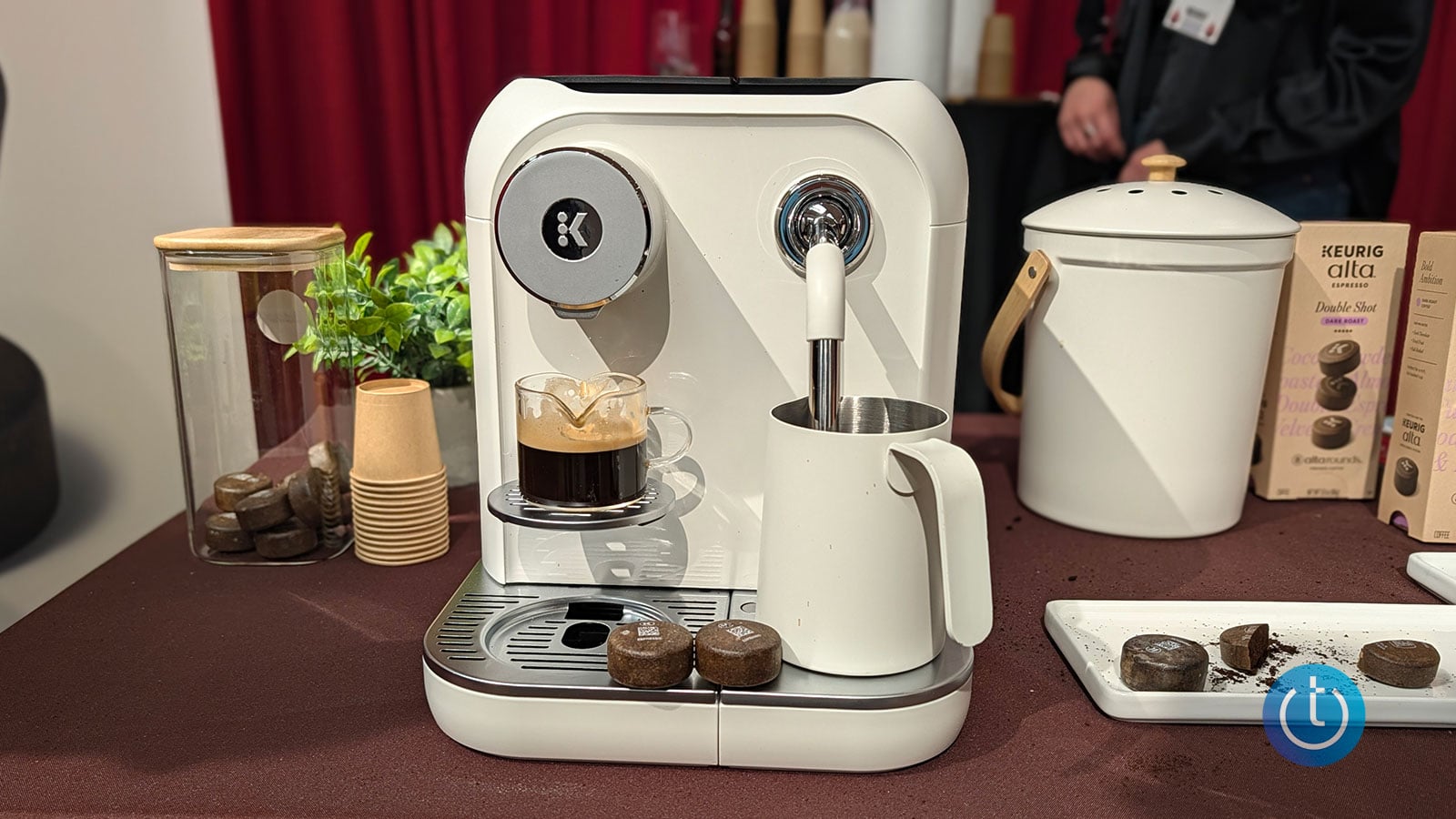
Keurig's new $499.99 Alta System takes on Nespresso with a coffee and espresso maker that uses compostable discs of pressed coffee instead of traditional plastic or aluminum capsules. Called AltaRounds, the discs can produce espresso, lattes, cappuccinos, and regular coffee. And because the brewer also works with existing K-Cup pods, Keurig owners won't have to throw out their current coffee supply.
I had the opportunity to try out the Alta in person prior to it going on sale, and it is positioned to be a competitor to Nespresso pods. But it isn't a bargain. A Single Shot AltaRound, comparable in size to a standard Nespresso OriginalLine capsule, costs $1.25, versus roughly $0.90 for a Nespresso capsule. And there are plenty of cheaper Nespresso-compatible options, including my favorite Roastesso Gourmet Cubanito, which costs just $.59 per pod on Amazon.
Each AltaRound is ground coffee pressed the way a barista tamps espresso into a portafilter (the handled basket on an espresso machine), then wrapped in a plant-based coating that includes alginate, a compound derived from seaweed. Keurig says the coating becomes flexible when wet and expands during brewing, which lets the brewer force water through the grounds at up to 10 bars of pressure for espresso.
For consumers concerned about the waste from disposable coffee capsules, the AltaRounds offer a meaningful advantage over Nespresso. They're certified for home and commercial composting, so the spent coffee and its plant-based coating can go directly into a compost bin. There's a catch, though: every AltaRound comes individually sealed in a foil-based freshness wrapper that isn't recyclable. Keurig says it plans to replace those wrappers with recyclable paper-based packaging in 2027. Once unwrapped, the rounds stay fresh on the counter for 30 days.
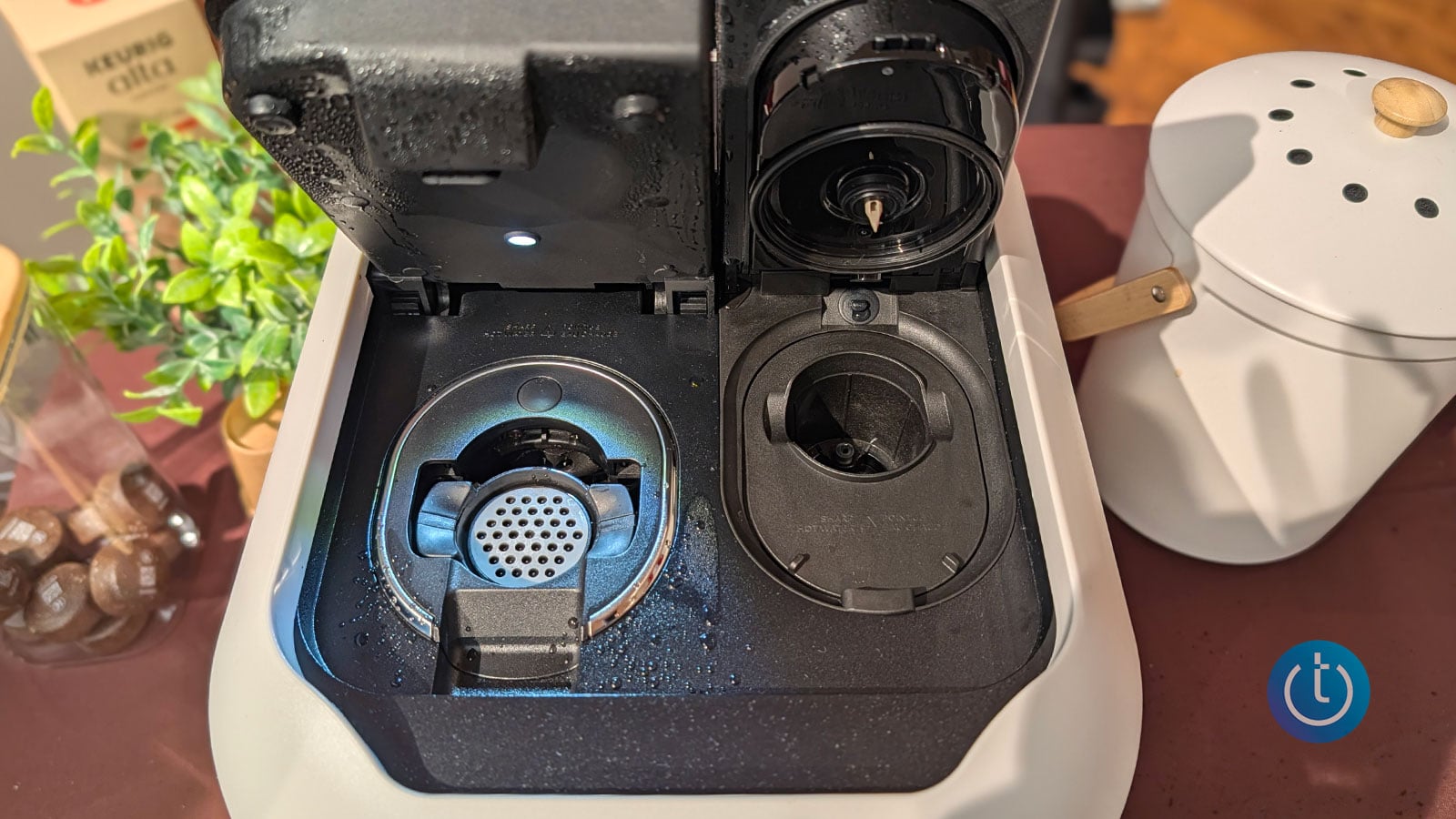
The espresso pods go into the brewer on the left and the K cups on the right.
Image credit: Josh Kirschner/Techlicious
Each AltaRound has a stamped QR code that the brewer reads to set the pressure, temperature, and water-to-coffee ratio automatically. When the brew finishes, the used round drops into a built-in chamber with the grounds and coating still in one piece. I picked up a round after brewing and it didn't crumble, making for easier cleanup.
Design and milk frothing
The Alta is a good-looking machine, with rounded edges, chrome accents, and the water tank tucked away in the back. At 10.84 inches wide, 11.77 inches high, and 19 inches deep, the Alta is a substantial countertop appliance. Its height should fit beneath most kitchen cabinets, but Keurig specifies nearly 17 inches of clearance to open the pod compartments fully. And at 19 inches deep, the machine will occupy most of the usable depth of a typical kitchen counter. It comes in three finishes: Sandstone (shown), Sandstone and Satin Stainless, and Graphite.
The full-color display lets you select your beverage of choice and control a handful of customization options, such as pressure, temperature, and coffee strength. There is also Wi-Fi on board, which Keurig says is needed for brewer updates (when new AltaRounds are launched) and new features updates.
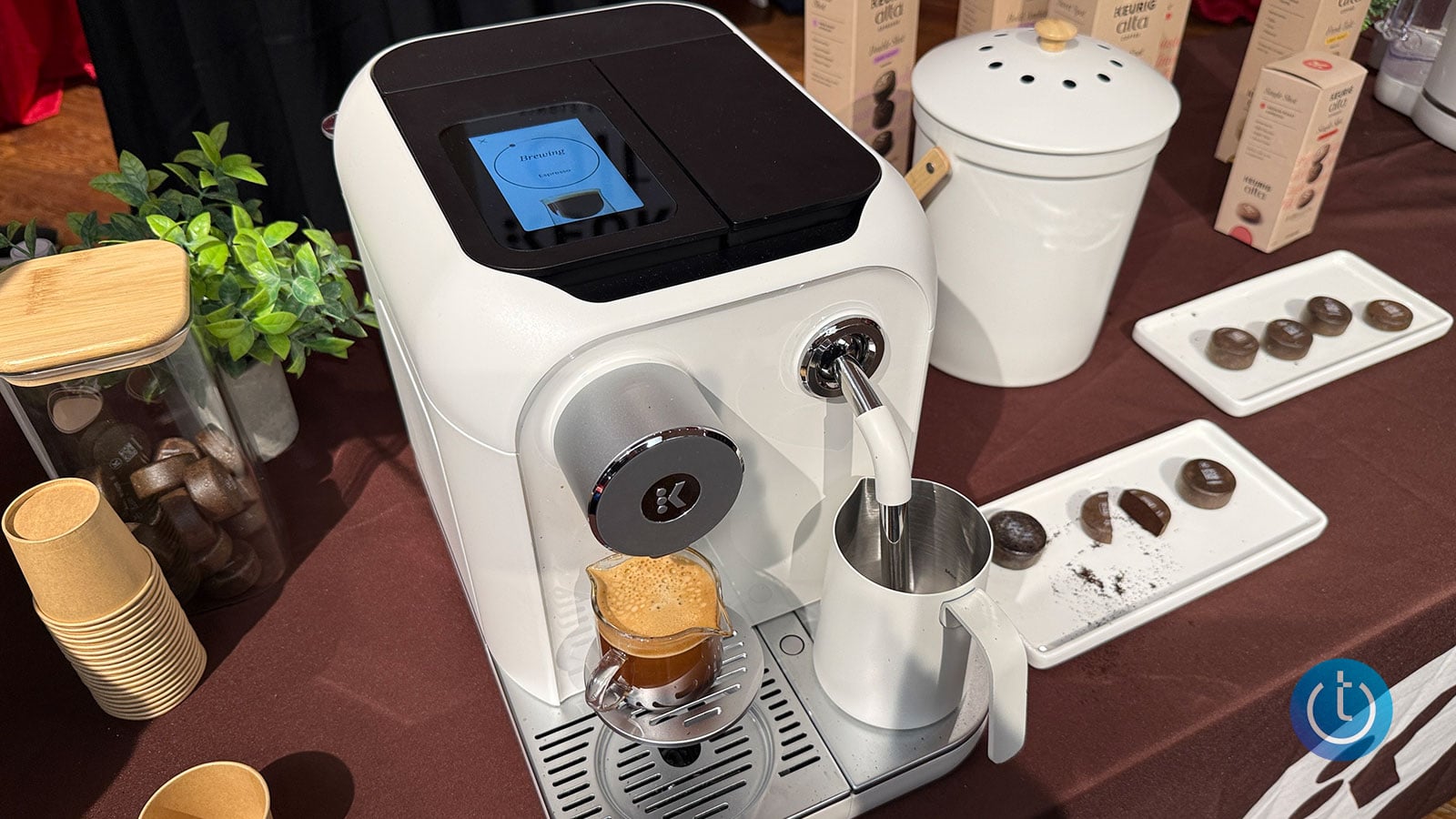
The Keurig Alta shown in the Sandstone finish with the control display on top.
Image credit: Suzanne Kantra/Techlicious
For lattes and cappuccinos, the Alta gives you the choice of letting its built-in frother handle the milk automatically or using the steam wand manually for more control. The automatic frother combines steam and whisking to create hot milk foam, or uses just the whisk for cold foam. It also adjusts its settings based on whether you're using dairy or plant-based milk.
Having both automatic and manual frothing options is an unusual feature for a pod-based espresso machine, and it's one I can really appreciate. I am definitely in the automatic camp, and just want the machine to do its thing. While my husband is never satisfied with the results from automatic frothers and prefers to go full barista with the wand.
The taste test
I tried the Keurig Double Shot, a dark roast double espresso. To my taste it was a little bitter and burnt (a problem that plagues many Nespresso pods, as well), but it had a thick, rich crema. That makes me want to try Keurig's lighter options: the Single Shot is a medium roast espresso, and Fresh Take is a light roast coffee.
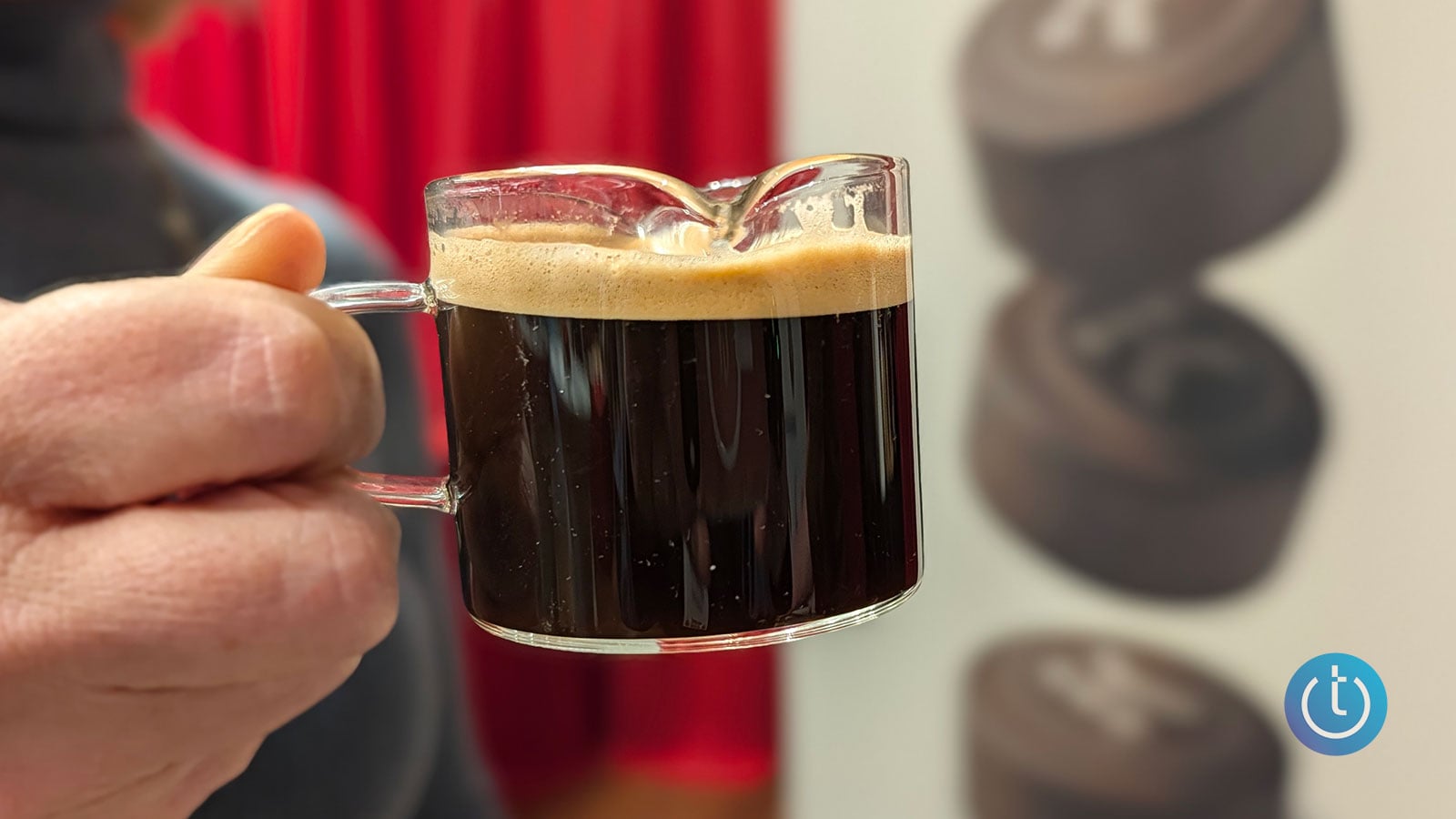
Image credit: Josh Kirschner/Techlicious
At launch, only Keurig branded AltaRounds are available, with six varieties: Single Shot, Double Shot, Bold Ambition, The House, Fresh Take, and Sweet Spot, a caramel-flavored coffee. But a company rep told me this should quickly expand to Peet's Coffee options (the two brands share the same Keurig Dr. Pepper parent company), likely early in 2027. Keurig expects more brands to follow as the system grows.
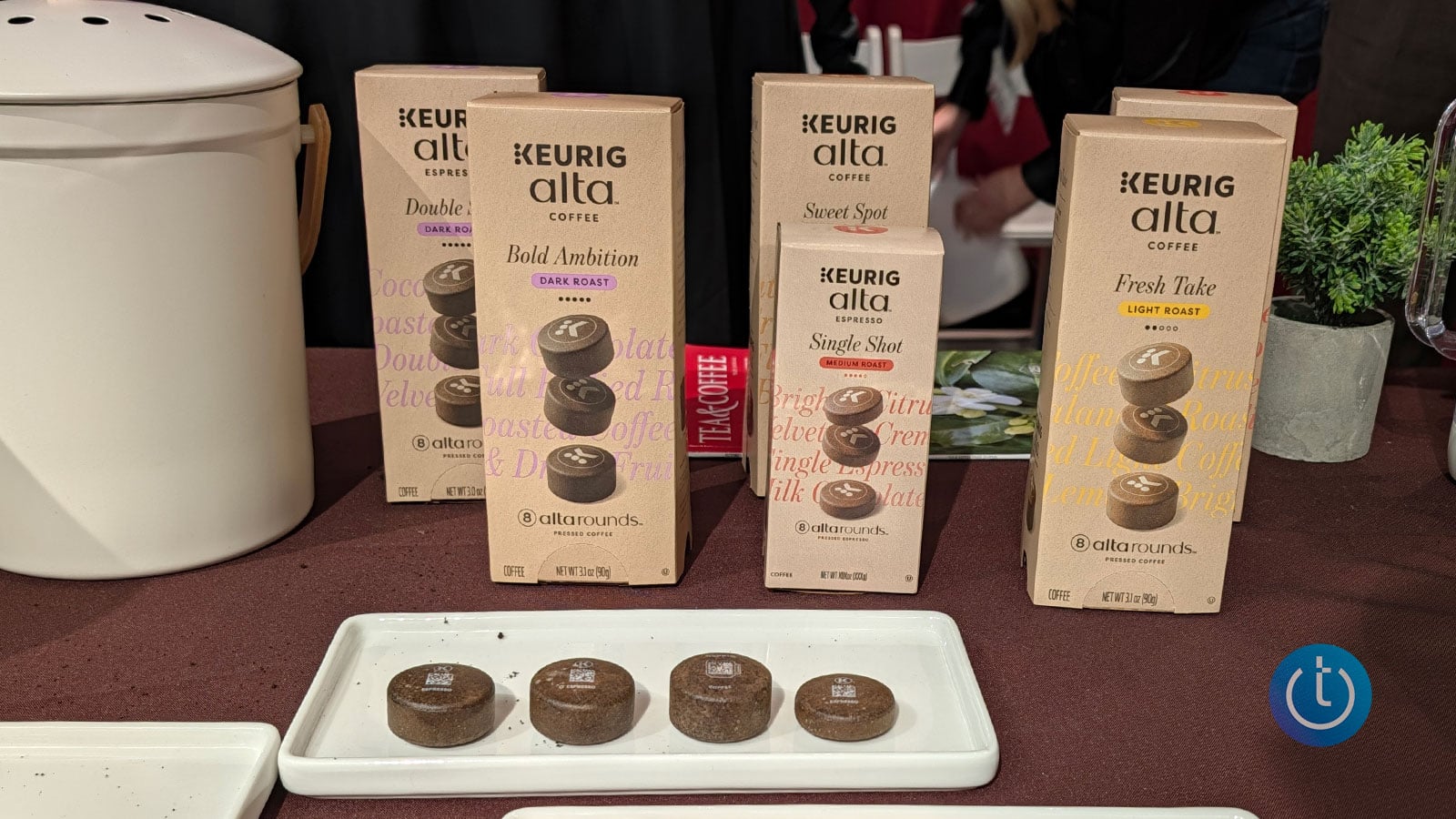
Image credit: Josh Kirschner/Techlicious
What it costs
The $499.99 launch price includes the brewer and four boxes of AltaRounds in the varieties you choose. After that, AltaRounds cost $10.99 for a box of eight, except the Single Shot, which costs $9.99. That works out to about $1.37 per AltaRound, or $1.25 for a Single Shot.
Keurig’s AutoRefresh subscription takes $1.50 off every box and ships free on orders of $49 or more in the contiguous U.S. The Alta is sold only at KeurigAlta.com for now, with retailers to follow over the coming months.
The Alta has a lot going for it, particularly the ability to make coffee and espresso in one machine, the flexibility of its milk frother, and compostable coffee rounds that avoid the waste of other capsules. But at $500 for the brewer and roughly $1.37 per AltaRound, it's a significant investment. And while the Double Shot espresso I tasted produced impressive crema, the flavor didn't win me over. I'll be interested to see whether the lighter roasts and upcoming Peet's varieties can deliver a better cup.

