
Smart locks are becoming increasingly popular for their convenience and security benefits. But they are not popular for the hassle of keeping the batteries full. That requires either swapping out disposables or running a charging cable to a spot where an outlet may not be handy.
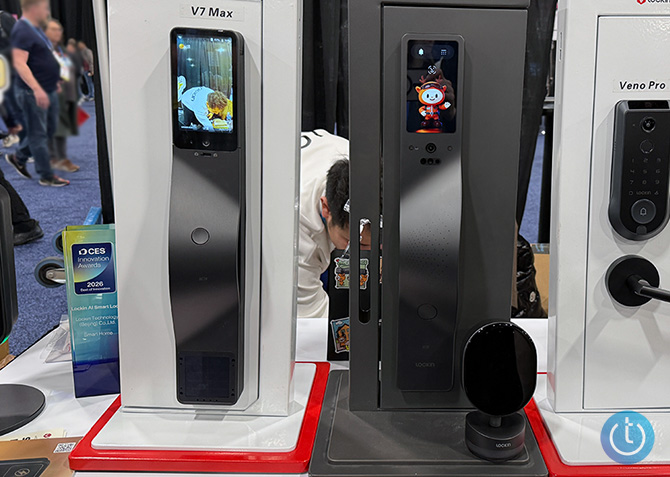
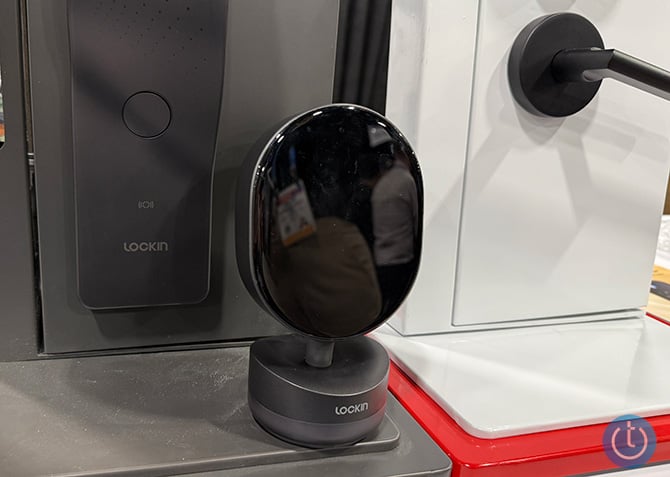
Lockin is offering a solution with the V7 Max. A wall-mounted transmitter beams an invisible, eye-safe infrared signal to the lock from up to 13 feet away, and a receptor in the lock converts the infrared energy into electricity. Lockin says this works regardless of weather, lighting conditions, or installation location, and that the internal battery can last for a week if wireless charging is interrupted. We were so impressed, we gave it our CES 2026 Editor’s Choice Award.
Read more: Are Your Smart-Lock Codes Safe? Survey Says Probably Not
The technology, called AuraCharge, is similar to laser power transmission systems being developed for military drones and satellites, but adapted for home use. The infrared beam has dual safety certifications from respected agencies TÜV Rheinland and SGS.
How it compares to other smart locks
Smart locks use either disposable AA batteries that last six months to a year, or rechargeable batteries charged via USB-C cable, like the SwitchBot WiFi Smart Lock Pro ($99.99, usually $139.99). The V7 Max is the first smart lock to receive power wirelessly while installed on the door.
This saves some hassle one or two times a year, but you pay for the convenience. While the company hasn't officially named a price, there has been some reporting of a $1,300 price tag. In addition, wireless charging requires mounting a separate transmitter inside your home within 13 feet of the lock, which adds installation complexity.
We’ve had IR technology in our homes for a long time, used in remote controls. However, we haven't seen it used in wireless charging. We'll need to test the V7 Max in real-world conditions to see how well it handles everyday obstacles like furniture, people walking by, and varying installation scenarios.
The V7 Max offers a lot more, however, which helps justify its premium price a bit. It includes triple biometric security with finger vein recognition, palm vein recognition, and 3D facial recognition. On paper, vein recognition is more secure than fingerprints because it scans blood vessel patterns beneath the skin that can't be copied from surfaces you touch. It also features the company’s LockinAI, which can detect deliveries, prevent theft by detecting people and alerting you, and tag recorded video so you can use keywords to search. Lockin has been making vein recognition locks since 2014 and has 42 million users worldwide, so the biometric and AI features are proven technology. What's new and untested is the wireless optical charging system. We’ll need to see how it works in practice.
Read more: No Drills, No Keys: SwitchBot’s Face-Unlock Smart Lock Is Renter-Ready
The lock has two HD cameras with panoramic view for video doorbell functionality and 5-inch touchscreens on both sides of the door. It connects to Google, Apple, Amazon, and Samsung SmartThings home systems via the Matter protocol.
Pricing and availability
The V7 Max will be available for preorder later this month, with shipping in early March. We’ve seen mentions of a ballpark price of $1,300 from publications like Phandroid, though official pricing has not been announced. For comparison, typical smart locks from Yale and Schlage cost $180 to $260. Lockin's own Veno Pro, which includes palm vein recognition and a camera but uses standard batteries, costs around $350. The premium the V7 demands is for the triple biometrics, dual touchscreens, and 4-meter wireless charging range.
[Image credits: Techlicious]