


Image credit: Meta
Meta wants you to carry a second gadget just to talk to its AI, and it's shaped like a Tamagotchi.
Mark Zuckerberg unveiled Muse Charm at Meta's Connect conference this week, describing it as "a delightful and fun device built for you to talk and interact with your Muse, the personal AI agent Meta has been building into its apps and hardware. The pitch is simple: skip unlocking your phone and opening an app, just talk to the pocket-sized device clipped to your keychain or bag.
Muse Charm runs on what Meta calls a state-of-the-art real-time voice model, so conversations are meant to feel closer to talking to a person than issuing commands to a voice assistant. A small screen shows an animated avatar reacting in real time as you talk, which enhances the Tamagotchi comparison. Built-in 5G let's you use Muse Charm from anywhere.
Meta hasn't set a price or a firm release date, only "we'll have more to share later this year," pointing to a possible holiday-season launch.
Muse Charm arrives alongside a broader push at Connect: Meta also showed off a redesigned Ray-Ban Meta Gen 3 ($479.00), a new pair of audio-only Ray-Ban Meta Audio glasses, and a 100-gram VR Glasses, all built around the same Muse agent. The Charm is the version for people who don't want a camera on their face just to get AI help, a tacit admission that Meta's camera-equipped glasses still face resistance.
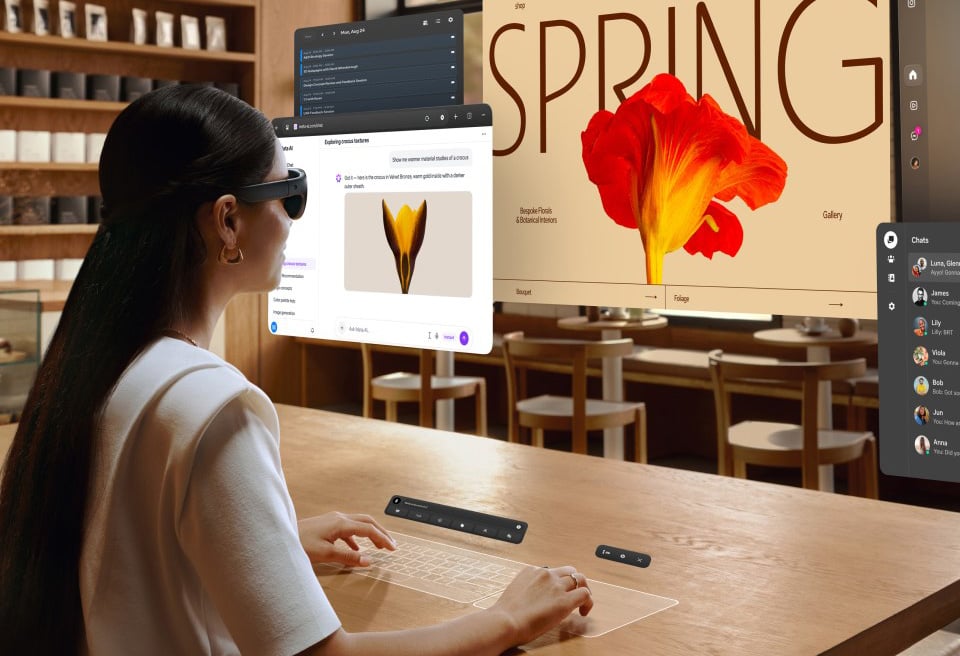
Image credit: Meta
I'm skeptical a standalone AI gadget will take off, but Meta isn't the first company to bet it would. Humane's AI Pin launched in 2024 to bad reviews and was dead within a year, and Rabbit's R1 fared little better once reviewers found most of its promised abilities half-built.
Meta has deeper pockets and an existing AI product in Muse to build on, which gives it a real advantage neither startup had. It doesn't change the core problem, which is that a phone already does everything a keychain gadget is promising, and asking someone to carry, charge, and remember a second device is a hard sell no matter how good the voice model is.

