

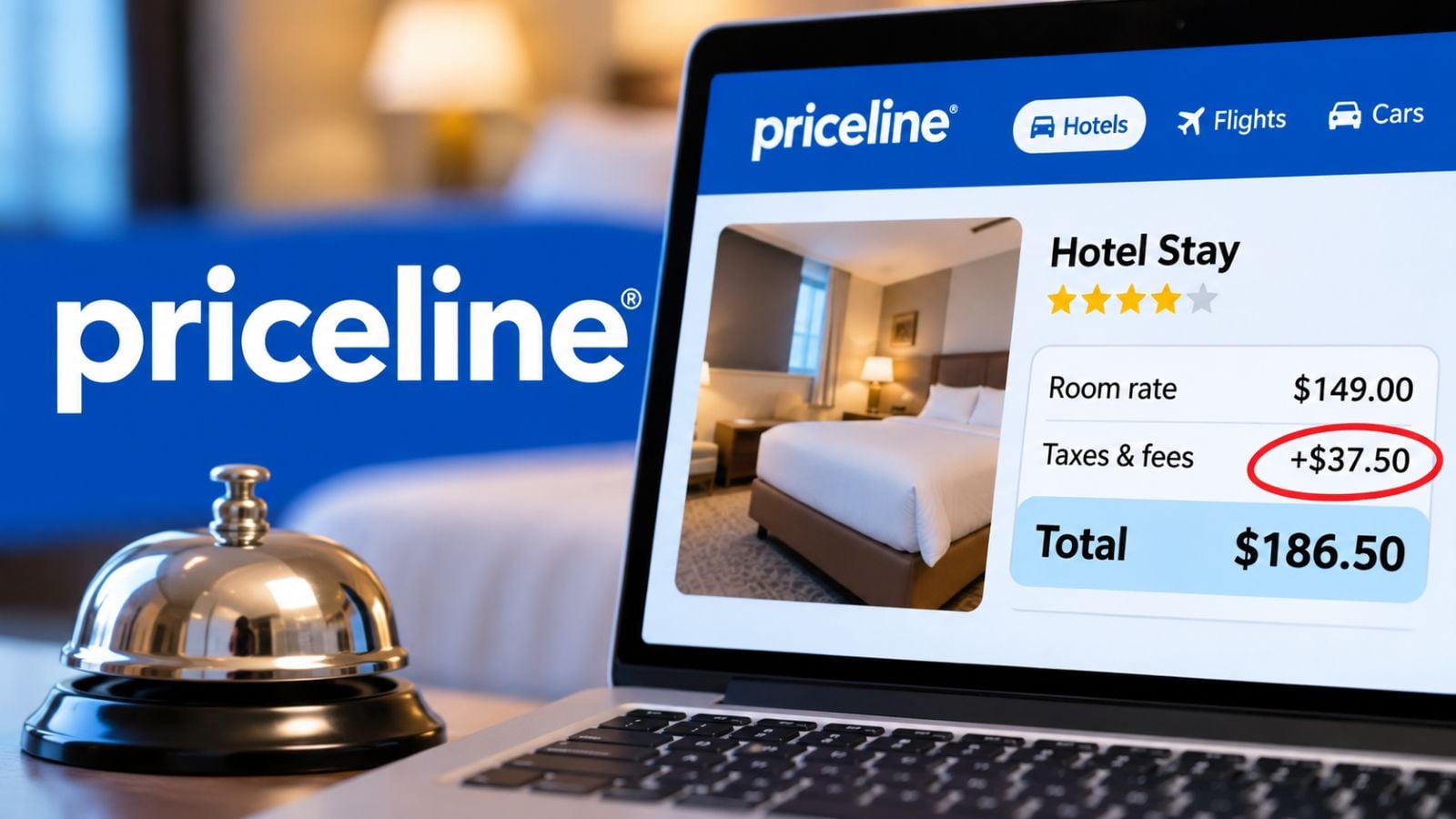
Illustrative Priceline booking screen and prices, not actual Priceline charges.
Image credit: Josh Kirschner / Techlicious via ChatGPT
Booking Holdings, the parent company of Priceline, cut its third-quarter revenue by $900 million and recorded another $100 million loss over a Federal Trade Commission case involving alleged unfair or deceptive hotel booking practices, according to its quarterly SEC filing. The company says a potential settlement would likely include refunds for some U.S. travelers.
FTC staff told Priceline in July that they intended to recommend filing a complaint against the company and one of its business-to-business partners, alleging unfair or deceptive practices involving fee disclosures, customer support, and billing. Priceline is negotiating with the agency, but no settlement has been reached, and litigation remains possible. The $900 million revenue reduction and $100 million expense are accounting charges, not money already paid to consumers or the FTC.
The SEC filing doesn't name the affiliate. Reuters reported that the FTC has been examining Priceline's relationship with Guest Reservations, a third-party website that advertises stays at specific hotels and often charges higher prices and fees than booking directly. The agency is looking at whether the site violates a rule against impersonating other businesses, along with other possible fee violations. An FTC spokesperson declined to comment on the latest filing, and Guest Reservations' own site says it uses hotel trademarks and information only to help customers book rooms.
Booking Holdings is also a defendant in a lawsuit filed by San Francisco (PDF) in late July. The city alleges that its Priceline Partner Solutions division supplies hotel inventory to Guest Reservations and BookOnline.com, whose ads and websites are designed to look like hotels' own booking portals.
According to the complaint, customers are typically required to pay in full upfront, often with little or no ability to cancel, and can end up paying substantially more than they would booking directly. In one comparison cited in the lawsuit, a room at San Francisco's Palace Hotel cost $775 through Guest Reservations, compared with $419 when booked directly through Marriott – an 85% markup.
Consumers have been complaining about these practices for some time. Guest Reservations has drawn more than 1,100 complaints to the Better Business Bureau, including reports from customers who believed they were booking directly with hotels, encountered unexpected fees, or had trouble getting help with their reservations. FTC Chairman Andrew Ferguson said at a Reuters event in September that many consumers "don't notice until they've checked out and they've paid exorbitant fees."
How to tell whether you're on the hotel's site
For many consumers looking for a hotel reservation, search ads are where the confusion starts. The FTC's June travel scam alert warns that bad actors sometimes use paid ads that put their phone number next to a well-known company's name, or that link to a website that only looks like it belongs to a hotel brand. The agency advises scrolling past the paid results and checking that you have the right website or contact information for the business. Even better, type the hotel's web address directly into your browser if you know it.
A URL that includes the hotel's name isn't necessarily its official website. For example, an address ending in guestreservations.com or bookonline.com is a third-party booking site, even if the hotel's name appears at the beginning. Before entering your payment information, compare the full price, including taxes and fees, and check whether the reservation can be canceled or refunded.
Hotel phone numbers deserve the same scrutiny. The San Francisco suit alleges that the sites list local phone numbers for the hotel's area and that the agents who answer don't say they work for a third-party platform. Getting the number from the hotel's own website, rather than from a search ad, avoids that problem. If you've already booked and aren't sure who you booked with, call the hotel at that number, give your confirmation details, and ask whether the reservation is in its system.
These allegations don't apply to all third-party booking sites. Aggregators, such as Expedia, can offer deals beyond what you receive booking directly with a hotel. However, it is always wise to check both sites to confirm who is giving you the best price, and what restrictions may apply.
Read more: These noise-canceling sleep buds saved my business trip

