

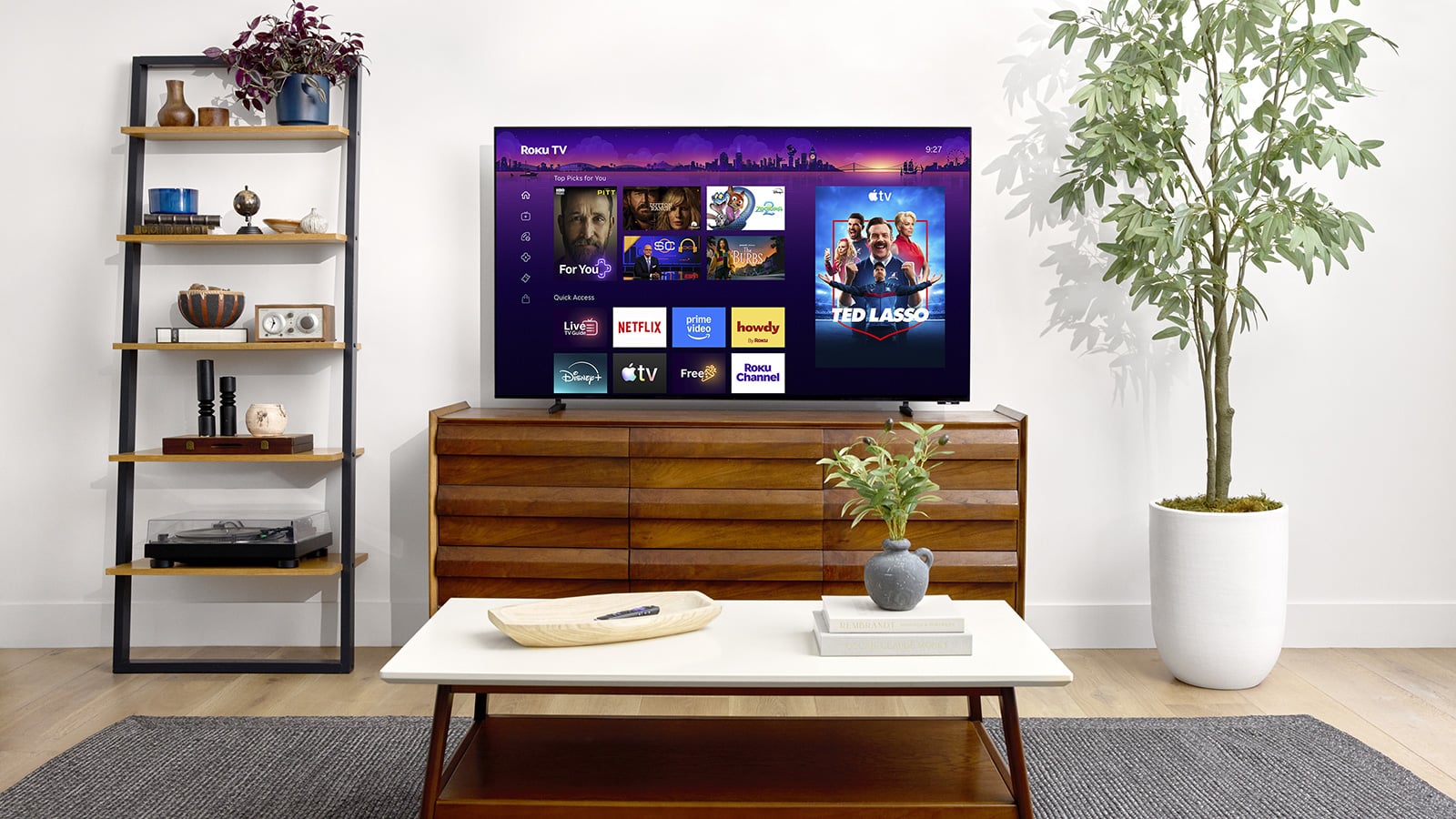
Image credit: Roku
Roku is putting its streaming software on an OLED screen for the first time. The company launched two new televisions today, the Roku Pro Series OLED TV and the Roku Pro Series LX OLED TV, with the Pro Series starting under $1,000.
OLED panels light each pixel on their own, so the screen can switch individual pixels off entirely for true black. LCD and QLED sets, by contrast, dim a backlight (or array of backlights) sitting behind the panel, which is why their blacks can look more like dark gray. That difference is most obvious in dark scenes: a thriller shot mostly in shadow, or the black bars around a widescreen movie, hold their depth instead of glowing faintly.
The Roku Pro Series OLED TV is available in 55-inch ($999.99) and 65-inch ($1,199.99) sizes. It runs a 4K OLED panel at 120Hz, with Dolby Vision, HDR10+, and HLG support. Wi-Fi 5 handles the connectivity, and Dolby Atmos handles the audio. Ports include four HDMI 2.1 inputs (one with eARC), USB-C, USB-A, an optical audio output, and a cable and antenna jack. Automatic Game Mode pairs with AMD FreeSync Premium and variable refresh rate to cut down on lag and screen tearing, whether the source is a console or a gaming PC.
The step-up Roku Pro Series LX OLED TV, also in 55-inch and 65-inch sizes, won't ship until October, at a $1,299 starting price. It pushes the refresh rate to 144Hz with variable refresh rate, has a brighter picture with a wider color range, and adds an anti-reflective polarizer to cut down on glare. It also upgrades to Wi-Fi 6 and ships with a Roku Voice Remote Pro ($29.52) that swaps the base model's push-to-talk voice control for hands-free voice and adds a rechargeable USB-C battery.
Roku calls its picture tuning Smart Picture Max, and it works the way most auto-calibration systems do. The TV reads what's on screen and adjusts contrast, color, and motion settings on the fly, so a viewer never has to dig through a picture menu before a movie or a game.
Everything else here is standard Roku, just wrapped around a nicer panel. Setup uses a tool-free stand with built-in cable straps, the home screen surfaces a viewer's usual apps up front, and a single Roku account can sign up for, manage, and cancel more than 70 subscriptions, including Max, Paramount+, and Apple TV+, from one place. Both remotes have backlit buttons and customizable shortcuts, there's Bluetooth headphone support for late-night viewing, and a remote finder built into the TV for anyone who's lost it in the couch cushions. The TVs themselves get an ultra-thin metal bezel and a sleek profile.
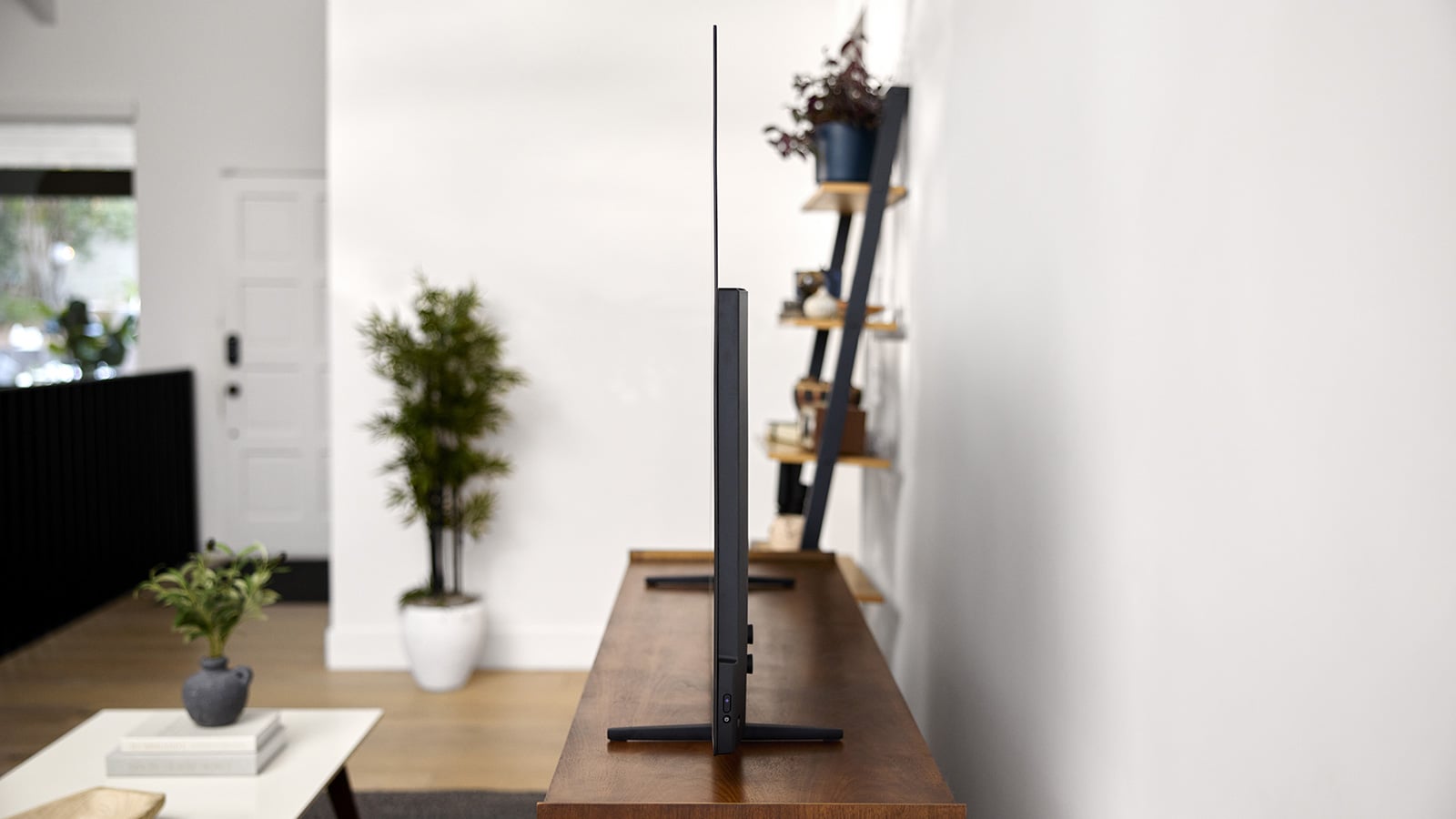
Image credit: Roku
Roku's TVs have never been built to go up against Samsung's, LG's, or Sony's flagship lineups. What it's selling instead is a solid OLED picture at a mainstream price, wrapped in the Roku interface people already use every day. For casual gamers in particular, the Pro Series LX's 144Hz OLED panel, FreeSync Premium support, and variable refresh rate cover what most people need for smooth play, without asking them to learn a new platform or pay flagship prices to get it.
Read next: Which Roku should you buy? All the Roku streaming players compared

