

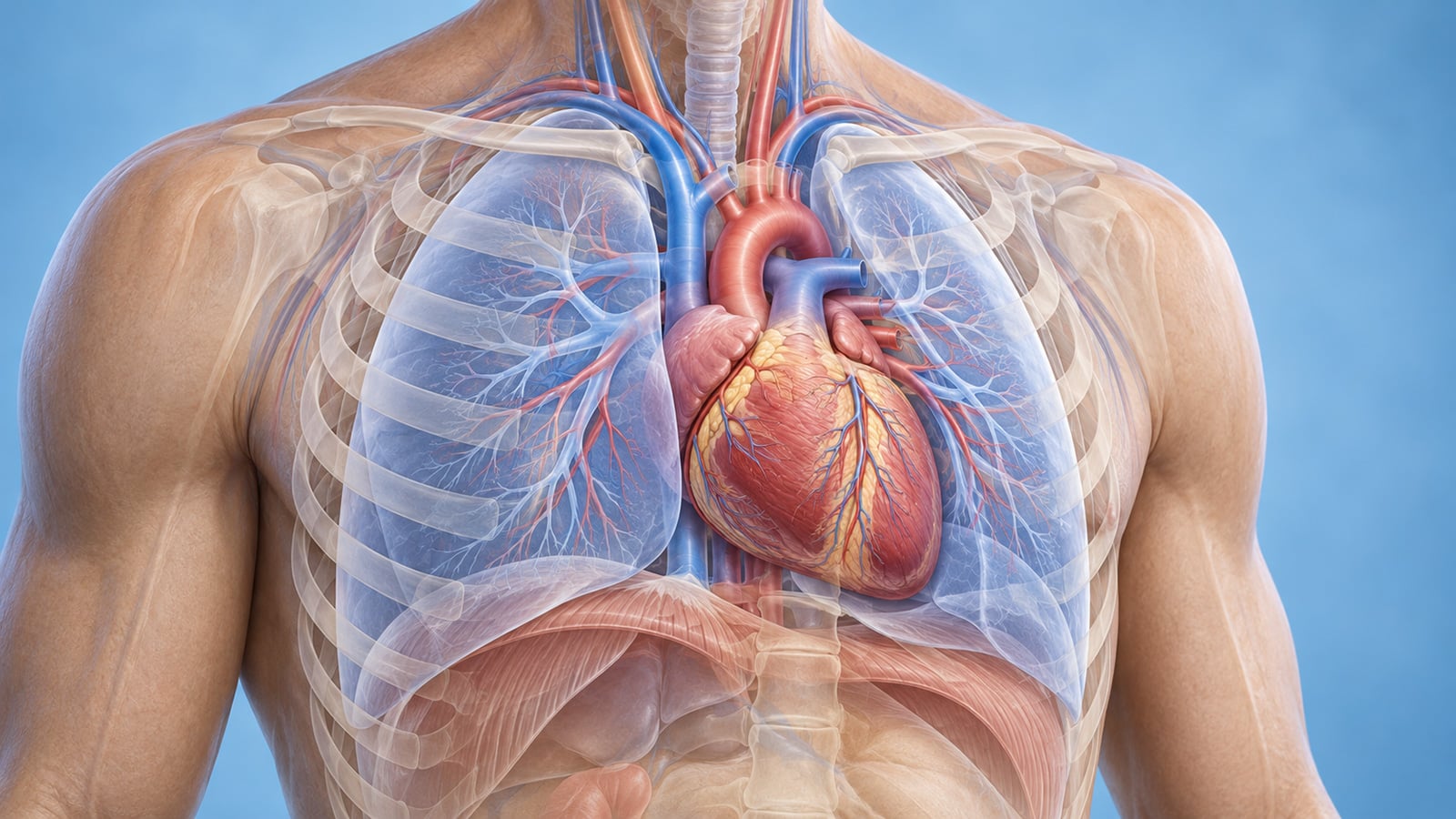
Image credit: Suzanne Kantra/Techlicious via ChatGPT
Engineers at Johns Hopkins University have built a pair of magnetic robots, each about as wide as a pencil tip, designed to deliver antibiotics directly to infected heart tissue. The prototype targets endocarditis, a bacterial infection of the heart's inner lining or valves that affects as many as 50,000 people in the U.S. each year and often resists the standard weeks-long course of IV antibiotics.
Those drugs frequently fail because they spread poorly to the infection site. Doctors can then raise the dose, which risks toxicity, or operate on a damaged heart valve, which carries serious risk of its own. The Hopkins team's robots, called millirobots because of their size, carry the medicine to the infection site themselves.
The robots – each about as long as a grain of rice – work in pairs. A needle module with a barbed tip anchors in heart tissue at the infected spot and serves as a docking station. A second robot, the drug module, carries the medicine, docks with the needle module magnetically, and releases the drug slowly.
A catheter would carry the robots into the heart, and from there an external system of electromagnetic coils steers both wirelessly. The magnetic fields supply all the power, so the robots carry no onboard batteries or motors, senior author Axel Krieger said.
Because the needle module stays in place, the drug module can be swapped out for repeat doses.
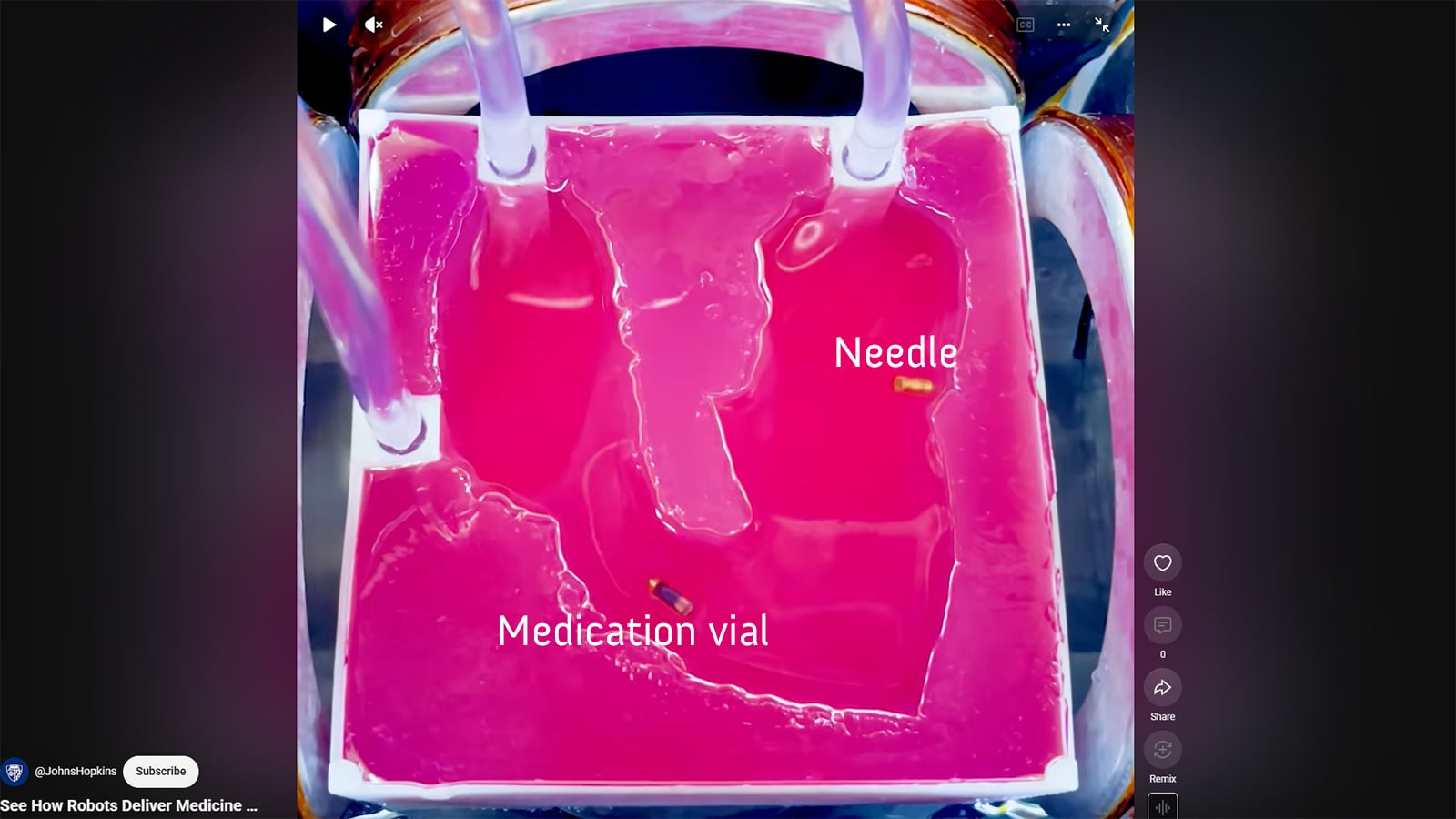
Johns Hopkins engineers test a pair of robots in a gel model of the heart to deliver medication.
Image credit: Johns Hopkins
The team tested the system in a gel model of the heart with pulsing fluid flow, and in excised pig heart tissue. The robots navigated autonomously, even against simulated blood flow.
First author Anuruddha Bhattacharjee, estimated that the procedure might take 10 minutes to an hour, compared with four to six weeks of IV therapy today. He said treatment could shrink to a day or less "if everything works well."
The team's next step is testing in more realistic phantom hearts that contract and beat. In addition to the heart, the researchers also believe the robots could deliver targeted drugs to fight cancer and other diseases.

