

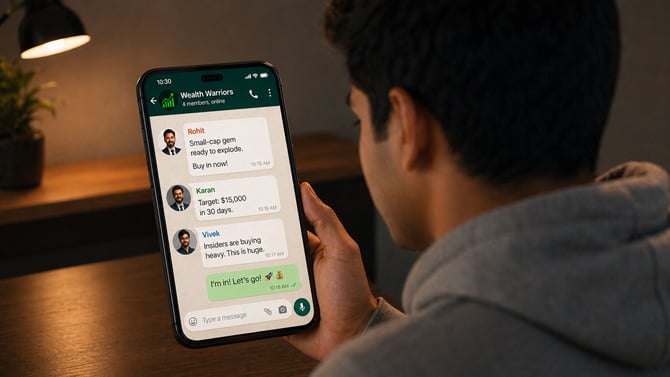
If someone in a WhatsApp group is telling you how much money they're making in crypto or foreign exchange trading, stop. That group was almost certainly built to rob you. The Federal Trade Commission says investment scams that started on social media cost Americans $1.1 billion in 2025 – more than half of the $2.1 billion total lost to social media fraud last year.
The playbook is consistent. A scammer contacts you through an ad, a post, or a direct message offering to teach you how to invest. Once they have your attention, they direct you to a platform that looks professional and legitimate. You create an account. You watch your balance grow. You might even withdraw a small amount early on: that's intentional, designed to build your confidence before you put in serious money. Then the platform goes dark, and so does your money.
The WhatsApp group version is particularly cynical. Scammers pack these groups with fake "successful investors" posting fabricated returns and testimonials. The social proof feels real because it's designed to. These aren't amateur operations.
What makes this especially painful: some people who lost money reported being targeted a second time by scammers claiming they could recover the lost funds – for a fee. The FTC calls it a secondary loss, and it's common enough to be worth flagging specifically.
The FTC's advice is simple. Never let someone you met on social media direct your investment decisions, regardless of how credible they appear or how long you've been in contact. If an investment pitch arrived through a social media ad or message, treat it as a red flag, not a golden opportunity.
Read next: How to freeze your credit to stop identity theft
[Image credit: Suzanne Kantra/Techlicious via ChatGPT]

