

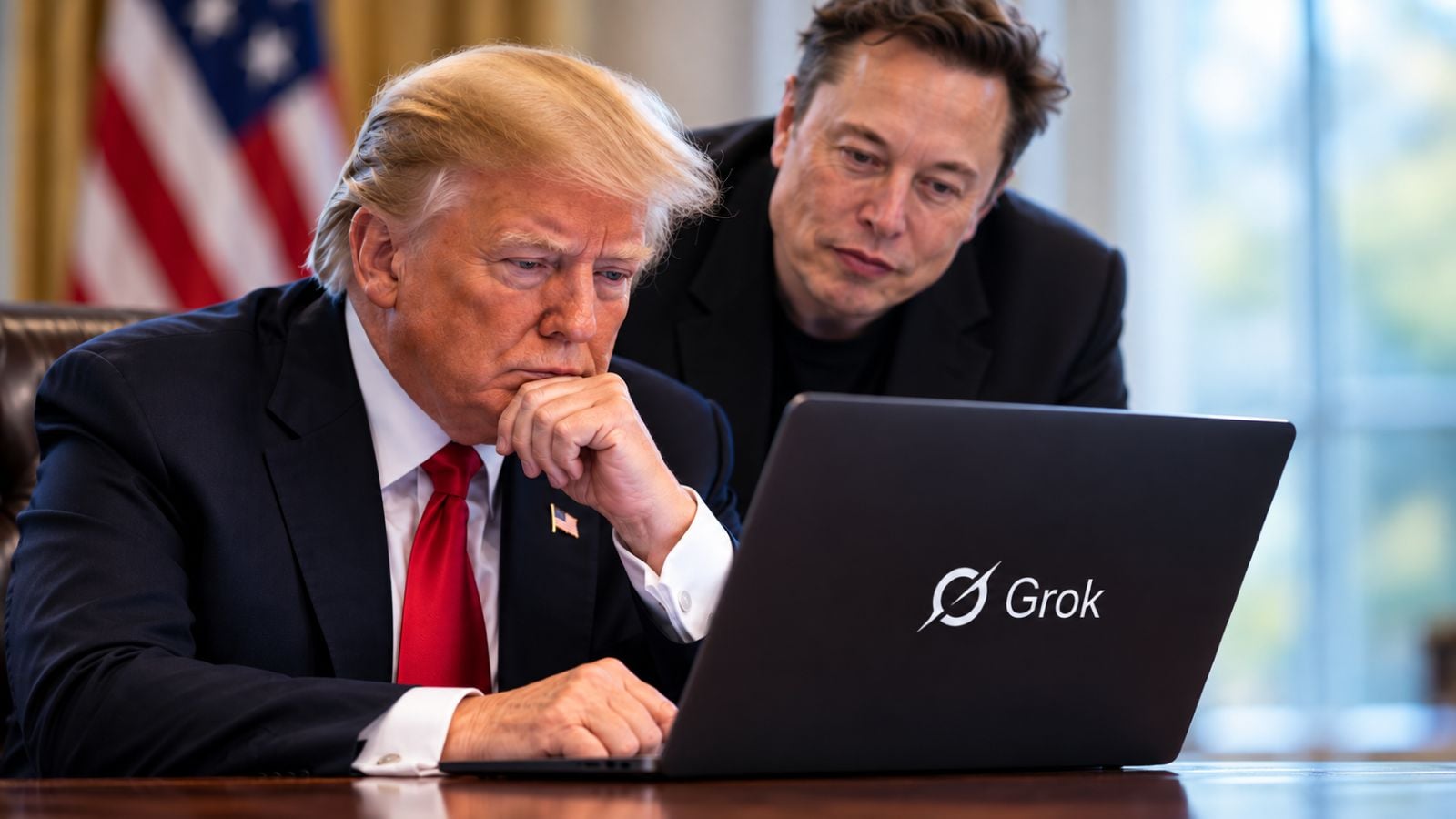
Image credit: Techlicious via ChatGPT
About a month before U.S. forces captured Venezuelan President Nicolás Maduro, President Donald Trump reportedly spent hours questioning Elon Musk's AI chatbot, Grok, including asking how Venezuelans would react if the United States captured their president. According to a new TIME report, the chatbot predicted that many Venezuelans would celebrate Maduro's removal.
It's an unusual example of a president consulting a consumer AI chatbot about a consequential foreign policy question. And while there's no evidence that Grok directly influenced the military operation, the account raises important questions about the growing role of artificial intelligence in government decision-making.
According to TIME, Trump met privately with Musk in the Oval Office in December 2025. During the meeting, he spent hours asking Grok questions about his presidency and legacy, according to an official who was present, including the one about how Venezuelans would respond to the capture of Maduro. When the U.S. military captured Maduro on January 3, and celebrations followed, Trump reportedly came away impressed by Grok's apparent accuracy.
But an AI chatbot getting a prediction right doesn't necessarily mean it's a reliable source of information for decisions with potentially far-reaching consequences.
Generative AI systems are designed to produce responses based on patterns learned during training and information available to them. They can provide useful analysis and synthesize large amounts of information, but they can also generate inaccurate information, omit important context, and express unwarranted confidence in their conclusions. As OpenAI has acknowledged, even sophisticated language models are susceptible to hallucinations, producing plausible answers that aren't supported by the facts.
Determining how millions of people might react to the removal of a political leader is particularly complicated. Grok's reported prediction may be consistent with what followed, but says little about the potential consequences of military intervention, the prospects for political stability, or the long-term interests of the Venezuelan people.
It's also unclear whether Grok's answers affected Trump's decision. TIME's account establishes that the conversation took place before the operation, but it doesn't establish what influence, if any, the chatbot had on the president's thinking or suggest that Grok was involved in military planning.
The reported conversation comes as the Trump administration is expanding its use of AI across the federal government, including in national security. As TechCrunch noted, the Pentagon has reportedly used a government version of Grok in military operations during the Iran war.
Trump has also embraced the technology while resisting calls for additional oversight. In September, amid growing concerns from AI researchers and industry executives about potential risks, he dismissed the need for additional safeguards in a Truth Social post.
"The only control or 'guardrails' that AI needs is a STRONG AND SMART (High IQ!) PRESIDENT, and the U.S.A. has that, in spades!" Trump wrote.
The administration's broader approach to AI regulation is a separate policy question from how government officials use AI-generated information. But both make the need for transparency and accountability increasingly relevant.
AI can be a valuable tool for researching complicated issues, exploring potential scenarios, and identifying information that decision-makers might otherwise overlook. The challenge is distinguishing those useful capabilities from the appearance of expertise that a chatbot's confident answers can create.
TIME's report doesn't establish that AI determined the outcome of a military decision. It does, however, illustrate how readily AI-generated answers can enter discussions at the highest levels of government, even when the consequences of getting those answers wrong could extend far beyond an ordinary chatbot conversation.

