

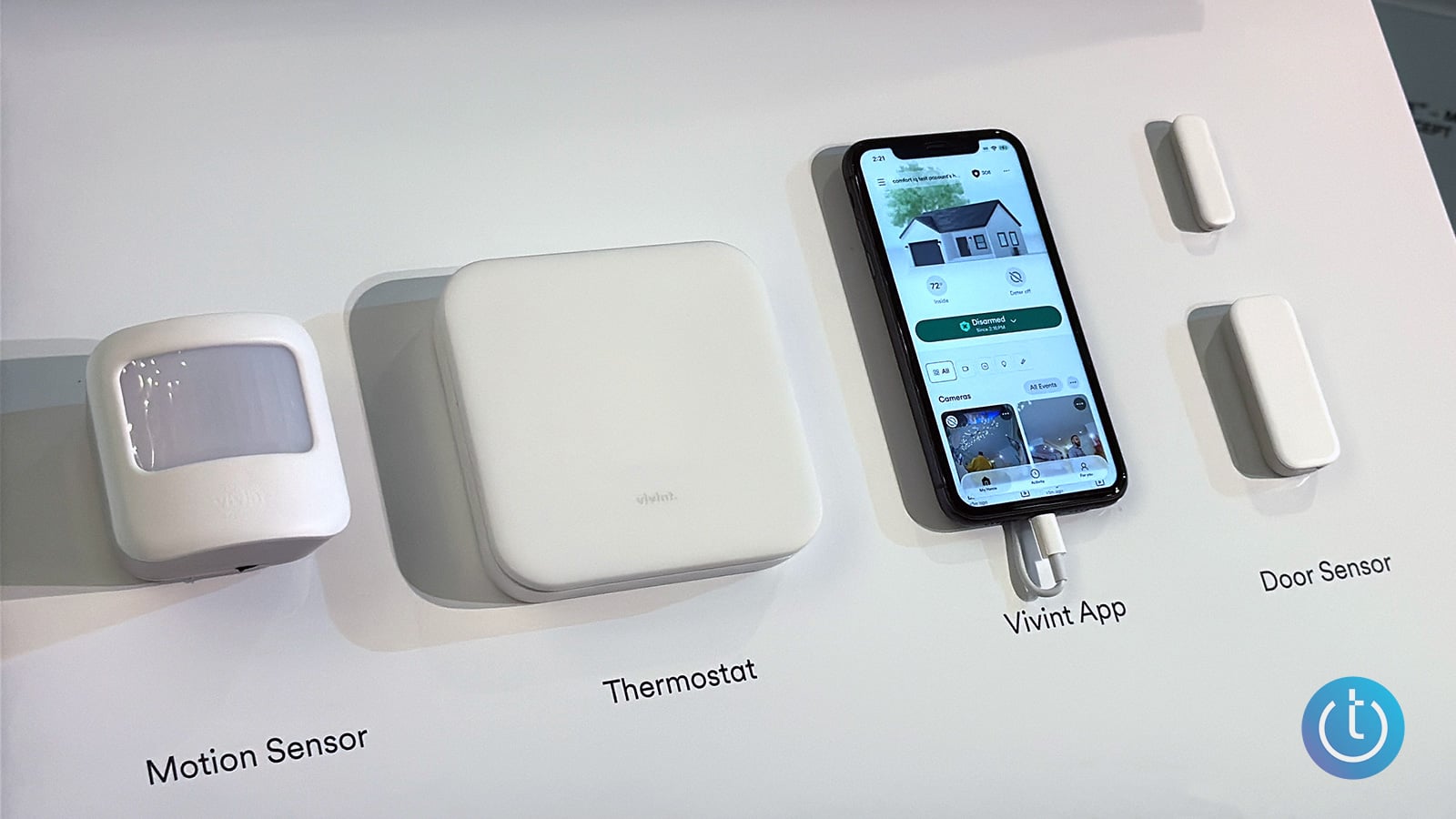
Image credit: Stewart Wolpin/Techlicious
For the last three years, U.S. residential electricity prices have been rising faster than inflation, thanks to a costly combination of higher fuel prices, grid upgrades, extreme-weather preparation, and growing power demand from proliferating, controversial AI data centers.
With no end to rising home energy costs in sight, consumers could use some relief.
Vivint thinks AI can help provide it. The smart home and security company claims its new AI-powered Comfort IQ system can save homeowners an average of $210 and up to $300 a year in heating and cooling costs. Comfort IQ became available nationwide via Vivint dealers at the end of September.
Rather than relying solely on a thermostat’s schedule or its own occupancy sensor, Comfort IQ draws information from motion, door/window, and other sensors already distributed throughout a Vivint smart home. Comfort IQ’s AI spends about two weeks learning household occupancy patterns and heating and cooling behavior, then continues to adjust its predictions every 24 hours based on when people are home, their comfort preferences, and how efficiently the individual home and its HVAC system respond.
Vivint joins the party
Vivint isn’t alone in making thermostats smarter with information from elsewhere in the home, or in promising substantial annual energy savings.
Alarm.com combines its smart thermostat with its security, motion, and door/window sensors, geolocation, and machine learning, leading to typical savings of around 8% on heating and cooling costs, or about $50 a year, according to the company.
Ecobee’s eco+ system uses remote temperature and occupancy sensors, geofencing, and learned household routines, and the company claims savings of up to 26%, or as much as $284 annually.
A smarter smart thermostat?
Comfort IQ attempts to learn what “normal” looks like for each household: when the house is occupied, what each occupant prefers, and how quickly its HVAC system can bring temperatures back to the preferred level.
“Every home looks different,” explained Jim Nye, Vivint’s chief product officer, noting differences in insulation and HVAC equipment and whether a system is under- or oversized. If a thermostat cuts heating or cooling too aggressively while a home is vacant, an inefficient HVAC system could consume much of the anticipated savings trying to restore the desired temperature later.
The older Alarm.com and Ecobee whole-home smart thermostat systems already provide similar, and in some instances additional, intelligence.
Alarm.com’s current smart thermostats evolved from a whole-home model introduced in 2015 and use information from security and other sensors around the home to learn activity patterns. Its 2018 model added more machine-learning capabilities. Alarm.com has also used smartphone geofencing for thermostat control since 2013, allowing the system to reduce HVAC use when residents leave and start restoring the preferred temperature as they approach home.
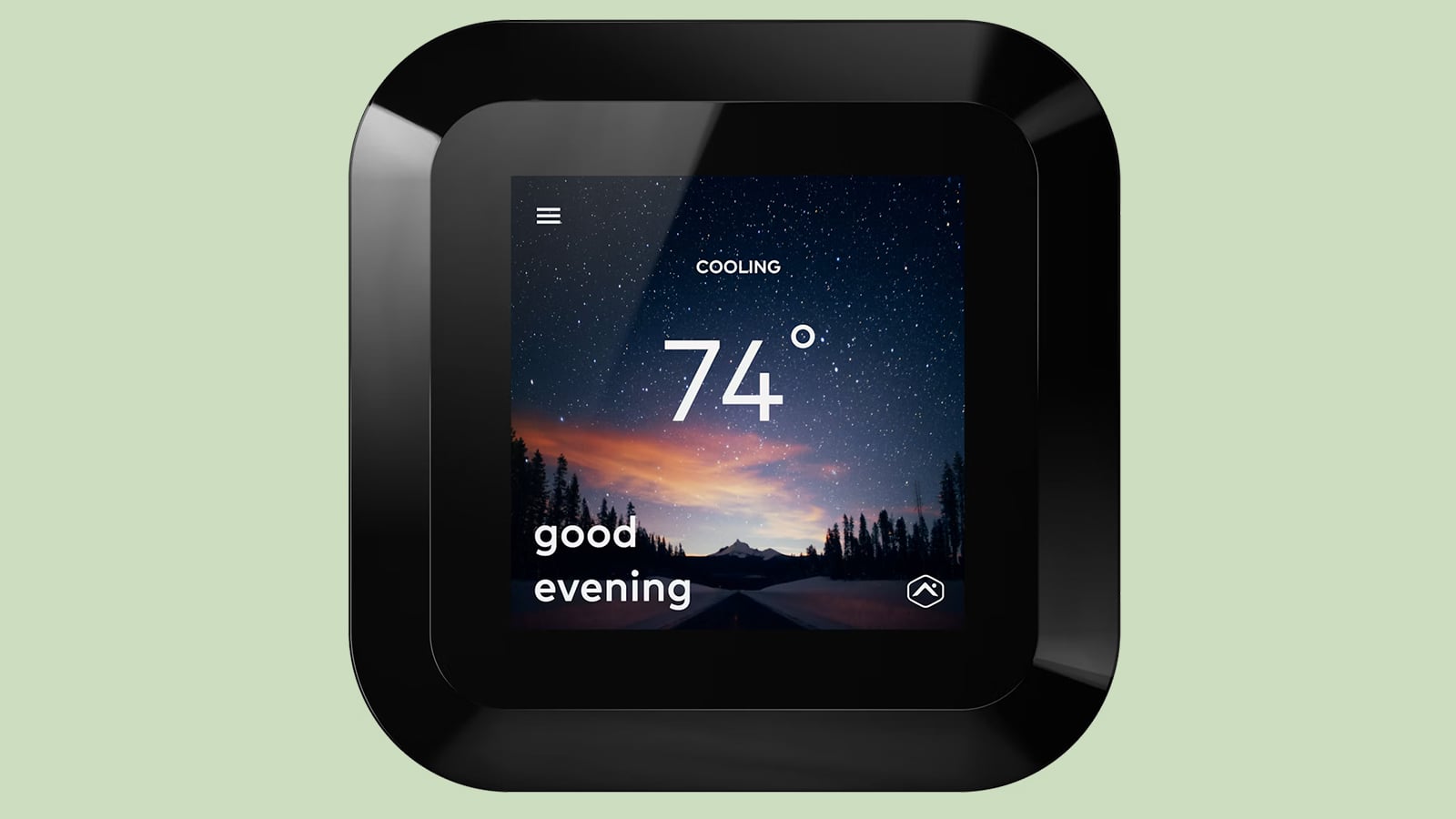
Alarm.com's Smart Thermostat HD
Image credit: Alarm.com
Vivint doesn’t currently offer geofencing, although the company says it’s looking to add it. But Vivint executives argue that Comfort IQ’s collection of in-home sensors can provide a more direct indication of whether anyone is actually there rather than depending on where someone’s phone happens to be.
Ecobee’s eco+, introduced in 2019, similarly learns household behavior and combines occupancy and remote temperature sensors with factors such as humidity, weather, and local energy conditions.
Both Ecobee and Alarm.com also offer remote temperature sensors that can help manage comfort in specific rooms, something Comfort IQ currently doesn’t emphasize.
Comfort control and service
Comfort IQ can be controlled through the Vivint app or directly from its deceptively blank white thermostat, whose settings and controls illuminate when you touch its surface. Alarm.com and Ecobee similarly provide both thermostat and app controls.
One potential Vivint advantage is its integrated services. Vivint handles installation, configuration, security monitoring, and service with its own technicians; installation and configuration are included in the hardware price, and security monitoring is covered by the monthly fee.
By comparison, Alarm.com technology is sold, installed, and serviced primarily through independent licensed service providers, while Ecobee’s smart thermostats are designed for DIY installation, with professional installation available for an additional cost.
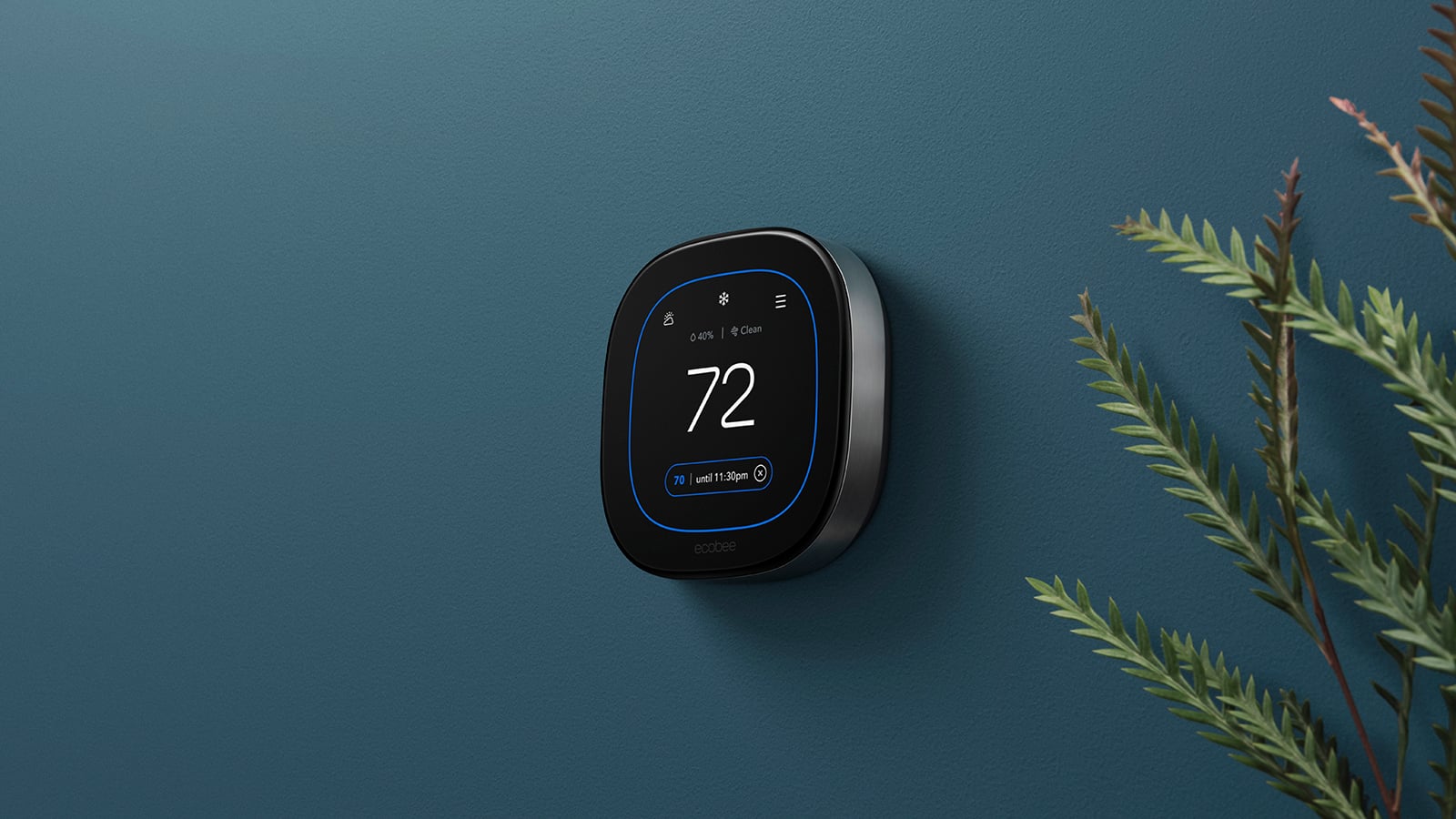
Ecobee's Smart Thermostat Premium
Image credit: Ecobee
How much can you really save?
Vivint’s savings claims come from an independent, year-long study conducted by Tierra Resource Consultants that monitored 50,000 homes across five major U.S. climate zones.
According to Vivint, Comfort IQ reduced HVAC runtime by an average of 13%, translating into average annual savings of $210 and up to $300 in some higher-demand regions.
The three companies’ numbers measure different things: Alarm.com’s roughly $50 figure is described as typical savings, while Ecobee’s $284 figure is an “up to” estimate based on an internal analysis that found customers could save as much as 26% on heating and cooling. Climate, home size, insulation, HVAC equipment, local energy prices, and how efficiently or aggressively a homeowner manages their thermostat can all dramatically alter cost-saving results.
Bundled system requirement
There’s also a catch to Comfort IQ’s savings: unlike Ecobee’s eco+, you can’t buy the thermostat and its energy-saving features by themselves. Comfort IQ comes as part of a Vivint security system. Alarm.com follows a similar dealer-based model, although pricing and packages vary by provider.
A new Comfort IQ-enabled Vivint security system starts at around $199 and requires $24.99-a-month professional security monitoring. That’s $299.88 a year, essentially identical to Vivint’s maximum claimed $300 annual energy savings.
The economics are better for existing Vivint customers. Subscribers who already have a compatible Vivint thermostat and Vivint security system can activate Comfort IQ at no additional charge. Customers who need a compatible Vivint thermostat can add one to their existing system.
Vivint also says Comfort IQ will continue to evolve, with additional inputs and capabilities planned. Geofencing is among the possibilities under consideration, potentially enabling Comfort IQ to begin restoring a home’s preferred temperature before its occupants return, a trick some of its older competitors have been performing for years.

