

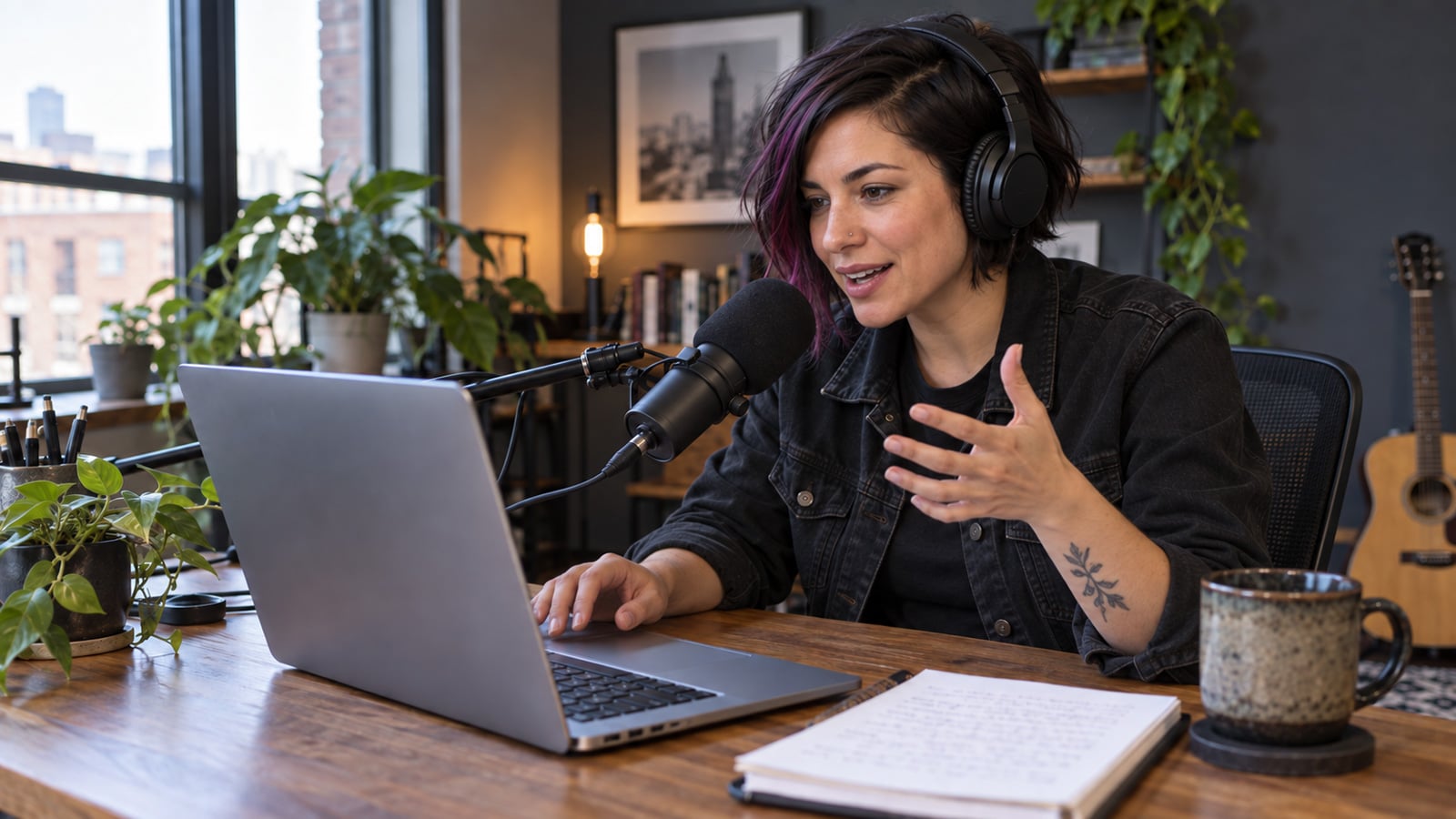
The numbers that describe podcasting in 2025 would have seemed implausible a decade ago. According to Edison Research's Infinite Dial 2025 study, 70 percent of Americans aged 12 and older have now listened to a podcast, an all-time high, and the format has become a genuine mass medium with reach comparable to broadcast television among younger listeners. The audience is there. The appetite is clearly there. And yet the production side of podcasting has remained stubbornly difficult for most people who want to participate in it. Recording audio well requires equipment and a quiet room. Editing takes time and software familiarity. For every podcast that reaches a consistent publishing schedule, dozens of good ideas stay permanently in someone's notes app.
What AI Podcast Tools Actually Do
AI podcast tools have changed the calculus of that entry barrier considerably. They cannot replace the expertise of an experienced audio producer, but for the large category of would-be podcasters whose content is genuinely interesting and whose obstacle is entirely on the production side, they address the problem directly. The current generation of tools can take written content, a blog post, a newsletter issue, a research report, and generate a voiced audio episode from it, complete with natural-sounding narration and, in more advanced implementations, a two-host conversation format where two AI voices discuss the material as co-hosts.
ElevenLabs offers one such toolset through its ai podcast generator page, oriented toward creators who want to produce consistently without recording every episode from scratch. The platform's Studio allows users to paste or upload content, assign AI voices or use a clone of their own voice, edit the resulting audio in a browser-based timeline editor without importing it into a separate app, and export in standard podcast formats. Its GenFM feature extends this further, generating a two-host podcast conversation from source material and supporting export in more than 30 languages, which opens the possibility of localizing a single piece of content into multiple podcast editions for different audience regions.
Who Benefits Most From This
The practical applications are wider than they might initially seem. A writer who publishes a weekly newsletter can give every issue an audio version without recording it, reaching the significant share of their audience that prefers listening over reading. A business that produces regular reports can offer a spoken summary alongside the PDF download. A teacher or trainer can convert lesson text into audio students can commute with. A solo creator whose content ideas outrun their recording time can publish on schedule while reserving their recorded voice for the episodes where it genuinely matters.
None of this is about replacing human presence in podcasting. The most compelling shows will always be ones where a distinctive human voice carries the content. It is about removing the production bottleneck that was keeping a lot of legitimate content from reaching its audience in audio form.
Honest Limitations to Know Before You Start
There are real trade-offs worth understanding before investing in any AI voice production workflow. AI narration handles clear, well-structured prose best and begins to sound mechanical when the text is overly technical or when it cannot resolve ambiguities in pronunciation or emphasis. Proper nouns, names, and specialized terminology sometimes require manual correction. The emotional range of current AI voices, while broader than it was even two years ago, does not fully replicate the spontaneous quality of a skilled human host who is genuinely engaged with their material.
These are honest trade-offs, not bugs that will be immediately patched, and they matter more or less depending on the content type. The most sensible approach is to think of AI podcast production as augmentation rather than automation. Your perspective, your research, your editorial judgment, and your audience relationship are what make the content worth listening to. The tool handles the execution, turning structured ideas into broadcast-ready audio, and lets you concentrate on the part that only you can do. Given where podcast audiences are and how consistently they are growing, that trade-off now makes genuine practical sense for a much wider range of creators than it did a year ago.

