
We may earn commissions when you buy from links on our site. Why you can trust us.

All the phones that have satellite messaging in 2026
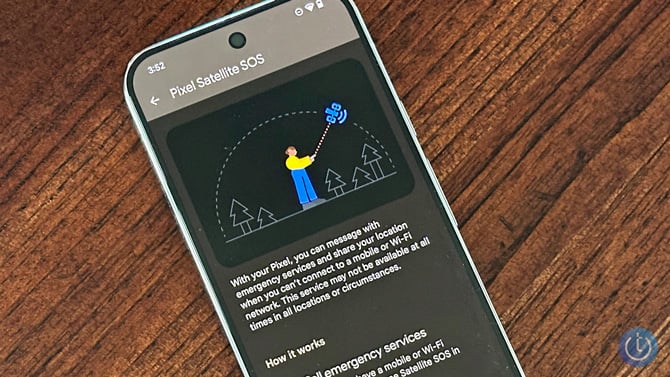
When cellular networks go down, whether it’s a hurricane, wildfire, or just a dead zone on a road trip, your phone doesn’t have to go silent anymore. Satellite messaging has quickly gone from a niche emergency feature on the most expensive phones to something that’s becoming standard on more and more devices.
But not all satellite messaging is the same. Depending on your phone and carrier, you may get emergency SOS only, basic texting, or even app connectivity. And in all cases, satellite messaging is far slower than SMS or cellular data services, plus it requires a clear view of the sky for a reliable connection. So, it remains far from being a true cellular replacement.
Here's the breakdown of where satellite messaging stands for each of the major device brands and US carriers.
Latest iPhones have satellite messaging built-in
If you have an iPhone 14 or newer, including the iPhone 16e, iPhone 17e, and iPhone Air, you get satellite messaging built in at no extra cost (at least for now). Apple uses the Globalstar satellite network, and the experience is tightly integrated into the phone.
When you call 911 and you don’t have cellular or Wi-Fi service, your phone automatically prompts you to connect to a satellite. From there, you’re guided through a short questionnaire that captures the critical details for emergency responders. Your location, Medical ID, and emergency contacts can all be shared automatically.
Apple has also rolled out support for location sharing through Find My, roadside assistance, and limited use of iMessages (and SMS texts) with select friends and family. Messages can take up to a minute to send, but the service works consistently when you need it.
If you have an older iPhone 13 series, you can subscribe to T-Mobile's T-Satellite service for $10 per month (see more below).
Read more: The iPhone 17e Finally Gets MagSafe – But It’s Missing Key Features
Most new Google Pixel phones have limited satellite messaging
Satellite messaging is available for free on the Pixel 9 series (except the 9a) and all Pixel 10 models, including the 10a. These phones connect through Skylo, a satellite connectivity provider that works behind the scenes with multiple networks.
Like Apple, Pixel phones activate satellite messaging when you attempt to call emergency services without coverage. You’re prompted to use Satellite SOS, and your phone automatically shares your location and key details.
Read more: Pixel 10a vs 9a: A Small Upgrade, Still a Smart Buy
Samsung and other Android phones – it's complicated...
Beyond Pixel phones, the Android phone satellite story is more complicated because it depends on your carrier, not the phone manufacturer. Verizon only supports the Samsung Galaxy S25 series and later models. T-Mobile supports more than 60 models, including recent Samsung Galaxy and Motorola phones, as well as its own Revell 8 line. And AT&T doesn't have a satellite service up and running yet, but customers can subscribe to T-Mobile's service. Here are the details.
T-Mobile T-Satellite offers messaging and some app support
T-Mobile’s T-Satellite service is built on SpaceX’s Starlink network, which orbits significantly lower than other satellite networks. That means lower latency and higher speeds. Starlink satellites connect directly to phones and don’t require satellite hardware built in, so the service supports a surprisingly wide range of phones, including models that were never designed with satellite service in mind.
That list includes:
- Pixel 9a and many recent Android phones (There’s no official list, so use T-Mobile’s compatibility checker or in your Android settings go to Settings > Safety and Emergency and look for "Satellite SOS" to see if your model is satellite-ready.)
- Samsung Galaxy S21 and newer (plus select A series)
- Motorola Razr, Edge, and Moto G models (2024 and later)
- T-Mobile Revvl 8 and Revvl 8 Pro
- iPhone 13 series
T-Satellite is included with T-Mobile’s premium Experience Beyond and Better Value plans and is available for $10 per month to its other customers with supported phones. AT&T and Verizon customers can also pay $10 per month without switching to T-Mobile.
What’s new for this year is that T-Satellite is adding support for apps like WhatsApp, Google Maps, AllTrails, and AccuWeather. That’s a big shift because it’s not just for emergencies and quick communication anymore. That said, performance is still limited and you shouldn’t expect real-time responsiveness.
Verizon offers basic satellite messaging
If you’re on Verizon, free satellite messaging in partnership with Skylo is available on the Galaxy S25 series, Galaxy S26 series, Galaxy Z Fold 7, and Galaxy Z Flip 7. The service supports emergency messaging and basic texting. Owners of other devices can subscribe to T-Mobile's T-Satellite.
What about AT&T?
AT&T is the one major U.S. carrier that hasn’t launched a consumer satellite messaging service yet. The company is working with AST SpaceMobile to deliver full broadband satellite connectivity – meaning voice, data, and apps without special hardware. That’s potentially more powerful than anything currently available, but it’s still in development and hasn’t rolled out to consumers. For now, AT&T customers can head over to T-Mobile for the T-Satellite plan.
Where satellite messaging works
Coverage has expanded quickly, but it’s not truly global. Depending on your device and provider, satellite messaging is now available across Canada and the United States (including Alaska and Hawaii on some services), most of Europe, Australia and New Zealand, as well as Japan and select other regions.
But geography isn’t the only or biggest limitation – visibility is. If you don’t have a clear view of the sky, your phone may not connect at all. That means no indoor use, and dense forests, mountains, urban canyons and even dense cloud cover can interfere.
The final take is that satellite messaging is one of the most important safety features added to phones in years, and it's becoming available on more and more devices. If you're in the market for a new smartphone, it's worth seriously considering as a feature so you have it when you really need it.
[image credit: Techlicious]

