
We may earn commissions when you buy from links on our site. Why you can trust us.

Best NextGen TV receivers for cord cutters in 2026
Right now, you're probably paying your cable or satellite provider around $30 a month just to watch local channels you could be getting for free over the air. It's buried in your bill, but it's there – the "retransmission" fees that local ABC, NBC, CBS, and Fox affiliates charge providers for access to programming that's technically free broadcast TV. A one-time investment of $150 to $300 in a NextGen TV receiver pays for itself in under a year, and then keeps paying you back.
NextGen TV (the industry shorthand for the new ATSC 3.0 broadcast standard) is a genuine technological leap over the old-school antenna TV most people remember. Where conventional over-the-air broadcasts are often blocked by buildings, terrain, or distance, NextGen signals use a far more sophisticated transmission platform that punches through interference. The picture quality – barely compressed, often High Dynamic Range enhanced – is the best you'll see on any source, better than cable, better than streaming. The audio frequently carries Dolby Atmos. And yet it comes in on an inexpensive indoor flat antenna, $30 to $40, taped to a window.
Read more: The best indoor TV antennas
You haven't heard much about this, and there's a reason: the broadcasters themselves have been slow to promote it. Chicken-and-egg inertia. But the infrastructure is already there. Backed by ABC, CBS, NBCUniversal, Fox, and Univision (along with major station groups through the Pearl TV coalition), NextGen/ATSC 3.0 signals are broadcasting in more than 80 markets, covering 75 percent of U.S. households. There's a good chance you're already in range. You can check the full list of ATSC 3.0 stations here.
The receivers themselves are compact – similar in size to a Roku or Fire TV box – and connect to your TV via HDMI. If you're shopping for a new set, some higher-end models from Sony, TCL, Hisense, and Samsung have NextGen reception built in. But a dedicated add-on box is the better move if you're serious about replacing cable, because these standalone receivers do things the built-in tuners don't: they offer full program guides, optional DVR recording with a plug-in storage drive, and in some configurations, the ability to share live and recorded programming to multiple TVs around the house without running any new cable.
Some NextGen boxes also connect to the internet to pull in additional content through a feature called BIP (Broadcast Internet Protocol). In some cities, local PBS stations stream seamlessly to these hybrid boxes this way. NBC has added user-selectable bonus content alongside its regular schedule in several markets. And the ATSC 3.0 platform has bandwidth to spare for things like hyperlocal weather, on-demand programming, and other interactive services – though how far that goes depends heavily on how quickly stations and the FCC commit to the format.
One more thing worth knowing: these boxes also tune old-school ATSC 1.0 channels, and they do it well – often picking up fringe stations that smart TVs with mediocre built-in tuners miss entirely. Those subchannels (10.2, 10.3, and so on) carry a surprising amount of classic movies and TV that cable and satellite rarely bother with.
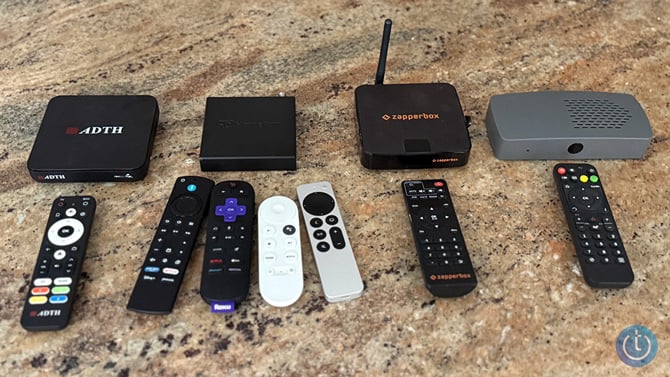
Four NextGen receivers are on the market right now: the ADTH Next Gen TV Box Gen 2, HD HomeRun Flex 4K, Zapperbox M1, and Zinwell ZAT-600B. Here's how they stack up.
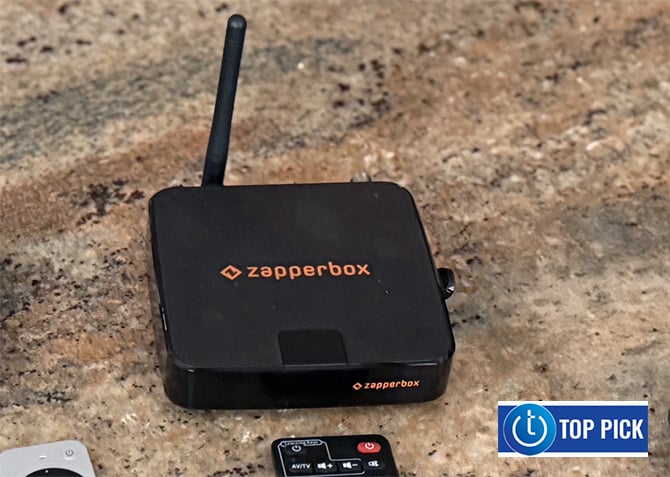
Zapperbox M1: The best NextGen TV receiver
Rating: 4.5 out of 5 stars
The Zapperbox is the most fully realized NextGen receiver available. It's the only one that has been formally licensed by A3SA – the standards body that governs ATSC 3.0 operations – to function as a full Gateway. Gateway status means the Zapperbox can receive, record, and distribute DRM-encrypted ATSC 3.0 content, which is the majority of NextGen broadcasts in most cities.
The core M1 dual tuner unit connects to an antenna and then pushes live and recorded content to up to four Zapperbox M3 Mini units ($159.95 each) connected to other TVs via your home Wi-Fi or Ethernet. No special wiring. The Minis are tuner-free and antenna-free – they just decode what the Gateway sends.
If you only need two rooms covered, the single-tuner M2 ($199.95) paired with one Mini gets it done, letting you watch live in one room while the other plays back something recorded. For recording, you'll need a microSD card or USB drive; a SanDisk UltraFit or Lexar portable SSD both work well. Manual scheduling for the next 24 hours is free; a $29.99 annual subscription unlocks a two-week EPG, automatic series recording, and trick-play features like thumbnail previews when scrubbing.
One significant addition is on the roadmap: a Zapperbox app that would let the Gateway distribute content to third-party streaming devices, including Roku boxes and sticks. Zapperbox founder Gopal Miglani told me ATSC 1.0 content delivery to Roku could arrive by year's end, with ATSC 3.0 and other platforms to follow. That would close the biggest gap between the Zapperbox and the HD HomeRun Flex 4K.
Hits: The only fully licensed Gateway for encrypted ATSC 3.0. Universal remote with number-pad tuning. Excellent image and sound. Clean, polished program guide.
Misses: Most expensive hardware. No streaming device app yet.
Price: $274.95
CHECK PRICE ON AMAZON
CHECK PRICE ON ZAPPERBOX
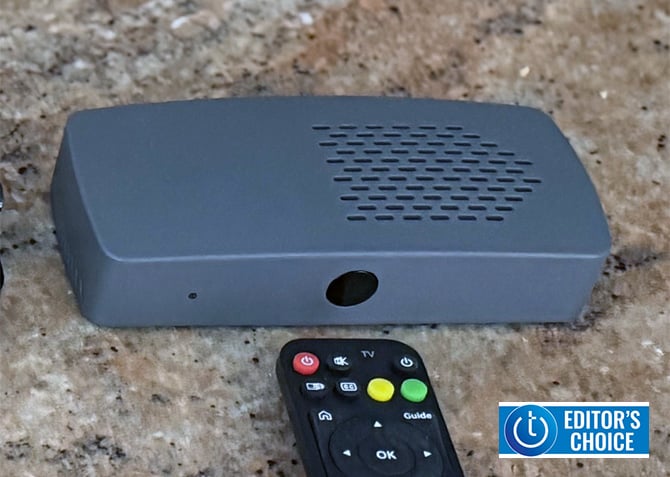
Zinwell ZAT-600B: The best budget NextGen TV receiver
Rating: 4 out of 5 stars
If all your viewing happens on one TV and you have no interest in recording, the Zinwell ZAT-600B is a solid, uncomplicated choice. It delivers all NextGen channels cleanly, including those protected by DRM (Digital Rights Management) encryption, which is a hurdle some rivals haven't cleared. ATSC 1.0 reception is stable even in difficult first-floor locations with a basic indoor antenna – no amplifier needed in urban areas, and often counterproductive if you use one.
The Zinwell handles BIP-delivered PBS content and NBC's interactive features without fuss. Its remote has a dedicated App button for internet-sourced content, hinting that more is coming. The seven-day program guide is free. Unlike some of the other boxes in this roundup, the Zinwell doesn't get frequent software updates, which is actually a virtue if you're setting this up for someone who doesn't want to deal with "time to update" notifications popping up every few weeks.
Hits: All NextGen services, DRM included. Fast numerical keypad on the remote. Easy setup. Competitive price.
Misses: No DVR. No multi-room capability. The power indicator light is aggressively bright.
Price: $149.00
CHECK PRICE ON AMAZON
CHECK PRICE ON CHANNEL MASTER
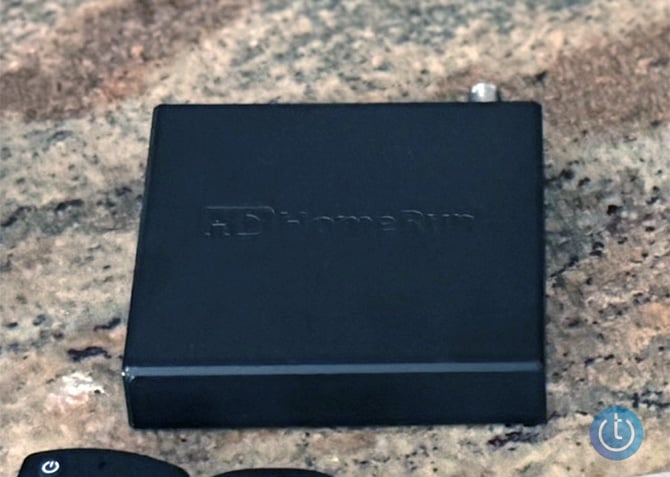
SiliconDust HD HomeRun Flex 4K
Rating: 3.5 out of 5 stars
In some ways, the HD HomeRun Flex 4K is my favorite piece of hardware in this roundup. Its installation is the simplest of the bunch – connect it to an antenna, plug it into power and Wi-Fi, and you're done. No HDMI connection to a TV required. Instead, you load the HD HomeRun app onto whatever streaming devices you already own: Roku, Fire TV, Apple TV, Google TV, smart TVs from Sony and LG, iPads, iPhones, computers, even Xbox consoles. The app sits in your launcher alongside Netflix and YouTube, and that's genuinely powerful – it puts broadcast TV on equal footing with streaming in your daily workflow without buying dedicated hardware for every room.
ATSC 1.0 reception is the best of any box in this roundup, and the program guide – two of them, actually, one grid-style and one vertical sidebar over a live picture – is the most refined. With a $35 annual subscription, you get full DVR features including four simultaneous recordings across its two ATSC 3.0 tuners and two ATSC 1.0 tuners.
The problem is DRM. The Pearl TV collective of station groups has denied SiliconDust a license key, citing concerns about the hardware – specifically, the use of a chip from a Huawei subsidiary that the Trump administration has restricted for telecommunications use. SiliconDust president Nick Kelsey disputes the characterization, arguing the chip isn't being used in a telecommunications application and that the DRM signals are transferred end-to-end without the content being exposed. He says a resolution is in progress and expects it by year's end. But right now, the Flex 4K can only decode unencrypted ATSC 3.0 channels. In many cities, that's a minority of what's broadcasting on NextGen. In Philadelphia, six of seven local ATSC 3.0 signals use DRM. Only the ABC affiliate doesn't.
What makes this particularly odd: SiliconDust is a trusted partner in the NextGen rollout, providing products that manage the platform's broadband signal delivery. The DRM standoff has the quality of an unresolved bureaucratic disagreement more than a fundamental technical failure. If SiliconDust can't get it resolved, Flex 4K owners shouldn't panic. While the first-generation of digital broadcasts, which transmit an ATSC 1.0 signal, are currently targeted to turn off in 2028 for the top 55 U.S. markets and the rest by 2030, these dates have been repeatedly extended.
Hits: Economical multi-room setup using streaming devices you already own. Best ATSC 1.0 fringe reception. Clean installation.
Misses: Currently locked out of DRM-encrypted ATSC 3.0 channels. Using a streaming remote for TV navigation is less fluid than a dedicated NextGen remote.
Price: $199.99 on Amazon
CHECK PRICE ON AMAZON
CHECK PRICE ON SILICONDUST
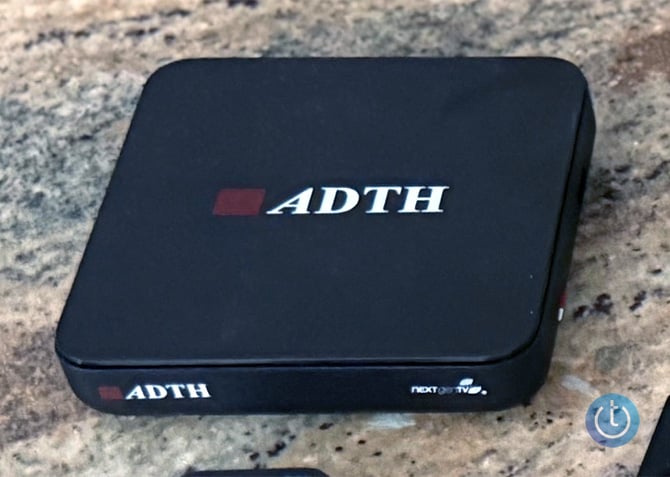
ADTH NextGen TV Box Gen 2
Rating: 2 out of 5 stars
The ADTH checks enough boxes to stay in the conversation, but only barely. All local NextGen ATSC 3.0 channels come in fine with an indoor antenna. The second-generation unit improves on its predecessor with a better-labeled remote and adds a microSD slot for recording (a USB slot was already there), plus about 4GB of onboard memory – enough for roughly two hours of programming.
The ADTH also has one genuinely useful trick: it can unlock DRM-encrypted ATSC 3.0 channels without an internet connection. The Zinwell claims this too, though running any NextGen box offline means no interactive content and no software updates, so it's a limited advantage in practice.
What holds the ADTH back is performance. Channel changes can take up to ten seconds, with a spinning wheel marking the wait. The box freezes regularly, especially when navigating the program guide. ATSC 1.0 reception with an indoor antenna lags the competition by 10 to 15 channels (most of them shopping channels you won't miss, but still). Switch to an outdoor antenna – the Televes Dinova Boss Mix is a compact, excellent choice – and the count catches up to the Zinwell and Zapperbox, though still behind the HD HomeRun Flex 4K.
At CES 2026, ADTH announced Gateway features and a dedicated app were coming, which would let the box beam content to Roku, Fire TV, or Walmart Onn devices. Given the company's pace on previous updates, I wouldn't bank on it arriving soon.
The ADTH is also the only NextGen box with analog and optical digital audio outputs, which matters if your audio system lacks HDMI inputs. (The analog composite video output, though, produced a scrambled picture in testing – skip it.)
Hits: Lowest everyday price. Analog and optical audio outputs. DRM decryption without internet required. Some onboard recording storage.
Misses: Slow, unresponsive operation. Weakest ATSC 1.0 reception with indoor antenna. Spotty track record on promised updates.
Price: $119.99 on Amazon
CHECK PRICE ON AMAZON
CHECK PRICE ON ADTH
What About a $60 Box?
At the 2026 NAB convention, NextGen TV's backers put out a call for manufacturers to develop an entry-level receiver that could retail for under $60 – similar to the federally subsidized converter boxes that eased the analog-to-digital TV transition in 2009, though without any such government support this time. A box at that price would improve over-the-air reception but would lack DVR capability, internet connectivity, and Gateway support.
Zinwell, ADTH, and Skyworth (which sells televisions in the U.S. under the Philips brand) have expressed interest. A3SA says it's willing to reduce licensing fees to help make it happen, but the economics are difficult.
"This is not a good time," Miglani told me. "The wholesale price for the memory chips we use has tripled because of the AI boom. And as a small-team operation, we'd need serious outside backing to fund rapid product development."
Whether the $60 box materializes or not, the four receivers already on the market make a persuasive case for cutting the cord on local channels. The math is straightforward, the setup is easy, and the picture quality will make you wonder why you waited.
[Image credit: Jonathan Takiff/Techlicious]

