

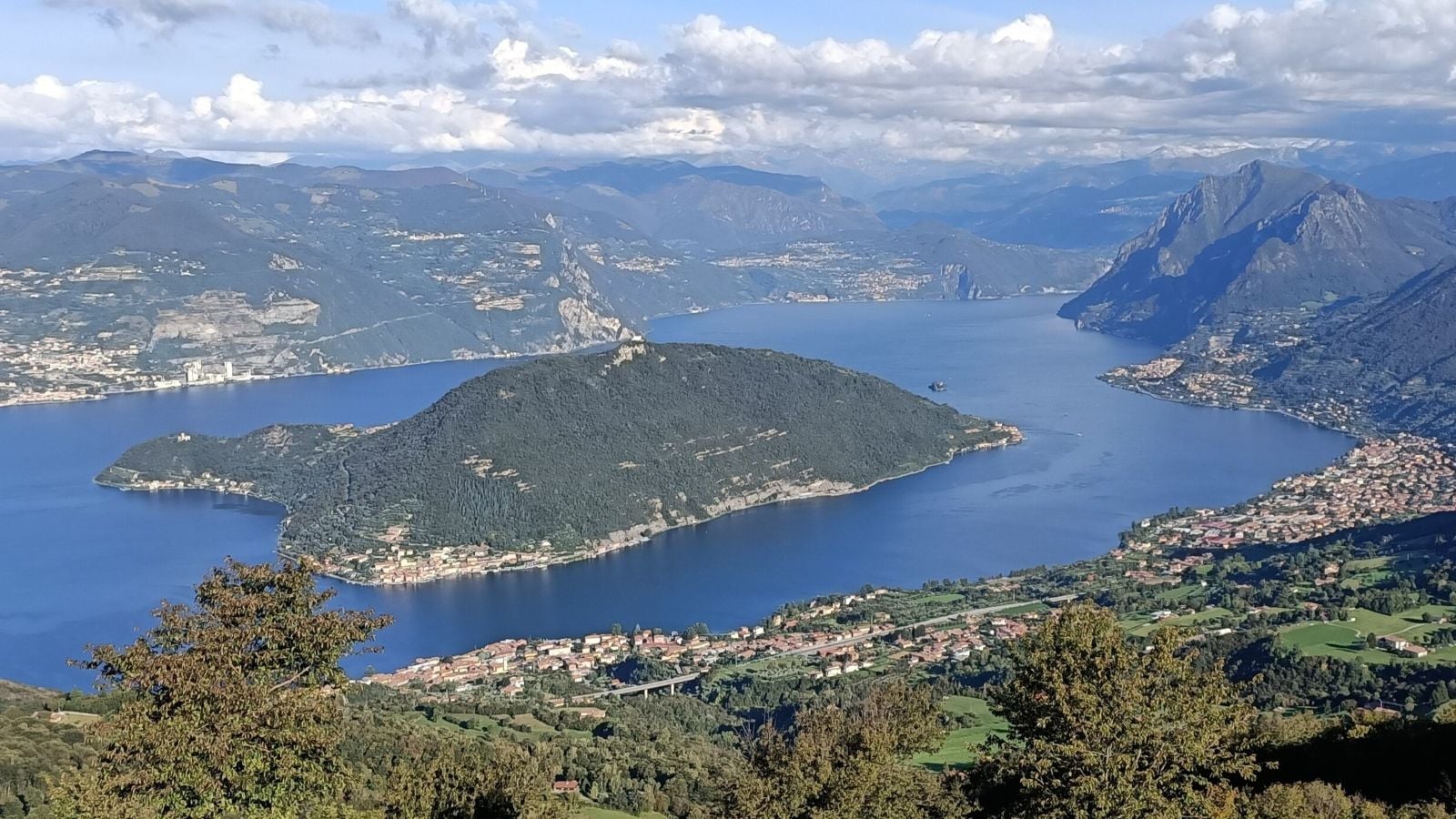
Lake Iseo in northern Italy, where researchers reconstructed two medieval tsunamis triggered by underwater landslides.
Image credit: Dedi.otto/Wikimedia Commons (CC BY-SA 4.0). Cropped from original.
Two medieval earthquakes sent giant waves across Lake Iseo in northern Italy, and a new study in Nature Communications says farming and forest clearing over the centuries helped make them possible.
The researchers matched lake-floor samples and seismic scans to two unusually thick layers of collapsed sediment. They then ran computer simulations of the landslides and the waves they would have created. The first wave in 1117 AD may have climbed as high as 164 feet and flooded as far as 1.7 miles inland. The second tsunami, in 1222 AD, peaked near 43 feet.
A 12th-century manuscript in the Vatican Library provides historical support for the reconstruction. It says the lake overflowed so badly that very few people in nearby villages escaped, and that many castles and fortresses were destroyed.
Human activity helped set the stage for these massive inland tsunamis. The Oglio River drops sand and silt into the north end of the lake, building an underwater slope called a delta. Since Roman times, clearing forests, farming, and grazing livestock in the surrounding mountains have tripled the amount of sediment washing into the lake. The delta grew steeper and heavier until earthquakes shook big pieces of it loose. The sliding sediment shoved the water above it, creating the massive waves.
The delta has been rebuilding for eight centuries, and today the lake's shores are crowded with towns, marinas, and tourist spots. The authors' simulations suggest waves from a similar collapse could reach the northern shore in under a minute, too fast for a warning. They call such events "low-probability but high-consequence," and the study does not estimate when another one may occur.
Two other large Italian lakes show signs of the same history. Thick layers of collapsed sediment on the floors of Lake Como and Lake Garda suggest their slopes also gave way during medieval earthquakes, and historical records describe destructive lake tsunamis in the region. Iseo, Como, and Garda now have some of the most densely developed freshwater shorelines in Europe, with more than 370,000 permanent residents.
Similar delta collapses have been documented in Swiss lakes, in New Zealand, and in Alaska, where a 1964 earthquake set off collapses in several lakes. The researchers say future tsunami risk assessments for lakes should account for how sediment from human activity can make underwater slopes more likely to collapse.

