

If you are a high-profile target and worry that spyware could be secretly installed on your phone, that fear is legitimate. Apple alone has sent spyware warnings to users in more than 150 countries since 2021. The targets are consistently journalists, activists, politicians, and diplomats, people in the crosshairs of state actors and the surveillance tools built for them, like Pegasus from the NSO Group.
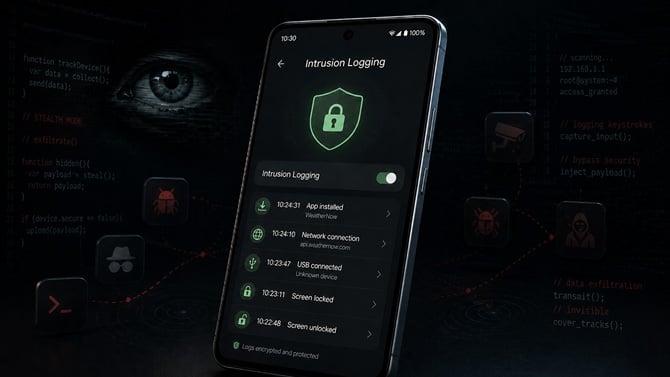
Sophisticated surveillance apps leave no visible trace, and the activity logs that might reveal them can be wiped before anyone looks. Google worked alongside Amnesty International's Security Lab and Reporters Without Borders to close that gap with its new Intrusion Logging feature for Android 16. It’s built specifically for journalists, human rights activists, and people under government watch, and lets them know if their phone has been breached.
Intrusion Logging maintains a daily, encrypted record of what happens on your phone. This includes any apps that were installed or removed, what networks your device connected to, whether anything was transferred over USB, and when the screen was locked or unlocked. Those records get stored in your Google account for 12 months, where even spyware on your phone cannot delete them.
It sounds like something everyone should want, but it comes with constraints. It is only available on Google Pixel phones running Android 16. And you have to turn on Advanced Protection Mode, which is Google's most locked-down security setting, limiting which apps you can install and adding extra steps when you sign in.
If you think that you are at risk, you should enable Intrusion Logging. Go to Settings > Security & Privacy > Advanced Protection on a Pixel phone, and turn on Intrusion Logging. It only records going forward, so you have to have it enabled before a threat occurs.
Read next: Android 16 includes Advanced Protection Mode's top-level security for everyone
[Image credit: Suzanne Kantra/Techlicious generated by ChatCPT]

