

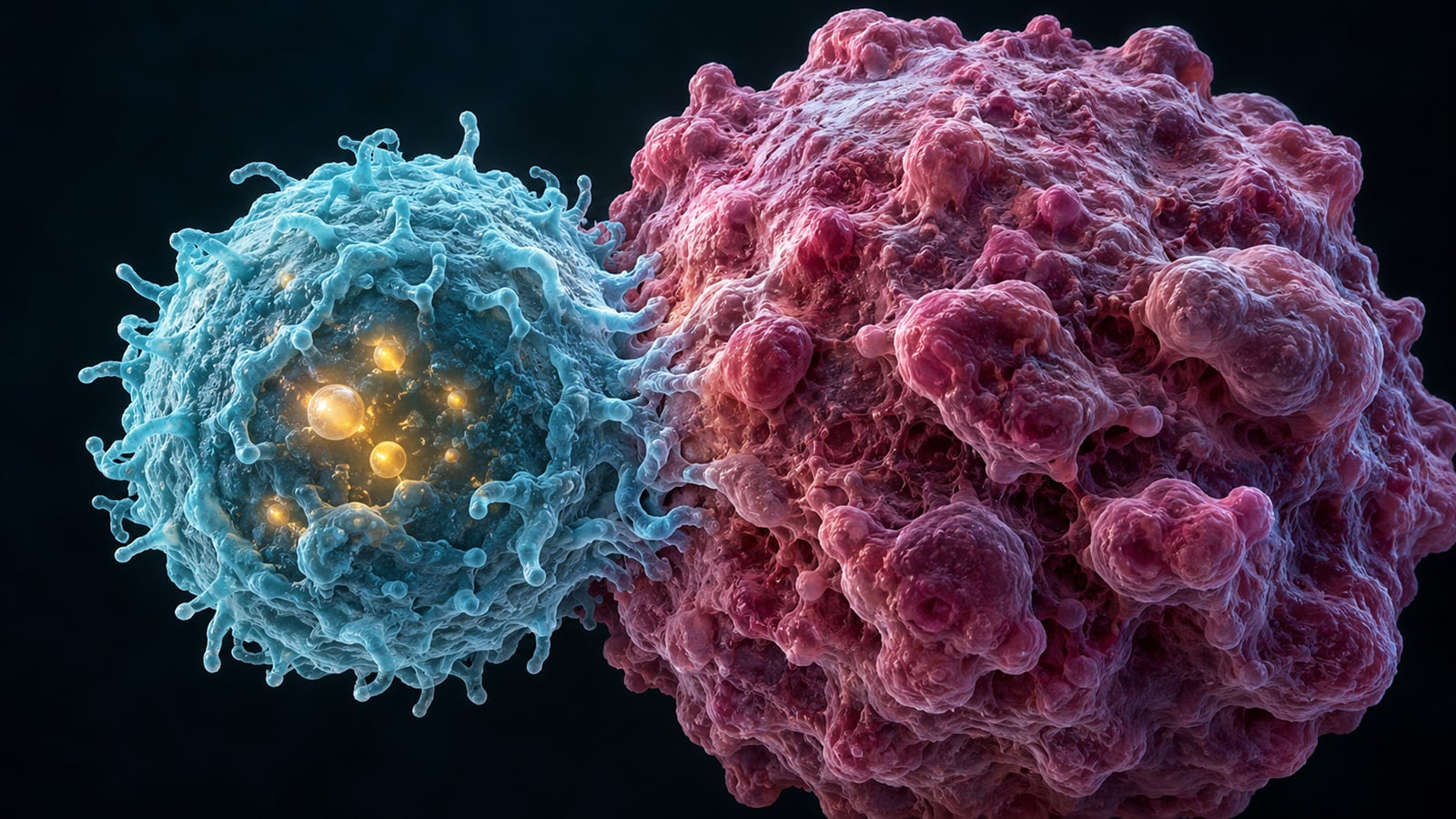
Concept illustration of a killer T cell attacking a tumor cell, with glowing droplets representing fat used for energy.
Image credit: Suzanne Kantra/Techlicious via ChatGPT
A protein that helps cancer grow can also help the immune system destroy it, researchers at Cold Spring Harbor Laboratory (CSHL) report. When the team switched the protein on in immune cells, tumors grew more slowly in mice and in lab models of human cancer, according to a study published October 14 in Nature Immunology.
The researchers focused on colorectal cancer, which the study calls the leading cause of cancer death in U.S. men under 50 and the second in women under 50. Most cases resist today’s immunotherapies, treatments that help the immune system find and attack cancer.
The protein, called PPARδ, helps cells burn fat for energy, and both cancer cells and immune cells make it. Its activity can be adjusted, like a dimmer. In the experiments, researchers turned it up in one type of cell or the other, using either a genetically engineered version that stays active on its own or a drug that boosts it.
Turning it up in cancer cells made tumors grow faster and weakened the immune attack. Mice whose cancer-killing T cells had the protein turned up controlled tumors better across several cancer types, including an aggressive colorectal cancer that spreads, melanoma and breast cancer.
“When immune cells burn more fat, they become more fit for fighting cancer,” said CSHL assistant professor Semir Beyaz, who led the study.
In another test, mice with colorectal tumors received boosted immune cells along with an immunotherapy drug. Half of them rejected their tumors completely, while tumors in mice given ordinary T cells kept growing and spreading.
The team also tested genetically engineered human immune cells called CAR T cells, boosting PPARδ activity before putting them up against human cancer cells. These included miniature tumors grown from patients’ tissue, cancer cells in dishes and human cancer cells implanted in mice. The boosted CAR T cells slowed or stopped tumor growth in each setting.
The approach has not been tested in people. Because the protein also helps cancer cells grow, any treatment would have to target immune cells only. The mice showed no signs of serious inflammation in the tissues the researchers checked, but the authors say longer safety studies are needed before the approach could move toward patients.

