

Image credit: Suzanne Kantra/Techlicious via ChatGPT
Doctors who accept more free meals and other perks from drug companies tend to prescribe less appropriate medications, write more prescriptions and choose pricier drugs. That’s the finding of a major Cochrane review published October 9, which pulled together data from 93 studies, eighty-two of which were conducted in the United States.
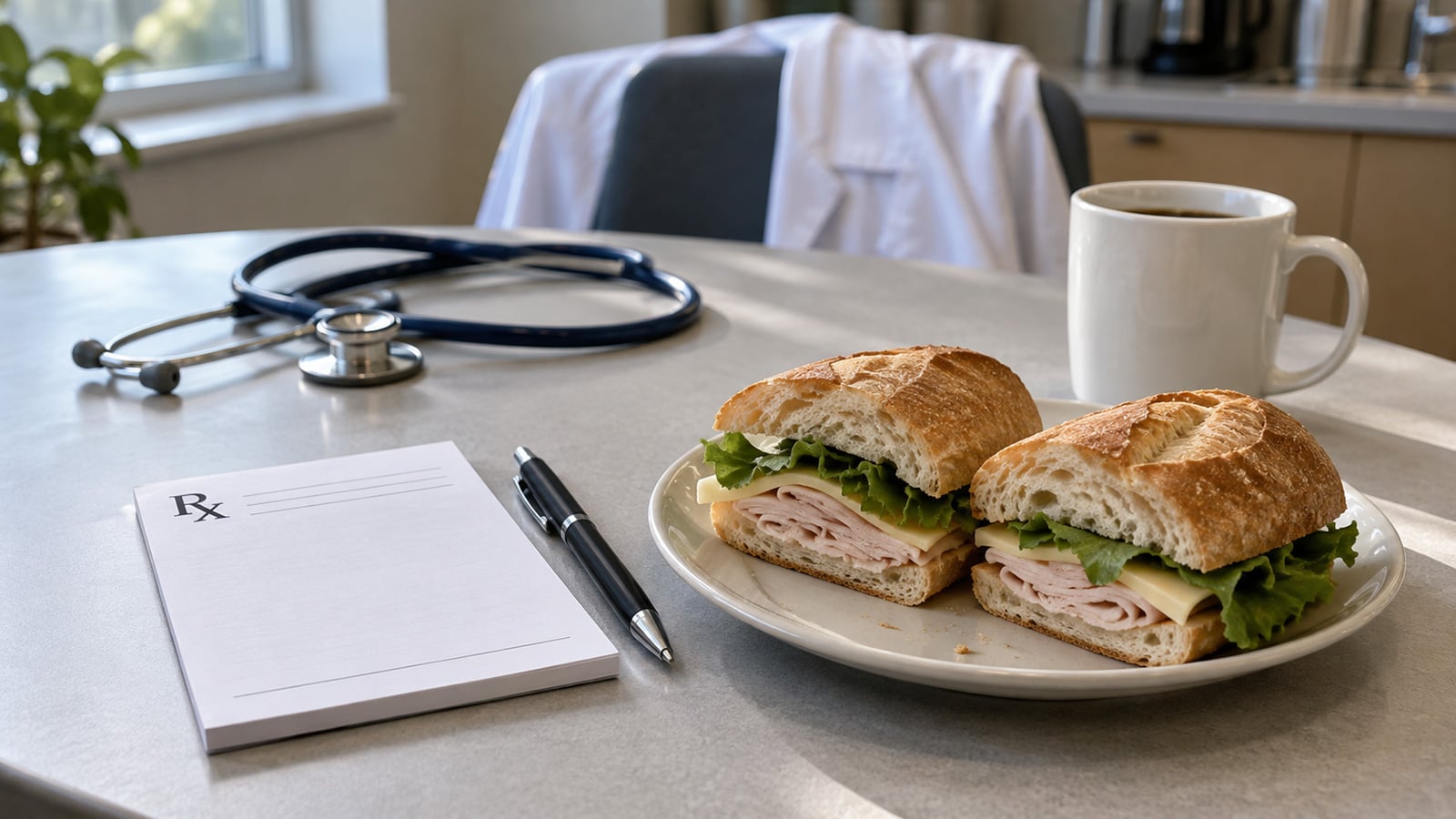
Cochrane, an organization that reviews medical evidence, looked at several ways drug companies reach doctors. The most heavily studied was gifts and payments, which covers everything from a sandwich at a sales presentation to travel funding and fees for sitting on an advisory board. Across studies covering millions of doctors, those who received more were more likely to prescribe in ways that didn’t match the best evidence, to write more prescriptions overall, and to prescribe costlier drugs. Visits from drug sales reps showed a similar pattern, though the evidence was less certain.
Cochrane defined “less appropriate” prescribing as treatment that compares poorly with other available options or lacks evidence that its benefits outweigh its harms. In practice, that may mean a newer, more expensive drug when an older or generic one would work as well.
According to a York University summary of the findings, the more meals a doctor received from a company, the more of that company’s drug the doctor prescribed. That held for medications ranging from blood pressure and cholesterol drugs to antidepressants and opioid painkillers.
And the amount of money involved is substantial. Drug companies reported paying U.S. prescribers $3.28 billion in non-research payments in 2023, according to the review, which drew on the federal Open Payments database. Meals alone topped $250 million in 2022.
Lead author Dr. Barbara Mintzes of the University of Sydney says doctors often assume a free lunch can’t influence them, that they “can’t be bought for the price of a sandwich.” The data, she says, suggests otherwise.
The authors also found no data on whether the prescribing patterns actually harmed patients, and they call for research into that question. The review also looked at patterns across large groups of doctors and can’t say whether any individual doctor’s prescribing was affected.
Whether drug companies have paid your own doctor is public record. Under a federal law passed in 2010, drug and device makers must report payments to doctors and teaching hospitals, and the government publishes them in the Open Payments database. Searching by a doctor’s name shows which companies paid them and how much. If you’re prescribed a brand-name drug, it’s reasonable to ask why it’s the right choice for you and whether a generic or older option would work as well.

