

Image credit: MOVA
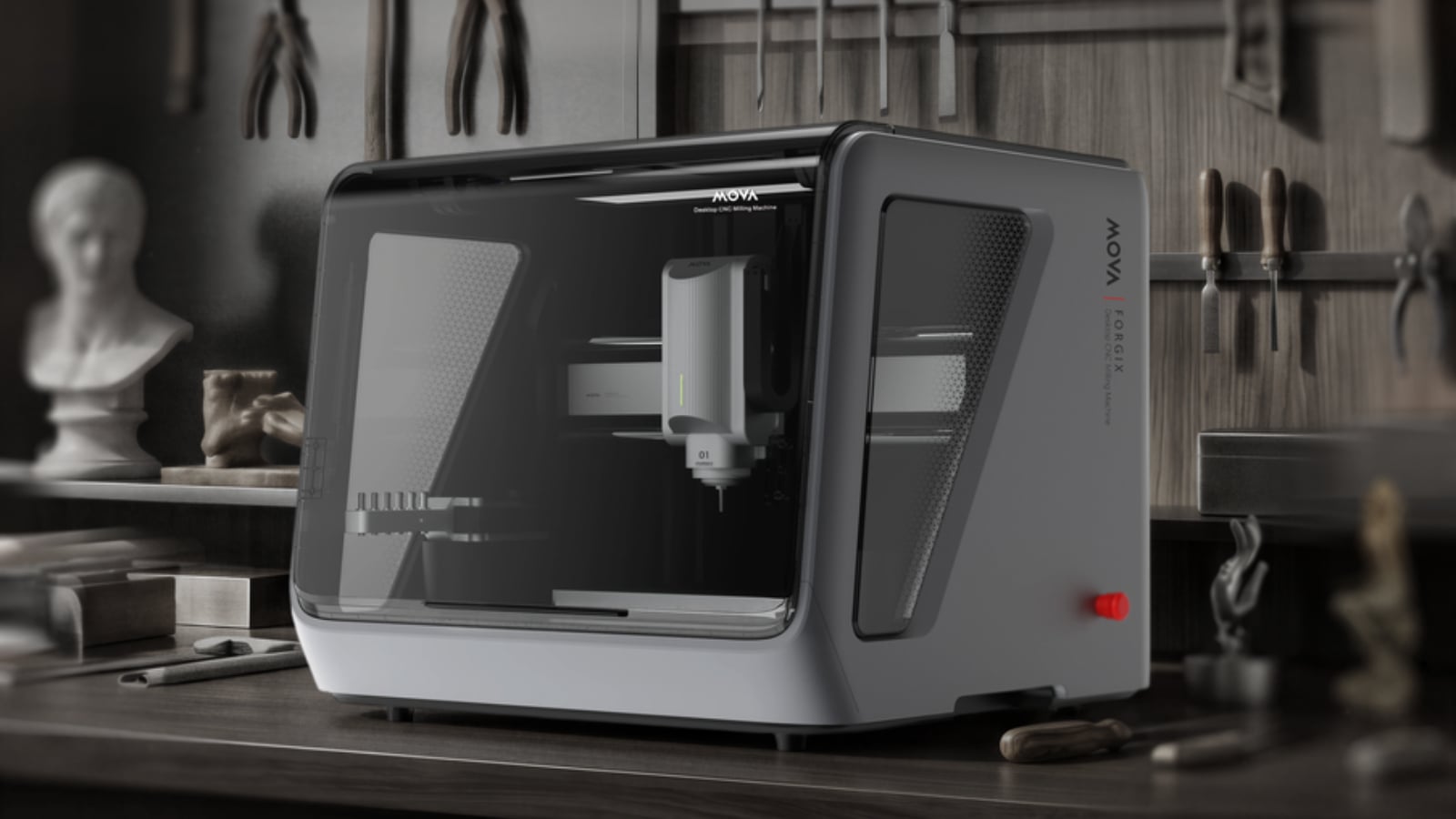
MOVA has announced Forgix, a desktop milling machine, at IFA 2026 in Berlin. Forgix is the first machine tool from the Dreame sub-brand, which so far has sold robot vacuums, mowers, and the AtomForm 3D printer we covered earlier this year.
MOVA says that milling should be about as easy to pick up as 3D printing has become. The company plans to launch Forgix in 2027 in parts of Europe and North America, and it hasn't announced a price yet.
Read More: MOVA's AtomForm Palette 300 rethinks multi-color 3D printing
What a milling machine does
A CNC mill is a computer-controlled cutter that carves a part out of a solid block of wood, plastic, or metal. The parts usually come out stronger and more precise than what a 3D printer makes. You feed it a design file, and it cuts that shape out for you, in the same way a printer would build it up layer by layer.
The biggest catch is typically the setup. You have to measure the block, clamp it down, find its center, and tell the software exactly where it sits. Then you pick the right cutting bit and speed for the material. Get one of those wrong and you can ruin the part or snap the bit, which is often what happens with amateurs. That's a big part of why milling has stayed limited to people who already have some expertise in it.
The Forgix key features
Most of the features MOVA lists seem to be aimed at making that setup less complicated. An electric vise will clamp the block down, saving you that bit of work. A camera on the cutting head then measures it, and a small probe touches it to confirm where it is. MOVA says this should work on odd-shaped pieces as well, like a chunk of wood with the bark still on one side, which you'd normally have to square up before you could use it.
Forgix also changes its own cutting bits. It holds 10 of them, and a camera reads which one is which. So it can go through a job that needs a rough cut, a fine cut, some drilling, and an engraving from start to finish without having to stop the machine.
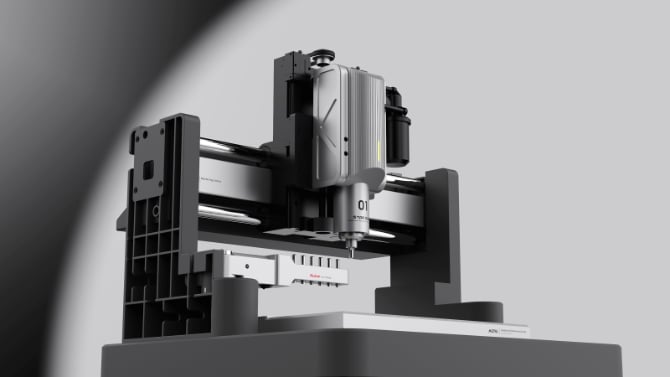
Image credit: MOVA
The motor peaks at 500 watts. MOVA says the machine watches its own power draw while cutting, so it can slow down or stop if the readings look like a bit is about to break.
The machine is fully enclosed, with dust collection and air filtering built in. It has a 5-inch touchscreen on the front to help you operate it without a computer. It can cut wood, acrylic, aluminum, brass, carbon-fiber sheet, and circuit boards. MOVA has also said it is planning to release rotary and laser add-ons.
How it compares to other options on the market
The Makera Carvera Air is one of the more popular enclosed desktop mills right now. It has a 200-watt motor, and you have to change its bits by hand. It starts at $2,499.
The NestWorks C500 promises an 800-watt motor and automatic bit changes. It's $3,199 on Kickstarter, with an estimated retail price of $4,699. Its ship date has slipped more than once, however.
Forgix more or less lands between the two on motor power and ahead of both with regards to the ease of setup. We still don't have some of the key specs, like how big of a block it can handle, how fast the motor spins, or which configurations will be sold. It also doesn't say when North America specifically gets it, and MOVA says pricing, software details, and regional availability will come closer to launch.
What I make of the MOVA Forgix
I'd normally be suspicious of a first machine tool from a vacuum brand. However, Dreame's track record with motors and cameras makes me confident MOVA can pull this off. The price will decide whether it's a winner, but I feel the company will get that part right.
My own machining experience is limited to a manual lathe I learned on years ago. However, I've watched plenty of people have troubles with CNC setups. A machine that does the clamping and measuring for you looks like the natural next step for hobbyists who've hit the limits of 3D printing and need more. This machine will likely be a solid fit for a ton of small businesses as well.
I'm not too sure about the AI features, though. Forgix can turn a text prompt or a picture into a 3D model. It can also pick the cutting route through the material on its own. That way, in theory, you get to skip both the design software and the machining software, which is where I've seen most people give up. If that works as described, it'd be a bigger deal than the self-clamping vise, but I'll reserve my judgement until I see it running on a real part.
Follow our coverage of the IFA 2026 Tech Show.

