

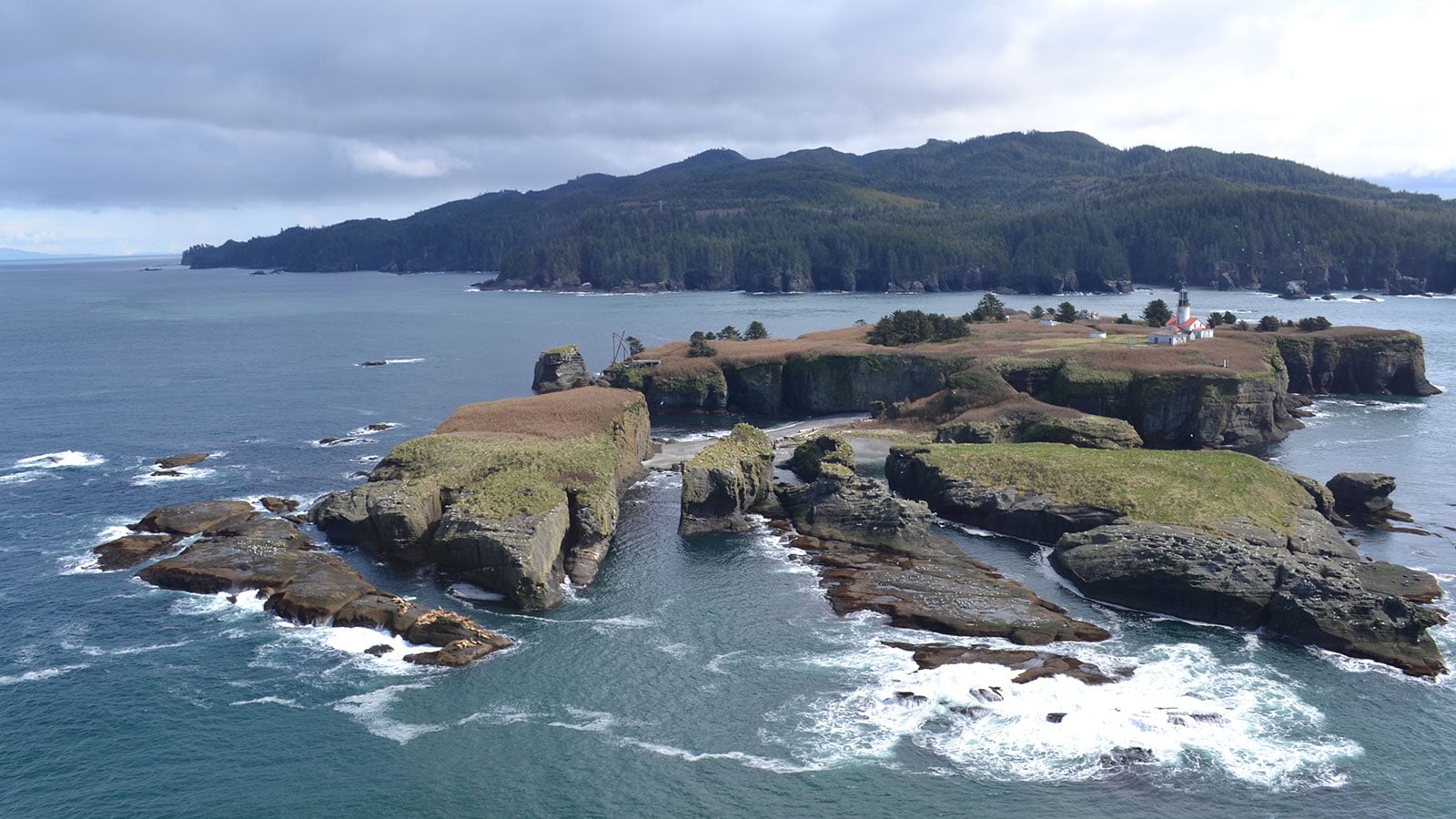
Tatoosh Island off the coast of Washington state
Image credit: Dr. Sophie McCoy / NOAA Photo Library / Wikimedia Commons (CC BY 2.0)
Ocean acidification may be reducing the microscopic algae that coastal fish depend on, according to a 24-year study of waters off Washington state. The study's authors say the decline could hurt commercial and recreational fisheries and threaten the food supply they provide.
The drop in seawater pH, a measure of how acidic the water is, occurs as the ocean absorbs carbon dioxide from the atmosphere. As pH fell, the researchers found that the ratio of dissolved silicon to dissolved inorganic nitrogen dropped by 56%, while chlorophyll, an indicator of phytoplankton abundance, declined by 92%.
Silicon matters because diatoms, single-celled algae that generate roughly 40% of the ocean's primary production, build glass-like shells from it. Dead diatoms sink, and their skeletons slowly dissolve, returning silicon to the water for the next generation. Lower pH slows that dissolution, allowing more silicon to become trapped in sediments rather than recycled into the water.
“The net effect is that more of the silicon nutrient supply is cut off from the diatoms,” said study co-author and University of Chicago ecologist J. Timothy Wootton.
The effects may extend beyond microscopic algae. NOAA Fisheries records show that Washington state's catches of Pacific herring, a plankton-eating fish, declined as the silicon-to-nitrogen ratio fell. Catches also tended to be higher when chlorophyll concentrations had been higher the previous year. The findings are consistent with disruptions moving up the marine food chain, although they don't establish that ocean acidification caused the decline in herring catches.
Herring are an important food source for larger fish, including salmon and halibut. If acidifying water continues to reduce algae at the base of the food chain, these predators could have less to eat, potentially affecting fisheries that supply seafood to consumers. The researchers did not determine whether salmon or halibut populations have already been affected.
The implications could reach beyond Washington state. The researchers warn that the same process could threaten other highly productive coastal waters. Potentially vulnerable environments include upwelling regions off California, South America, and Africa, where nutrient-rich water supports major fisheries. Whether these areas are experiencing similar changes, and how severely their food webs might be affected, remains to be established.

