

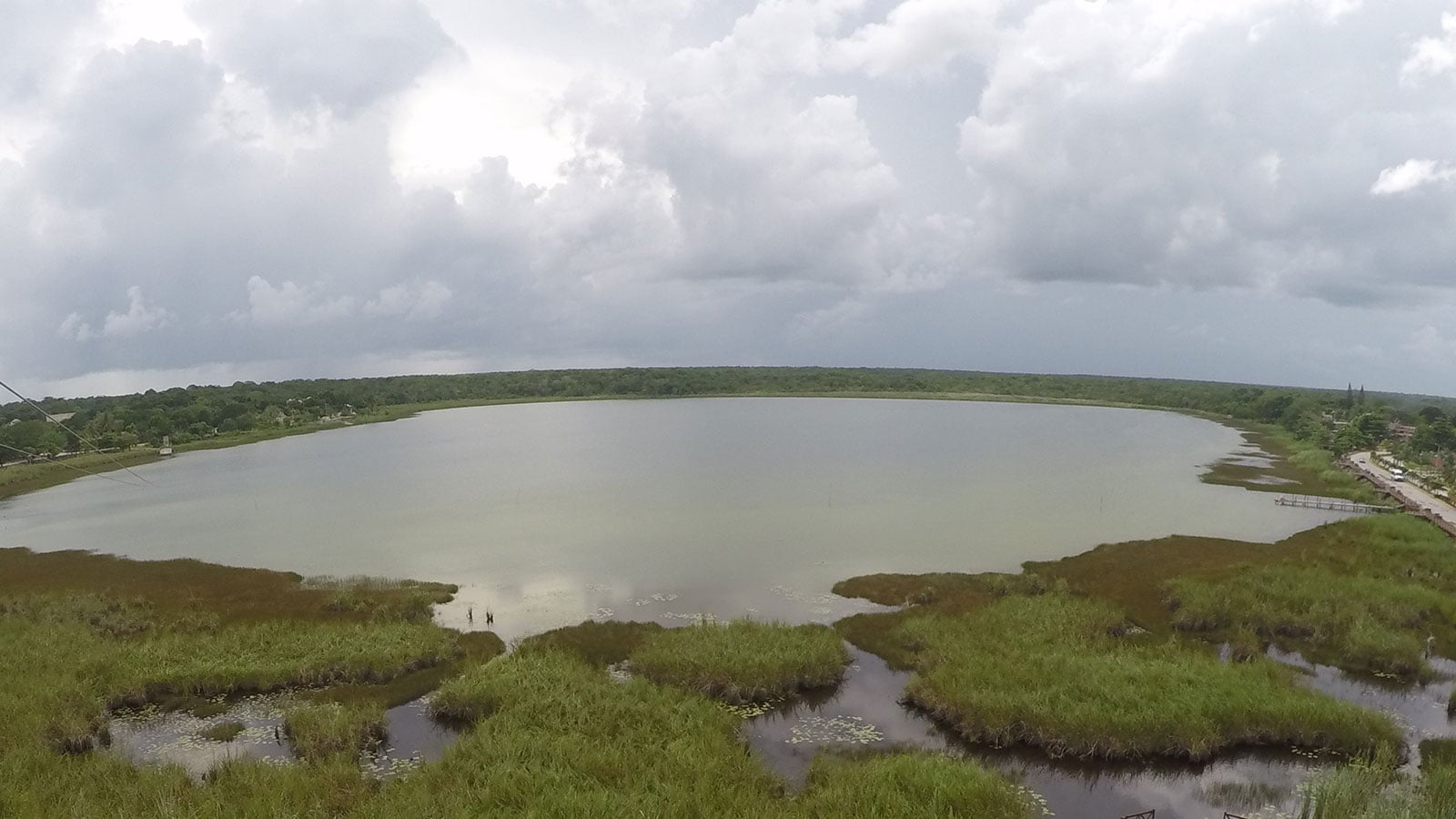
Lago Cobá, where researchers found evidence of mercury contamination linked to the ancient Maya.
Image credit: Wasquewhat / Wikimedia Commons / CC BY-SA 4.0 cropped from original
Mercury used by the ancient Maya in red pigments and religious rituals may have poisoned two lakes in Mexico for centuries, according to a new study in Science Advances. The lakes supplied water and fish to nearby communities, but researchers found mercury in the lake mud at levels considered severely harmful to aquatic life. As pollution increased over the years, many of the organisms living in the lakes declined or disappeared.
The likely source was cinnabar, a red mineral containing mercury that the Maya used to decorate buildings and pottery and in burials and religious ceremonies. They also used liquid mercury, possibly for ritualistic purposes. Researchers believe mercury from these activities washed into the lakes from surrounding settlements.
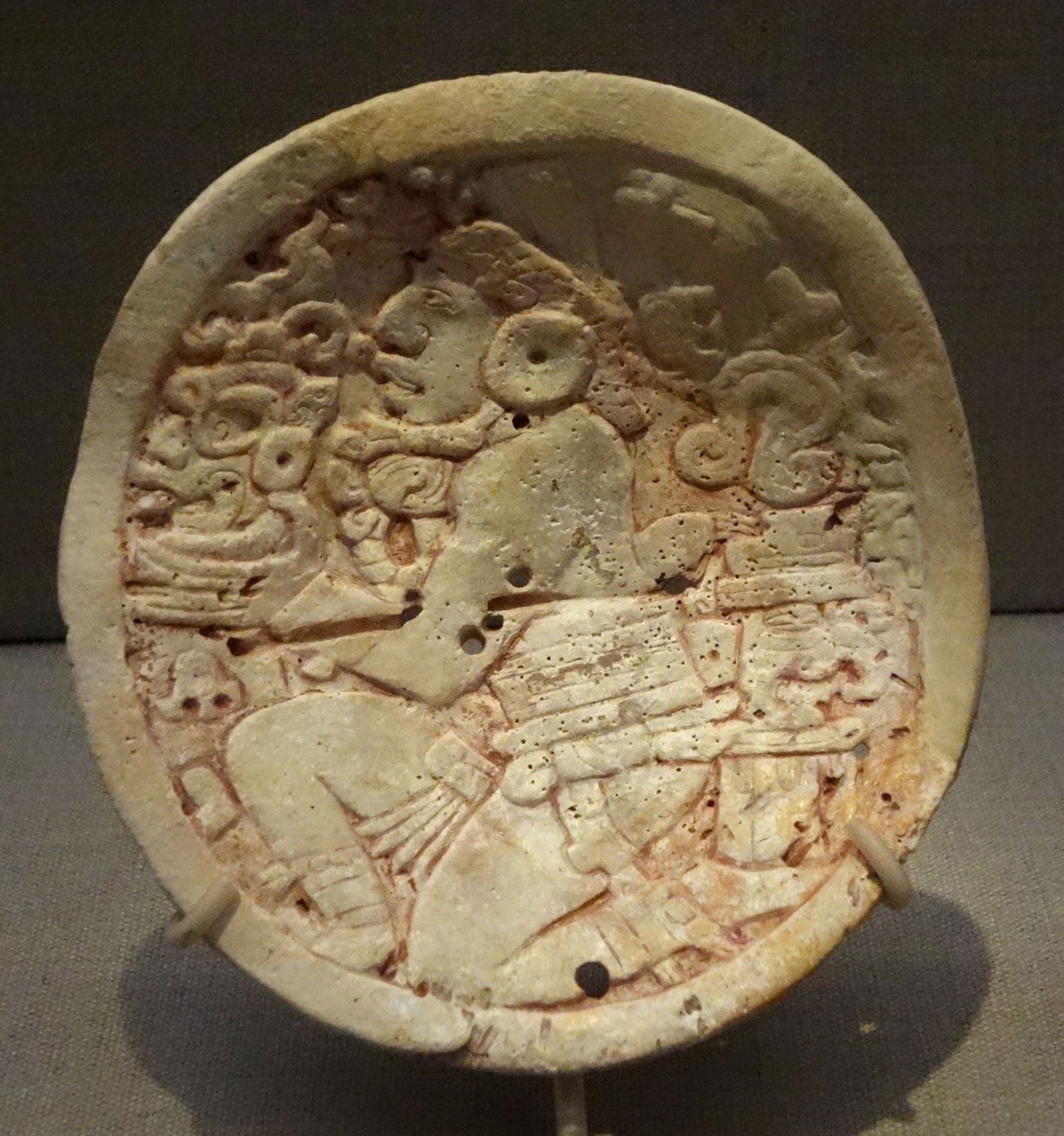
A Maya shell ornament dating to A.D. 400–550 bears traces of cinnabar, a mercury-containing mineral used as a red pigment.
Image credit: Daderot / Wikimedia Commons / CC0 (public domain dedication)
A team led by Matthew Neal Waters of Auburn University analyzed more than 2,000 years of mud deposits from Lago Cobá and Cenote Xcach, two lakes near ancient Maya ruins on the Yucatán Peninsula. By testing layers of mud, the researchers traced how mercury levels changed over time.
At Lago Cobá, mercury contamination began rising around A.D. 40 and peaked roughly 250 years later, reaching concentrations more than twice the modern threshold associated with harmful effects on aquatic organisms. At Cenote Xcach, a smaller sinkhole lake, contamination was even worse. Mercury concentrations peaked at nine times the modern threshold for severe harm to aquatic life, and remained above that threshold for nearly 300 years.
The pollution coincided with major changes in the lakes' ecosystems. The researchers found shifts in communities of algae and bacteria, which form the base of aquatic food webs, along with declines or disappearances of snails, tiny crustaceans, and other small aquatic animals. Two other lakes in the region showed no comparable mercury spike, strengthening the case that local Maya activity contributed to the contamination.
The contamination may also have affected people. Fish and shellfish were part of the ancient Maya diet, and mercury can accumulate in aquatic food chains, raising the possibility that nearby communities were exposed over generations. However, the researchers did not measure mercury in ancient food remains or establish whether anyone suffered mercury poisoning.
The findings add another potential environmental problem to those faced by the Maya during their Classic Period, roughly A.D. 250 to 920. Drought, deforestation, and soil erosion were already putting pressure on their cities. Researchers say mercury pollution may have added to those environmental pressures, although the study does not establish that it contributed to the decline of Maya civilization.

