

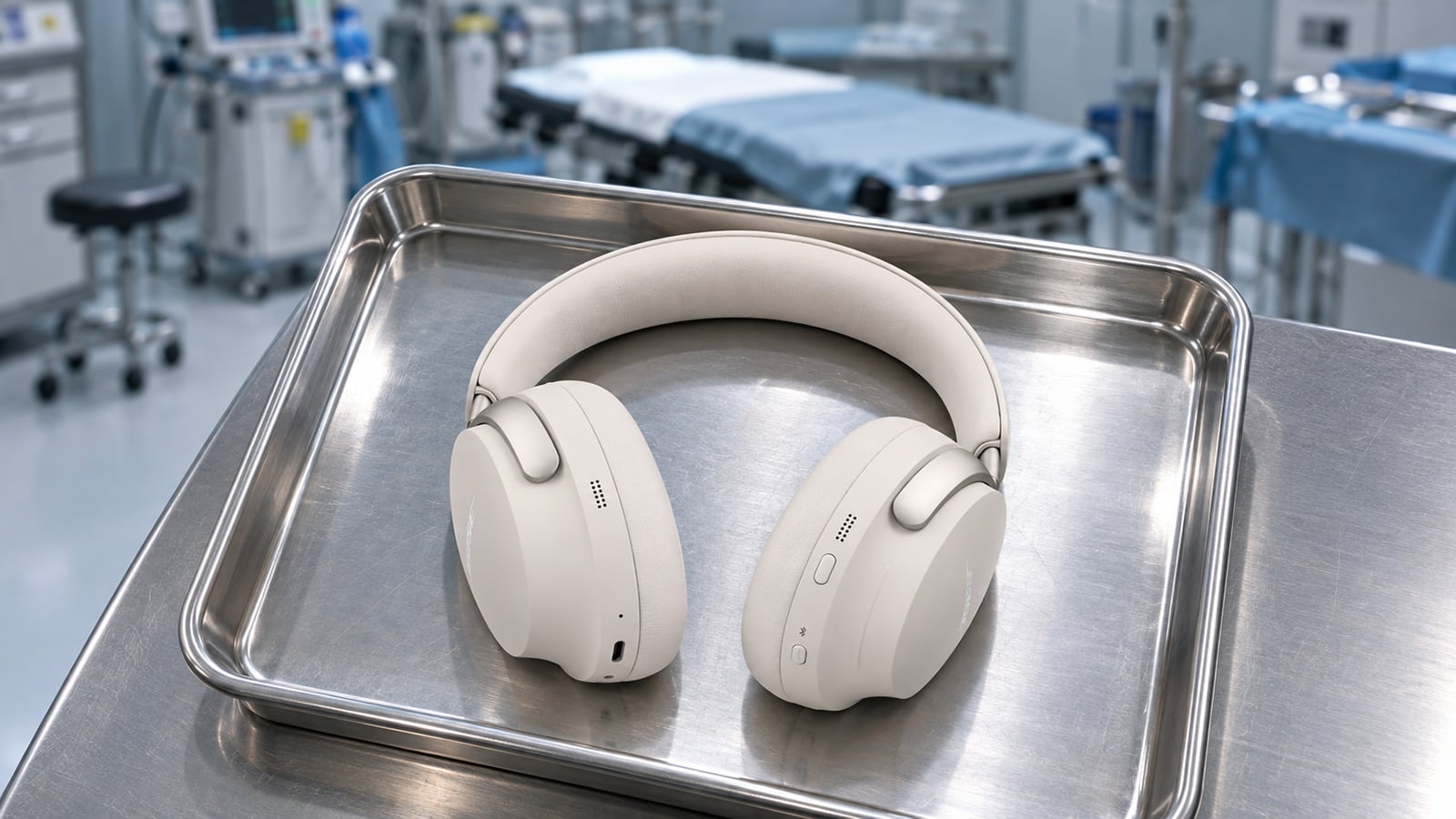
Image credit: Bose, composited by ChatGPT
Patients who wore noise-canceling headphones during surgery were less likely to have nausea and vomiting afterward, the American Society of Anesthesiologists (ASA) reports. In the 48 hours following surgery, only 35.4% of patients who wore headphones during the procedure had symptoms, compared with 52.1% of those without.
Nausea and vomiting after surgery is one of the most common side effects of anesthesia. It can cause dehydration, slow recovery, require extra medication, and lengthen time in the recovery room, according to the ASA. Patients in this study were having minimally invasive gynecological surgery, which carries a particularly high risk even with preventive medication.
Researchers split 192 adults into two groups. Half wore over-the-head noise-canceling headphones from the start of anesthesia until the operation ended, and half did not. Everyone received the same anesthesia and the same anti-nausea medication. Patients with headphones also had milder symptoms during the first 24 hours, and the ASA reported no increase in side effects.
Noise in the operating rooms averaged about 66 decibels, somewhere between normal conversation and a nearby vacuum cleaner. Lead author Huayue Liu of the First Affiliated Hospital of Soochow University in China said the brain continues to process sound to some degree even under general anesthesia. Cutting that noise, she said, could help prevent nausea “without adding another medication.”
The trial covered only minimally invasive gynecological surgery, and researchers also don’t yet know why the headphones helped.
The headphones used in the trial were commercially available over-ear models (researchers didn't mention the brand), so the approach wouldn’t require specialized equipment. If you’re considering bringing a pair for an upcoming procedure, ask your surgical team whether and when you can use them. Our recommendations for over-ear noise-canceling headphones include the Bose QuietComfort Headphones (2nd Gen) ($359), if you're looking for the absolute best performance, and the Soundcore Space 2 ($130) for an solid pair on a budget.

