


Image credit: Suzanne Kantra/Techlicious via ChatGPT
Power stations from Anker, Bluetti, EcoFlow, and Jackery are up to 50% off during Amazon's Prime Big Deal Days, which end October 7th. I have tested and trust all four brands, and the deals range from portable models that keep your phone charged and a couple of lights on to home systems that keep the refrigerator running.
Start with the equipment you want to keep running. Capacity, measured in watt-hours (Wh), tells you how much energy the battery stores. A 1,000Wh battery could theoretically power a 100W device for 10 hours, but conversion losses and the station's own electronics shorten that time, so every runtime estimate in this guide assumes roughly 80% of rated capacity is usable.
Output, measured in watts (W), determines what the station can power. A 1,500W kettle requires at least 1,500W continuous output, even if you use it for only a few minutes. A refrigerator also needs enough surge output (the brief extra power its compressor draws at startup) to get going.
| If you want to power | Capacity | Continuous output | Runtime example (80% usable) |
|---|---|---|---|
| Phones, a laptop, LED lights, a small fan | 250 to 300Wh | 300 to 600W | About 8 hours at 30W; about 4 hours at 60W |
| A portable refrigerator, home office gear, short outages | 768 to 1,024Wh | 800 to 2,000W | About 13 hours at 60W; about 4 hours at 200W |
| A home refrigerator, lights, and phone charging | About 2,000Wh | 1,500 to 2,600W | About 16 hours at 100W; about 8 hours at 200W |
| A refrigerator and freezer for longer outages, or several appliances at once | About 3,000Wh | 2,400 to 3,600W | About 24 hours at 100W; about 8 hours at 300W |
250 to 300Wh: phones, laptops, and lights anywhere you need them
A capacity of 250 to 300Wh with 300 to 600W of output suits phone charging, a laptop, LED lights, or a small fan. At a combined 30W average, a 300Wh battery provides roughly eight hours. A laptop drawing a steady 60W cuts that to roughly four.
Both stations below are easy to carry. A 300W station can only run devices that draw 300W or less, which rules out a 1,500W kettle. If you mainly want to charge a laptop, check USB charging power as well as AC output, and choose a larger battery for more time between charges.

Image credit: Ecoflow
The small station to buy: Bluetti Elite 30 V2
The deal: $219.99, down from $319.00 (31% off)
The Elite 30 V2 is the small-station to buy for charging electronics and running compatible small appliances. Its 288Wh battery and 600W output give you twice the output of the cheapest station here, and at approximately 9.5 pounds it is still easy to carry. It also comes in fun colors, including light green, pink, purple, light blue, and, of course, black.
Lowest price and lightest weight: EcoFlow River 2 240
The deal: $189.00, down from $249.00 (24% off)
If price or weight decides it, the River 2 240 costs $31 less than the Bluetti and weighs approximately 7.8 pounds. Its 243Wh battery and 300W AC output suit phones, lights, and a small fan. The Bluetti's extra cost buys approximately 19% more capacity and twice the output, which makes it the better choice for most people.
1,000Wh: portable refrigerators, home office gear, and shorter outages
Around 1,000Wh capacity and 1,800 to 2,000W output is a useful combination for a portable refrigerator, lights, laptops, and occasional use of more demanding equipment within the station's limits. At a combined 60W average, a 1,000Wh battery gives you roughly 13 hours; at 200W, roughly four.
Weight and charging speed matter if you carry the station frequently or recharge between stops. The two 1,000Wh models below weigh about 25 pounds. Compatible solar panels can replenish them away from an outlet, but are purchased separately.
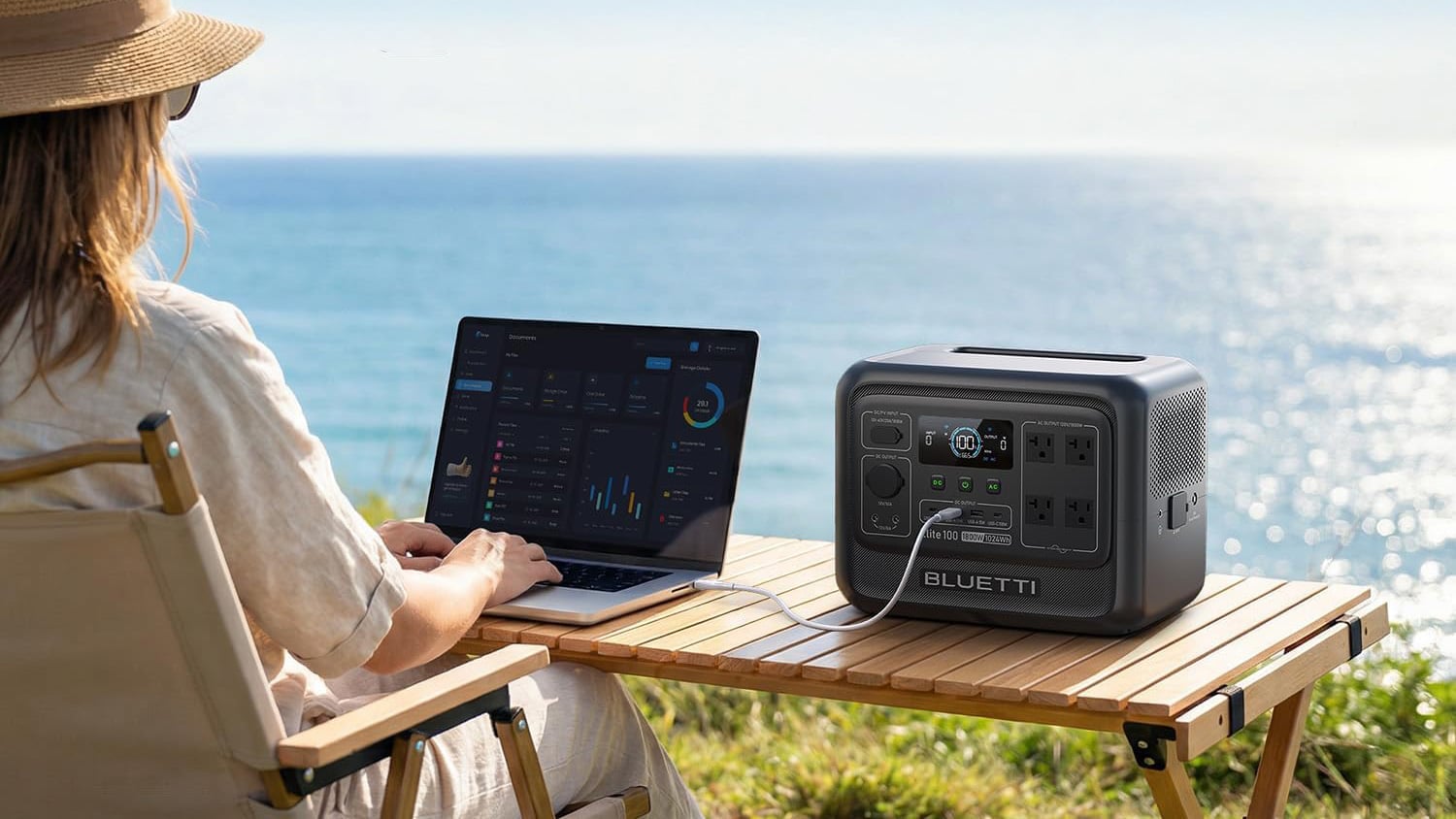
Image credit: Bluetti
Best 1,000Wh value with high solar input: Bluetti Elite 100 V2
The deal: $448.00, down from $899.00 (50% off)
The Elite 100 V2 is the 1,000Wh deal to grab. Its 1,024Wh battery and 1,800W output handle a portable refrigerator, lights, and laptops. Its 1,000W maximum solar input lets it recharge faster than most of its competitors, so if you want the ability to use solar during an outage, this is the way to go. It weighs in at 25.4 pounds.
Fastest recharge before a storm: Anker Solix C1000 Gen 2
The deal: $469.99, down from $599.00 (22% off)
The C1000 Gen 2 has the same 1,024Wh capacity as the Bluetti and a higher 2,000W continuous output. It can recharge fully in 49 minutes with fast charging enabled in the app, which helps when you have a short window to charge it up before a storm arrives or taking on the road. It weighs 24.9 pounds.
Powers a portable refrigerator for under $400: EcoFlow River 2 Pro
The deal: $349.00, down from $429.00 (19% off)
The River 2 Pro gives you 768Wh of capacity and 800W of output, a big step up from the small stations without crossing $400. That suits longer electronics use and compatible portable refrigerators. It weighs 18.15 pounds.
2,000Wh: refrigerators, lights, and small appliances during an outage
For a refrigerator, modest lighting, and phone charging, I would start with around 2,000Wh capacity and at least 1,500W continuous output, then check the refrigerator's startup requirements. If those devices average 100W combined, a 2,000Wh battery provides roughly 16 hours. At a 200W average, that falls to about eight hours.
Refrigerator model, room temperature, and connected equipment change runtime considerably. Anker specifies up to 35 hours for the S2000 powering a refrigerator alone, based on testing with a 24.7-cubic-foot refrigerator in a 77°F room. Adding other devices reduces that time.
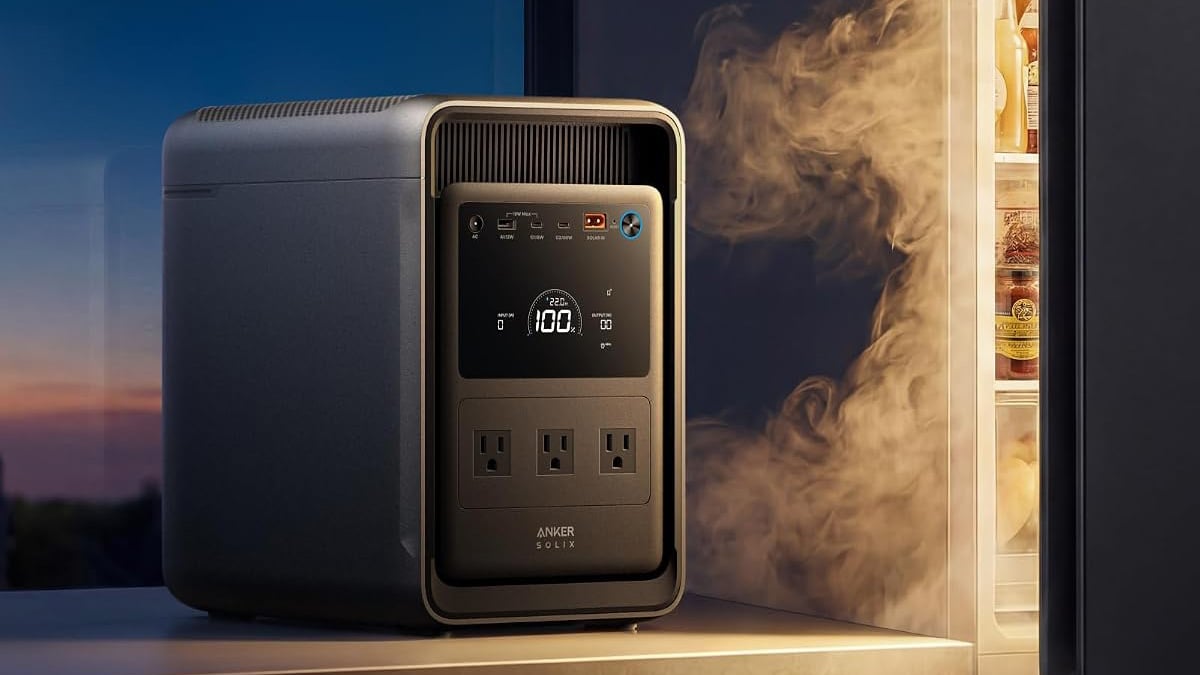
Image credit: Anker
Best low-cost backup for household essentials: Anker Solix S2000
The deal: $649.99, down from $999.99 (35% off)
If your main concern is keeping a refrigerator and smaller essentials running during an outage, the S2000 is the first deal to consider. Its 2,010Wh battery stores almost twice as much energy as Anker's C1000 Gen 2 for an additional $180, a worthwhile upgrade when you expect to use the station primarily at home and can handle its 35.7-pound weight. Its 1,500W continuous output suits a household that prioritizes a few essentials.
Upgrade for higher loads or a second battery: Anker Solix C2000 Gen 2
The deal: $849.99, down from $1,499.00 (43% off)
Spending another $200 on the C2000 Gen 2 gets you 2,400W continuous output and the option to add an additional Anker storage battery for roughly 4kWh total capacity. Its initial 2,048Wh capacity is nearly the same as the S2000's, so the reason to upgrade is the ability to power more demanding equipment and expand capacity later. At 41.7 pounds, it is also heavy.
A super-quiet back-up for the bedroom: EcoFlow Delta 3 Max
The deal: $799.00, down from $1,199.00 (33% off)
If the station will sit next to a bed, the Delta 3 Max runs at 25 decibels or less, while most stations run at 30 to 50dB. It still provides 2,048Wh of capacity and 2,400W of output, and it accepts up to 500W of solar input. At approximately 45 pounds, your bedroom is probably where it will stay.
Saves your battery for what matters most: Jackery HomePower 2000 Plus V2
The deal: $999.00, down from $1,199.00 (17% off)
I like the HomePower 2000 Plus V2's Priority Routing feature. You pick the devices that matter most, and when the battery drops to a level you set, the station shuts off everything else so the remaining energy goes to your priorities. That feature is the justification for the $149.01 premium over the Anker C2000 Gen 2, which has the same 2,048Wh capacity and 2,400W output. The HomePower also supports expansion, with up to five Battery Pack 2000 Plus V2 batteries (2,048Wh each).
3,000Wh: longer outages and more appliances at once
A battery around 3,000Wh provides more time with the same essentials connected: roughly 24 hours at a 100W average, or eight hours at 300W. A refrigerator and freezer, lights, and electronics all share that reserve.
Look for 2,400W or higher continuous output if you also want to use a microwave or other demanding appliance, and total the watts of devices operating together. A 1,500W appliance running continuously would consume the usable energy in a 3,000Wh battery in roughly 1.6 hours, so use heating and cooking appliances briefly when you want to preserve backup time.
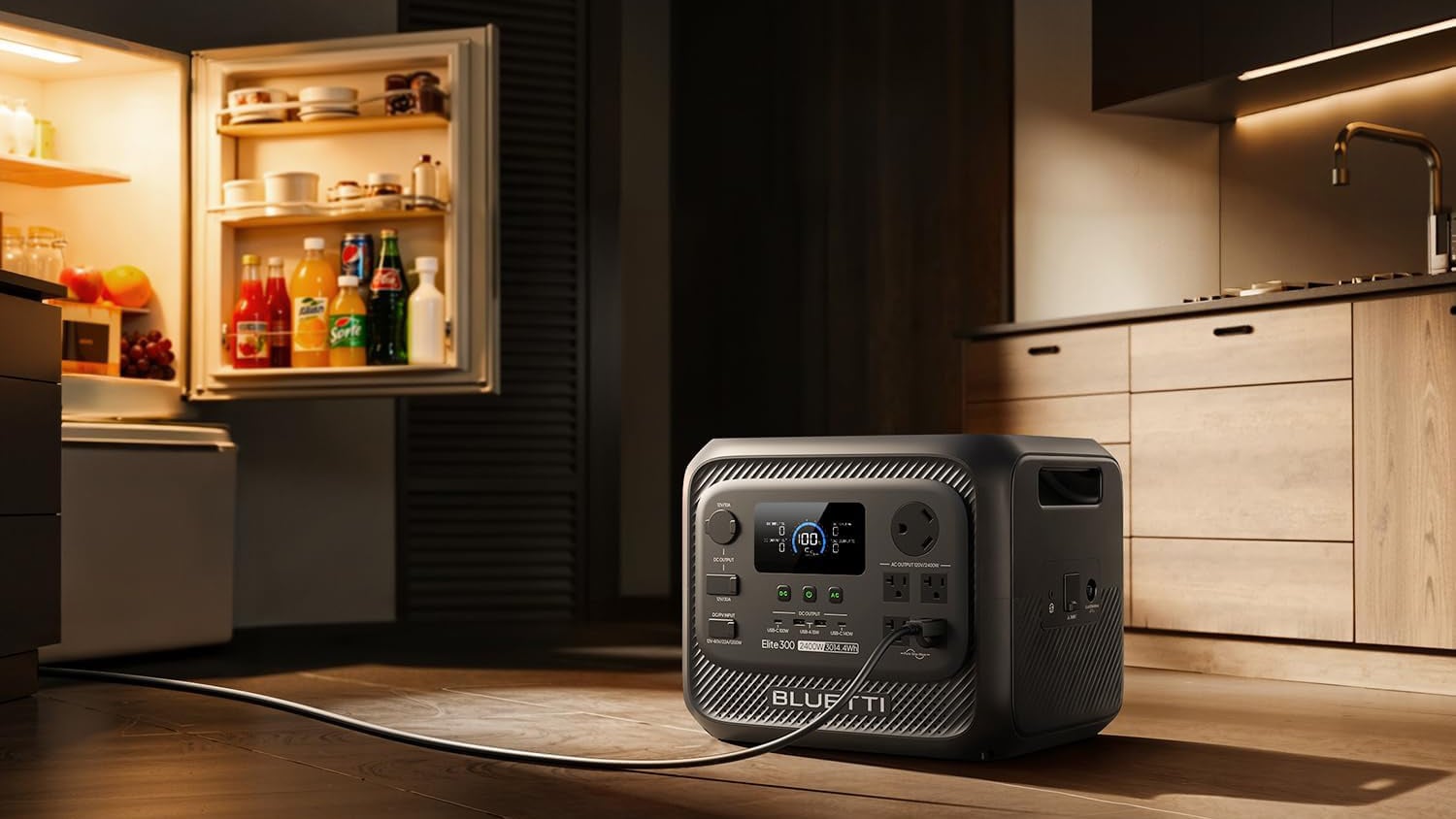
Image credit: Bluetti
More stored energy for longer outages: Bluetti Elite 300
The deal: $999.00, down from $1,499.00 (33% off)
The Elite 300's 3,014.4Wh battery holds approximately 47% more energy than the Anker C2000 Gen 2 for another $149.01, with the same 2,400W output. Its 12V/30A DC output also suits compatible RV equipment. At approximately 58 pounds, it is best suited to a planned location in your home or RV.
Higher output for several appliances: Jackery HomePower 3000
The deal: $1,269.00, down from $1,499.00 (15% off)
The HomePower 3000 offers a different reason to spend more. Its 3,072Wh battery is close to the Elite 300's capacity, but continuous output increases to 3,600W. That makes it the more useful choice if your outage plan involves several appliances operating together. It includes a 30A AC outlet and weighs approximately 59.5 pounds, so there is little weight difference from the Bluetti.
A big system you can expand later: Jackery HomePower 3600 Plus
The deal: $1,538.00, down from $1,899.00 (19% off)
The HomePower 3600 Plus combines a 3,584Wh battery and 3,600W output with storage expandable to approximately 21kWh through additional batteries. It provides about 17% more initial capacity than the HomePower 3000 for $269 more, and weighs 77.2 pounds. A single station supplies 120V; two identical units connected in parallel can supply 240V to handle large appliances.

