

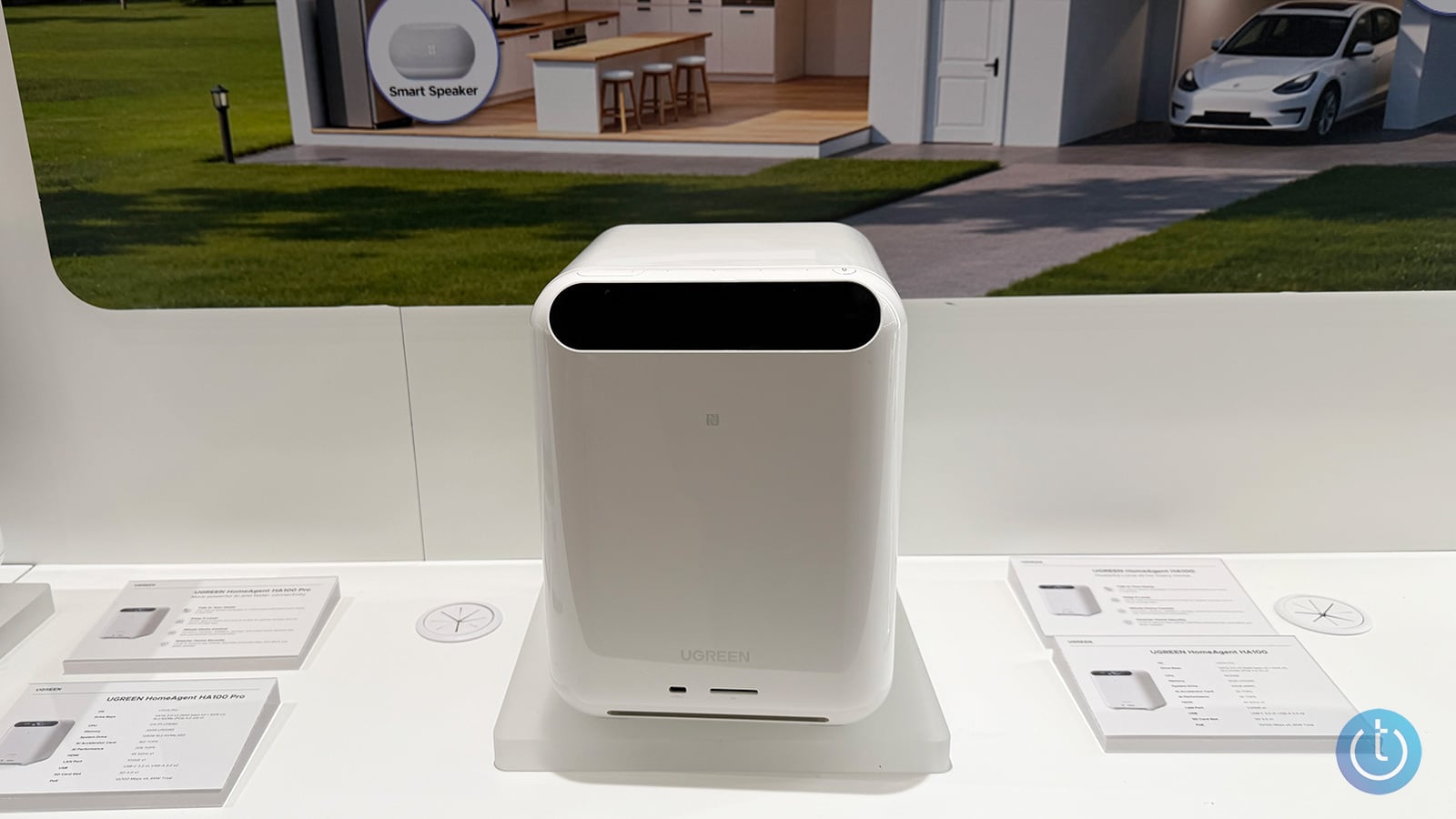
UGREEN HomeAgent acts as a hub for other smart home devices.
Image credit: Adan Doud/Techlicious
Ugreen, long known for its charging gear, is moving into AI-powered smart home devices. To that end, it invited me to attend a launch event in Boston at Gillette Stadium, home of the New England Patriots football team. The company showed a wide array of new charging devices and smart home devices, and since charging is Ugreen's bread and butter, that's where I'll start.
Ugreen launched three new devices under its MagFlow branding. MagFlow is designed to output Qi2, 25W charging while keeping the device cool, and it does so in a variety of ways. The halo product here is what Ugreen is calling the world's first liquid-cooled charging bank. As the description implies, the power bank uses Ugreen's Cryopulse technology, a pump that circulates coolant through the battery to draw away heat. A window on the back shows the liquid moving throughout the battery, though in person, it's not as bright as Ugreen's imagery implies. Still, it's neat to see the bubbles circulating through the device. An LED display shows the power input and output as the device works, which is always preferable to the pips that most power banks have.
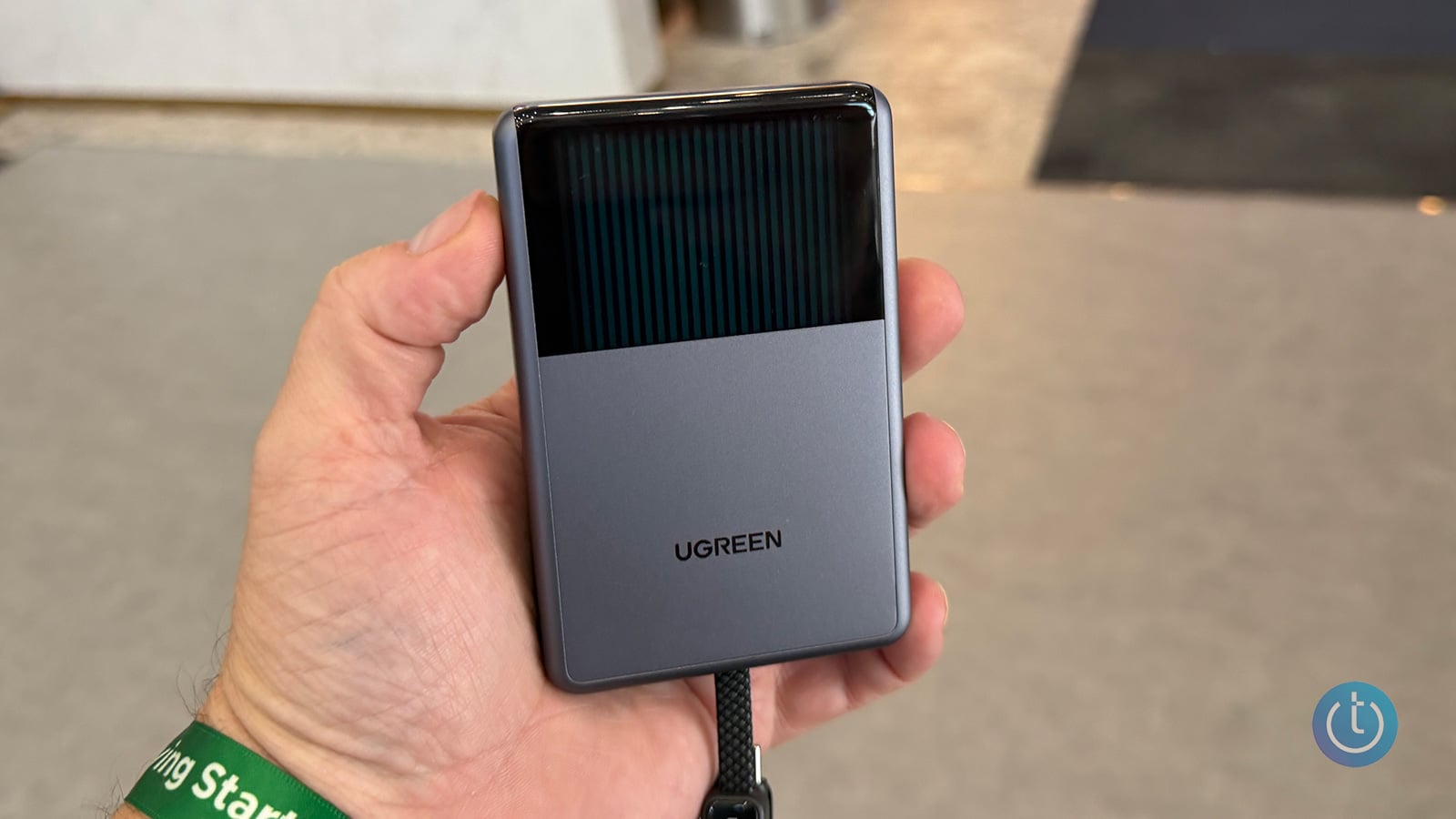
The UGREEN MagFlow Pro Magnetic Power Bank 10,000mAh has a black window that shows liquid moving through the battery.
Image credit: Adan Doud/Techlicious
Meanwhile, the Ugreen MagFlow Pro 3-in-1 charger is a standard phone/watch/earbuds charging stand. It has a cool design, with a similar display built into the pedestal showing power output per device. The caveat here is that, like most 3-in-1 charging stands you can buy today, the watch charger only works with the Apple Watch.
Finally, Ugreen introduced a new travel-friendly charging station. This is a two-piece, magnetic charging stand that flips open to reveal a magnetic charging pad and a secondary charging pad (presumably for your phone and earbuds, though a second phone would work too). If you flip the charging stand open all the way, the charger can prop up your phone for media viewing as well. It's a cute little travel charger I could see adding to my bag in the future.
All of these devices are available now on the UGREEN site. The MagFlow Pro magnetic power bank is $149.99 ($120.00 with code UL65062), the charging stand is $159.99 ($129.60 with code UL75249), and the travel charger is $59.99 ($40.20 with code UL55313). All three of these are at the pricey end of their respective categories, so bear that in mind.
Ugreen's AIoT lineup is next. It's launching on Kickstarter with a big caveat: everything Ugreen showed will eventually be sold separately (Q1 2027 is the estimate), but during the campaign, everything ships as an add-on to the main device, the HomeAgent HA100. It comes in a base version and a pro version. The HomeAgent acts as a hub for the other smart home devices, which cuts both ways.
The HomeAgent looks a little bit like a small minifridge that sits somewhere central to your home. It's a white device with a small black screen, so in terms of decor it should be fairly neutral. Inside the hub are three bays for SATA hard drives that can serve as a NAS storage device, and it also houses an Nvidia Jetson Thor T5000 processor, powerful enough to enable pretty hefty AI processing: up to 2,070 FP4 teraflops.
Much of what the auxiliary devices can do will be powered by the HomeAgent. Presales start today on Ugreen's official AIoT store, with the HomeAgent available at 50% off early-bird pricing. I'd take advantage of it if you're planning to go all in on Ugreen's smart home lineup: full price starts at $999 and climbs from there.
The accessories are not as pricey, fortunately. The first device is a smart speaker built around Uliya, Ugreen's smart assistant. Pronounced Yoo-lee-yah, it's akin to "Hey Gemini" or "Alexa" on the more popular smart speakers. You can ask Uliya to handle tasks, including controlling your other devices. For example, you can ask the speaker to have your indoor camera take a photo. You can also play music through the speaker, but only from files stored locally on the HomeAgent, since it doesn't tie into any streaming service, which is a huge miss because we live in the era where no one owns anything. Given all that, I cannot see a use for this speaker except to control other Ugreen devices.
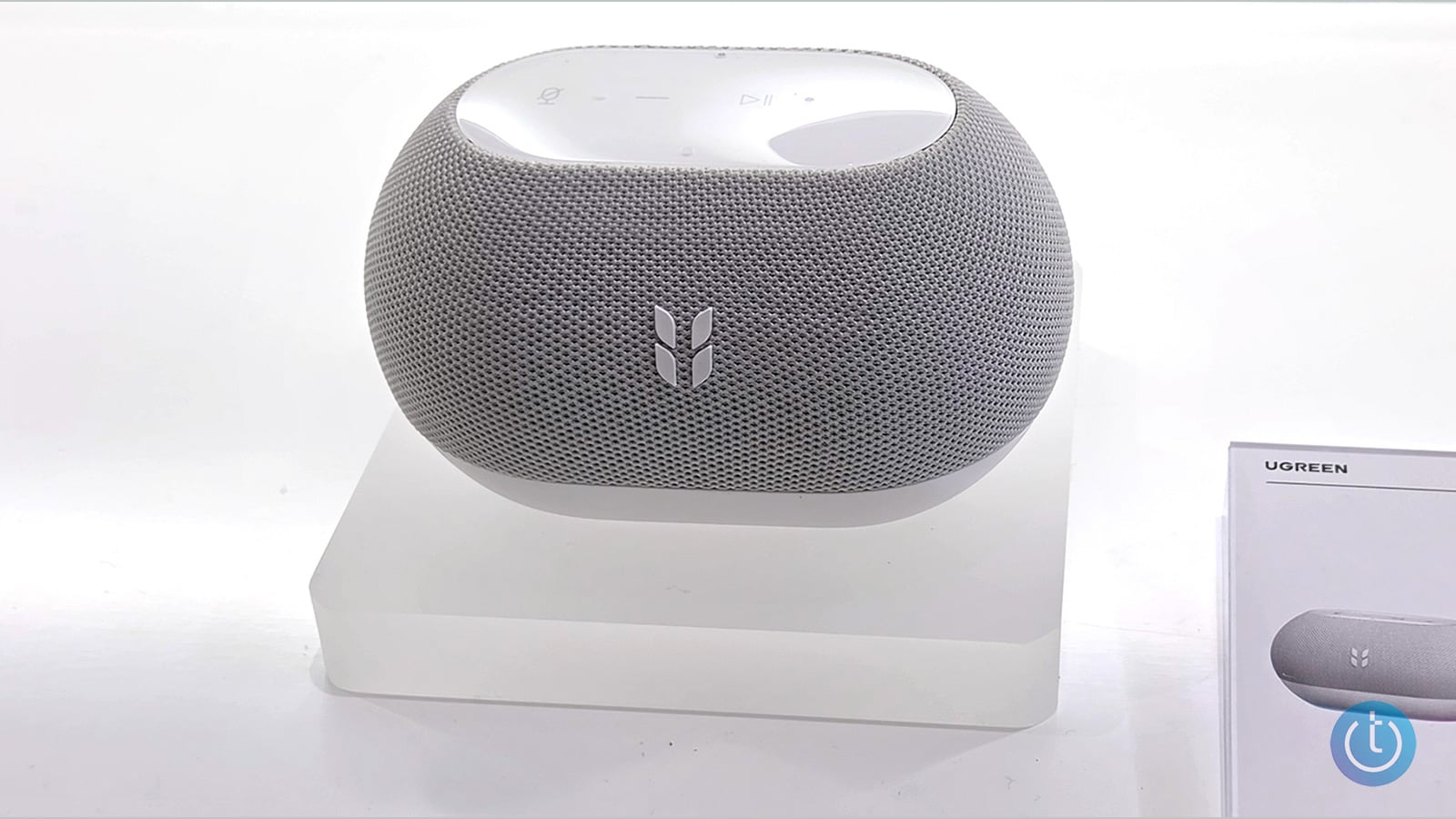
Image credit: Adan Doud/Techlicious
The cameras all share the same pan-and-tilt design, which can track movement in a space. You can also set perimeters where visitors (or intruders) get a warning to back off, or an alarm sounds and red and blue lights start to strobe. It's very dramatic. The key differences are in use cases: the indoor camera is meant for indoors, while the outdoor cameras come in PoE (power over ethernet) and battery/solar-powered varieties, depending on what setup you have available. I suspect most buyers will use the battery/solar combo. Ugreen claims those cameras can run for around six months before recharging becomes necessary, though a full review period will be needed to verify that.
The outdoor cameras come with triple sensors: one static main sensor with 4K resolution, and dual PTZ (pan-tilt-zoom) cameras at 3K resolution. The PTZ cameras support up to 9x hybrid zoom for close monitoring. The tracking accuracy was solid, at least in the demo area I tested. All the cameras include night vision as well.
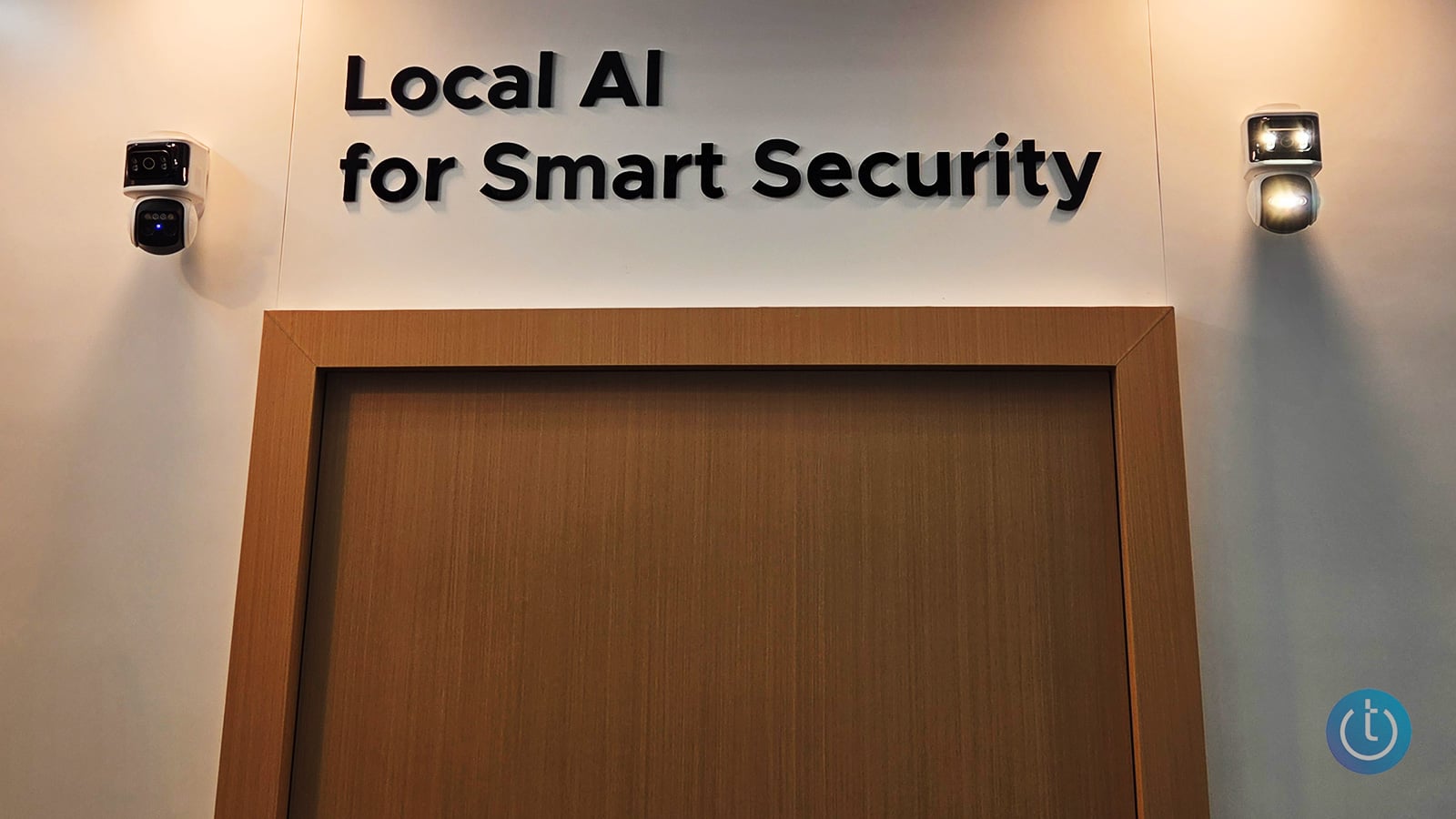
UGREEN outdoor cameras
Image credit: Adan Doud/Techlicious
All of these devices work locally through the HomeAgent, without going to the cloud. That's a pretty big deal these days, and it also skips the subscription that a lot of cameras require. The cameras feed their images into the HomeAgent, which can then send you a summary of the clips it thinks are the day's highlights. Consider keeping a camera in the living room to capture playtime with the kids: the HomeAgent can compile those clips for you automatically. Ugreen wants its cameras to capture both the good times and the bad, which is a nice sentiment.
The HomeAgent can also identify people and pets and report on their locations. For example, when your mom comes over, the HomeAgent can alert you that she's approaching, presumably so you can tuck in your shirt and stop slouching. You can also ask the HomeAgent where your pet was at 3 p.m. yesterday, and it can tell you your dog was in the backyard. You need to identify those people and pets in the app first, but once you do, the facial recognition works.
But the HomeAgent itself seems like a bit…much. I'm no stranger to smart home hubs, but this is a lot more than that. Perhaps that's a good thing: adding more capability to a single device can be a space saver. But that capability comes at the cost of a much larger footprint than the device probably needed. AI processing takes a lot of power, and the more of that we can move off data centers and onto private devices, the better.
The other big question this engenders is cross-ecosystem capability. What can the HomeAgent do with a Philips light bulb, for example? Can my Vivint home security system incorporate these cameras? The cameras support Zigbee, so in theory, it should work. But for as many pain points as Ugreen addresses, there's still one massive question left unanswered, and it's fair to put this to every smart home maker, not just Ugreen: if I buy this, what happens to the rest of my smart home devices? The Ugreen ecosystem feels locked in to the $999 HomeAgent, and it doesn't feel like it welcomes devices from other ecosystems, which is problematic at best.
Read next: How to Pick the Best Surge Protector

