

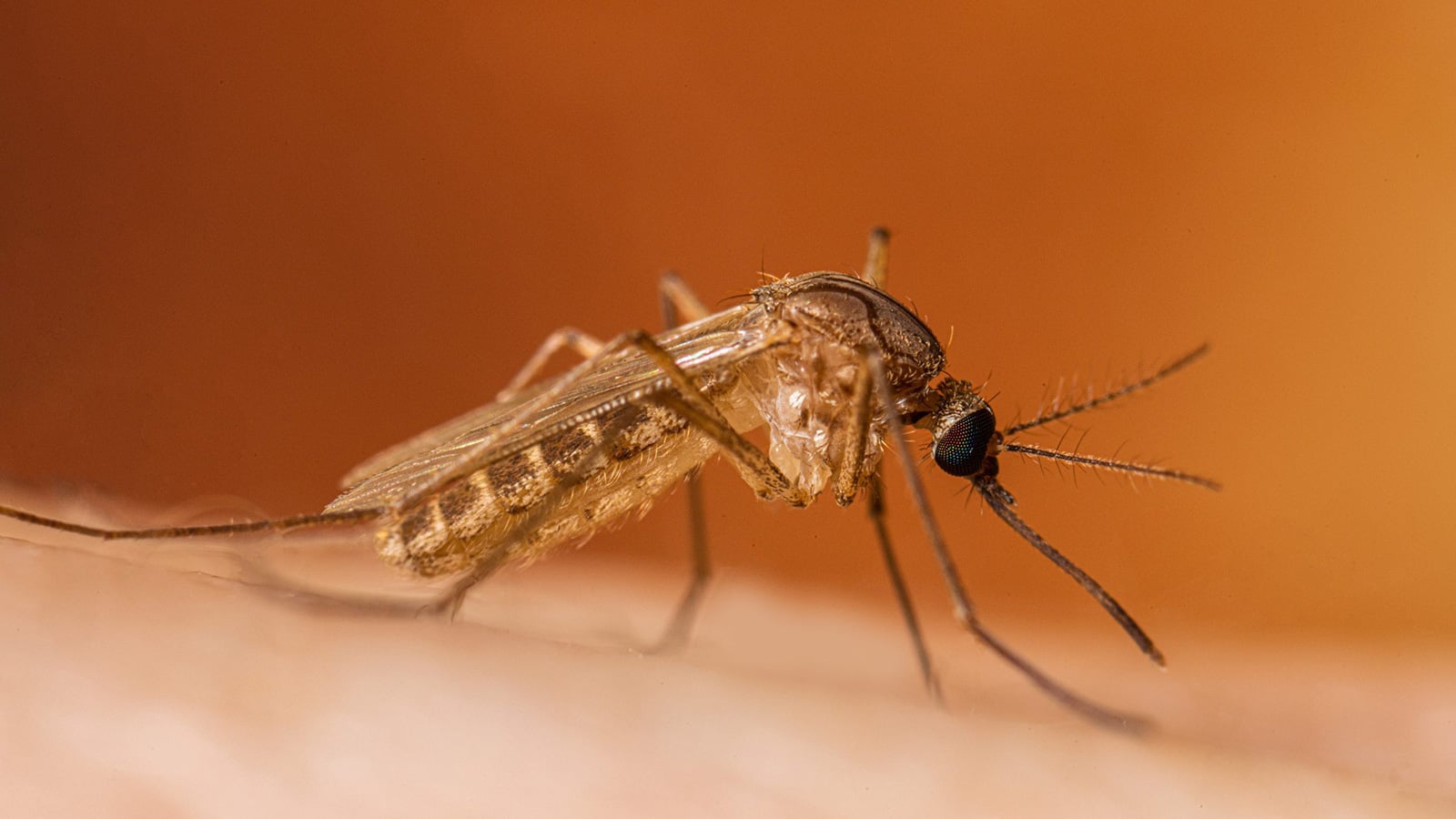
Image credit: U.S. Centers for Disease Control
If mosquitoes keep picking you over everyone else at the barbecue, the microbes on your skin may be to blame. Researchers at the Academy of Military Medical Sciences in Beijing report in Nature Communications that two species of Bacillus bacteria that live naturally on skin were more abundant on volunteers who drew fewer mosquitoes.
Mosquitoes find people using body heat, exhaled carbon dioxide, and chemicals drifting off the skin. Bacteria shape that third signal: as they metabolize, they release airborne odor compounds that change how skin smells to a mosquito.
The researchers tested 37 healthy volunteers by letting 30 female Aedes aegypti mosquitoes choose between each person’s skin odor and an empty control for an hour. They sorted volunteers into more and less attractive groups, then swabbed their skin to see which bacteria lived there. Bacillus licheniformis and Bacillus paralicheniformis were more common in the group that were less attractive to the mosquitos.
That correlation alone cannot show whether it was the bacteria themselves that caused the difference or some other factor. So, the team applied both species of bacteria to the shaved backs of three monkeys. Mosquito attraction dropped significantly compared with untreated controls, with the effect still apparent eight days after treatment began.
The study tested only one mosquito species, and the bacteria have not been tested as a repellent on human skin. The researchers also made no direct comparison with conventional repellents such as DEET. And the Bacillus treatment increased the abundance of Streptococcus and other bacteria potentially associated with human skin infections.
Next, the team plans to test the Bacillus strains against Culex and Anopheles mosquitoes, which include species that transmit West Nile virus and malaria, respectively, and use DEET and other established products as reference controls.

