
We may earn commissions when you buy from links on our site. Why you can trust us.

Heat Wave Hitting This Week? The Best ACs and Fans to Buy Now
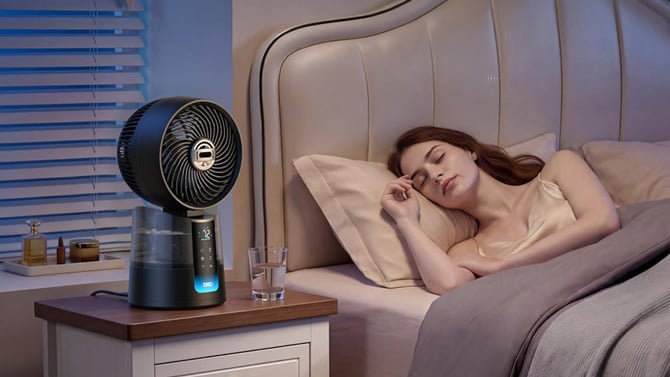
A heat wave is rolling across the United States this week, and if your home doesn't have air conditioning or your current setup isn't cutting it, now is the time to act. I picked the best options based on products we've tested, brands we trust, and top consumer ratings on Amazon. All are available for fast shipping, so you can get set up before the brunt of the heat hits and in time for July 4th celebrations.
Read on for my tips on buying a window or portable room air conditions. Or, if you're ready to check out my product picks, you can jump down to the sections on window AC units, portable AC units, and misting fans.
Buying the right size and type of air conditioner
Bigger is not better when it comes to air conditioners. An oversized unit cools a room quickly but cycles off before it can pull humidity out of the air, leaving you with a space that feels cold and clammy. A properly sized unit runs long enough to do both jobs.
Air conditioners are rated in BTUs, or British Thermal Units, which measure how much heat a unit can remove from a room per hour. The more BTUs, the larger the space it can cool. According to Energy Star, 100 to 150 square feet need 5,000 BTUs; 300 to 350 square feet need 8,000 BTUs; 450 to 550 square feet need 12,000 BTUs. If your room gets a lot of direct sun, bump up capacity by 10 percent. If more than two people regularly use the room, add 600 BTUs per additional person.
But not all BTU numbers are measured the same way. Air conditioners are rated using two different testing standards, and the numbers aren't interchangeable. ASHRAE is the older standard and tends to produce a higher BTU figure for the same physical unit. DOE/SACC (Seasonally Adjusted Cooling Capacity) is the newer, stricter Department of Energy standard that accounts for real-world conditions rather than ideal lab conditions, so it produces a lower, more accurate number. A unit advertised at 8,000 BTU ASHRAE might only be rated 6,000 BTU DOE/SACC.
When you're comparing air conditioners or sizing one for your room, always look for the DOE/SACC number. That's the figure that actually reflects how the unit will perform in your home, and it's the number I've used for the products below.
Once you know the right BTU count, the next thing to look at is how the unit actually delivers that cooling. A standard compressor AC runs at full power until the room hits your set temperature, then shuts off completely. Once the room warms up again, it kicks back on at full power. That start-stop cycle is what causes the noise, the temperature swings, and the higher energy use you get with older or cheaper units.
An inverter AC uses a variable-speed compressor that adjusts its output up or down to match what the room actually needs, rather than switching fully on and off. The result is steadier temperatures, quieter operation, and meaningfully lower energy bills, since the compressor isn't repeatedly drawing a big surge of power to restart. Inverter models cost more upfront, but the efficiency and noise difference are worth paying for if it fits your budget.
Window air conditioners
Window units are the most efficient cooling option and the easiest to live with long-term. Installation takes about 30 minutes, and they stay off your floor space. The tradeoff is that they require a double-hung window and aren't an option if you rent and your lease prohibits them.

Windmill Window AC
The Windmill Window AC is a 6,000 BTU unit that cools spaces up to 250 square feet, and it looks considerably better after installation than most window units. Instead of the plastic accordion flaps that most ACs use to fill the gap on either side, Windmill uses rigid foam panels that also do a better job of blocking outdoor noise and drafts. The install kit comes pre-assembled in the box, and the unit gets high marks from consumers for being quiet and easy to set up. It also supports app and voice control via Alexa and Google Assistant, and the LED display dims automatically after 60 seconds so it won't light up your bedroom at night.
Price: $299 (usually $339). Also available in 8,000 BTU ($429.00), 10,000 BTU ($499.00, usually $549.00), and 12,000 BTU ($549.00, usually $599.99).
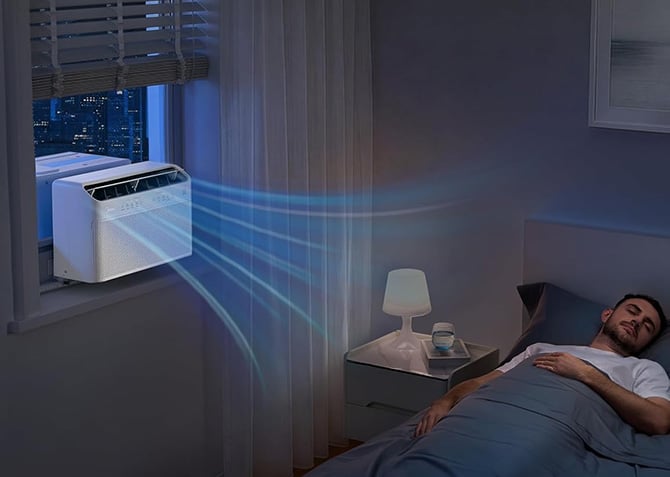
Midea U Shaped Smart Inverter Window Air Conditioner
The Midea 6,000 BTU U-Shaped Smart Inverter uses a U-shaped design that lets you keep your window partially open after installation, so you're not locked out of fresh air on milder days. The inverter compressor runs as low as 32 dBA, making it one of the quietest window ACs available, roughly equivalent to a whisper. We've tested an earlier Midea model and found it easy to install and quiet enough to sleep through. The U-shaped design is now a growing category worth seeking out if airflow matters to you; at 6,000 BTUs, it's sized for rooms up to 250 square feet and uses 37 percent less energy than conventional units.
Price: $349.99. Also available in 8,000 BTU ($379.99, usually $399), 10,000 BTU ($409.99, usually $449.99), and 12,000 BTU ($449.99, usually $509.99).
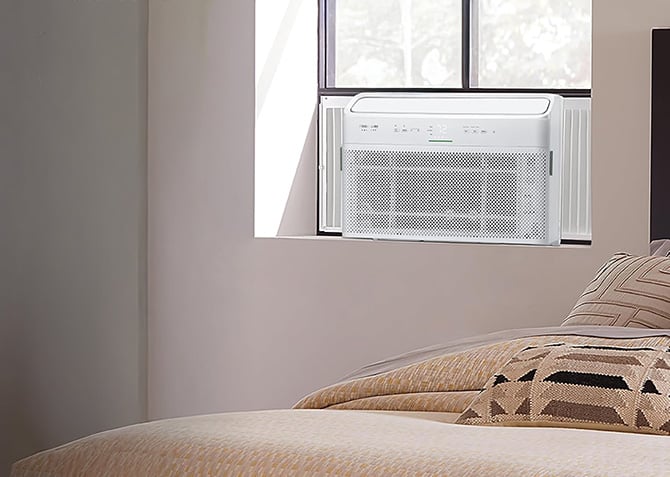
Frigidaire Gallery Smart Inverter Window Air Conditioner
The Frigidaire Gallery 8,000 BTU Smart Inverter covers rooms up to 350 square feet and runs as quietly as 41 dBA thanks to its variable-speed inverter compressor. A built-in indoor air quality sensor monitors the air continuously as it cools, displaying air quality status through the app. The washable filter means you're not buying replacements every season, and Frigidaire's track record for reliability is well established. It earned Energy Star's Most Efficient certification and works with Alexa and Google Assistant.
Price: $429.00. (usually $499.00) Also available in 10,000 BTU ($449.00, usually $529.00)
Portable air conditioners
Portable ACs are the right call for renters or anyone who can't install a window unit. They sit on the floor and vent through a hose routed out a window or sliding door, which means some setup time and a permanent footprint in the room. They work well, but they're louder and less efficient than window units.
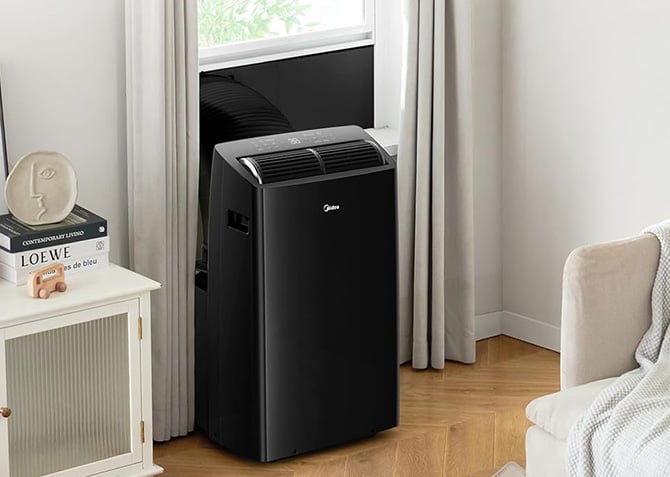
Midea Duo Inverter Portable AC
The Midea Duo 2026 puts out 10,000 BTUs and covers up to 450 square feet, making it a strong choice for larger rooms. Its inverter compressor runs continuously at whatever level the room needs rather than cycling on and off, delivering more than 40 percent energy savings compared to the federal standard. A dual hose-in-hose design locks cool air in and pushes hot air out, projecting cooled air up to 26 feet across the room. At 42 dBA, it's also unusually quiet for a portable unit. It's available in black and white.
Price: $349.99. Also available in 12,000 BTU ($559.99, usually $609.99).
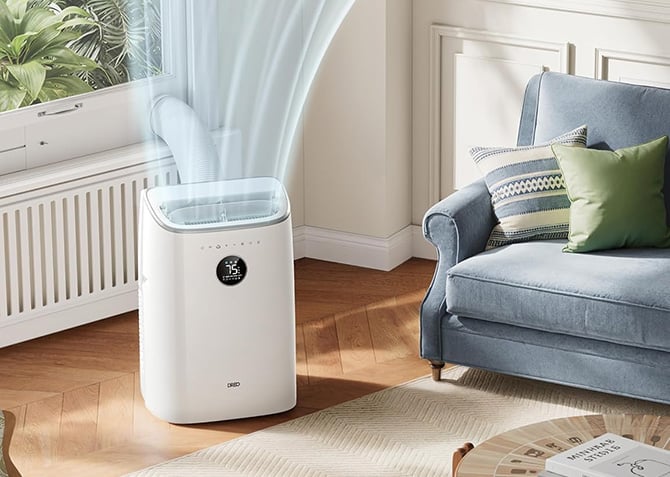
DREO Portable Air Conditioner 318S
The DREO Portable Smart AC 318S is a 5,000 BTU unit that pulls triple duty as an air conditioner, dehumidifier, and fan, covering spaces up to 150 square feet. It uses standard compressor technology rather than an inverter, which keeps the price down but means it cycles on and off rather than running continuously. It's drainage-free in most environments, runs as quietly as 45 dB, and can be controlled via the DREO app, remote, or voice. It's rated between 4 and 5 stars on Amazon and is currently on sale.
Price: $389.99 (usually $439.99). Also available in 6,000 BTU ($469.99) and 7200 BTU ($499.99).
Misting fans
Misting fans lower the actual temperature around you rather than just moving hot air. They're not a substitute for air conditioning in extreme heat, but as a supplement, or if you need something with no installation and fast relief, they make a real difference.
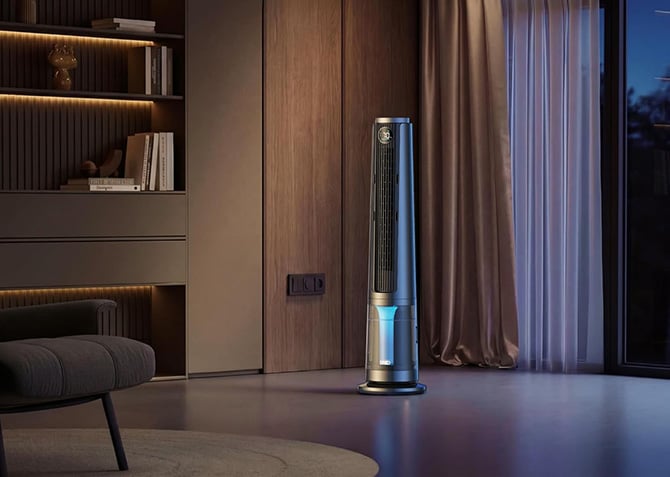
DREO TurboCool 765S
The DREO TurboCool line produces an ultrafine mist that evaporates before it reaches your skin, so you feel the cooling effect without feeling wet, and surfaces stay dry. I've tested the TurboCool line and we gave it our CES 2026 Editor's Choice award. The DREO TurboCool 765S ($199.99) is a 3-in-1 oscillating tower fan that works as a fan, misting cooler, and humidifier. The fan offers 12 speeds, the 6-liter tank runs for up to 30 hours on low, and DREO claims a temperature drop of up to 10°F. The TurboCool 516S ($99.99) is a more compact desktop version with a 1.3-liter tank, up to 12 hours of runtime, a 5°F temperature drop, and a 150° oscillating base. Both run as quietly as 20 dB at their lowest settings and can be controlled via app or voice. If you don't need voice and app control, the TurboCool 516 is on sale for $69.99 (usually $89.99).
Price: $199.99
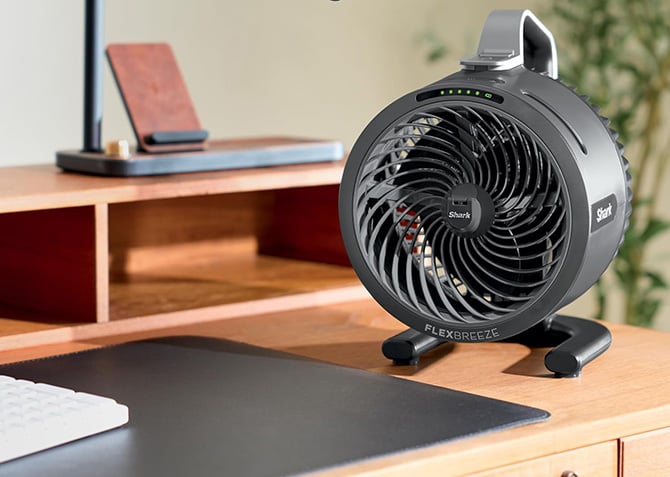
Shark FlexBreeze HydroGo Pro Fan
The Shark FlexBreeze HydroGo Pro Fan weighs 5 pounds and runs on battery for up to 29 hours on low without misting, 8 hours on medium, and 3.75 hours at maximum speed. It can also run corded if you're near an outlet. The mist is fine enough that you won't feel wet, but you need to sit close to feel the cooling effect, and the integrated tank needs refilling roughly every 25 to 30 minutes with heavy misting use. It's rated between 4 and 5 stars on Amazon.
Price: $127.99 (usually $149.99)
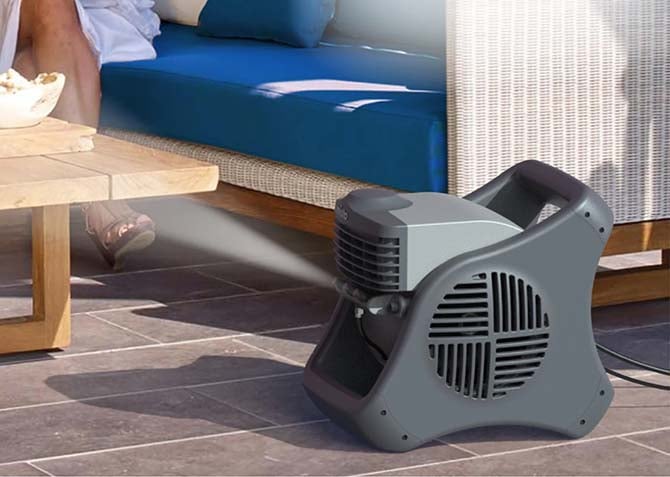
Lasko Misto Outdoor Misting Blower Fan
The Lasko Misto Outdoor Misting Blower Fan is a 15-inch pivoting blower that connects directly to a standard garden hose via a 9-foot supply hose, so there's no tank to fill or run dry. Three speeds and a 90-degree pivot let you direct the mist flow where you need it, and automatic louvers sweep the air across a wide area. The mist is coarser than the DREO and Shark options, and reviewers report getting wet if they sit too close, but moving back to around 15 to 20 feet delivers a cooling breeze without the dampness. Lasko claims up to a 25°F temperature drop, which is plausible in dry conditions. The fan is built to stay outdoors, with weather, UV, and rust-resistant construction and an in-line GFCI plug rated for outdoor use. It's the right choice for a patio, deck, or backyard setup where a little water isn't a concern.
Price: $119.99 (usually $178.99)
3 tips for getting the most out of your AC unit
Set your thermostat as high as you can comfortably tolerate. The smaller the gap between indoor and outdoor temperatures, the less your unit has to work and the lower your electricity bill.
On dry days, keep the fan speed high. On humid days, drop it to low: slower air movement gives the unit more time to pull moisture out of the air, which is where a lot of the discomfort comes from.
Use an interior fan alongside your window AC to spread cooled air through more of your home without meaningfully increasing electricity use.
Read next:Our favorite portable handheld fans
[Image credit: DREO, Windmill, Frigidaire, Midea, Shark, and Lasko.]

