

The federal government began enforcing the Take It Down Act (TIDA) this week, giving victims of nonconsensual intimate image abuse a federally backed right to demand removal – and significant consequences for platforms that ignore them.
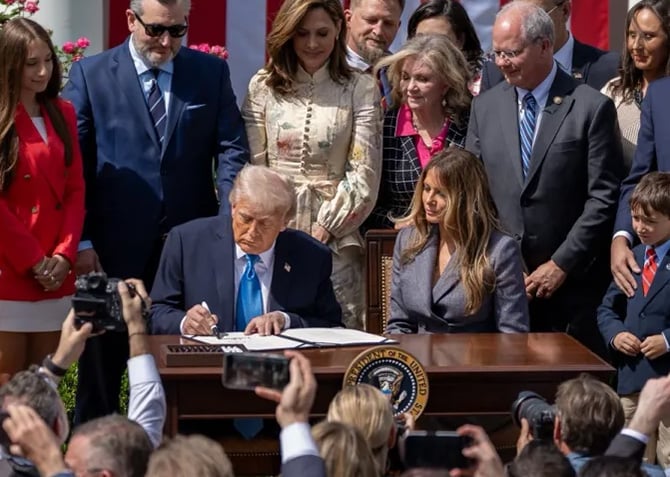
The law, signed by President Trump on May 19, 2025, requires covered platforms to remove intimate photos or videos posted without a person's consent within 48 hours of receiving a valid request. That includes AI-generated deepfakes, not just real images. As of now, platforms that fail to comply face civil penalties of $53,088 per violation. And given that a single image can be copied and reposted hundreds of times across a platform, that exposure adds up fast.
The FTC, which enforces the consumer-facing section of the law, launched a complaints portal at TakeItDown.ftc.gov where victims can report platforms that have ignored a removal request or haven't set up a process to accept one at all.
The companies are already on notice
The FTC didn't wait until now to start applying pressure. Last week, Chairman Andrew Ferguson sent warning letters to 15 major companies – Alphabet, Amazon, Apple, Automattic, Bumble, Discord, Match Group, Meta, Microsoft, Pinterest, Reddit, SmugMug, Snapchat, TikTok, and X – reminding them of the deadline and what's at stake if they miss it.
That list covers many of the largest platforms where nonconsensual images circulate. The fact that the FTC named them publicly, before enforcement officially began, signals the agency may intend to move quickly on complaints.
What platforms are required to do
Any website, app, or online service that hosts user-generated content or regularly publishes intimate images falls under the law. That means social media, messaging apps, image and video sharing platforms, and gaming services are all covered.
Each must post clear, plain-language information about how to submit a removal request and make it easy to find wherever intimate content might appear (not buried in terms of service). Platforms must assign a tracking number to each request so victims can follow up, and so the FTC can verify the resolution. Platforms are also required to search for and remove identical copies of a reported image within the same 48-hour window.
The law's protections extend to people who don't have an account on the platform where the image appears, and you must be able to submit a removal request as a non-member.
How to get your pictures taken down
If intimate images of you have been posted without your consent, file a removal request with the platform first. If the platform ignores it or has no visible process in place, report it at TakeItDown.ftc.gov.
While removal requests under TIDA address images currently on a site, they don't prevent future uploads. There are two non-profit services available to help you do that. Each allows you to upload a unique digital fingerprint of the image you don't want shared, which is then used by participating platforms to detect and prevent its upload. The fingerprint consists only of a hash value representation of your image – the content itself never leaves your device and can't be viewed by anyone.
For images involving minors, the National Center for Missing and Exploited Children operates takeitdown.ncmec.org to prevent uploads on Meta (Facebook & Instagram), MindGeek (Pornhub, YouPorn, and other adult sites), OnlyFans, and Yubo. For adults 18 and older, StopNCII.org does the same thing across Meta, Pornhub, Reddit, Tiktok, X, and more social and adult platforms.
Two things to keep in mind: the 48-hour clock doesn't start until a platform receives what it considers a valid request, so platforms have some latitude to define that threshold. And the law doesn't require platforms to proactively scan for nonconsensual content – the burden of discovery still falls on victims. What TIDA does do is give people a federally enforceable right to demand action, backed by an agency that has already shown it's watching.
Read next: YouTube unleashes new tool to hunt down political deepfakes
[Image credit: WhiteHouse.gov]

