

You have probably seen countless photos online and in your social media feeds and wondered whether they were real or made by AI. Maybe it was a celebrity doing something outrageous or a controversial news image that looked slightly off. Up until now, your options for checking were limited. You could reverse image search it, try to spot visual glitches like extra fingers, or upload it to a third-party detection site and hope for the best. None of that is quick, and none of it is reliable.
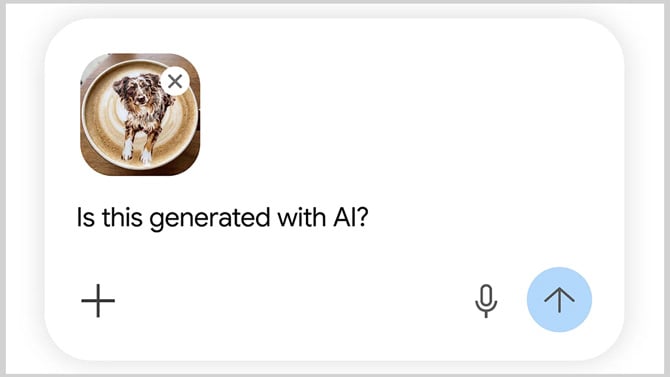
Google announced at I/O 2026 that it is building AI image detection directly into Chrome, Search, and Circle to Search using its SynthID watermark technology. If it works as promised, checking whether a photo is real will be as easy as right-clicking it.
How the AI image detection works
SynthID is an invisible watermark that gets embedded into an image when it’s created by an AI tool. The watermark survives common edits like cropping, color adjustments, and compression, so it’s difficult to remove without knowing it’s there.
Google is now building detection for these watermarks into three places. In Chrome on desktop, you can right-click any image and check whether it was AI-generated. On Android, Circle to Search will flag images that show signs of AI generation. And in the Gemini app, you can upload an image, video, or audio file and ask whether it was made by AI.
The system also checks for Coalition for Content Provenance and Authenticity (C2PA) Content Credentials, which is a separate standard that tracks an image's history, including where it originated and whether it has been edited. C2PA is used by over 500 companies, including Microsoft, Adobe, and Meta.
Read More: Understanding deepfakes and how to spot them
It’s not just Google
The bigger deal is that SynthID is not limited to Google's own AI tools anymore. OpenAI, Nvidia, Kakao, and ElevenLabs have all adopted the standard, which means images generated by ChatGPT, DALL-E, and other platforms will also be detectable. Google says over 100 billion images, videos, and audio files have already been watermarked using SynthID.
That cross-industry adoption matters more than any single feature. A watermark system only works if most AI tools are using it, and this is the closest we have gotten to that so far.
What this AI image detector will not catch
This only works on content created by AI tools that use SynthID or C2PA Content Credentials. If someone generates an image with a tool that does not embed the watermark, there is nothing to detect. So, don't assume no flag means "not AI".
Still, having a quick way to check an image without uploading it to some third-party website is a meaningful step. The Chrome right-click option alone will probably save a lot of people from sharing something they thought was real. And Circle to Search for things like your social media feeds will flag which of your friends still haven't gotten the message.
[Image credits: Google]

