

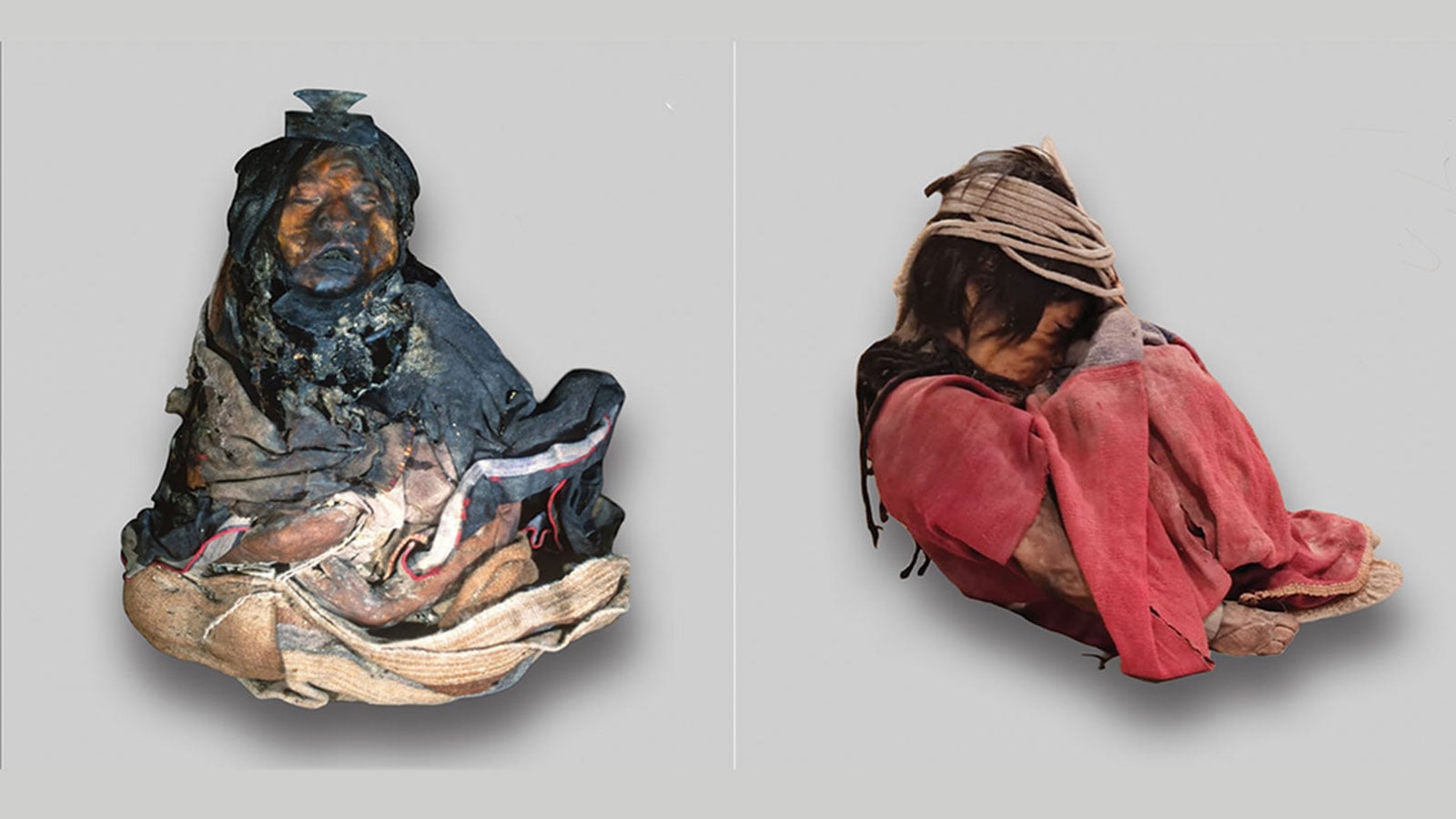
The mummified remains of two Inca children sacrificed on Llullaillaco volcano: a six-year-old girl (left) and a seven-year-old boy (right).
Image credit: J. Reinhard and D. Socha / Antiquity
Chemical tests on eight frozen Inca mummies show that children sacrificed on Andean mountaintops about 500 years ago consumed coca, alcohol, and in at least one case a plant compound called harmine before they died, according to a study published in Antiquity. Coca turned up in every hair sample, and signs of alcohol appeared in several of the mummies. Harmine, whose most probable sources grow only in the Amazon rainforest, was found in the nails of a 14-year-old girl known as Juanita.
The victims belonged to the capacocha, one of the most sacred rituals in the Inca Empire, in which children were offered to important deities and became intermediaries between living people and the divine. They were often given psychoactive substances, possibly as a perceived means to enhance their prophetic abilities. Seven of the eight mummies were female, and they came from five mountains in Peru and Argentina: Ampato, Chuscha, Llullaillaco, Quehuar, and Sara Sara.
How hair and nails keep a record
Chemicals absorbed by the body can become embedded in keratin, the protein in hair and nails, allowing toxicologists to identify substances consumed long before death. For most longer hair samples, researchers analyzed the centimeter closest to the scalp, representing approximately the final month of life.
Two mummies, from Chuscha and Sara Sara, had tested negative for cocaine in earlier studies; this time their hair tested positive. Lead author Dagmara Socha of the University of Warsaw says recent advances in toxicology can now detect very low concentrations of these substances.
Coca and corn beer
The cocaine traces come from chewing coca leaves, which the Incas offered to their gods and which could also have eased altitude sickness and fatigue during the children’s long climbs. Evidence of alcohol consumption showed up in four mummies from Chuscha and Llullaillaco. Historical records describe the children being given chicha, a corn beer, to dull their senses and calm them during the final stage of the ritual.
Hair from the Chuscha mummy, a girl about eight years old whose body was found by grave robbers in the 1920s, offers the most detailed timeline. The researchers cut her hair into six segments, each representing roughly a month. Cocaine concentrations fluctuated before declining in the final month, while evidence of alcohol consumption appeared only in that last segment. The findings suggest a change in the substances she consumed as she entered the final stage of the ritual.
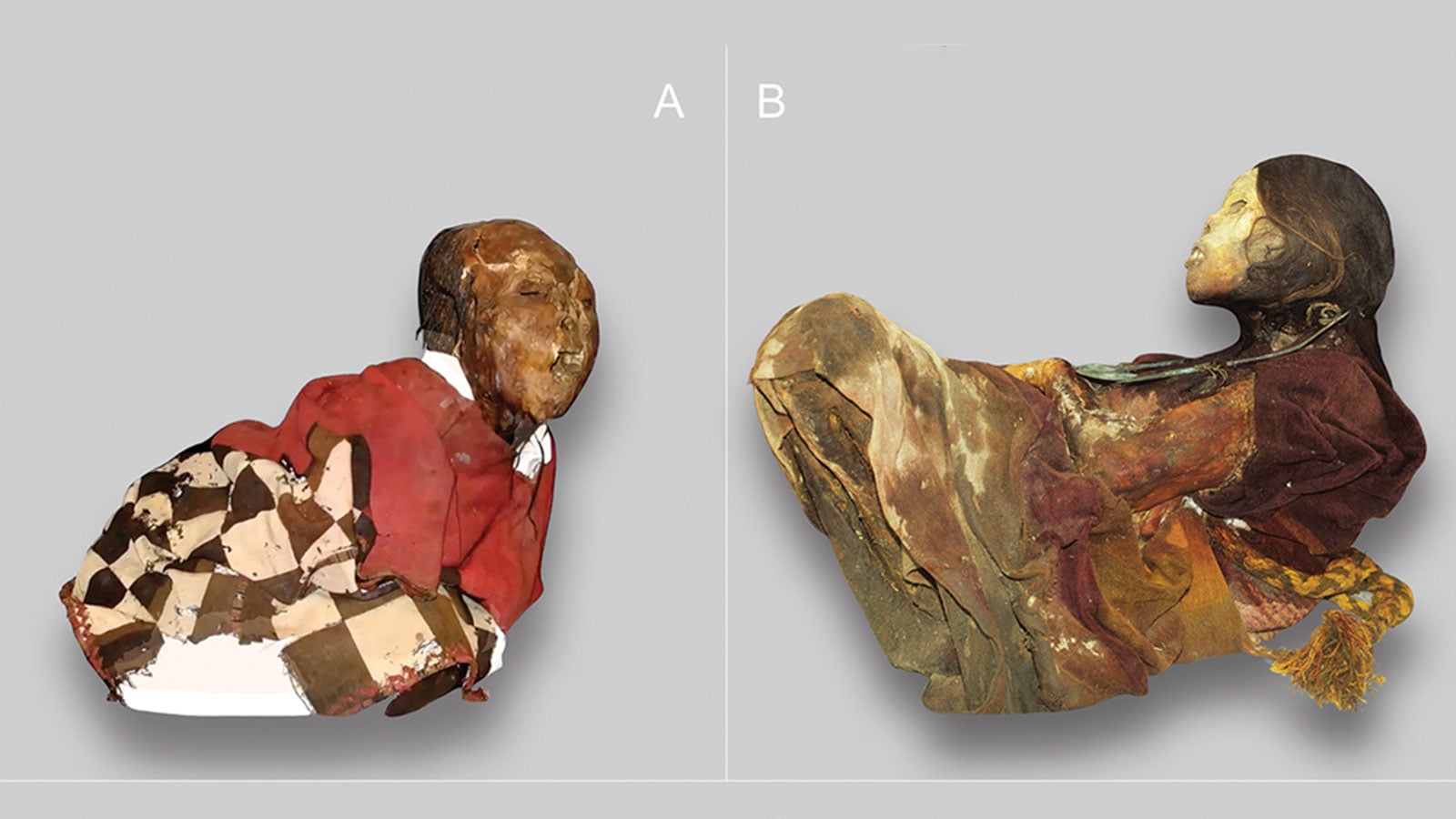
Two girls sacrificed during the Inca capacocha ritual: an 8-year-old girl (left) and a 14-year-old girl (right).
Image credit: J. Reinhard and D. Socha / Antiquity
Juanita’s harmine
Juanita, also called the Ampato Maiden, was found in 1995 after a burial platform near Ampato's 6,300-meter summit partly collapsed. Her nails contained small amounts of harmine, a compound found in vines used to make ayahuasca, the traditional Amazonian psychoactive drink. The researchers say the most probable sources are plants native to the Amazon rainforest, suggesting they were traded over long distances to reach the Andes.
Harmine interferes with an enzyme that breaks down brain chemicals including serotonin and dopamine, and researchers have studied its potential antidepressant effects. The authors suggest that the plant may have been given to calm the children or improve their mood, although its precise purpose in the ritual remains unknown. Earlier work by the same team found harmine in two other children from Ampato, and the compound may point to a harmine-containing beverage having a specific role in ceremonies on that mountain.
The nail samples were contaminated, likely by environmental pollutants, which made the results harder to interpret, and the authors say hair from Juanita still needs to be analyzed to confirm the harmine.
It's possible other substances were consumed
Read next: Skull fractures hint at human sacrifice in Egypt's First Dynasty

