

Image credit: Suzanne Kantra/Techlicious via ChatGPT
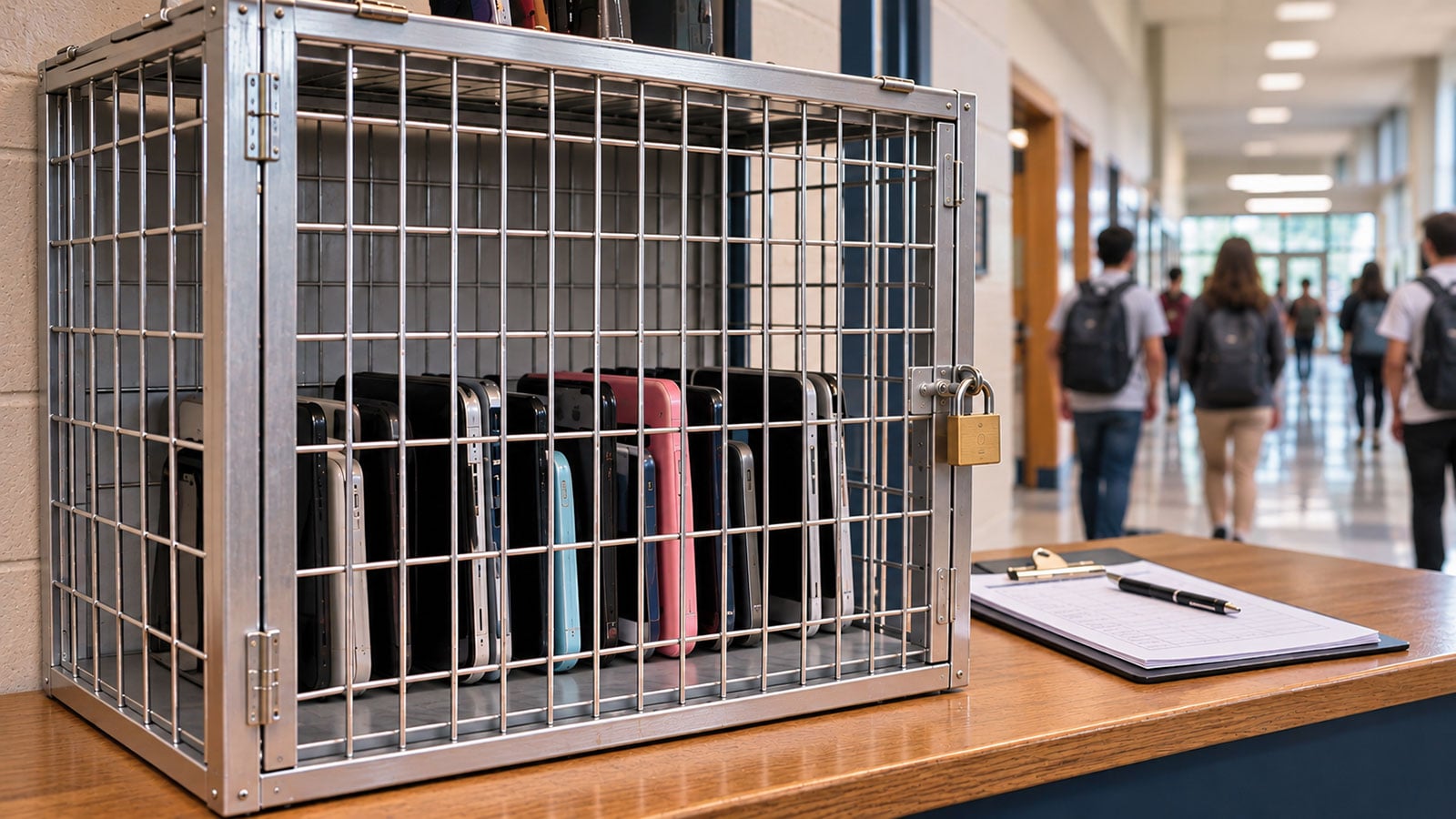
Banning smartphones during the school day did not produce meaningful improvements in teenagers’ mental health, according to a study published October 27 in JAMA Network Open.
Schools adopt phone bans in hopes of reducing distractions, bullying, and mental health problems. Researchers from Reykjavik University and collaborating institutions analyzed nearly 24,000 survey responses from 13- to 15-year-olds at 70 Icelandic schools. Of those, 22 introduced phone bans between 2018 and 2023. Compared with schools that didn't introduce bans, those schools showed no meaningful improvement in depression, anxiety, hostility, or overall well-being.
Bullying, both in person and online, showed no significant change at ban schools, and neither did students’ perceived support from peers. Students also reported no significant reductions in their overall daily time spent on social media, gaming, or watching videos.
The authors conclude that bans implemented alone “may be insufficient to improve adolescent mental health at the population level.”
Classroom attention, academic performance, and teacher workload fell outside the outcomes the researchers measured, so a school may still have those reasons to ban phone use.
Earlier research cited in the paper has produced mixed results. A U.K. study found that school phone restrictions were not associated with improvements in mental health, sleep, physical activity, academic performance, or classroom behavior. A Norwegian study linked bans to reduced bullying and mental health care use among girls, as well as some academic gains. A smaller South Australian study found modest improvements in psychological distress, including symptoms of depression and anxiety.
Phone bans may still make classrooms easier to manage, but the Icelandic findings suggest schools shouldn't expect those restrictions alone to improve students' mental health. That's a considerably more complicated problem than limiting access to a smartphone.

