

Image credit: Suzanne Kantra/Techlicious via ChatGPT
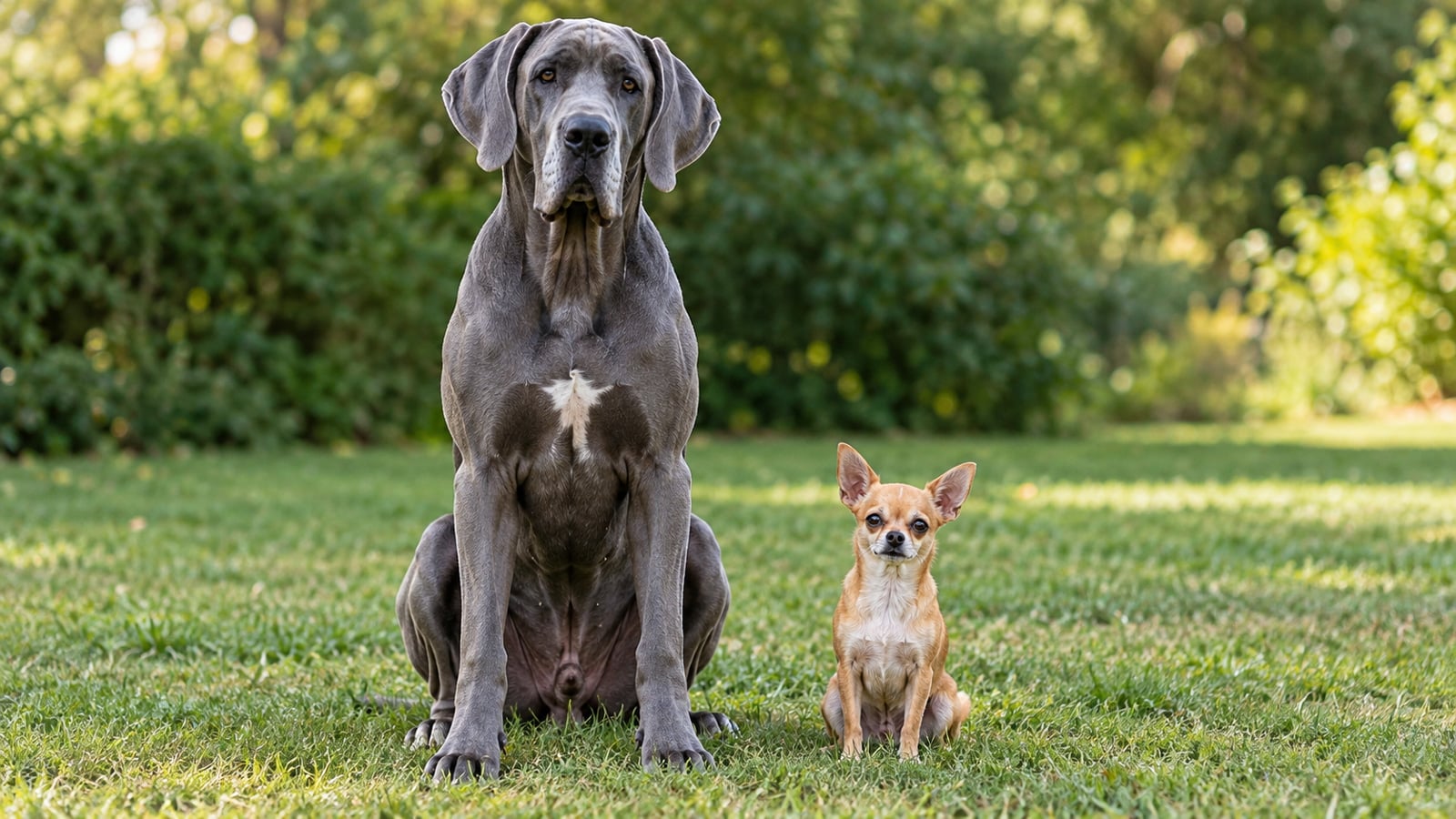
Anyone who has loved a Great Dane or an Irish wolfhound knows the heartbreak of a short timeline. Some of the largest breeds live ten years or less on average, according to Nature, while small dogs routinely stretch well past that. A study published October 8 in Science offers a possible reason at the molecular level, and it involves pieces of DNA that can copy themselves and hop around the genome.
Researchers at Arizona State University and several collaborating institutions analyzed 1,640 DNA samples from 894 dogs enrolled in the Dog Aging Project. The project has about 55,000 participants whose owners fill out regular health surveys and submit blood samples. The team focused on DNA methylation, chemical tags attached to DNA that help control which genes are switched on. Because these tags change in a predictable pattern as animals get older, scientists can use them as a biological clock.
The team constructed that clock for dogs and found that it can accurately predict a dog’s age with a median error of about ten months. Dogs whose clock readings ran older than their actual age were also more likely to die within the next two years, which suggests the clock is picking up something meaningful about overall health.
Using that as a measure, the researchers found larger dogs and male dogs aged faster. The size effect showed up most strongly in so-called jumping genes, formally known as transposable elements. These sequences can insert copies of themselves elsewhere in the genome and disrupt whatever gene they land next to. Methylation tags help hold them in place, and losing those tags has been linked to inflammation and aging in people and other animals.
The paper reports that jumping genes in larger dogs showed 31% greater age-related loss of methylation than in smaller dogs. Looking at one family of jumping genes called LINE1, Arizona State puts the figure for giant breeds at roughly 35% more methylation lost per year than in small breeds.
Male dogs showed a different pattern, with many of their age-related changes concentrated on the X chromosome. Males have one copy of the X chromosome, while females have two. Study author Brianah McCoy, now at the University of North Carolina at Chapel Hill, told Nature the extra copy may give females a way to buffer those changes. The male effect held even for dogs that were neutered at a young age.
Study co-author Blaise Mariner, a bioinformatician at Arizona State University, told Nature that it’s not known whether these methylation changes cause aging or make jumping genes more active.
Unfortunately for dog owners like myself, there's no test or treatment that comes out of the study we can use to keep our beloved pets alive longer. The researchers hope the data will be a starting point for understanding how methylation relates to aging, with treatments for older dogs and, eventually, insight into human aging as a possible payoff.

