

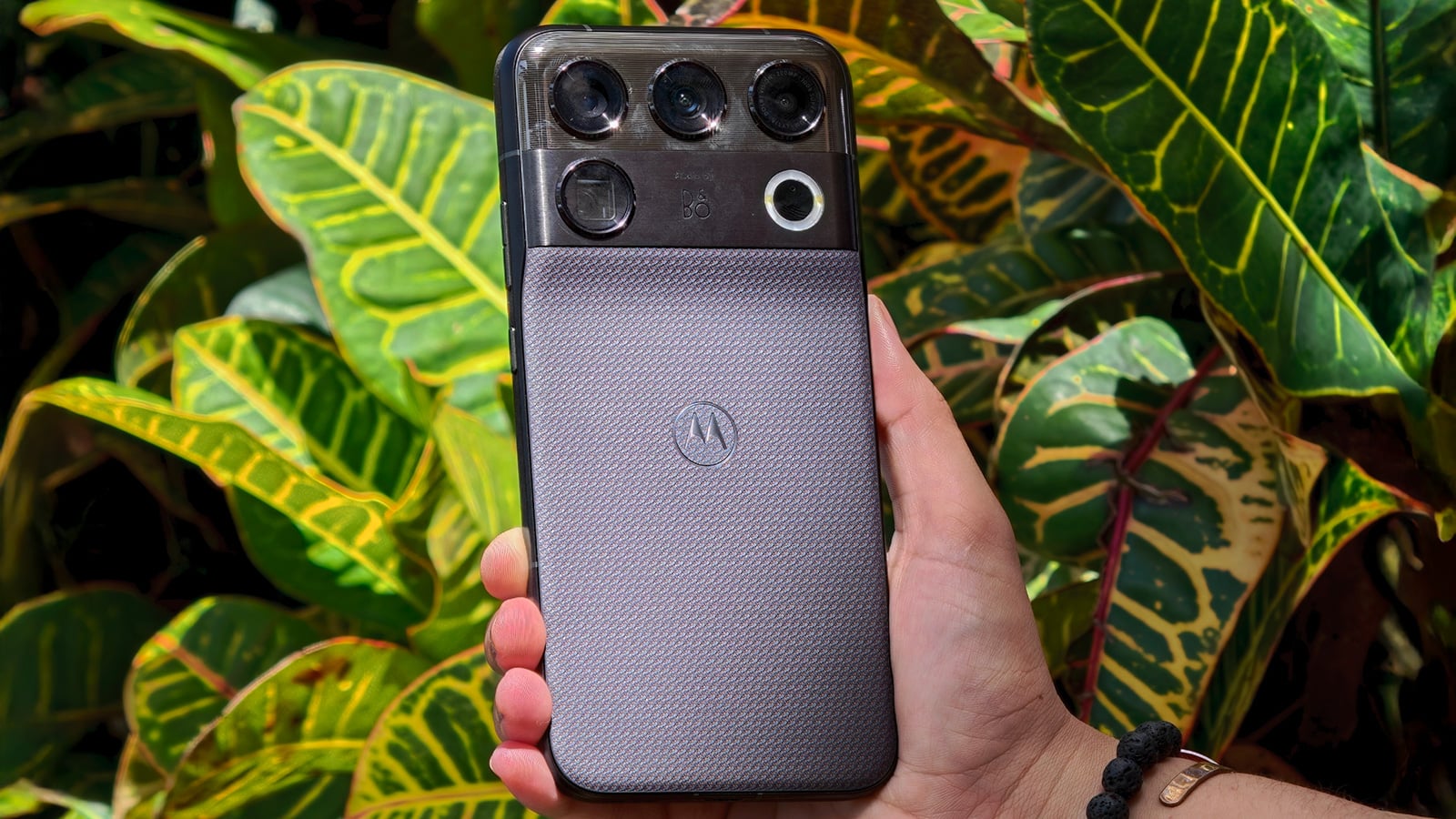
Motorola Signature 27
Image credit: Myriam Joire, Mobile Tech Podcast
Qualcomm has been making a lot of noise of late, and it's only going to get louder. This week in Hawaii, the company announced two new mobile chips: the Snapdragon 8 Elite Gen 6 and the Snapdragon 8 Elite Extreme Gen 6. Qualcomm flew me out to watch the keynote in person, and it's clear that Qualcomm has its eyes firmly on AI. From gaming to on-device chatbots, video tools, and even next-gen wireless connectivity, the company is laser-focused on creating a serious ecosystem buoyed by its powerful chips and the ever-evolving capabilities of AI.
To Qualcomm, the future of AI is mobile and decidedly Android-powered. Both the Snapdragon 8 Elite Gen 6 and the Snapdragon 8 Elite Extreme Gen 6 will be making appearances in a number of upcoming phones. Qualcomm even advised the audience to keep an eye on Mobile World Congress 2027. And while new smartphones are always exciting, my fervor dimmed when I noticed that many of these phones won't be coming stateside, with the exception of the intriguing Motorola Signature 27. The Signature 27 will use the Extreme Gen 6, the more powerful of the two new chips.
While I'm annoyed I won't be able to get my hands on the upcoming Honor and Xiaomi phones, I'm excited about what Qualcomm's new chips mean for the future of mobile computing. These premium chips are a strong indicator that flagship phone makers are bullish on local AI as well as smarter cameras and image processing, PC-style gaming, and speedier wireless connections.
Meet Elite Gen 6
But before we get ahead of ourselves, let's say hello to our new chip friends. The Snapdragon 8 Elite Gen 6 is Qualcomm's entry-level premium chipset, while the Extreme chip sits firmly at the top of the mountain. Both chips use a new 2nm manufacturing process that should help future phones run demanding AI, gaming, and camera features without increasing heat and battery drain at the same rate as performance. The chips also sport an Oryon CPU that can reach up to 5GHz, a Hexagon NPU, next-gen Adreno graphics, an X105 5G modem, and the FastConnect 8800 connectivity system. If you're unfamiliar, FastConnect 8800 is the part of the Snapdragon platform responsible for Wi-Fi, Bluetooth, ultra-wideband, and Thread connectivity. The company claims faster, more reliable connections with compatible devices and networks.
There are a few features that set the Snapdragon 8 Elite Extreme Gen 6 apart from the Elite Gen 6. First off, it has more powerful on-device AI as well as support for larger AI models. It also has dedicated AI graphics hardware with more graphics memory. The chip boasts advanced professional-video features with greater sustained performance. So if you want all the bells and whistles, make sure you look for a device with the Extreme chip.
But if most of the phones that will use either chip won't make it to U.S. markets, why should you care? Frankly, because of the phone that will grace our shores. When the Motorola Signature 27 lands later this year, it will have an Extreme chip; it could give Samsung, Google, and Apple a run for their money, provided the Extreme lives up to the hype. And if you watched the keynote, you heard a lot of claims.
For instance, Qualcomm claims 13% faster CPU performance and 37% better CPU efficiency than the previous generation. That means we should see faster app launches; less slowdown during taxing activities like gaming, video editing, and AI processing; less heat-induced performance throttling; and longer battery life. Those last two gains depend heavily on the Signature 27's ArcticMesh cooling, which combines liquid metal, copper mesh, diamond-infused thermal gel, and a larger vapor chamber.
Qualcomm's evolving AI
And it wouldn't be 2026 if we didn't talk about AI. As the technology becomes more ubiquitous, it's imperative that devices have enough power to handle increasingly demanding tasks locally instead of in the cloud. It's a privacy and a performance issue. Running AI directly on the phone can produce faster responses, work without an internet connection, and keep more information on the device. However, on-device AI is not automatically private. Your privacy still depends on whether the phone or app sends any of your data to the cloud.
Both chips include dedicated AI hardware called the Hexagon NPU. According to Qualcomm, the Extreme can run larger, more demanding AI models while using less power.
That extra capability could let your phone summarize long documents, understand conversations and distinguish between speakers, edit photos based on your preferences, and coordinate tasks across multiple apps. It could also allow more AI features to run locally without immediately sending your information to the cloud.
It can improve your gaming experience, too. The Extreme chip uses dedicated AI hardware to improve gaming graphics. The chip's Adreno Neural Fusion technology can render a game at a lower resolution and use AI to produce a sharper image. Plus, it can generate additional frames to make gameplay appear smoother.
Upscaling and frame generation can improve image quality and bump up frame rates while reducing the burden on the GPU, potentially lowering heat and power consumption. Keep in mind that AI-generated frames don't improve responsiveness the way frames rendered directly by the GPU do.
Your photography will also get an AI alley-oop. The Extreme's Intelligent Pixel Control technology helps the camera identify individual parts of a scene, including faces, hair, skin, skies, food, and moving subjects. Instead of processing the entire image the same way, AI can adjust each element separately. This could produce more natural portraits, better exposure, steadier footage, and improved low-light video. Qualcomm says the technology can make real-time skin-tone adjustments, which could help phones render a wider range of complexions more naturally, particularly in difficult lighting. However, the results will still depend on each phone maker's camera hardware and software tuning.
The Extreme also supports 8K video at 60 fps, 4K slow-motion video at 240 fps, and the professional-quality APV video format. As with Intelligent Pixel Control, however, the final results will still depend on the phone's camera specs and manufacturer tuning.
Faster connectivity
In addition to improved AI, the new chips are designed for faster connectivity. Both chips have Qualcomm's X105, the first modem-RF system designed for 3GPP Release 19, the latest set of 5G Advanced standards. Release 19 is intended to improve network speed, reliability, efficiency, and satellite connectivity with some future-proofing, laying groundwork for 6G. The modem supports theoretical 5G download speeds of up to 14.8Gbps. Both chips also include FastConnect 8800, which supports next-generation Wi-Fi 8, faster Bluetooth, ultra-wideband, Thread, and satellite communication. Together, these technologies could provide faster cloud-based AI, more reliable connections in crowded areas, and expanded satellite services.
Bottom line
Currently, the Motorola Signature 27 is the only phone confirmed to be coming to the States with one of the new chips. That's a bit of a bummer until you consider that Samsung regularly uses Qualcomm chips in its flagship phones. So, it's not a stretch to think the upcoming Samsung Galaxy S27 series could rock at least one of these processors. The same goes for the 2027 versions of the Galaxy Z Fold and Z Flip. Of course, the chips' ultimate performance will depend on how phone manufacturers adapt them to their designs, features, and price points. Cooling, battery capacity, memory, camera hardware, and software optimization will determine whether Qualcomm's lofty performance and efficiency claims translate into a noticeably better phone.

