

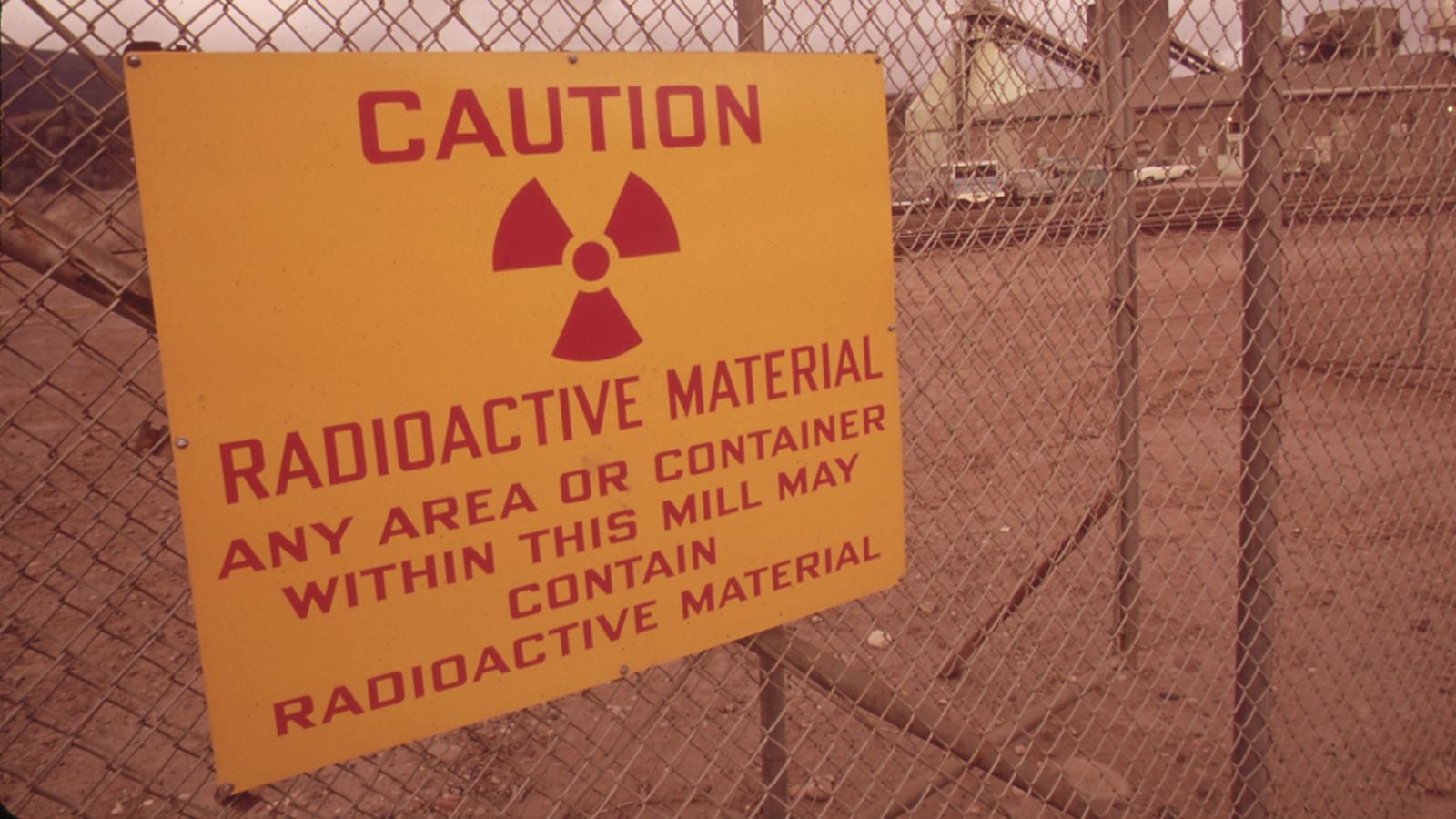
Radioactive warning sign at Union Carbide uranium mill in May 1972.
Image credit: US Environmental Protection Agency via National Archives
The Justice Department announced it has approved more than $909 million in payments for Americans who developed serious illnesses after exposure to radiation from the U.S. nuclear weapons program, according to figures updated November 2. More than 50,000 additional claims are still awaiting decisions.
The money comes from the Radiation Exposure Compensation Act (RECA), which provides payments of $100,000 to qualifying people who developed certain cancers after living downwind of nuclear weapons tests or working in the uranium industry. The program also covers people exposed to radioactive waste from the Manhattan Project and workers who participated in atmospheric nuclear tests. If an eligible person has died, surviving family members may qualify for compensation.
Congress expanded the program in July 2025, opening eligibility to additional communities and extending the filing deadline. Since then, the Justice Department has received 63,975 claims, approved 13,042, and denied 223. Another 50,710 remain pending. Among claims decided so far, the approval rate is 98.3%.
People who lived downwind of nuclear tests account for the largest share of approved compensation, with 5,511 claims worth $551.1 million.
Eligibility for Downwinder claims is bases on where and when you lived. Qualifying areas include all of Idaho, New Mexico, and Utah, plus designated counties in Arizona and Nevada. You generally must have been in one of those areas for at least a year between January 21, 1951, and November 6, 1962. For New Mexico residents, the qualifying period begins September 24, 1944, before the first atomic bomb was tested there as part of the Manhattan Project. People who were present in a qualifying area for the entire period from June 30 through July 31, 1962, may also qualify.
Claimants must also have been diagnosed with a covered illness, including leukemia (other than chronic lymphocytic leukemia), multiple myeloma, non-Hodgkin lymphoma, or certain cancers of the thyroid, breast, colon, pancreas, stomach, ovary, or lung, among others. They do not have to prove that radiation caused their disease.
The 2025 expansion also created a category for people exposed to radioactive waste from the Manhattan Project. It covers people who lived, worked, or attended school for at least two years after January 1, 1949, in designated ZIP codes in Missouri, Tennessee, Kentucky, and Alaska, and later developed a covered illness. A living claimant may receive the greater of $50,000 or their documented, unreimbursed medical expenses related to that illness. If the person has died, their surviving spouse can receive $25,000, or the payment can be divided among surviving children if there is no surviving spouse. Manhattan Project waste claims account for 7,087 approvals worth $314 million so far.
Uranium workers can also receive $100,000 if they worked for at least a year as a miner, miller, core driller, ore transporter, or remediation worker at qualifying uranium mines and mills in 11 western states between 1942 and 1990, and later developed a covered illness. These include lung cancer, pulmonary fibrosis, silicosis, and certain kidney diseases. Uranium miners who accumulated at least 40 working-level months of radiation exposure may also qualify without meeting the one-year employment requirement. People who participated onsite in U.S. atmospheric nuclear tests before 1963 and later developed a covered illness are eligible for $100,000 as well, reduced by any VA payments received for the same illness.
Claims filed before the July 2025 expansion are counted separately by the government. The Justice Department has approved 42,599 of those earlier claims, worth approximately $2.74 billion.
People who believe they qualify can apply through the RECA claim portal or submit a claim form by mail. Applicants need documentation showing they lived, worked, or participated in a qualifying activity during the covered period, along with medical records confirming their diagnosis. Online applicants can upload scans of supporting documents, although the Justice Department may later request originals or certified copies. Claims must be filed by December 31, 2027.
Read more:
Bought generic prescription drugs? $475M claim deadline is Nov. 9
Apple's $250M Siri settlement is taking claims now, worth up to $95

