
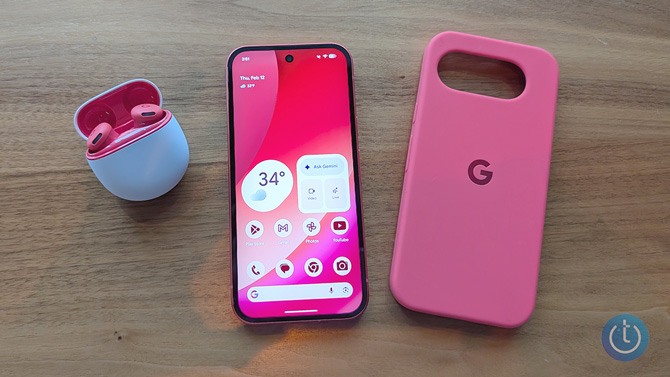
Google’s Pixel A-series has always been about delivering the core Pixel experience at a more accessible price. With the new Pixel 10a, Google is sticking to that formula, but if you line it up next to last year’s 9a, the changes are more incremental than transformative.
At its core, the Pixel 10a is still very much the same phone. It runs on Google’s Tensor G4 chip with 8GB of RAM, carries over the same dual-camera system (48MP main, 13MP ultrawide), and promises the same long-term value proposition – seven years of OS and security updates, which is still unmatched at this price point.
Where Google is trying to push the story forward is in refinement and safety features. The biggest headline addition is Satellite SOS – the first time the feature has come to the A-series. It’s one of those features you hope you never need, but for people who travel, hike, or spend time in areas with spotty coverage, it’s a real differentiator.
Beyond that, most of what’s new falls into the “nice to have, not a reason to upgrade” category. Wireless charging gets a small bump to 10W, up from 7.5W on the 9a. But without PixelSnap magnetic alignment, like on the other Pixel 10-series phones, you still won’t be able to use the vast MagSafe accessory ecosystem.
Google is making a lot of noise about the new flush camera bar, where the camera now blends into the back of the phone instead of protruding. From an engineering perspective, that’s impressive. In reality, most people won’t notice the difference, especially if you put a case on your phone from day one.
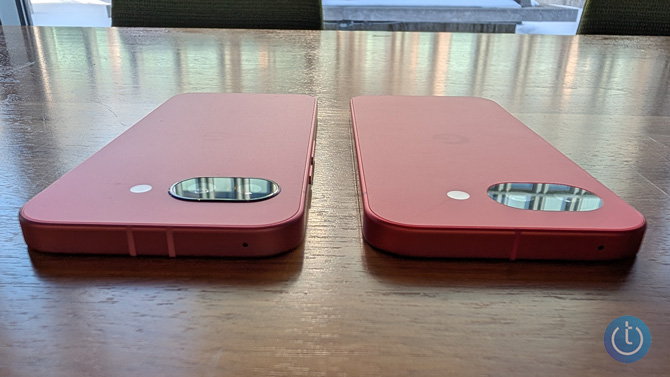
You can see a slight bump for the Google Pixel 9a's camera (left), while the Pixel 10a's camera is flush (right).
The display is another example of subtle improvement rather than a leap forward. It’s still a 6.3-inch Actua OLED panel with a 120Hz refresh rate, but the 10a gets about 11 percent brighter and trims down the bezels slightly.
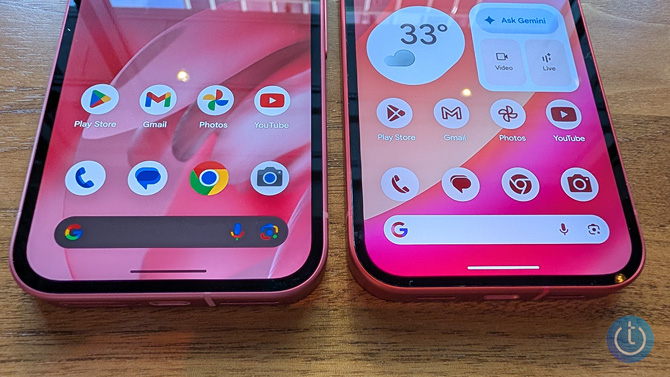
The Google Pixel 9a is on the left, while the Pixel 10a is on the right.
The Pixel 10a matches other phones in the 10 Series with Google Quick Share to AirDrop compatibility, allowing people to send files between Pixel phones and compatible iPhones with just the tap of a button. That’s one of my favorite upgrades here, and will allow me to easily share photos with my husband when we're on vacation or my business colleague at a trade show.
The rest of the story is classic Pixel: a durable IP68-rated design with Gorilla Glass 7i, over 30 hours of battery life, built-in Gemini AI features, and ongoing Pixel Drops that add new capabilities over time.
So, who is the Pixel 10a for? If you already have the Pixel 9a, there’s not much here that will compel you to upgrade. If you’re coming from an older Pixel or a budget Android phone, this is one of the best values you can buy. You’re getting flagship-level software support, excellent cameras, and Google’s AI features at a mid-range price.
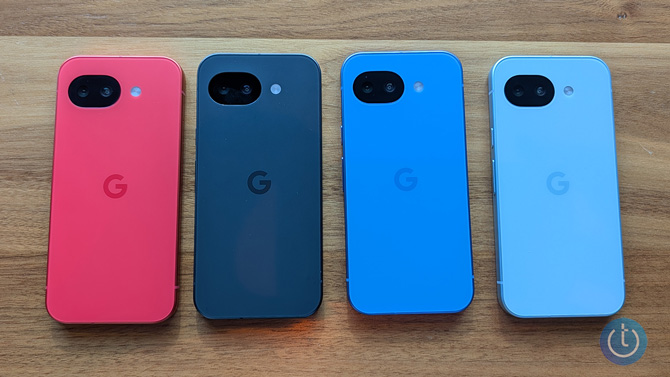
The Google Pixel 10 comes in (from the left): Berry, Obsidian, Fog, and Lavender.
You can pre-order the Google Pixel 10a for $499 (128 GB) or $599 (256 GB) on Google, with delivery on March 5, 2026. Color options include Fog, Obsidian, Berry, and Lavender. Google is including free Pixel Buds 2a or a $100 Google Store credit with your order through March 11, 2026.
[Image credit: Suzanne Kantra/Techlicious]