

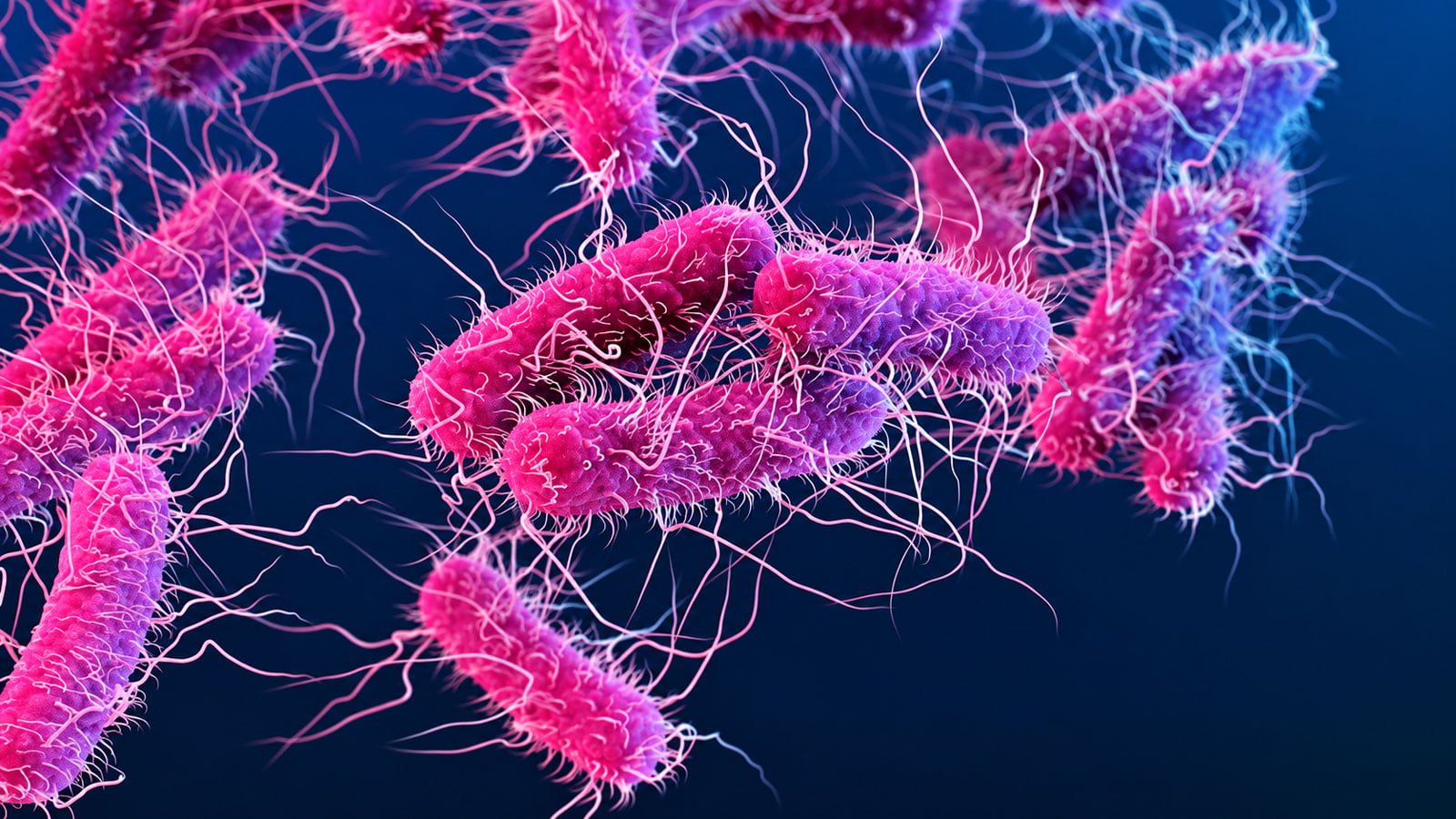
Image credit: U.S. Centers for Disease Control and Prevention, upscaled using ChatGPT
Antibiotics excreted by patients are giving drug-resistant bacteria an advantage inside hospital sewer pipes, according to a new study in Nature Communications. Researchers at the University of Gothenburg tested wastewater from ten hospitals in eight Swedish cities and found that every sample favored resistant E. coli over bacteria susceptible to antibiotics.
The researchers also found evidence that the development of antibiotic resistance was happening inside the sewer pipes themselves. They placed plastic plates in hospital and municipal sewers for about a month, allowing slimy layers of bacteria called biofilms to develop. In hospital sewers, E. coli resistant to two antibiotics accounted for roughly three times the share of bacteria in the biofilms as they did in the wastewater flowing past. The findings provide rare real-world evidence that antibiotics excreted by patients can favor resistant bacteria development in the environment.
Hospital sewers may be giving already-resistant bacteria an opportunity to gain even more ground. Antibiotic resistance is a major global health threat. A 2024 Lancet analysis estimated that resistant bacterial infections directly caused about 1.14 million deaths worldwide in 2021.
Hospitals are particularly vulnerable to this problem because they use large amounts of antibiotics. Roughly a third of Swedish hospital patients receive antibiotics at any given time. Some of those drugs are excreted in urine and feces and enter the wastewater, where they can kill or suppress susceptible bacteria while allowing resistant ones to survive.
The team also investigated which antibiotics were responsible. Ciprofloxacin emerged as a major driver. Cefotaxime, an injectable antibiotic used almost exclusively in hospitals, also contributed, although the evidence for its role across all hospitals was less conclusive.
Read more: Gut bacteria make a molecule tied to Alzheimer's brain changes
The study doesn't establish whether bacteria favored in hospital sewers eventually infect people. More research is needed to establish how much sewer environments contribute to the wider spread of antibiotic resistance.
The findings point to a new place to fight antibiotic resistance: inside hospital wastewater systems sewers. The researchers suggest treating hospital wastewater on site or adjusting antibiotic choices when medically appropriate. The University of Gothenburg team is already developing a targeted treatment method designed to reduce the conditions that favor resistant bacteria.
Read next: Your skin bacteria may explain why mosquitoes bite you

