


Suzanne Kantra, Josh Kirschner, Andrea Smith, Sherri Smith, and Palash Volvoikar contributed to this story.
IFA 2026 launched last week in Berlin, and our editors were once again on the show floor to see the latest and greatest new tech products from all over the world. And we weren't disappointed by what we found. Across every category, manufacturers are innovating with exciting new features, applications, and design.
In addition to the challenge of simply making our way through the labyrinthian halls of the Berlin Messe convention center packed with booths, we then had to select 30 products from among the thousands we saw at the show to make our Editor's Choice list. It's never an easy task. But, ultimately, the products below rose to the top as the ones we believe represent the best of the best from this year's show.
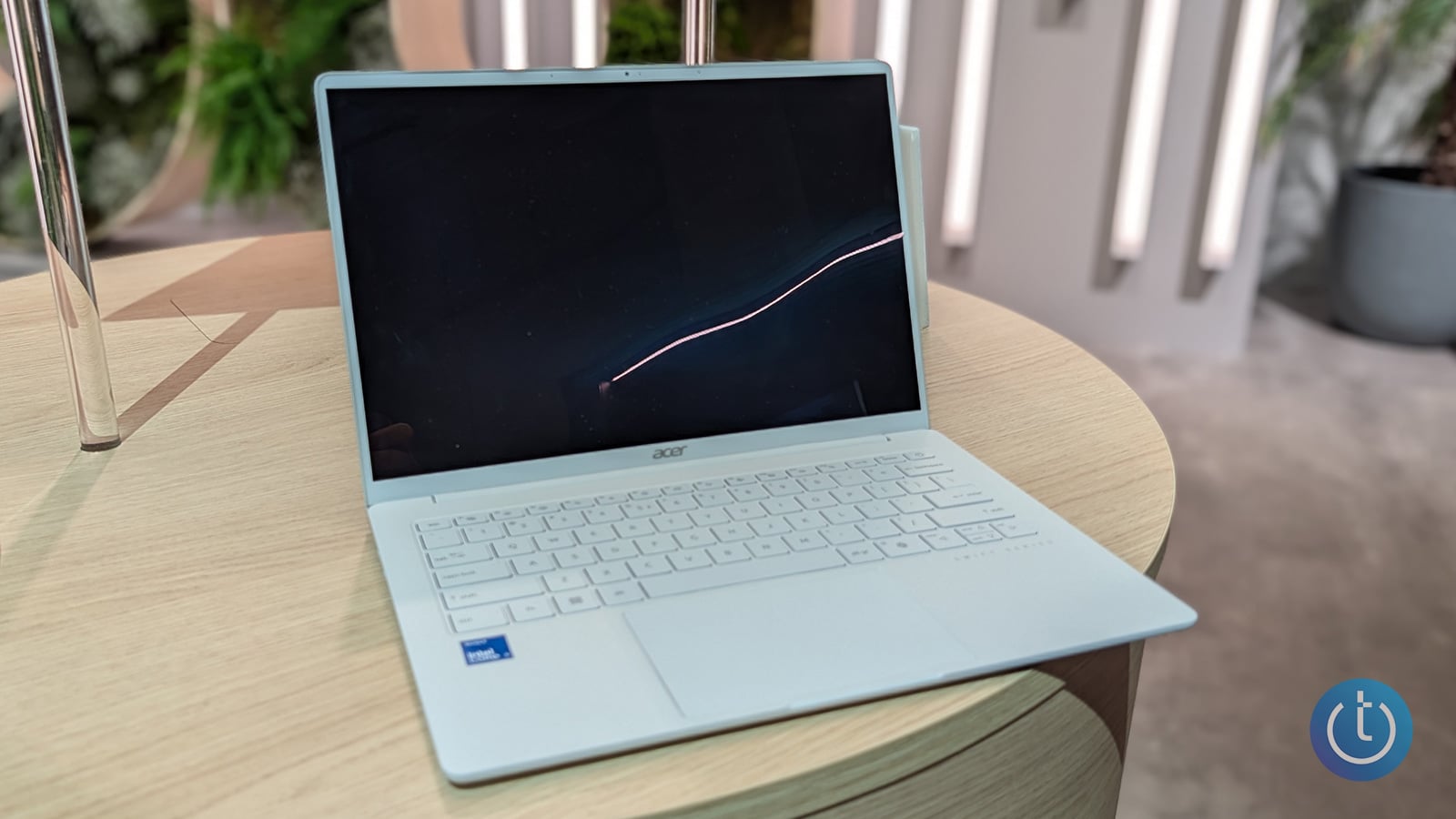
Image credit: Josh Kirschner/Techlicious
Acer Swift Blade 14 laptop
Getting a 14-inch laptop under two pounds usually means giving something up: a flimsy plastic shell, a cramped keyboard, or a battery too small to survive a workday. We chose the Acer Swift Blade 14 because it breaks that trade-off. At 799 grams (1.76 pounds), it's lighter than anything in this size class, and it gets there with a magnesium-aluminum alloy and carbon fiber chassis rather than the flimsier materials that usually make ultralight builds possible. We haven't seen that combination of weight and durable build in a 14-inch laptop from any other maker.
The rest of the machine doesn't feel scaled back to hit that number. Acer packed in up to an Intel Core 7 350 processor, 12 GB of LPDDR5 memory, and up to 1 TB of storage, plus a 3K OLED display option with 100% DCI-P3 color coverage, a 90% screen-to-body ratio, and a 90 Hz refresh rate for smooth scrolling. A 50 Wh battery, three USB 3.2 Gen 1 Type-C ports, Wi-Fi 6, and a physical webcam privacy switch round out a spec sheet built for people who work from wherever they land. That balance of near-flagship performance and sub-800-gram weight sets a new bar for what a 14-inch travel laptop can weigh.
Acer hasn't released pricing for the Swift Blade 14. The company says it will be available starting in December 2026, though only in EMEA markets for now; Acer hasn't announced a North American launch window.

Image credit: AGIBOT
AGIBOT A3 humanoid robot
Most humanoid robots have to choose: build one strong enough to lift real payloads, or light enough to move like a performer, but not both. We picked the AGIBOT A3 because it refuses that trade-off. At 173 cm tall and just 55 kg, the robot produces 12 kW of instantaneous power, a 0.218 kW/kg power-to-weight ratio that's a harder engineering problem to solve than raw strength numbers suggest. That ratio is what lets A3 pull off aerial walking and somersaults, movements that have been out of reach for humanoid platforms built around bulkier frames.
A3 also solves a problem that has nothing to do with acrobatics and everything to do with keeping a show running. A robot that goes dark mid-event because it needs a two-hour charge is a dealbreaker for the theme parks, brand activation teams, and entertainment operators A3 is built to serve. AGIBOT's answer is a dual-battery system with 10 hours of endurance and a 10-second hot-swap, so an operator can keep a unit in continuous rotation instead of building downtime into every performance schedule.
The rest of the platform is built for the same kind of real-world deployment. Standard UWB centimeter-level positioning and swarm control let operators coordinate more than 100 units out of the box, shoulder touch sensing and 360-degree multi-array audio pickup support interaction in noisy public spaces. Combined with the power-to-weight numbers, that level of operational readiness is what sets the A3 apart.
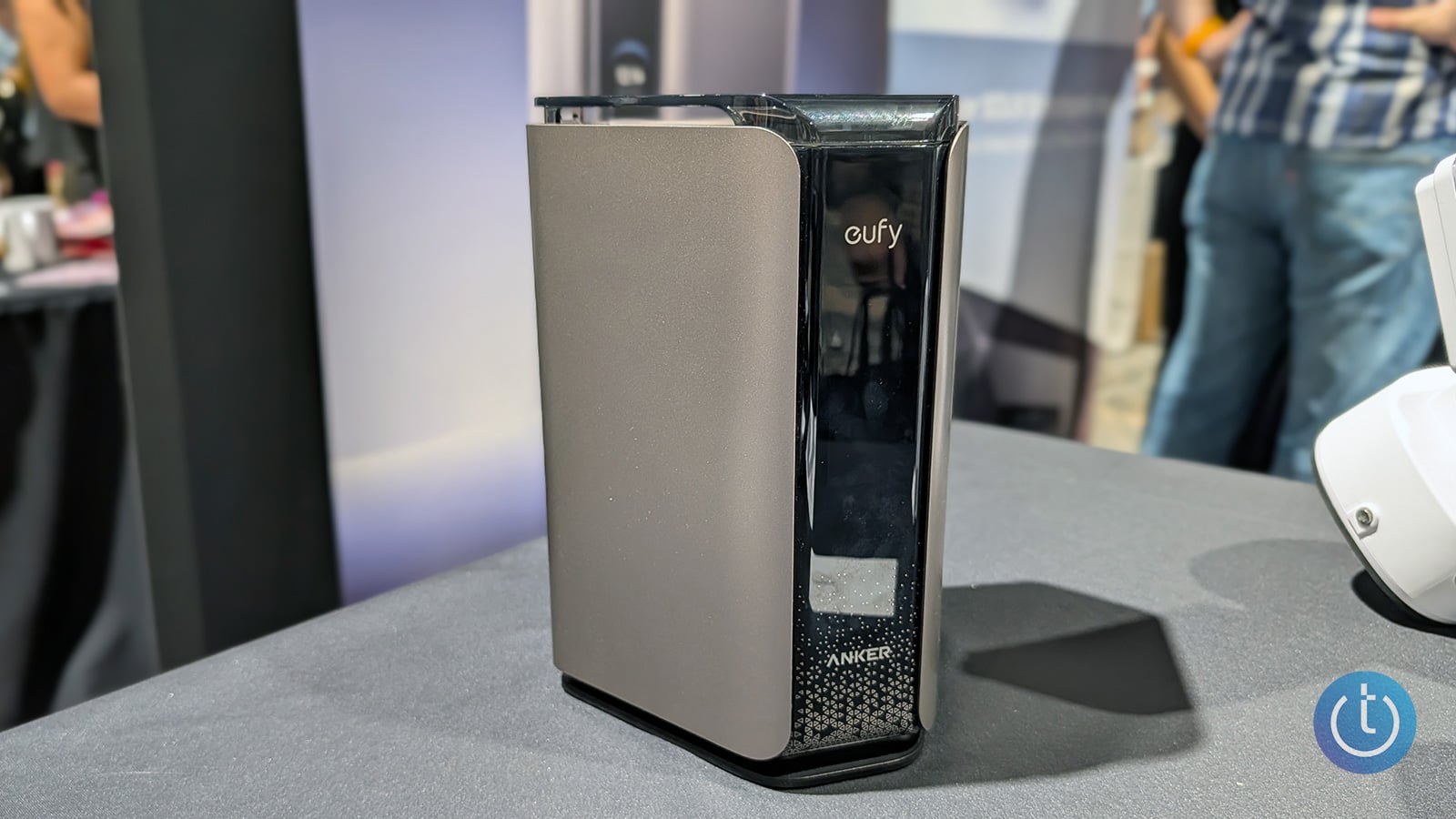
Image credit: Josh Kirschner/Techlicious
Anker MindBase Security Kit
Most home security systems fall into one of two camps: a monthly subscription that watches your house from the cloud, or a pile of disconnected smart cameras that record an intruder without ever doing anything about it. We chose the Anker MindBase Security Kit because it's the first AI home security system we've seen that runs entirely on local large language models, and we think it has a real shot at replacing subscription monitoring altogether. With no monthly fees required, that could save homeowners real money while actively working to scare off an intruder before they reach the door, something subscription cameras rarely attempt.
That's possible because MindBase coordinates five layers of hardware around a single on-device brain. A Smart Security Shield uses dual radar to spot strangers at the edge of the yard while recognizing family members up to 30 meters out, a TrackLight Cam locks onto an intruder with a tracking beam and a 105 dB siren, a Video Doorbell S4 covers a full 180 degrees with pre-roll of anyone approaching, and entry and motion sensors close off the remaining blind spots. All of it feeds into the MindBase Hub, which runs a chain-of-thought AI model on Anker's own 26 TOPS chip to judge intent and choose a response, from quietly logging a delivery to escalating into an active alarm.
Running that decision-making on-device rather than in the cloud is also what lets Anker drop the subscription model that defines most home security today. Footage and AI processing stay local, which means the system can act on what it sees without a monthly bill attached to keep working. That combination of local reasoning and active deterrence is what sets MindBase apart from security cameras that only ever record.
Anker has not announced pricing or a launch date for the MindBase Security Kit.

Image credit: Josh Kirschner/Techlicious
Anker Soundcore AeroClip 2 Pro open-ear AI note-taker earbuds
Anker keeps finding new ways to push what a pair of earbuds can do, and the Soundcore AeroClip 2 Pro is packed with useful features. It's the world's first note-taking open-ear clip-on earbuds, built around Anker's new Thus AI chip to record, transcribe, and summarize a conversation without you touching your phone. A two-second press on either earbud starts recording on the spot, and it covers four scenarios: phone calls, online meetings, in-person conversations, and personal voice notes.
Turning that recording into something usable stays just as simple. The AeroClip 2 Pro holds up to six hours of audio, and a trip into the Soundcore app to set speaker diarization, language, and a summary template is all it takes to generate a transcript. From there, Anka, Anker's onboard AI assistant, will search those transcripts and answer a spoken question about them almost instantly, and finished notes export to TXT, Markdown, DOCX, or PDF, with one-tap delivery straight to Notion or Google Drive. The AI Note-Taker itself starts free: every buyer gets 300 minutes of transcription a month for two years, with $8.33 and $19.99 monthly tiers available for people who need more.
All of that still runs through a pair of earbuds that have to sound and perform like Soundcore products first. Four microphones and two VPU bone-conduction sensors keep calls clear, a dual-diaphragm driver doubles the bass, and Dolby Atmos and LDAC handle Hi-Res playback. Anker's standard AeroClip 2, which shares the same earbud hardware and call performance as the Pro, holds a Guinness World Record for the highest objective speech quality score among open-ear clip-on earbuds. Battery life runs 11 hours per charge and 34 hours total with the case, a 10-minute charge adds three more hours of playtime, and an IP54 rating covers sweat and light rain. Pairing that kind of AI note-taking with call quality good enough to set a world record is what makes the AeroClip 2 Pro stand out among open-ear earbuds.
The AeroClip 2 Pro comes in Espresso Brown, Midnight Black, and Champagne White and cost $229.99. Availability is still TBD.
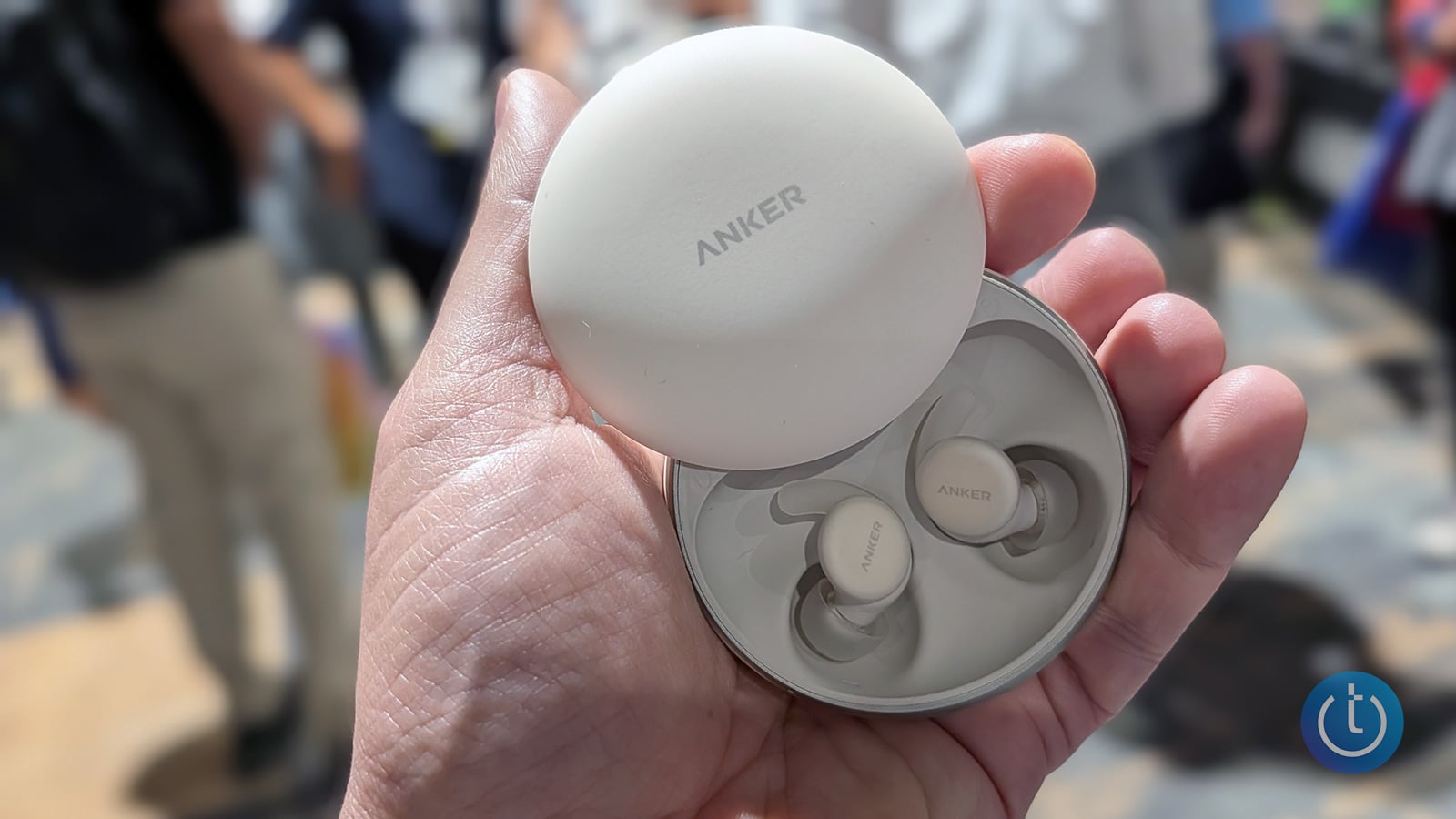
Image credit: Josh Kirschner/Techlicious
Anker Soundcore Sleep Earbuds 4 Pro
A sleep tracker can tell you exactly how badly you slept last night, but it can't do anything in real-time to fix it. That's the problem Anker's soundcore Sleep Earbuds 4 Pro aims to solve. They use in-ear optical sensors to read what's happening inside your body as you sleep, then adjust what you're hearing in real time based on that. That closed loop, sensing the sleeper and reacting in real time, is a different job than any sleep earbud, or tracker, has tried to do before.
The ear turns out to be a better place to take that reading than the wrist: Anker says its ultra-high-frequency in-ear PPG sensor reads sleep stages, heart rate, heart rate variability, and respiratory quality from a more stable, better-perfused signal site, with accuracy against polysomnography on par with leading trackers (70%-plus), though third-party academic validation is still in progress. That same data also drives what the earbuds do while you're still asleep. An experimental BioSync engine, which Anker labels a lab feature rather than a finished one, syncs audio to your real-time heart rate to support your natural wind-down, while 30 dB active noise cancellation and adaptive snore masking respond to a snoring partner by adjusting the masking sound to their actual rhythm.
The SleepHub case runs that entire routine phone-free. Its own AMOLED touchscreen starts audio, sets alarms, and pulls up a morning report the moment the earbuds dock, while a thinner, more tightly stacked housing keeps the earbuds themselves comfortable for side sleeping despite the added sensors. Battery life runs 10 hours per charge and 40 hours with the case, and the curated sleep audio library in the soundcore app comes with no monthly subscription attached. Turning a sleep tracker's data into something the earbuds can act on overnight is what sets the 4 Pro apart from every sleep earbud that came before it.
The Anker soundcore Sleep Earbuds 4 Pro is priced at $349.99 and is set to launch this October. Anker is currently taking $1 pre-launch reservations that lock in $30 off at launch plus a 24-month warranty.
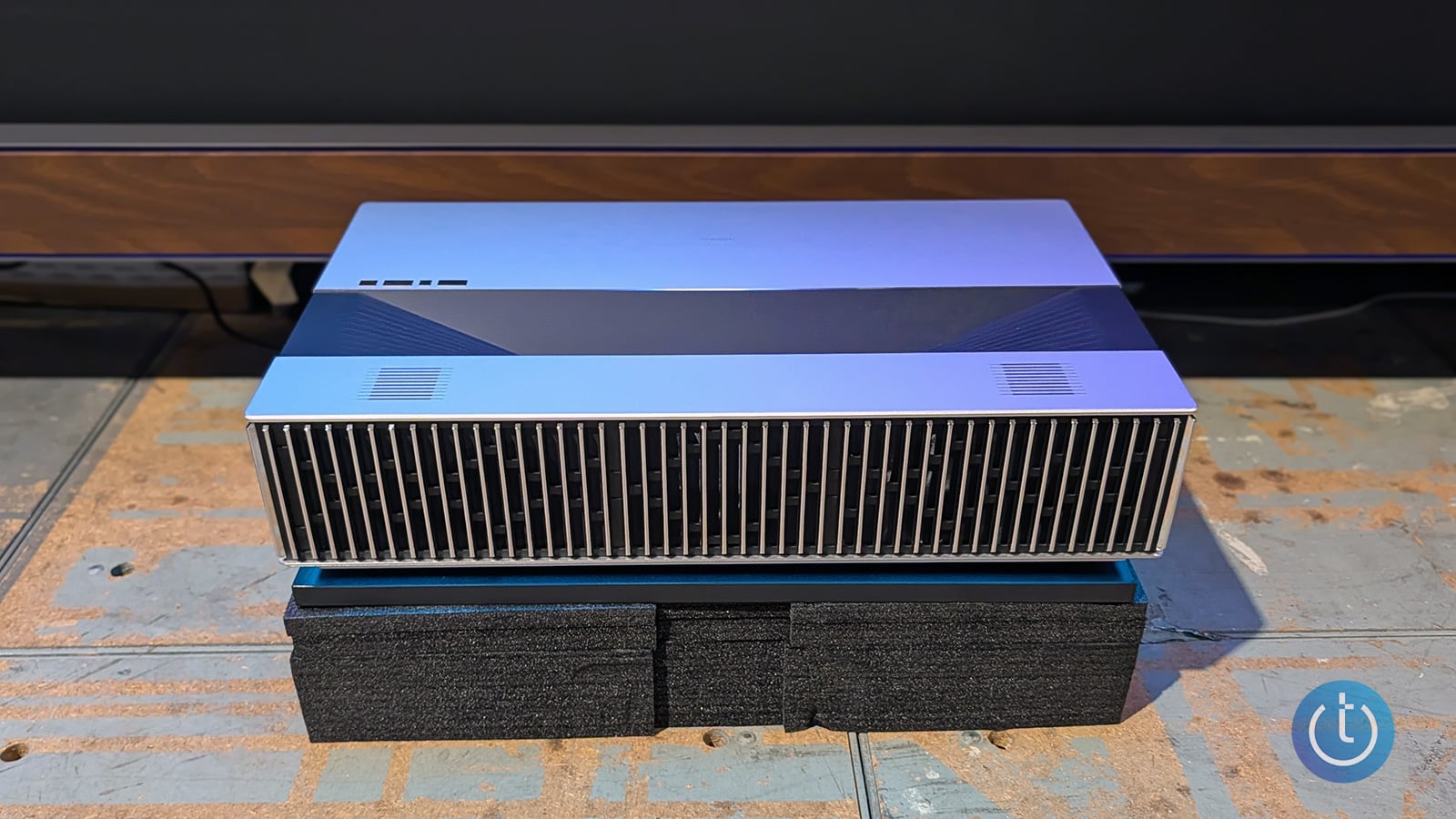
Image credit: Josh Kirschner/Techlicious
AWOL LuxVision ultra-short-throw projector
Every ultra-short-throw projector is stuck living with wherever its optics happen to point, and today's models fix an imperfect placement by warping the image digitally, which softens fine detail. We chose the AWOL LuxVision because it's the first living-room UST projector built with real optical lens shift to correct that placement. One-touch vertical lens shift physically moves the image where it belongs, preserving full 4K detail.
That lens shift works alongside a 0.18:1 throw ratio that turns an ultra-short distance into a screen up to 200 inches, with a motorized lens cover and a zero-light-leakage design keeping the picture free of stray light.
On the image itself, LuxVision runs 4K at 120 frames per second, processing close to a billion pixels every second so fast motion in sports, racing, and action scenes stays sharp. A 6,000 ISO lumen RGB triple-laser engine with 110% Rec. 2020 coverage, dynamic tone mapping, and a 7-level dynamic iris keeps color and contrast accurate from bright daylight to a dark room at night, with Dolby Vision, IMAX Enhanced, Filmmaker Mode, and 3D support layered on top. That combination of brightness and color accuracy holds up in a sunlit living room as well as a darkened theater.
Gamers get hardware to match that speed: 1ms input lag, ALLM, VRR, and Dolby Vision Gaming, plus three HDMI 2.1 ports, a DisplayPort, and 4-channel HDMI Multiview for running several sources at once. AWOL's second-generation Anti-RBE processing, paired with TÜV Harmful Light Reduction, cuts down the rainbow artifacts that have long affected single-chip laser projectors, especially in fast, high-contrast scenes. Between the gaming-ready connectivity and the artifact reduction, LuxVision reads like a projector built for daily use as much as for demo-day specs.
The AWOL LuxVision carries an MSRP of $5,999 and is set to launch around October, with pre-sale information already live on AWOL's site.
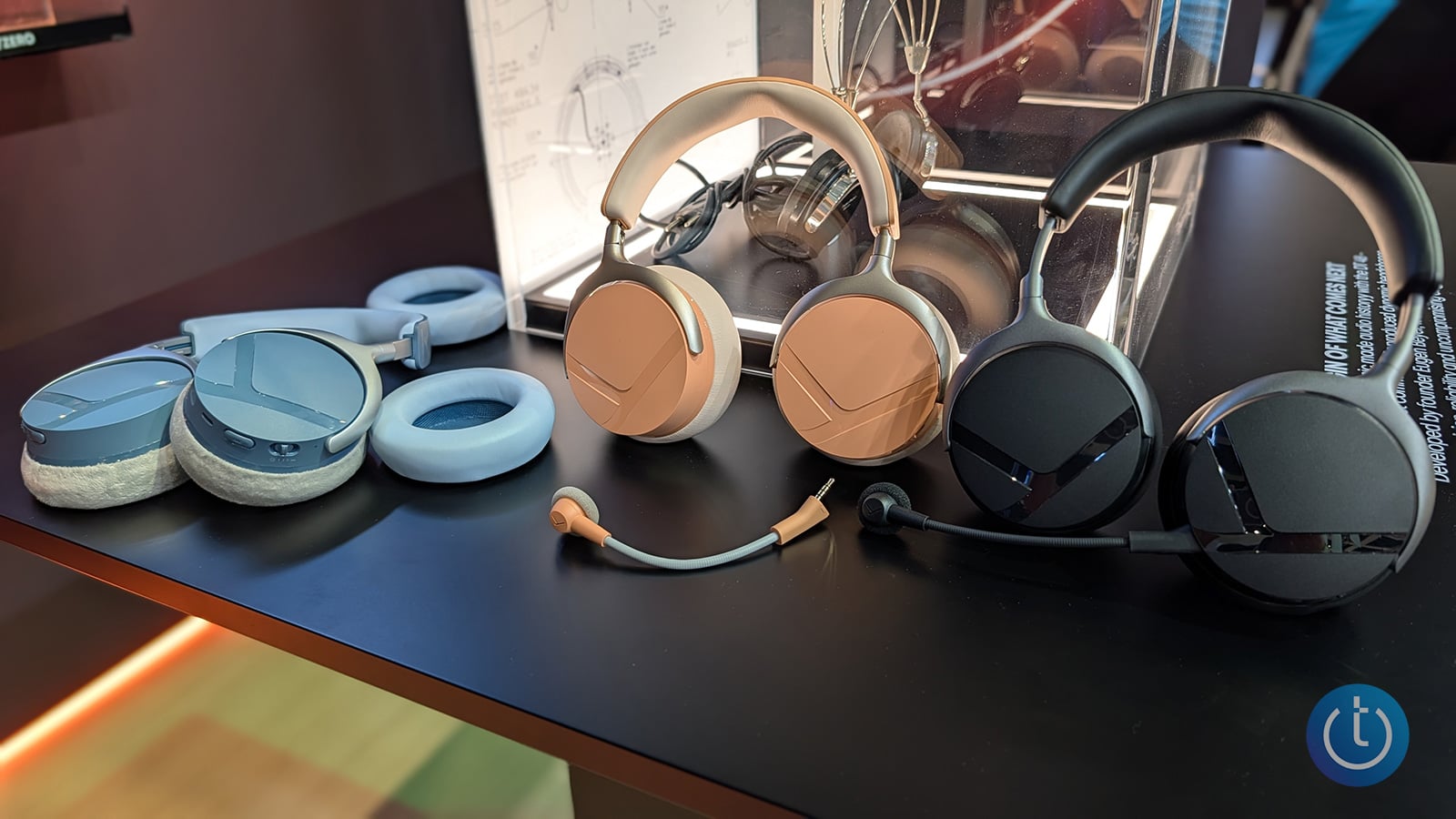
Image credit: Josh Kirschner/Techlicious
Beyerdynamic AVENTHO Y over-ear noise-canceling headphones
Active noise cancellation is usually the reason an over-ear headphone needs a charge before the day is over. We chose the beyerdynamic AVENTHO Y because it rates for 60 hours with ANC running, double what we see in its competitors, and stretches past 90 hours with ANC switched off. And a mere five minutes on the charger adds up to six hours of playback, useful for anyone who forgot to charge overnight.
That battery sits inside a headphone built around modular parts that shift with the job at hand. A detachable boom microphone and a low-latency USB-C dongle let the same headphone move between gaming, video calls and focused work, while interchangeable velour ear pads adjust the fit for longer everyday listening sessions.
The AVENTHO Y is built for long-term ownership. A user-replaceable battery, magnetic ear pads, aluminum sliders, and stainless-steel hinges mean a worn part can be swapped on its own, covering the components that typically fail first. A compartment inside the earcup even holds a spare battery and the optional USB-C dongle. The beyerdynamic app layers custom EQ profiles, genre-based sound presets and firmware updates on top of that hardware modularity.
The beyerdynamic AVENTHO Y is available now for $149.99 on Amazon.
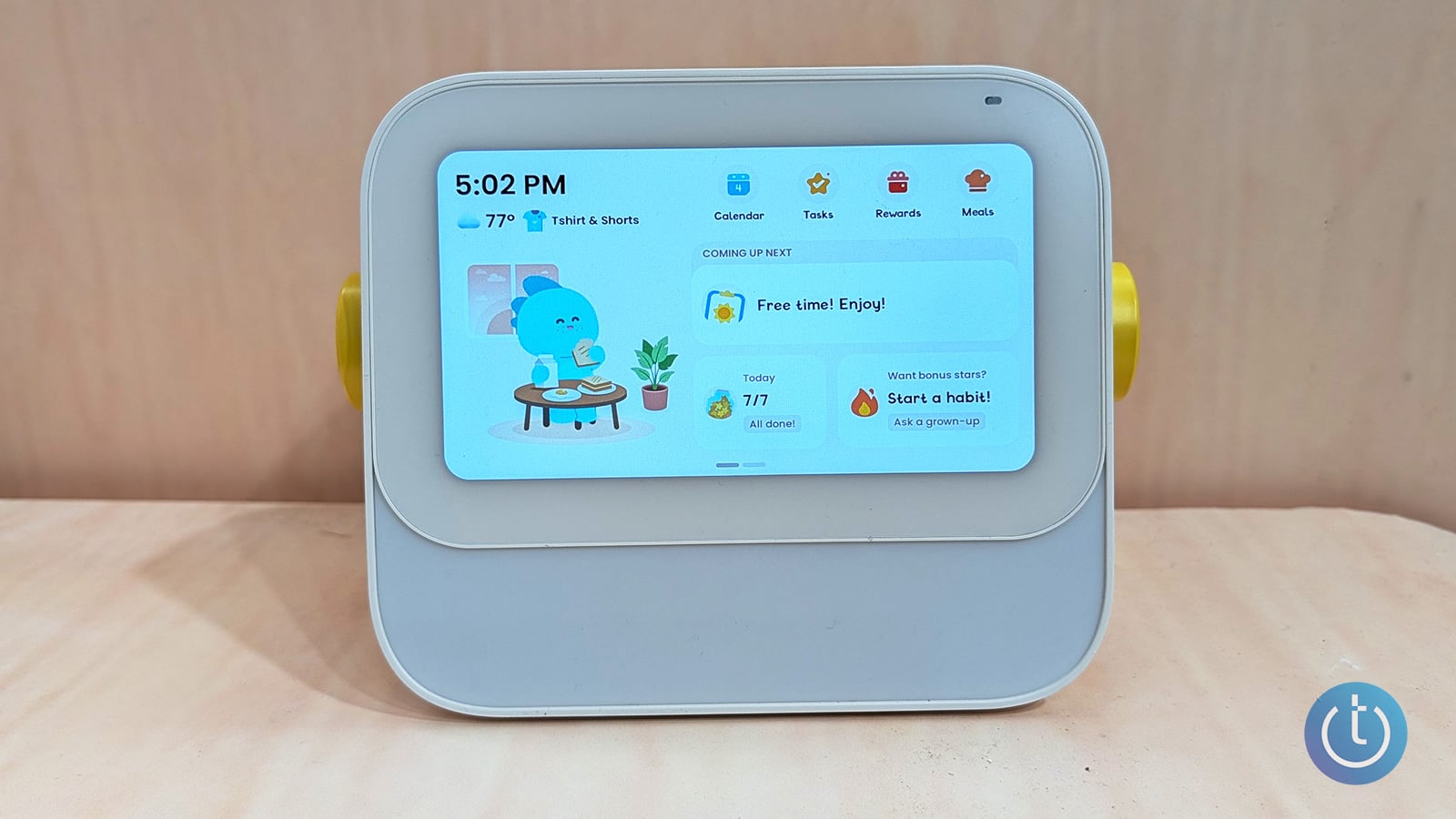
Image credit: Josh Kirschner/Techlicious
Cozyla Routie kids' smart display
Family calendars are built for parents and older kids, but a five-year-old just needs to know what's happening today. What we liked about Cozyla Routie is that it gives younger children their own simplified view of the household schedule, without the detail that older family members need, and then helps them actually stay on track with a sunrise-simulating light, synced bedtime and morning routines, and more.
Morning and bedtime guidance each run through their own structured routine that coordinates light, sound and voice, so a wake-up or a wind-down happens the same predictable way every time. A 250-lux full-spectrum sunrise-simulating light and Ok-to-Wake signaling turn Routie into a full daily-routine system, and because Routie, Cozyla Calendar+ and the Cozyla+ app all sync to the same shared cloud, a family's schedules, chores, rewards and meal plans can turn into personalized bedside guidance for each child.
Routie also includes Parent Voice Cloning, which lets a mom or dad record a voice sample so Routie can narrate a curated library of bedtime stories back to a child in that exact voice, even on nights the parent can't be in the room. Privacy is handled with unusual directness for a category full of always-listening gadgets: there's no camera built in at all, and a physical microphone switch with a visible red indicator gives kids and parents a clear read on when it's listening. That combination of age-appropriate scheduling, daily-routine structure and privacy-first hardware makes Routie one of the most complete bedside systems we've seen built specifically for young children.
The Cozyla Routie is available now for $169.99 on Amazon.
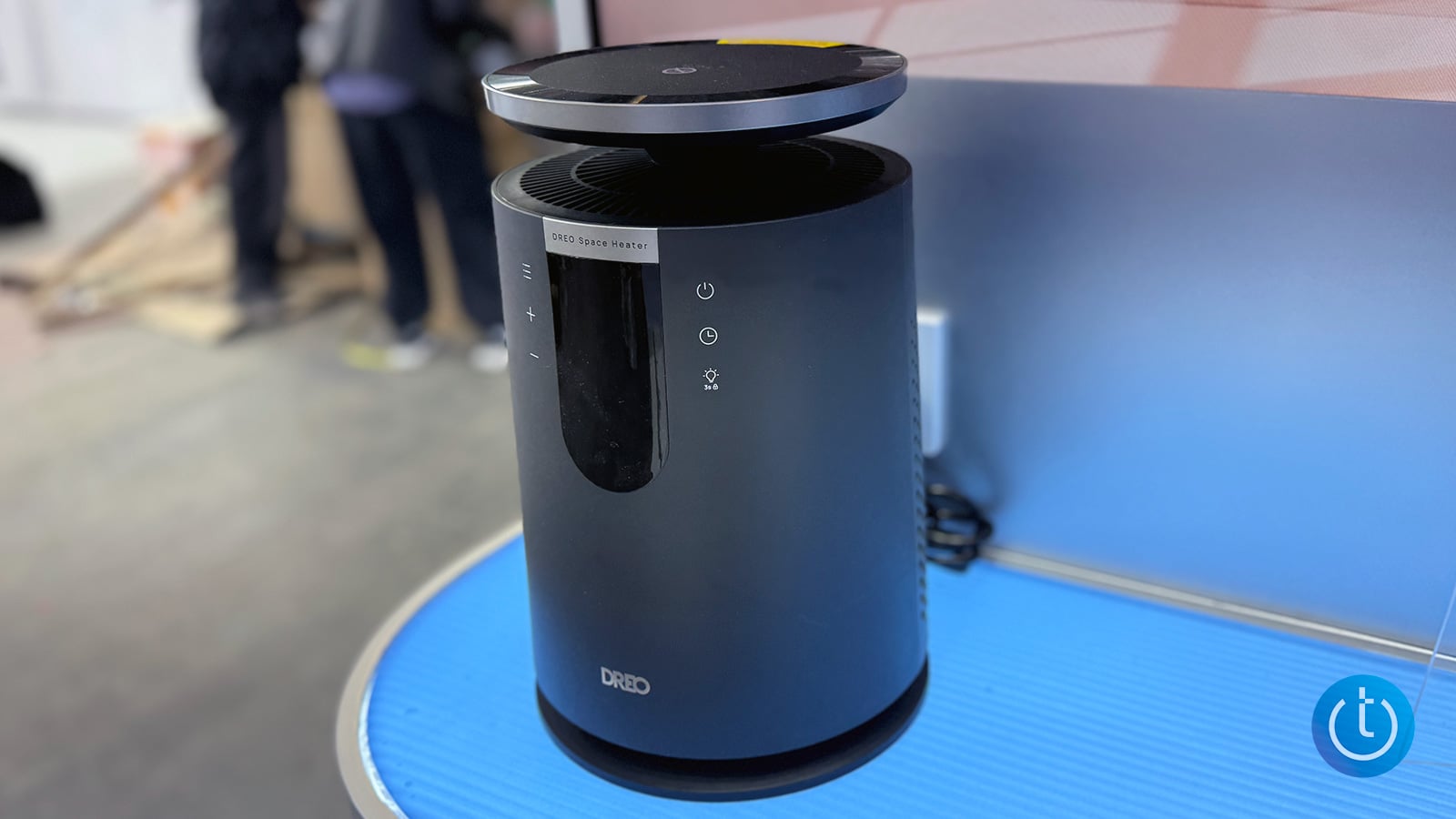
Image credit: Andrea Smith/Techlicious
DREO Whole-Room Heater 720S
We haven't seen another space heater do what DREO's Whole-Room Heater 720S does: physically reshape its own airflow path to shift between focused and whole-room heating. A motorized lift and cone-shaped air guide raise and lower the unit's upper structure to pull that off, rather than just adjusting fan speed or oscillation the way most heaters do.
Lower the 720S and it concentrates airflow for fast personal warmth; raise it and the same unit redirects that airflow for even heating across a room up to 25 square meters (about 270 square feet). DREO paired that moving structure with a 1,500-watt Hyperamics ceramic heating element that reaches target temperature in about two seconds, a forward-curved centrifugal fan tuned to keep airflow stable through the transformation, and operating noise as low as 25 decibels. That's quiet for a heater working this hard. Switching into focused mode boosts airflow velocity by around 35 percent.
DREO hasn't provided pricing or a specific on-sale date yet.
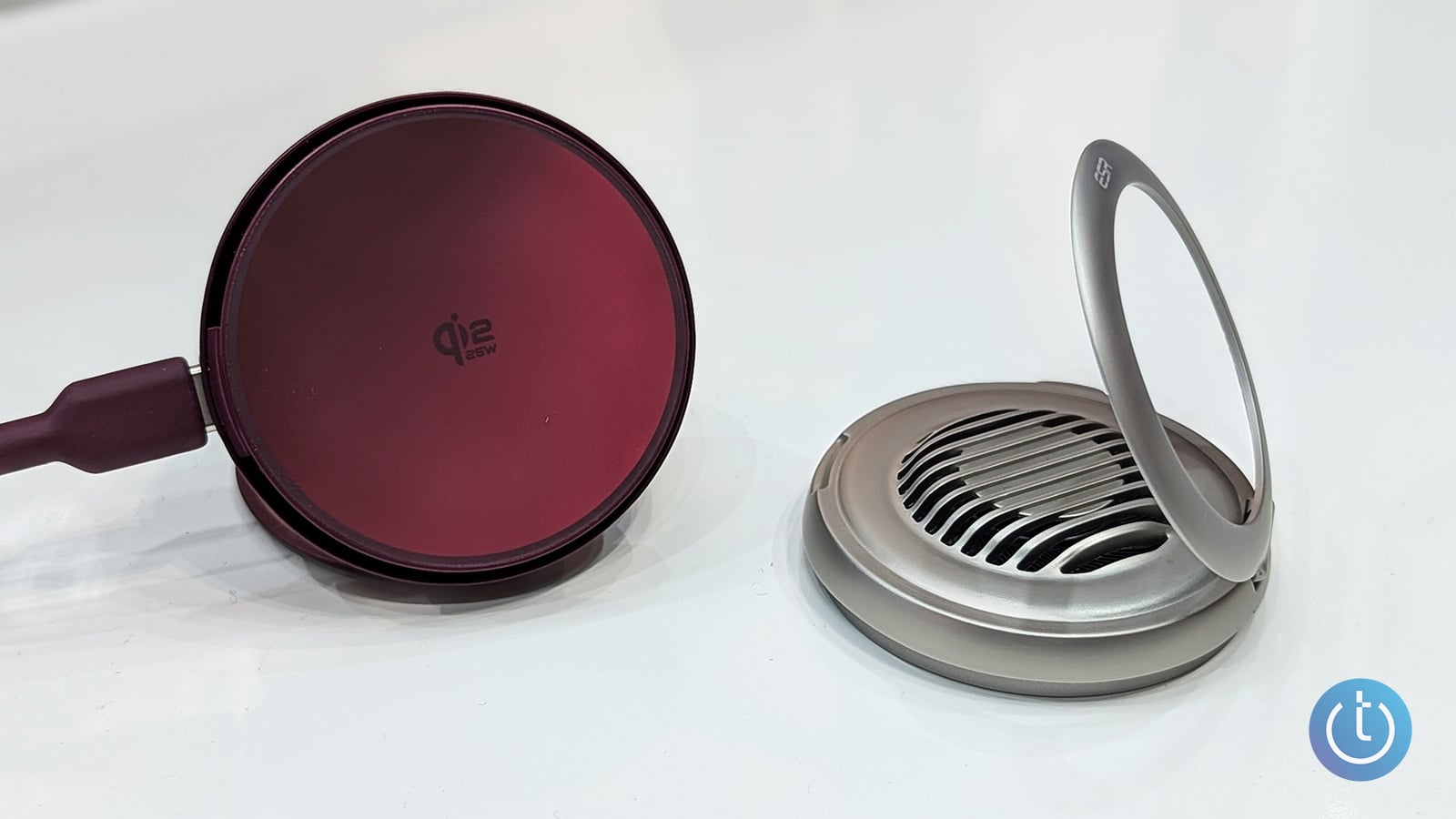
Image credit: Josh Kirschner/Techlicious
ESR Cyclone 25W Magnetic Charging Pad with CryoBoost
The ESR Cyclone 25W Magnetic Charging Pad with CryoBoost packs a cooling fan into a flat, 15-millimeter-thick magnetic pad, a feature wireless stand chargers and car mounts have managed before only in bulkier housings. It's the smallest fan-cooled charger we've seen.
Its CryoBoost system aims a stream of cooling air at the back of the phone, right where wireless charging generates the most heat, and ESR says that brings device temperature down by about 11.7 degrees Fahrenheit compared with a standard 25-watt wireless charger. The fan runs at roughly 25 decibels, quiet enough for a nightstand, and the whole pad weighs just 79 grams.
The Cyclone is also Qi2 25W certified and holds on with 2,000 grams of magnetic force. An adjustable kickstand that tilts from flat to 150 degrees lets the phone stand upright for video calls or streaming while it charges, something most magnetic pads don't allow, and a 1.8-meter cable gives it enough reach to sit on a desk, nightstand or counter without fighting for an outlet. That combination makes the Cyclone the most compact fan-cooled charger on the market, wireless or otherwise.
The Cyclone 25W Magnetic Charging Pad with CryoBoost is available now for $36.99 on the ESR site.
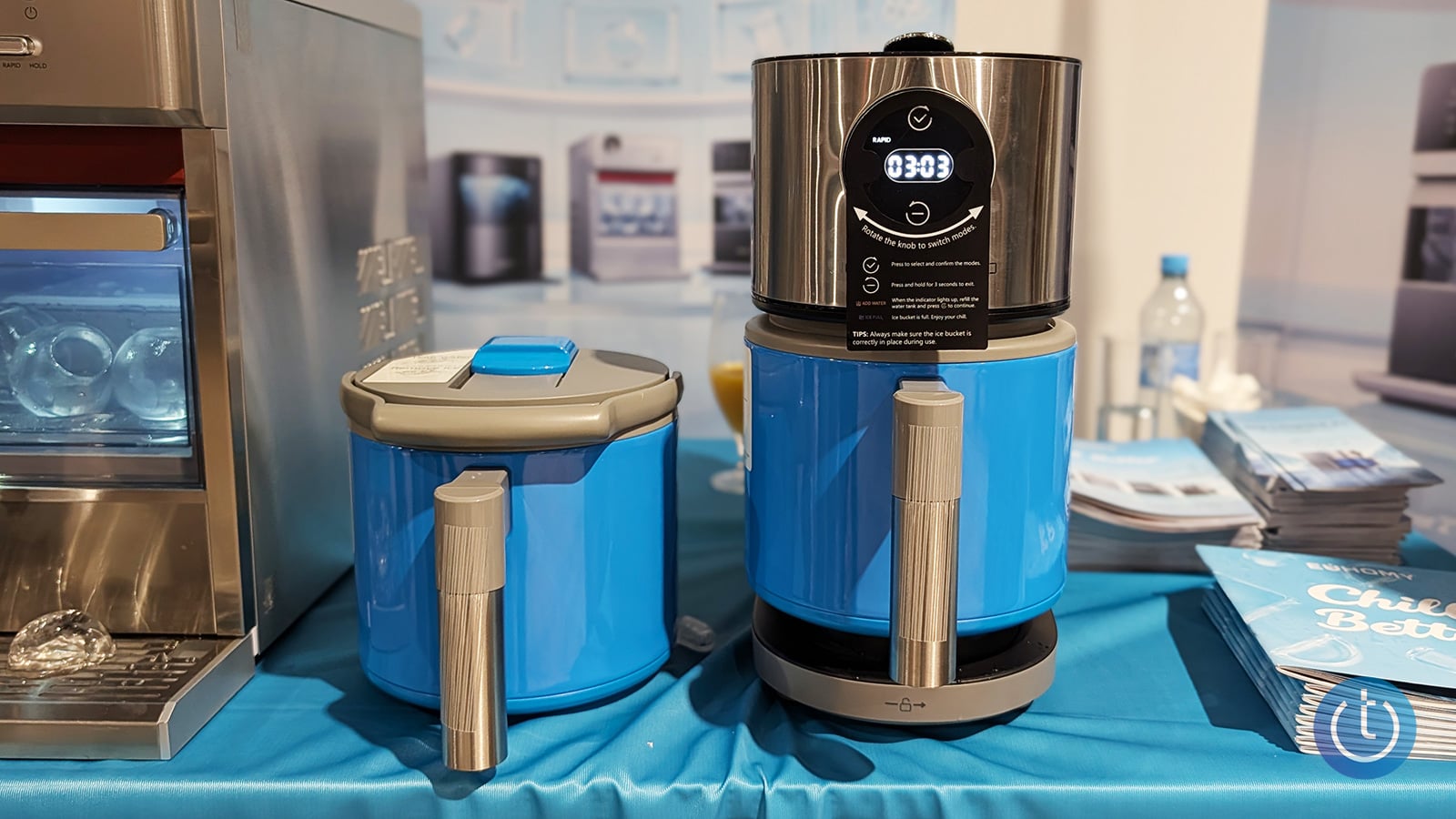
Image credit: Josh Kirschner/Techlicious
Euhomy Ice Leopard X1 Portable Rapid Ice Maker
Most countertop ice makers' functionality stops at making the ice. The Euhomy Ice Leopard X1 is the only one we've seen that has a detachable, insulated bucket built to double as a cooler and serving vessel. It keeps ice cold for up to four hours without power, so it can go straight to the dinner table, a home bar or the patio rather than sitting inside the appliance.
The Ice Leopard X1 produces bullet ice in as little as five minutes per cycle, with a daily capacity of up to 33 pounds, and its companion app lets you schedule a batch in advance or check status remotely, so ice is ready before guests arrive rather than after. The nearly 2-quart bucket is dishwasher-safe, and Euhomy says the insulated design cuts energy use by up to 30 percent by reducing how often the machine has to run to replace ice that's already melted. Operating noise tops out at 48 decibels.
Euhomy's site lists the Ice Leopard X1 at $169.99, with an early-bird price of $139.99 for anyone who signs up ahead of its scheduled release on October 15, 2026.
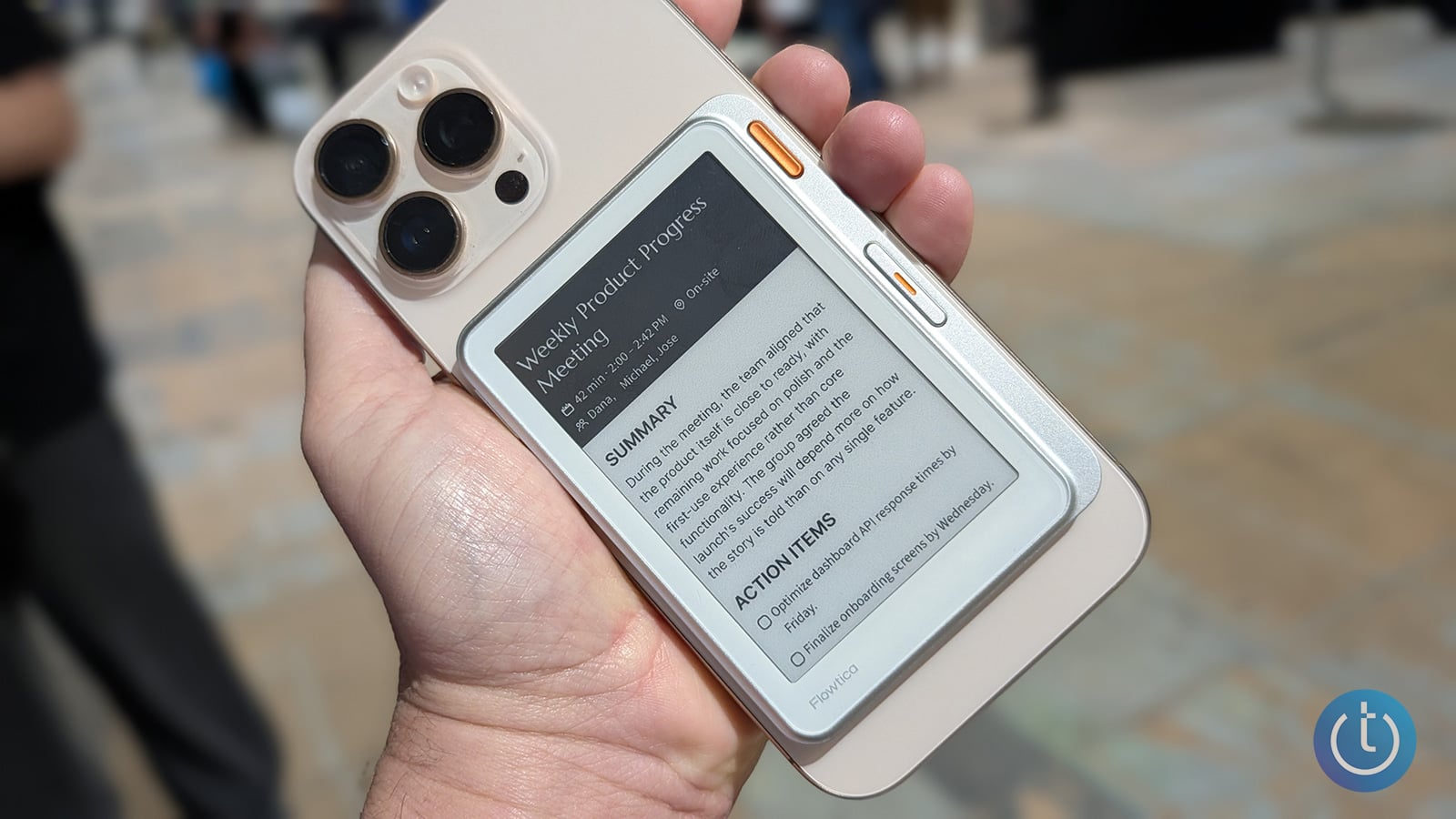
Image credit: Josh Kirschner/Techlicious
Flowtica Verso AI voice recorder
Checking a phone app to see what your voice recorder captured is the extra step Flowtica Verso decided to skip. The Verso has an always-on e-paper display, which keeps meeting summaries, transcripts, calendars and follow-ups visible right on the device itself, so this AI recorder feels like more of a participant in a conversation than a silent assistant waiting to be checked later.
The 98-gram aluminum-magnesium device clips magnetically to the back of a MagSafe-compatible phone, hangs on a lanyard, or sits on a desk stand, and its four MEMS microphones plus a bone-conduction microphone can pick up a conversation from up to 16.4 feet away. Flowtica's cloud AI separates up to 15 speakers, generates multilingual transcripts, and turns a conversation into a structured summary of decisions and action items. A single press of the FlowMark button flags an important moment without interrupting the discussion, and holding the Ask AI button lets you query past meetings or draft a follow-up email on the spot. For privacy, a recording indicator that can't be switched off stays lit any time Verso is capturing audio.
Flowtica Verso is open for early-access registration now on the Flowtica site, with early supporters getting 25 percent off an anticipated launch price of $299 and an exclusive early-bird gift. The company expects to ship in the fourth quarter of 2026.

Image credit: Hypershell
Hypershell Halo full-leg exoskeleton
Powered exoskeletons on the market today, including Hypershell's own X series, assist your hips: useful for climbing and walking longer, but your knees are usually what give out first, on the way down a trail, on stairs, or standing back up. The Hypershell Halo is the first consumer exoskeleton to power the hip and knee together as a single system, adding real assistance to exactly the movements where legs actually falter.
According to Hypershell, the four motors output up to 1,490 watts combined and cut knee-muscle fatigue by up to 40 percent during squats and overall exertion by 39 percent. The exoskeleton itself weighs 2.6kg in a carbon-fiber and titanium frame, folds to under 0.3 cubic feet, and straps on in about 20 seconds, even with a large backpack on. A swappable 370-gram battery, about the weight of a can of soda, is rated for roughly 20km of assisted walking.
Rivals like Dnsys sell separate hip and knee units that sync together rather than shipping as one integrated exoskeleton, and Hypershell has a track record of shipping what it announces. No other consumer exoskeleton maker is promising that kind of integration today.
The Hypershell Halo is available for pre-order now on the Hypershell site for $2,299.
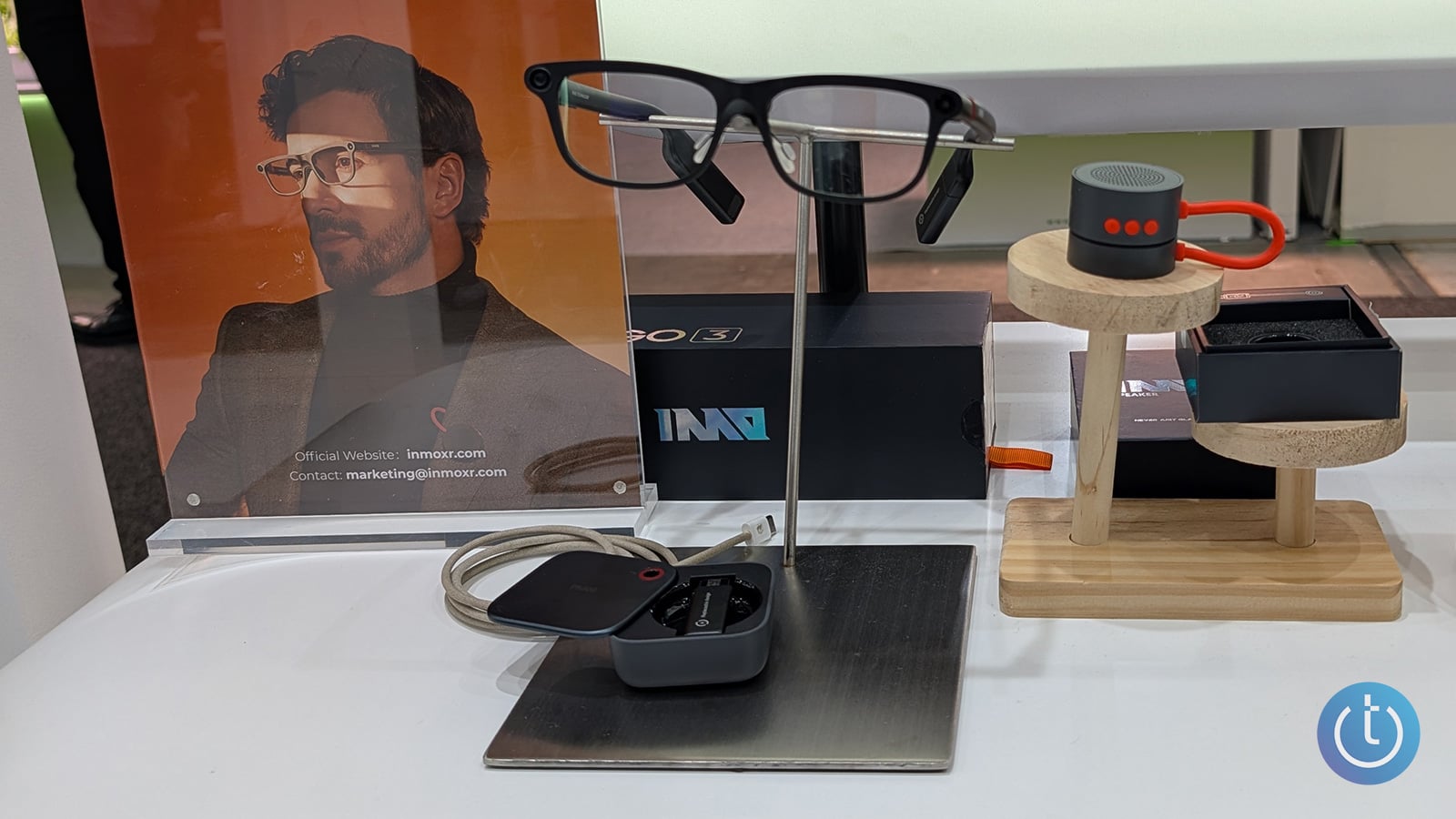
Image credit: Josh Kirschner/Techlicious
INMO GO3 AI glasses
The INMO GO3 pulls off something we haven't seen in AI glasses before: true two-way translation. When paired with the INMO Speaker, it holds up its end of an actual conversation, translating what you say back out loud instead of only translating what's said to you.
The GO3 translates in real time across 77 source and 98 target languages, works offline in nine of them, and can translate a photo of a menu or sign on the spot. It also doubles as a teleprompter that scrolls at your pace, records and summarizes meetings with speaker-aware transcription, and gives turn-by-turn walking and cycling directions through HERE Maps, all without pulling out a phone.
The GO3 also handles the everyday annoyances that have kept AI glasses off most people's faces. Two magnetic 270mAh batteries swap in about five seconds, so the glasses never sit dead on a charger, and a physical camera cover gives a visible, hardware-level way to confirm the camera is off. At 58 grams, it packs binocular green Micro-LED displays, a camera, onboard storage and multi-modal controls into a frame that reads as ordinary eyewear, with a 640-by-480 display that hits 1,500 nits so subtitles and directions stay legible outdoors.
Between the two-way translation, the swappable batteries and the hardware privacy cover, the GO3 checks boxes that have kept AI glasses a hard sell. The INMO GO3 is available now for $599 at inmo.com, with Kickstarter backers receiving priority shipping.
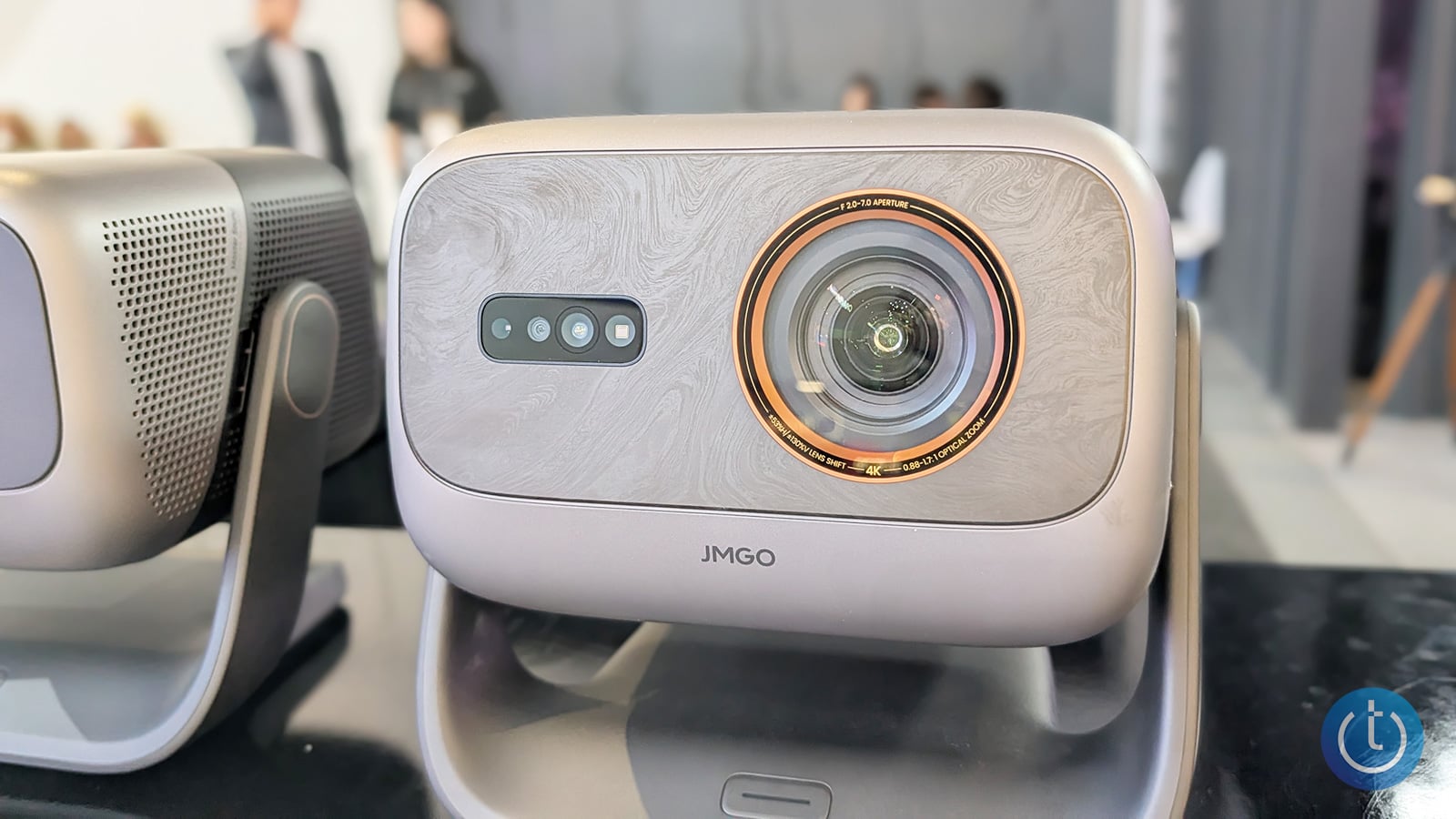
Image credit: Josh Kirschner/Techlicious
JMGO IRIS Ultra Max lifestyle projector
Most projectors that can do true 4K top out around 60Hz, and the ones fast enough for 120Hz usually give up resolution to get there. That tradeoff shows up two ways: motion blur in fast-moving scenes, and on single-chip DLP projectors like this one, a rainbow-colored fringing effect around bright objects that gets more noticeable at lower refresh rates. The JMGO IRIS Ultra Max is the world's first lifestyle projector to clear 4K and 120Hz at the same time.
That combination pays off most for gaming and sports: the IRIS Ultra Max handles native 4K at up to 120fps with VRR and an input lag JMGO rates at around 1 millisecond, so fast-paced console and PC games stay responsive instead of laggy. 120Hz Full-Frame MEMC keeps sports and other fast content just as smooth, and it's also the first projector to pair Dolby Vision with that resolution and refresh rate combo. JMGO backs it up with 10,000:1 native contrast, a 6-plus-9-blade Dual-Iris light control system, and a MALC 6.0 triple-laser engine rated at 6,500 ISO lumens with 110 percent of the BT.2020 color gamut.
An industry-first 3-in-1 optical system combines 0.88-to-1.7:1 zoom, four-way lens shift and a 360-degree AI-powered gimbal, and JMGO's AI Screen Alignment and AI Spatial Memory handle setup automatically, fitting the image to the screen and remembering where you like it. That level of placement flexibility puts the IRIS Ultra Max ahead of anything else in its price range.
The JMGO IRIS Ultra Max is open for preorder now for $2,999 on the JMGO site, discounted from a $3,499 list price.
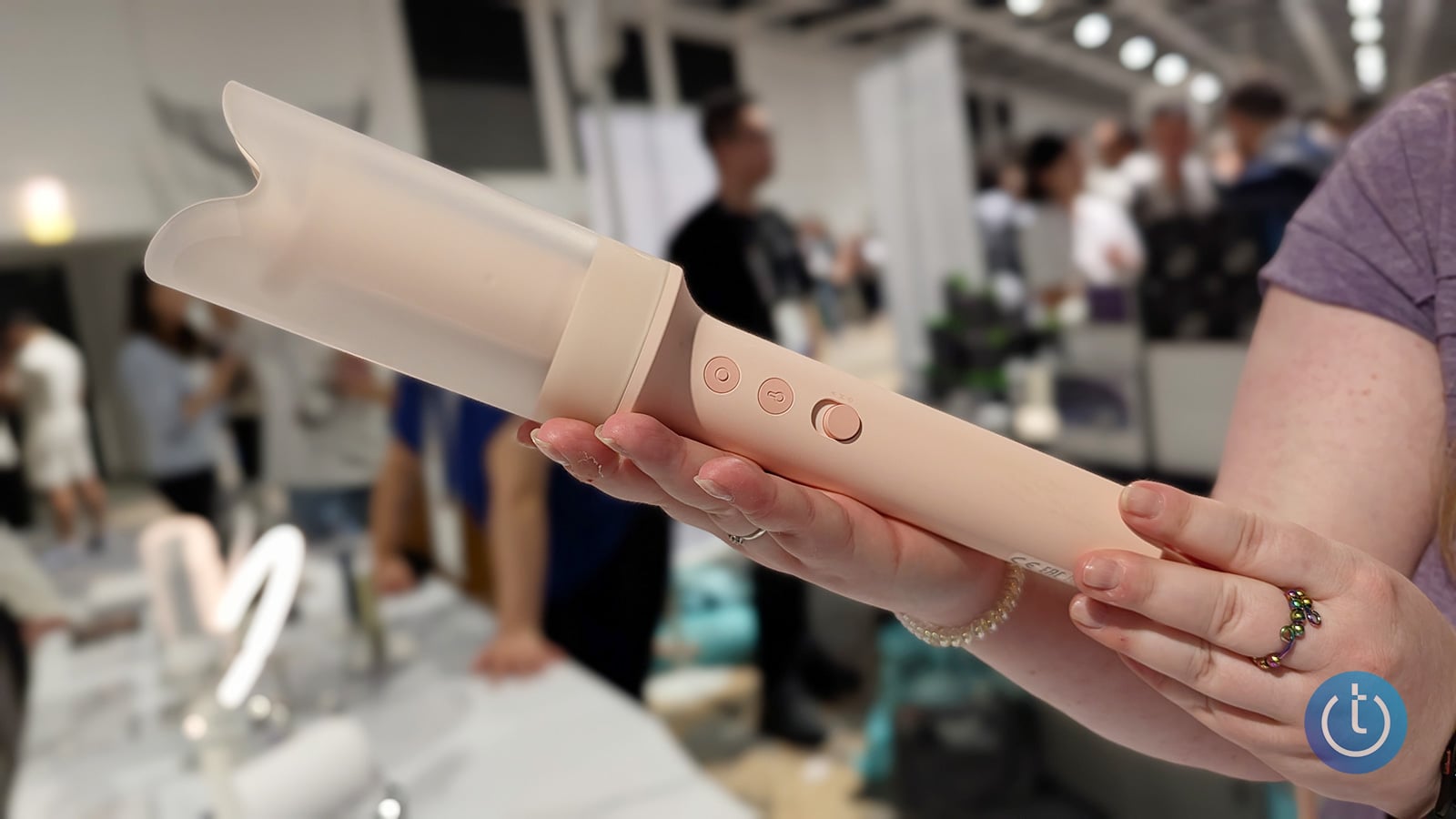
Image credit: Josh Kirschner/Techlicious
Laifen AutoCurl Curling Iron
At under $100, the Laifen AutoCurl does something Dyson charges $600 for: an open-barrel iron that wraps the hair in on its own, no manual twisting required.
D-ToF sensors detect hair the moment it's placed in the chamber and start curling within half a second. An adaptive servo system with PID control continuously adjusts speed, or pauses entirely, to keep hair from tangling or pulling, and a smart dual-chamber design automatically picks the curl direction instead of making you switch between left and right manually. For anyone who wants more control, AutoCurl also switches into a fully manual mode.
The Laifen AutoCurl Curling Iron is available now for $84.99 on Amazon, discounted from a $99.99 list price.
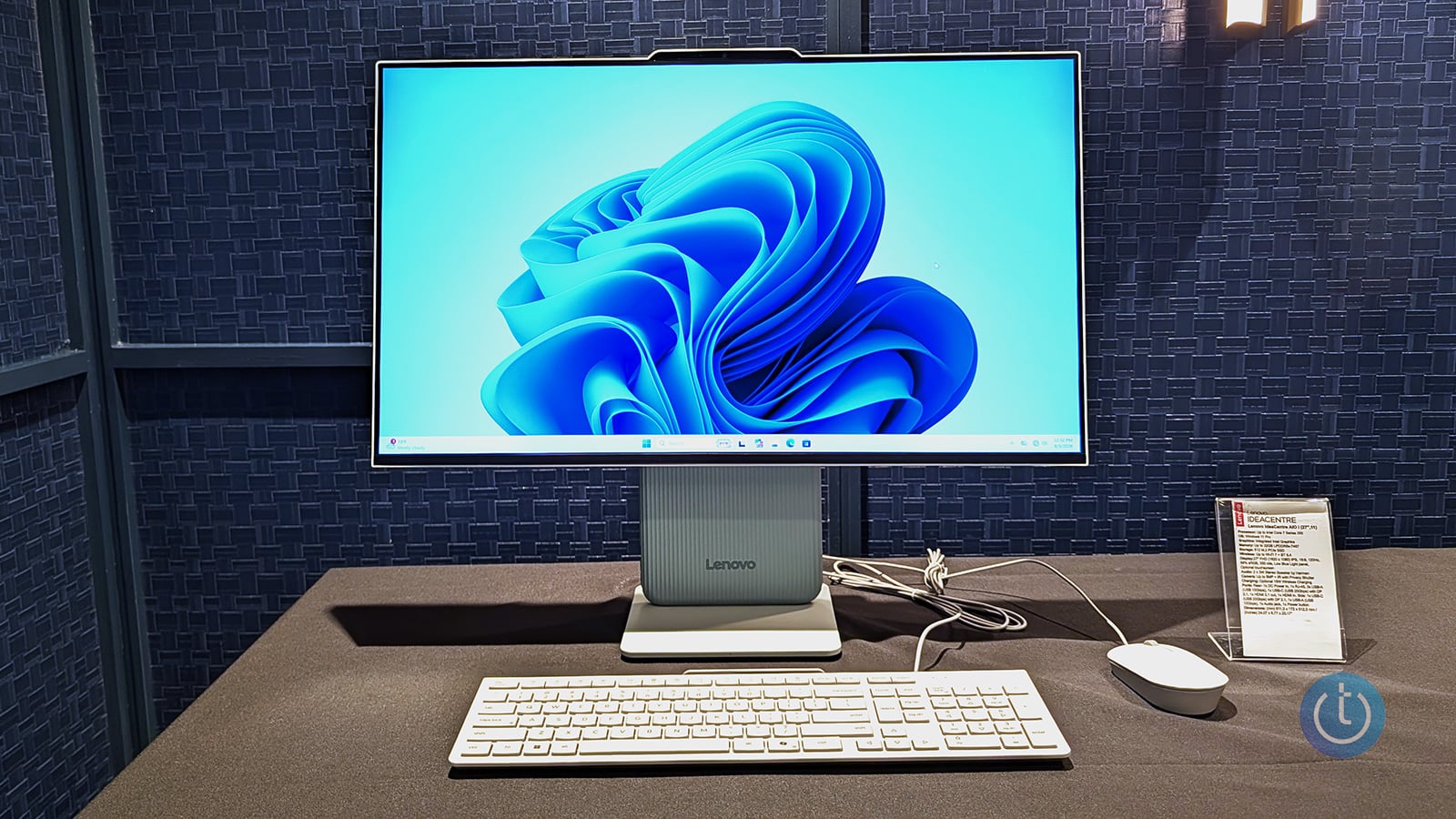
Image credit: Josh Kirschner/Techlicious
Lenovo IdeaCentre AIO i
Lenovo's IdeaCentre AIO i was already a strong family all-in-one, and the gen 11 model levels it up with a colorful new design and practical features: a touchscreen option, wireless charging, and an e-book mode for easier reading, on top of everything that worked before.
The colorways are the first thing you notice: working with the Pantone Color Institute, Lenovo built the AIO i in six shades, including Dreamy Violet, Radiant Coral and Zen Green, with ambient Adaptive Lighting that syncs to boot-up, everyday use or music, and can be fully customized. Lenovo also stripped away the bulky computing box that used to sit behind the display, so the whole thing now reads more like a monitor than a workstation. You can choose between 24-inch and 27-inch 1080p panels with up to 120Hz refresh rates and 300 nits of brightness.
Under the hood, it runs up to an Intel Core 7 Series 3 processor with up to 40 TOPS of AI performance, 32GB of RAM and 1TB of storage, enough for schoolwork, video calls and everyday content creation without needing a full desktop tower. Built-in Harman speakers, a 5-megapixel webcam with a physical privacy shutter, and a stand that adjusts 30 millimeters vertically with -5 to 15 degrees of tilt round out a machine built to be shared by an entire household.
The Lenovo IdeaCentre AIO i goes on sale in November 2026, starting at $939.99 for the 24-inch model and $1,149.99 for the 27-inch.
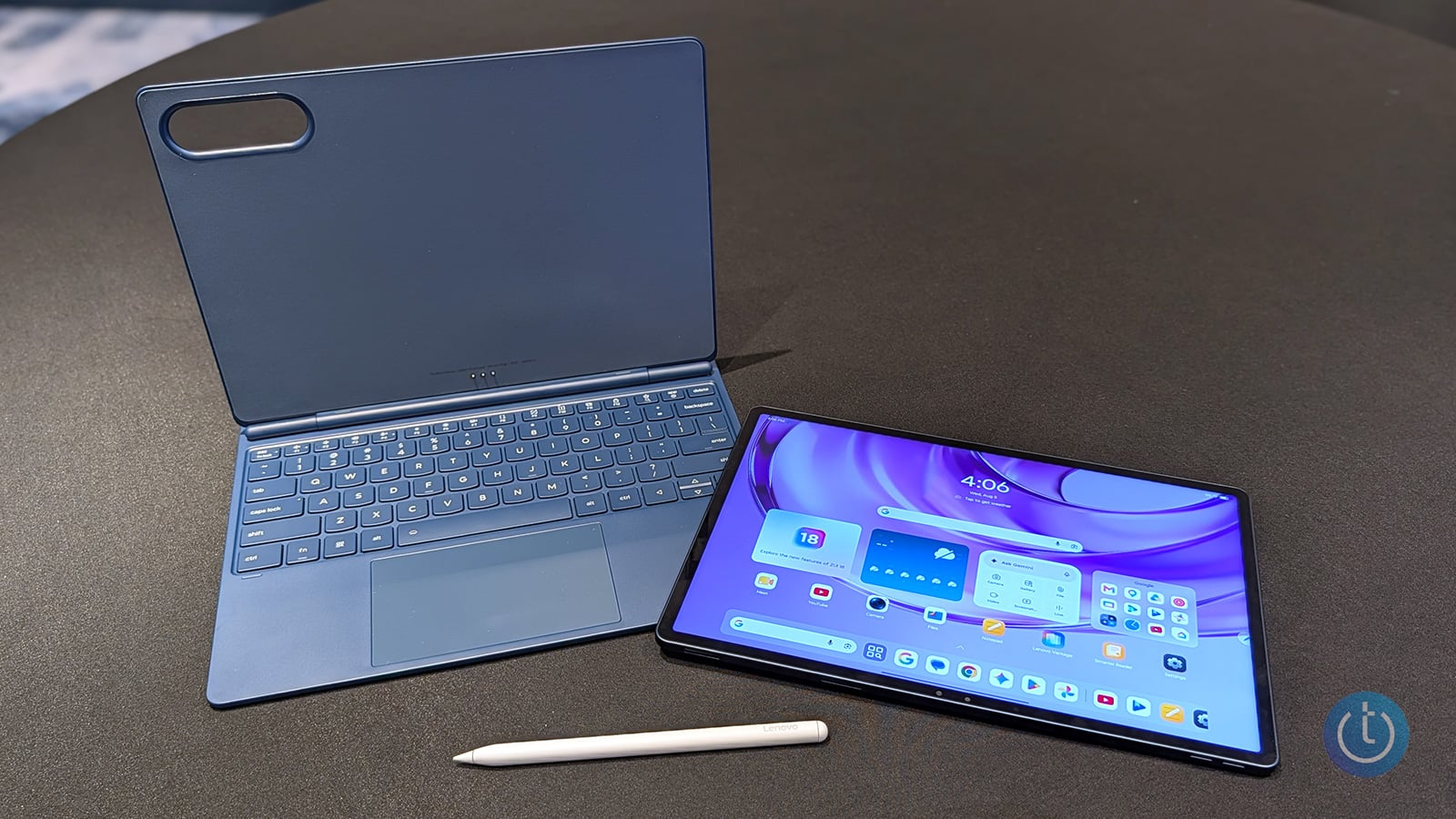
Image credit: Josh Kirschner/Techlicious
Lenovo Yoga Tab Plus Gen 2
Most tablets ask creators to pick one: a lightweight sketching surface, or a laptop that can actually carry production work. We picked the Lenovo Yoga Tab Plus Gen 2 because its optional magnetic clamshell keyboard folio and pen support precise enough for detailed illustration work let it stand in for a laptop when creators are away from a desk.
A Snapdragon 8 Elite Mobile Platform with Qualcomm's Oryon CPU handles the multitasking and on-device AI work underneath, but the display is what creators will notice first: a 13-inch 4K PureSight Pro OLED panel with Dolby Vision, a 144Hz refresh rate, a 3:2 aspect ratio built for reading and illustration rather than video, and 100 percent coverage of the DCI-P3 color space. Six Harman Kardon speakers back it up for calls and media.
The Tab Pen Pro 2 adds gesture shortcuts, a squeeze to bring up creative tools, a flip to erase, a double tap to switch modes, while Lenovo's Qira ambient AI and Smart Canvas features carry over from the rest of the Yoga lineup for note-taking and cross-device handoff. Up to 16GB of RAM and 512GB of storage, expandable to 2TB via microSD, round out a spec sheet built for sustained creative sessions. The magnetic folio is built to be used the way a laptop base is used every day: propped open on a desk, through hours of typing, sketching and video calls.
The Lenovo Yoga Tab Plus Gen 2 launches this September starting at $999.99.
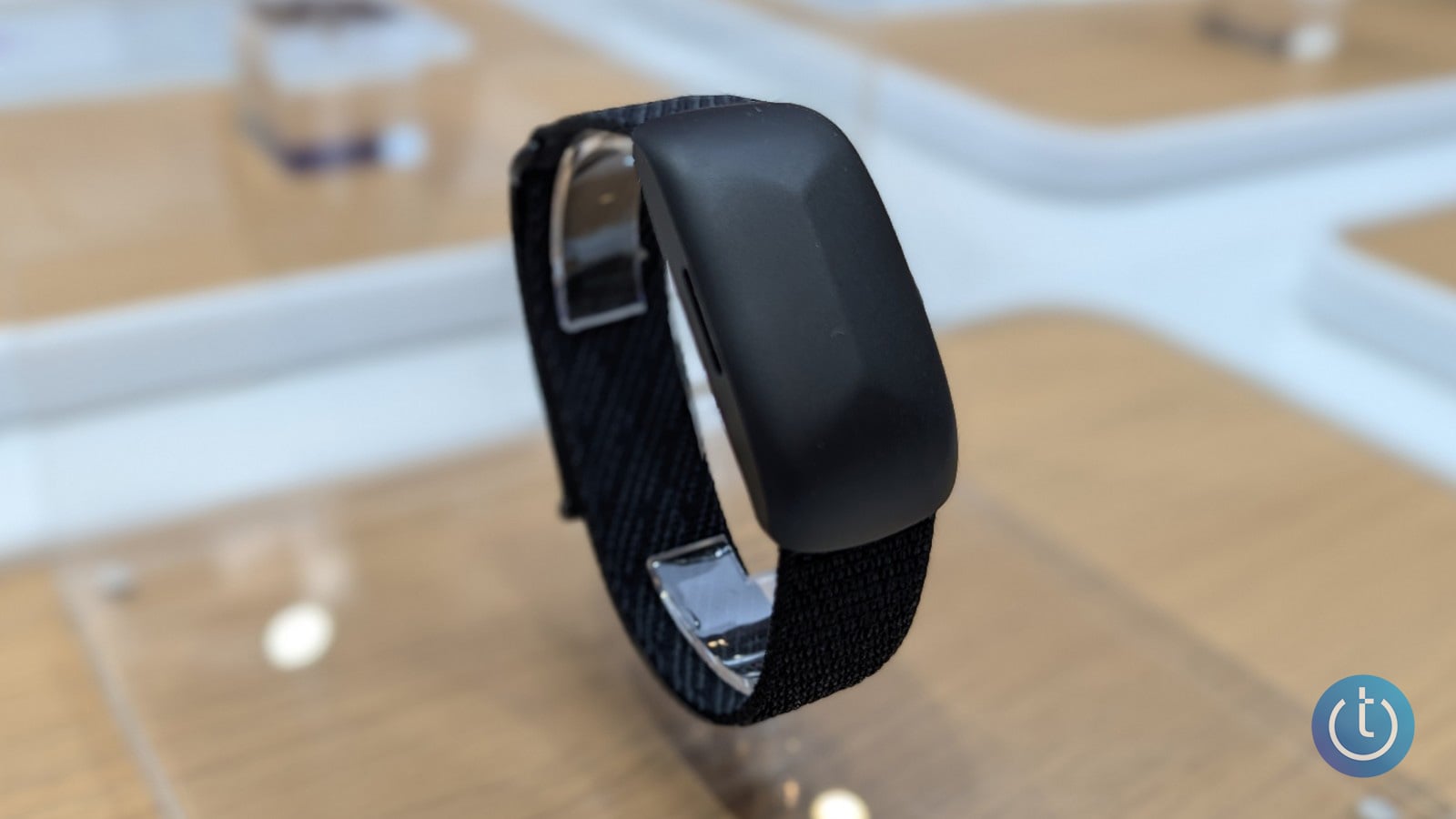
Image credit: Josh Kirschner/Techlicious
Memoket Gem AI voice recorder
Weighing 11 grams, about as much as a small paperclip, the Memoket Gem is easy to overlook next to bulkier AI wearables. We picked it because of what it does with everything it hears: it links what's said about a topic across weeks or months and resurfaces that history automatically the next time the topic comes up, complete with a link back to the exact moment it was said.
Gem co-wears alongside an Apple Watch on the same wrist through a custom band, adding a second always-on device to a wrist people already keep watches on every day, and a red LED lights up any time it's recording, making consent visible directly on the hardware. At full charge it runs up to 20 hours of continuous recording or 30 days on standby, and it transcribes in 153 languages.
The Memoket Gem is available now for $199 on Amazon.
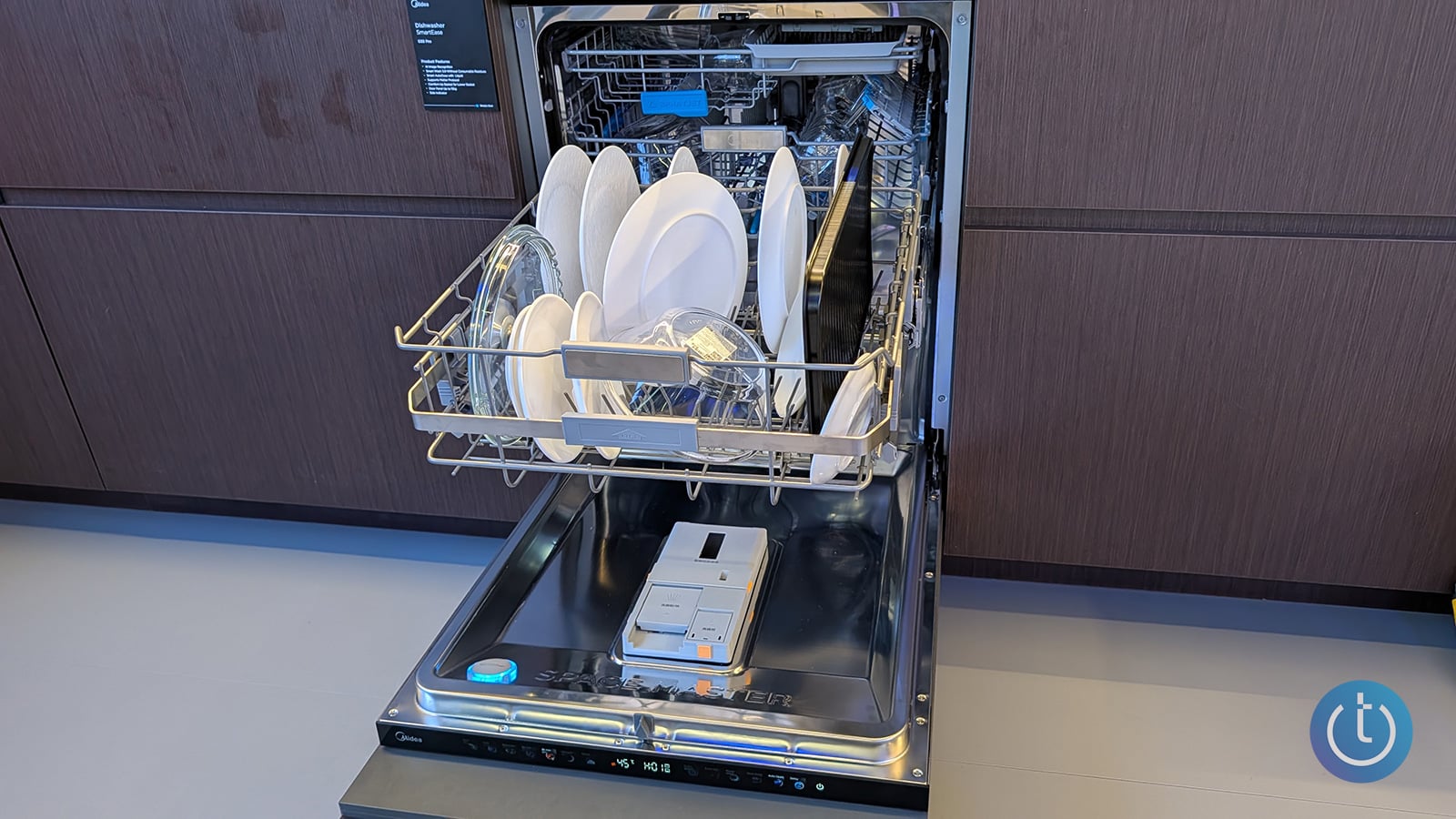
Image credit: Josh Kirschner/Techlicious
Midea GreenApex Dishwasher
Heat pumps show up in only one other dishwasher on the market today, and even there the technology sticks to a single job: warming water during the wash cycle. The Midea GreenApex Dishwasher's Tri-GreenApex System puts that same heat pump to work through drying as well, pulling moisture out of a full load of dishes with the same component that heated the wash water minutes earlier.
That extra duty is what unlocks Midea's efficiency numbers. The system is rated at A-50% energy efficiency, meaning it uses about half the energy of a standard Class A dishwasher across both washing and drying, and automatic door opening paired with heat-pump-driven airflow pulls a full load completely dry in as little as 30 minutes.
Once drying finishes, tableware and the dishwasher's interior stay dry for up to 168 hours without the system running again, so unloading can wait for whenever it's convenient. That same heat pump also keeps drying temperatures around 45 degrees Celsius, well below what a conventional heating element produces, which Midea says reduces wear on glassware, gold-rimmed china and plastic containers over repeated use.
Midea hasn't announced pricing or a release date for the GreenApex Dishwasher outside its IFA 2026 showcase in Berlin.
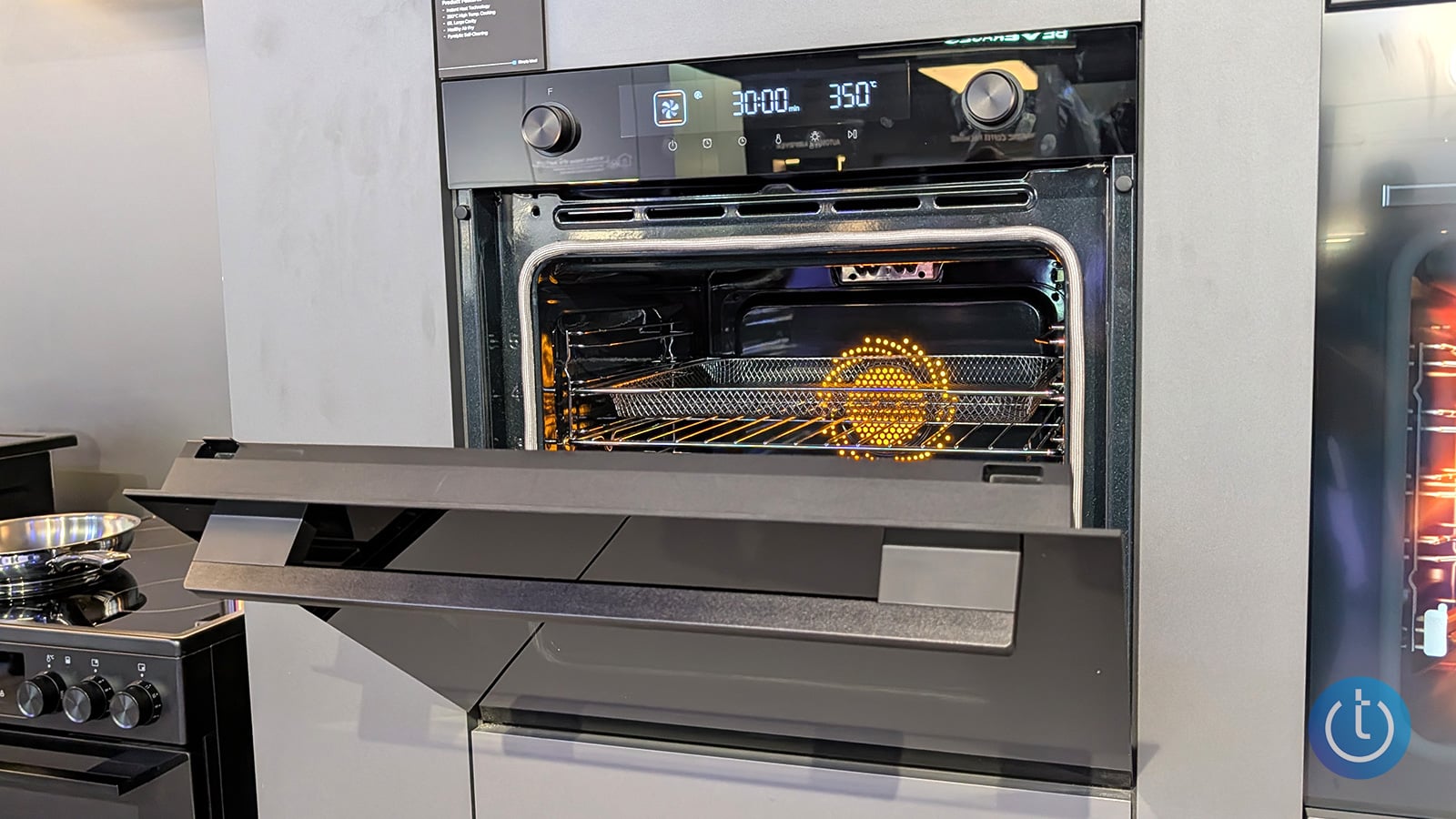
Image credit: Josh Kirschner/Techlicious
Midea SpaceMaster Series Built-in Oven
Three hundred fifty degrees Celsius (662 F), the temperature a professional pizza oven runs at, is well beyond what a standard built-in oven can reach without overheating the cabinetry around it. The Midea SpaceMaster Series oven hits that number anyway, using the company's patented thermal-management technology to make it possible.
Midea's patented graphene element reaches an element temperature of up to 1,300 degrees Celsius and responds in about 0.2 seconds, delivering the near-instant, intense radiant heat that a dedicated Professional Pizza Mode needs for the rapid browning and crisp crust normally reserved for a standalone pizza oven. That same responsiveness lets the oven reach its full 350-degree cooking temperature far faster than a conventional heating element would.
A dedicated thermal-management structure sits between the cooking cavity and the cabinet around it, limiting how much of that heat transfers outward so the oven can install like a standard built-in without extra ventilation or clearance. That's paired with an 81-liter cavity large enough to cook on three racks at once, keeping everyday capacity for family meals and batch cooking alongside the high-temperature performance.
Midea says it plans a global market launch for the SpaceMaster oven in 2027, following its debut at IFA 2026, but hasn't announced pricing.
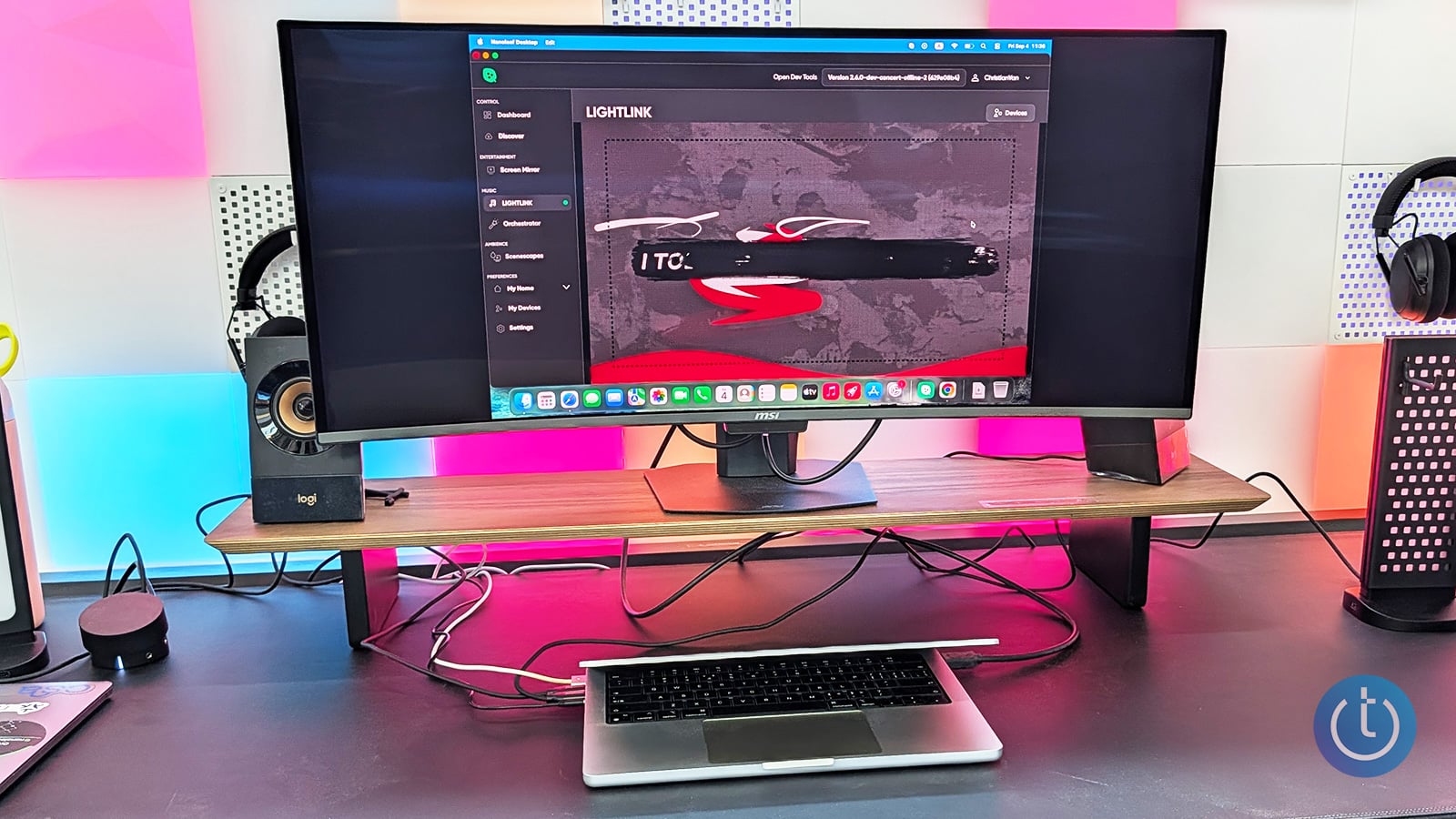
Image credit: Josh Kirschner/Techlicious
Nanoleaf Smart LED Monitor Stand
A monitor riser, a task lamp, an ambient light strip, an accessory mount and a smart-home device are usually five separate items cluttering a desk. The Nanoleaf Smart LED Monitor Stand folds all five into one walnut-veneer stand, and we love how completely it replaces that clutter.
Its Dual Flux Lighting system runs two lighting channels independently: a 550-lumen front task light with a 97 CRI rating and a tunable 1,700K to 6,500K color range for video calls and focused work, and 102 individually addressable RGB zones on the back that wash a wall in color across a 160-degree spread for gaming or entertainment.
The stand raises a display four inches to a healthier eye level, supports monitors up to 42 inches and 154 pounds, and includes 23 built-in mounting ports for cameras, ring lights or microphones. Matter compatibility brings it into most smart-home ecosystems, and Nanoleaf's own app adds 4D Scene Sync+ to coordinate colors with other Nanoleaf lighting, plus a music-reactive Rhythm Mode and Screen Mirror for syncing to on-screen content. The stand does everything a monitor riser typically does, then adds task lighting, ambient color, mounting ports and smart-home control on top.
The Nanoleaf Smart LED Monitor Stand is available now for $169.99 USD on Amazon.

Image credit: Andrea Smith/Techlicious
RayNeo iO Smart Glasses
Most AI glasses wait to be told what to do: tap to start recording, ask a question, snap a photo. The RayNeo iO Smart Glasses work differently, using a feature called Life Log to continuously capture conversations, meetings and passing thoughts throughout the day at ultra-low power, no activation required, then feeding that running record into RayNeo Suggestions so the glasses can surface reminders and next steps on their own.
None of that would matter if the glasses were uncomfortable to wear all day. RayNeo built the display around a 0.1cc Firefly Nano optical engine, about 30 percent smaller than a typical monochrome green engine, paired with an ultra-transparent waveguide that stays nearly invisible when the display is off. The whole frame weighs 33 grams with 50:50 weight distribution, runs IP65-rated against dust and water, and hits 1,700 nits of brightness for outdoor use. There's no camera and no speaker built in.
Multiple AI models, including ChatGPT and Claude, run behind the glasses, letting a wearer pick whichever one suits a task instead of being locked into a single assistant. RayNeo puts the results directly in view: a Personal Dashboard for schedules, notifications and weather, real-time translation across 40 languages displayed on the lens, an auto-scrolling teleprompter, and voice memos that transcribe and summarize conversations in 112 languages.
RayNeo iO Smart Glasses are available now for $449.00 on the RayNeo site, discounted from $499.00.
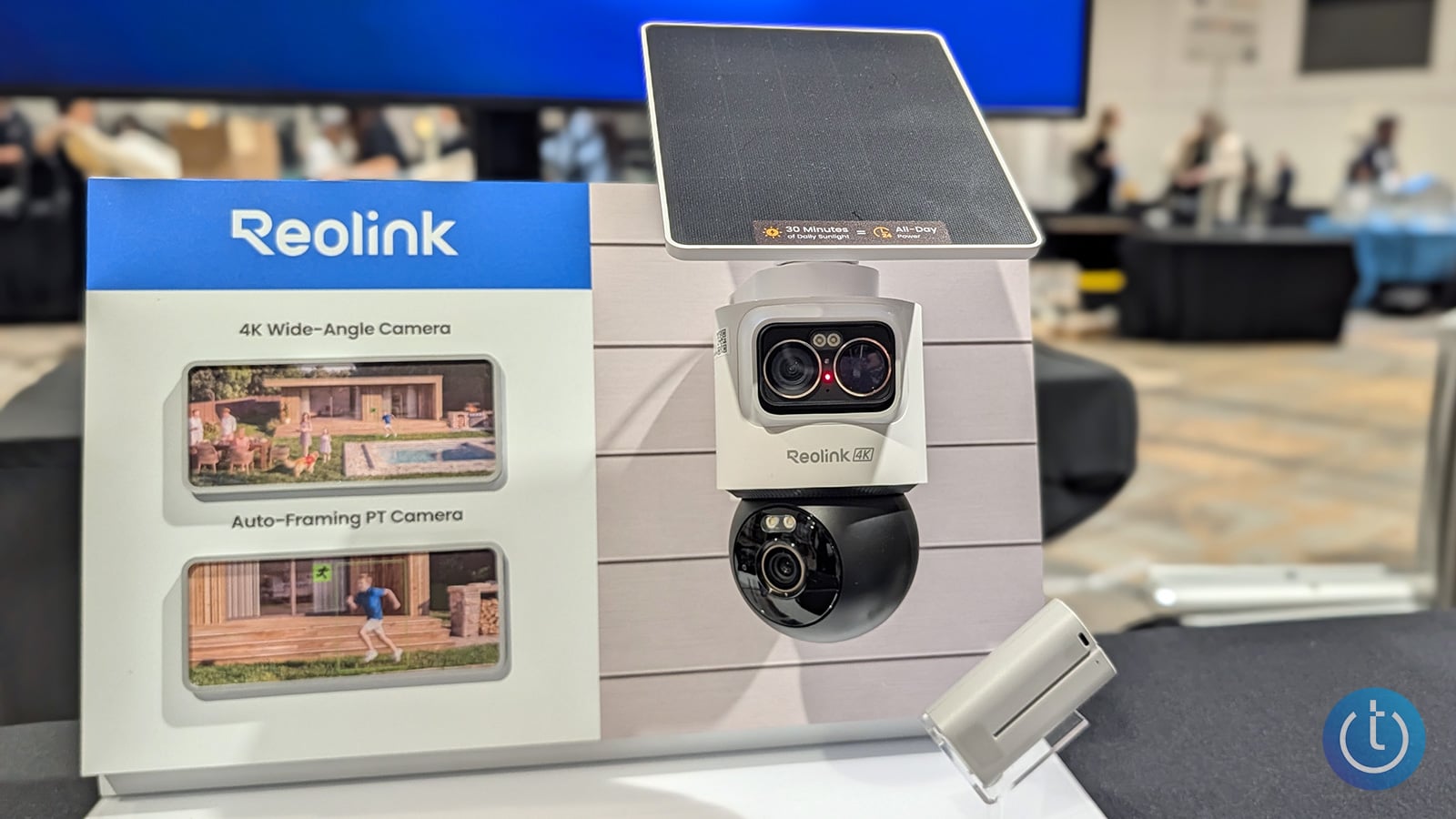
Image credit: Josh Kirschner/Techlicious
Reolink OMVI 2i Ultra Security Camera
Most dual-lens security cameras use the second lens just to zoom in tighter on whatever the first one already sees. The Reolink OMVI 2i Ultra points its second lens somewhere else entirely: a fixed 4K, 8-megapixel wide-angle camera watches the full scene while a separate pan-tilt lens tracks a detected person, vehicle or animal in a different direction, continuing to follow the subject even after it moves outside the wide-angle frame.
A single tap anywhere in the wide-angle view redirects that tracking lens instantly, pulling up a closer look at any point of interest without manual adjustment. The camera is also fully wire-free: a detachable 10,000mAh battery lasts up to six months per charge, extended indefinitely by an included 6-watt solar panel that needs only 30 minutes of daily sunlight to keep it running.
The tracking lens covers a 355-degree pan and 50-degree tilt range with automatic framing. Reolink is selling this as a single-camera answer to a problem most brands solve by mounting two separate cameras at opposite ends of a property.
Reolink expects the OMVI 2i Ultra to sell for $200 to $250 when it becomes available in late October 2026.
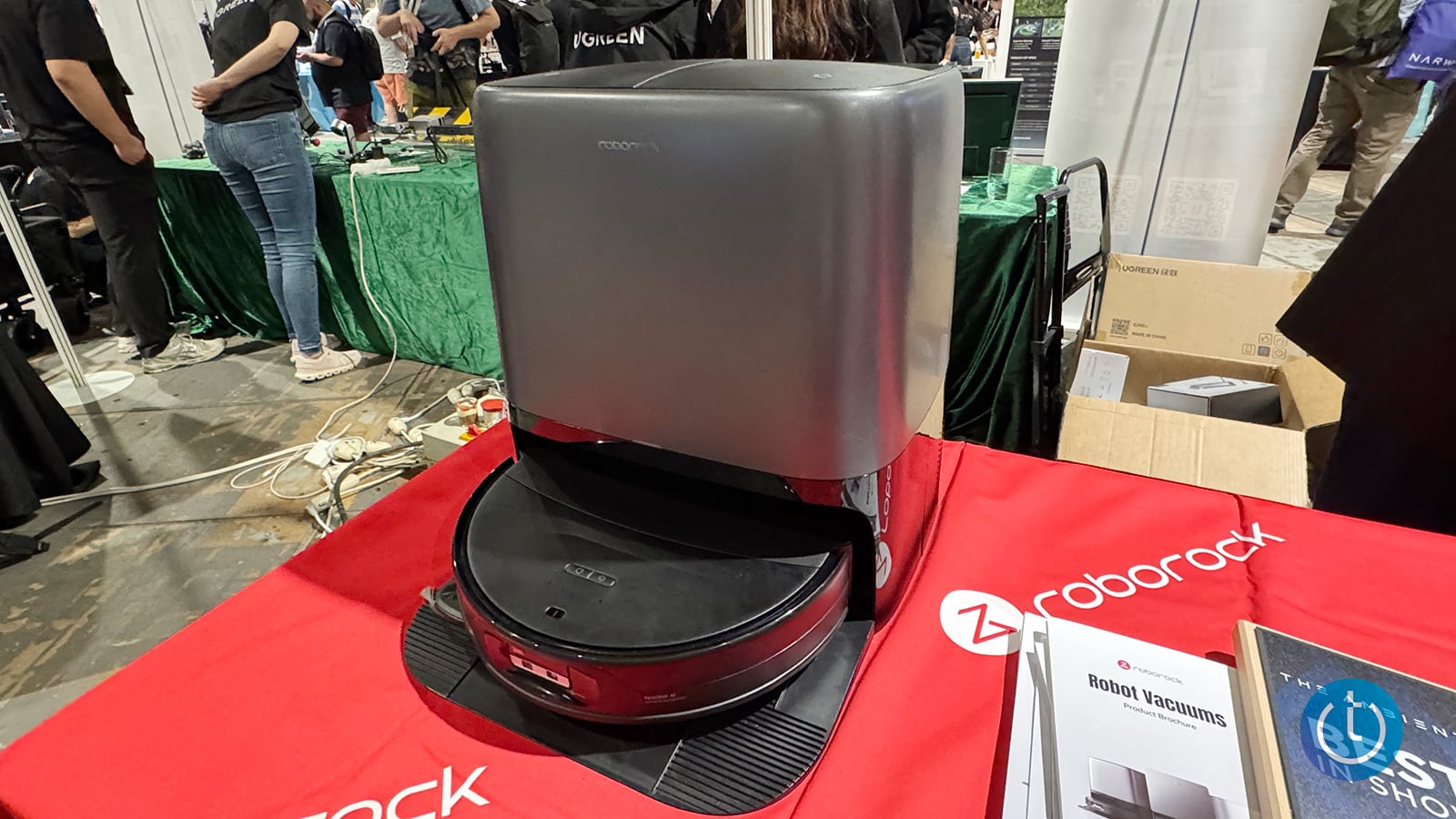
Image credit: Josh Kirschner/Techlicious
Roborock Saros 20 Flow robot mopvac
Robot mops typically drag a damp pad across the floor and rely on friction to do the work. The Roborock Saros 20 Flow's SpiraFlow 2.0 system uses a lot more elbow grease. It presses a roller mop into the floor with 15 newtons of downward force – more than any other mopvac – spins the roller at 240 rotations per minute, and sprays the floor through 16 pressurized water outlets to scrub through dried, stuck-on messes in a single pass.
At just 3.53 inches tall, Roborock claims it's the slimmest roller-style robot vacuum on the market, letting it reach under low-clearance furniture where dust tends to collect, while the AdaptiLift Traverse 3.0 chassis crosses thresholds up to 3.46 inches high to move between rooms. Its dock washes the mop in 212-degree pressurized water and dispenses detergent automatically between cycles. Reaching under furniture that 3.53 inches of clearance allows is one problem; keeping the mop that emerges clean enough to touch is another, and the dock here handles both without the owner doing anything between cycles.
The Roborock Saros 20 Flow is available now for $1,599.99 on Amazon.
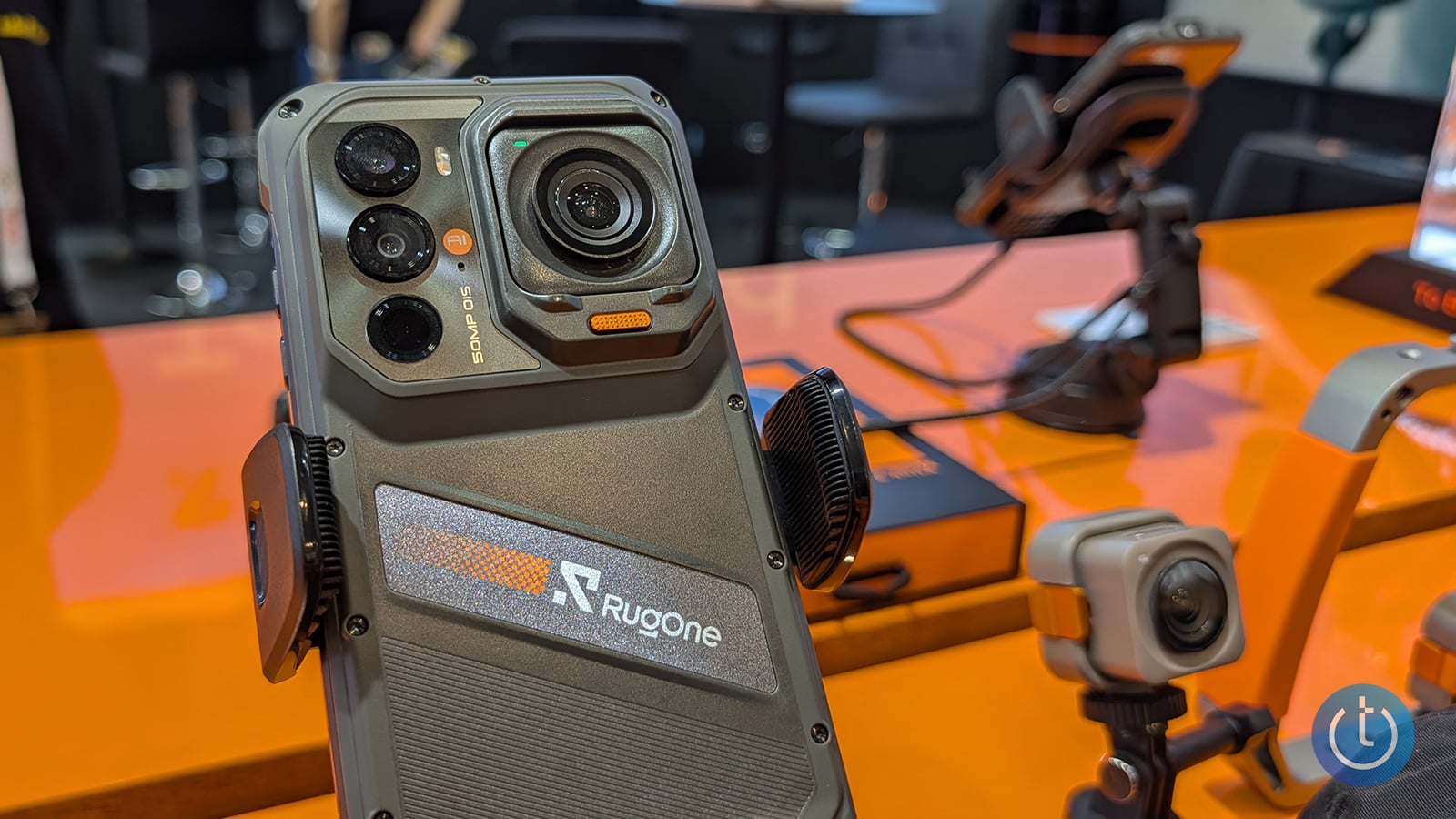
Image credit: Josh Kirschner/Techlicious
RugOne Xsnap 7 Pro smartphone
Action cameras usually mean carrying a separate device, and the detachable smartphone cameras that do exist are typically just camera modules bolted onto an otherwise ordinary phone. The RugOne Xsnap 7 Pro pairs a rugged 5G smartphone with a fully integrated 39-gram action camera module that snaps on and off a magnetic pogo-pin mount, so it can shoot from a helmet, chest strap or vehicle mount, angles a phone alone can't reach. Then it just clicks back into place to recharge from the phone's own battery.
Detached, the camera module shoots 2.7K video at 30fps across a 133-degree ultra-wide field of view, with SteadyX stabilization and 360-degree horizon lock to keep footage level during motion. It runs up to 40 minutes on its own battery, holds 64GB of onboard storage, and is rated for five meters of waterproofing without any separate housing. A proprietary magnetic quick-release paired with a mechanical secondary lock keeps it anchored during high-impact use, tested to MIL-STD-810H shock standards.
The phone itself runs a MediaTek Dimensity 8400 5G processor with 12GB of RAM and 512GB of storage behind a 6.67-inch 1.5K AMOLED display, backed by a 9,300mAh battery that's what recharges the camera module while docked. It's rated IP68 and IP69K, submersible to two meters for 30 minutes, and carries a 50-megapixel main camera alongside a 64-megapixel infrared night vision camera.
The RugOne Xsnap 7 Pro launches on Kickstarter September 7, 2026 at a super-early-bird price of €799, ahead of a global retail release in October at $999 ($1,099.99 in the EU).
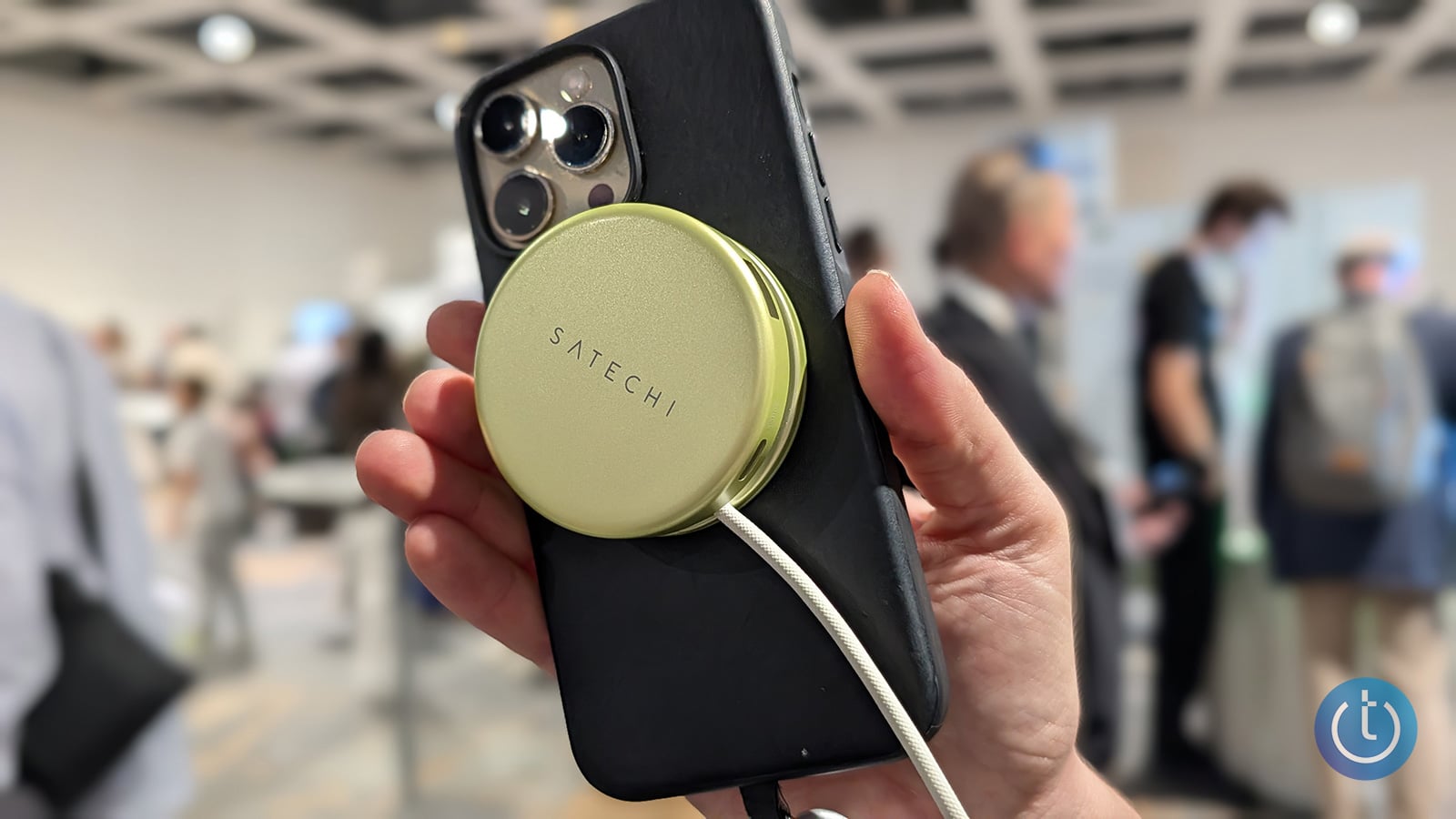
Image credit: Josh Kirschner/Techlicious
Satechi OntheGo 5-in-1 Multiport Adapter
For MacBook Neo owners struggling with its single-port design, multiport adapters mostly come in the same flat black or silver rectangle, plugged in and forgotten. The Satechi OntheGo 5-in-1 Multiport Adapter is a round, color-matched puck instead, with a soft-touch magnetic base that snaps to a MagSafe mount or mounts flush to a laptop's lid.
One USB-C connection expands into 4K/60Hz HDMI output, 60W USB-C pass-through charging, a 5Gbps USB-A port, a 5Gbps USB-C port, and a UHS-I SD card reader rated up to 104MB/s, all through an integrated nylon-braided cable that skips the need to pack a separate one. Satechi engineered it specifically around the MacBook Neo's single-port design, though it works just as well with the MacBook Air, MacBook Pro, iPad, and USB-C Windows laptops.
The Satechi OntheGo 5-in-1 Multiport Adapter comes in the Neo's Citrus, Blush, Indigo, and Silver palette and is available now for $44.99 on Amazon.
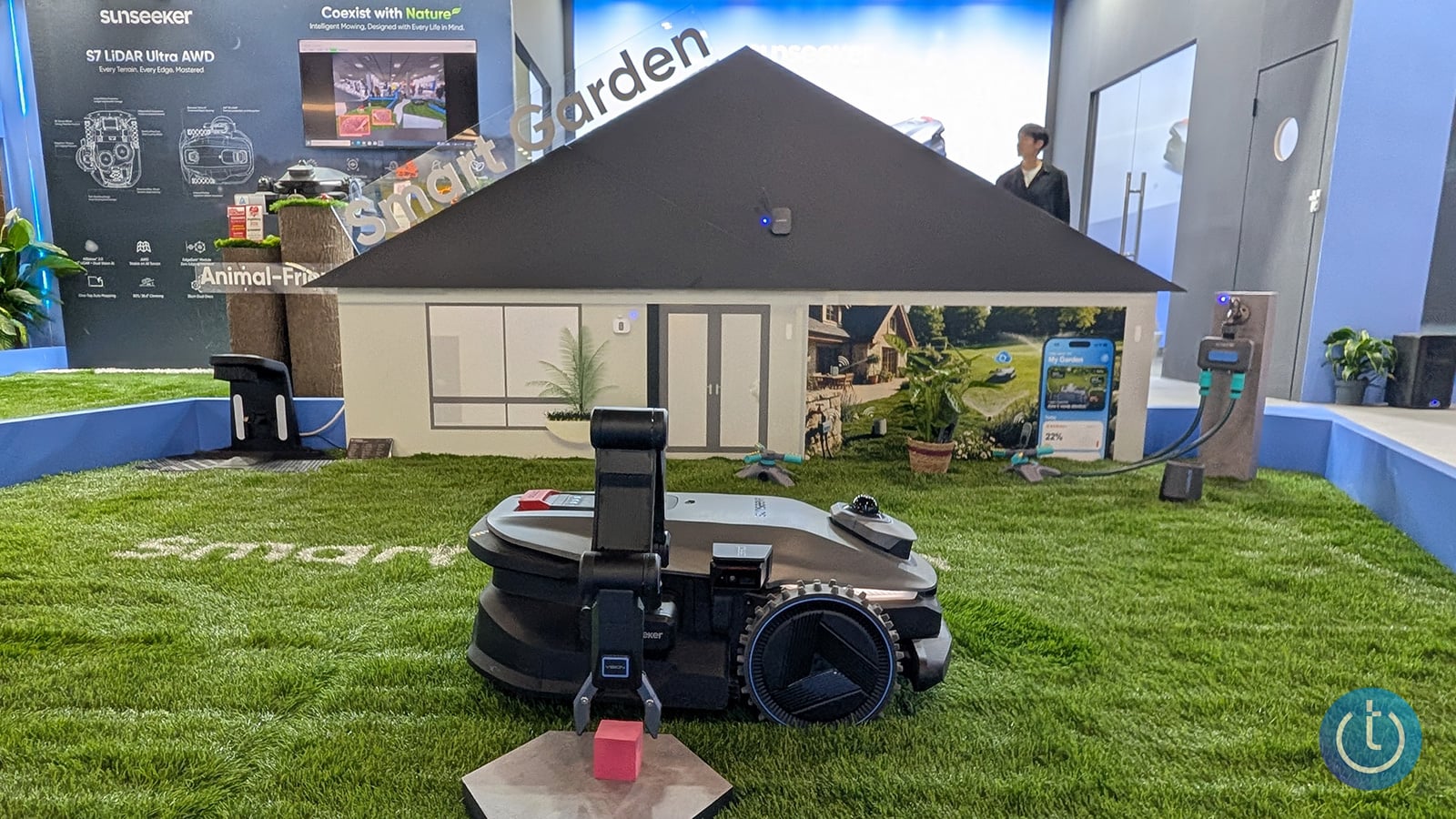
Image credit: Josh Kirschner/Techlicious
Sunseeker S7 LiDAR Ultra AWD 3000 robot mower
Robotic mowers already cut the grass without supervision. The Sunseeker S7 LiDAR Ultra AWD 3000 is built to do something broader: share what it learns about a yard with other devices in a Smart Garden ecosystem to build a working understanding of a lawn's overall health.
Utilizing the mower's cameras in conjunction with a broader ecosystem of rain sensors, soil sensors, and connected sprinklers, Smart Garden builds a picture of your lawn conditions. Cloud-based AI models analyze the data and can either go to work resolving issues through your lawn equipment or recommend mitigation through its app. For example, Sunseeker says that when yellow grass is detected, AI can help determine whether it is caused by drought or pests and recommend watering or pest control.
Also interesting, at IFA, Sunseeker demonstrated a robotic arm concept leveraging the S7's expansion hub. With an integrated camera, it would use Smart Garden's AI capabilities to identify objects and determine the most appropriate way to remove them, whether those are rocks, toys, or a pet's bathroom break.
Sunseeker hasn't announced pricing for the S7 LiDAR Ultra AWD 3000, which is expected to ship in February 2027.
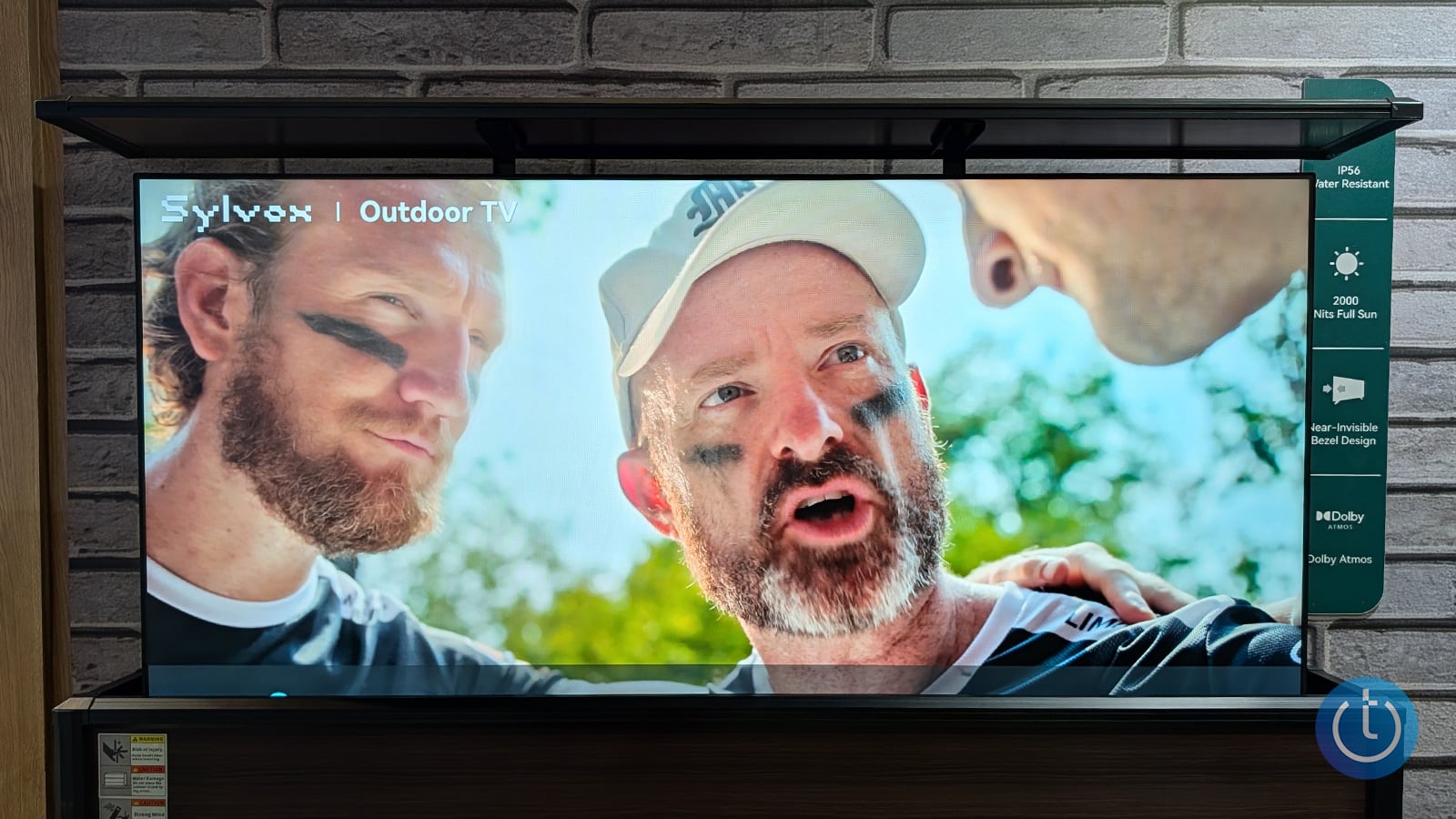
Image credit: Josh Kirschner/Techlicious
Sylvox Frameless Pro Outdoor TV
Outdoor TVs built to survive direct sun and rain have traditionally looked the part: thick bezels and a boxy enclosure built for protection over aesthetics. The Sylvox Frameless Pro cuts that bezel down to 1.5 millimeters, reaching up to a 95 percent screen-to-body ratio while still holding up to full outdoor exposure.
That exposure includes direct sunlight: the 4K UHD anti-glare panel hits up to 2,000 nits of brightness, bright enough to stay watchable in full sun, and IP56-rated protection guards against water and dust. A corrosion-resistant all-metal exterior and triple-sealed internal structure are built for long-term outdoor use, with rated operation from negative 22 to 122 degrees Fahrenheit.
An AI Wallpaper Generator turns the screen into ambient art when nobody's watching, and Google TV, Google Assistant, popular streaming apps and Dolby Atmos bring an indoor smart-TV experience outdoors. It comes in 43-, 55-, 65- and 75-inch sizes. Doubling as ambient art on top of a full Google TV smart stack pushes an outdoor TV past pure weatherproofing and into something closer to a living-room replacement that happens to live on a patio.
The 55-inch Sylvox Frameless Pro is available now for $2,999 at sylvoxtv.com, with 43-, 65- and 75-inch sizes also available.

Image credit: Josh Kirschner/Techlicious
XREL AURA XR headset
XR headsets like Apple Vision Pro and Meta Quest pack all their processing into one onboard chip, which is part of why they're heavy enough to make all-day wear impractical. The XREAL AURA splits that workload across two components: an X1S Spatial Coprocessor built into the frame handles motion-to-photon tracking and display rendering locally, while a separate Snapdragon Reality Elite puck handles the heavier computing, keeping the glasses themselves under 95 grams.
That split enables a 70-degree optical see-through field of view, full 6DoF positional tracking, and hand tracking precise enough that no controller is needed. AURA runs Google's Android XR operating system with Gemini AI processed directly on the glasses, keeping multimodal, conversational interactions on-device.
Its developer ecosystem, built through the Android XR Catalyst Developer Program, already supports cross-play titles like Demeo across Meta Quest, Apple Vision Pro, PlayStation VR2 and PICO. A device this open by design still depends on developers actually building for it, which makes the Catalyst program's growth the real test of AURA's approach in the months before it ships.
XREAL AURA is expected to ship this fall, with pricing under $1,500. A refundable $100 reservation on the XREAL site converts into a $200 discount at purchase, and a $300 Founder Priority Pass guarantees a spot in the first 2,000-unit batch.

