

Image credit: Josh Kirschner / Techlicious via ChatGPT
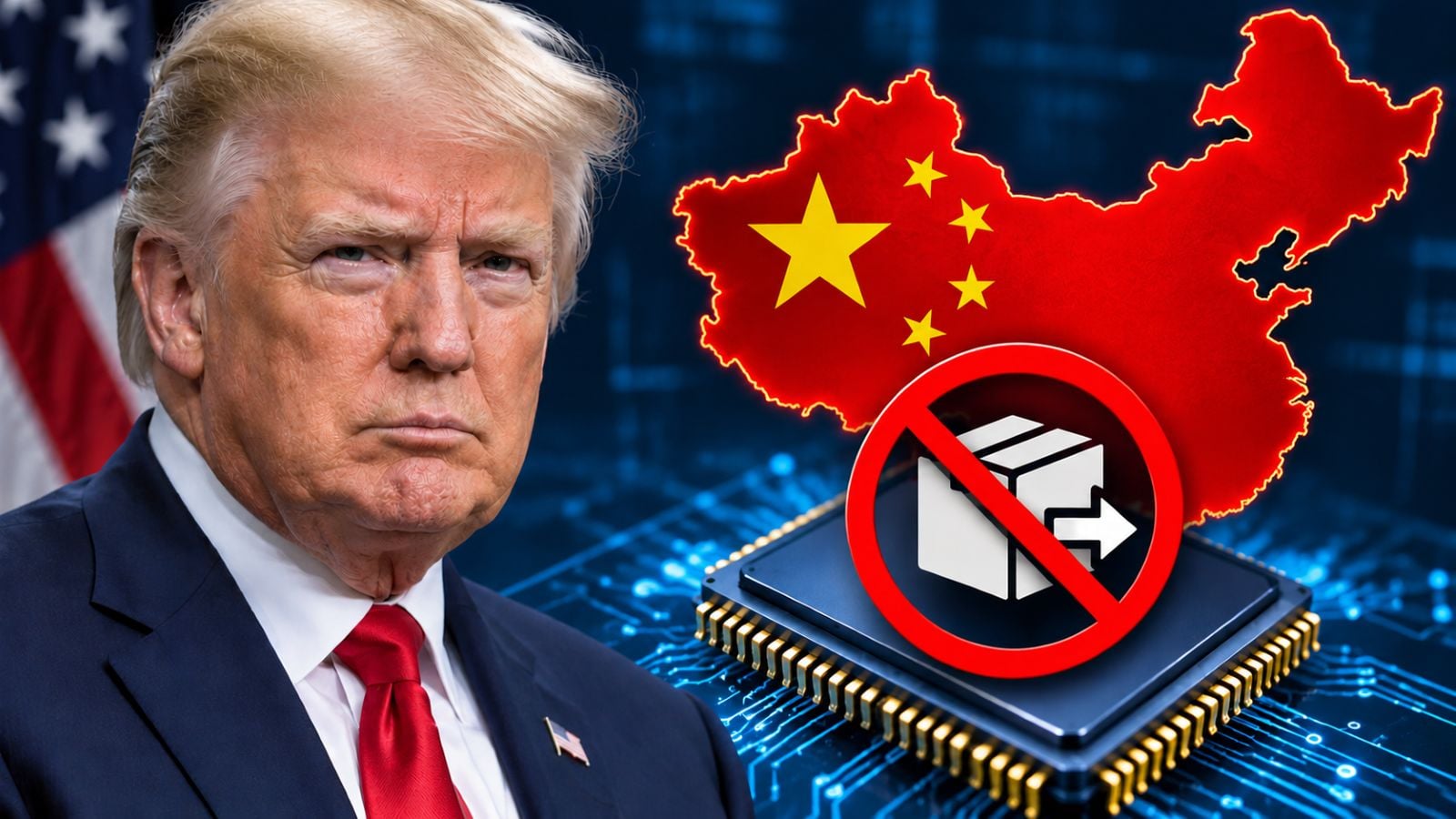
The Trump administration is trying to stop Chinese companies from renting their way around U.S. export controls on advanced AI chips. An interim final rule released November 16 by the Commerce Department's Bureau of Industry and Security (BIS) requires licenses for certain advanced chips and servers shipped to Singapore, Malaysia, Thailand, Indonesia, and Brazil. It also requires licenses for chips supplied to overseas data centers that give Chinese companies and others in restricted countries access to significant computing power.
The rule targets a loophole in existing restrictions on selling powerful U.S. chips to China. Rather than importing the chips themselves, Chinese companies can rent computing power from data centers in countries where those chips can legally be purchased. Under the new regulations, exporters will need licenses if they know their chips are headed to data centers that provide more than 12 million units of "aggregate TPP," a measure of total processing power, to companies headquartered in China, Macau, or other restricted destinations. The restrictions also cover companies whose ultimate parent is headquartered in one of those locations, as well as intermediaries that train or supply AI models on their behalf.
Read More: NVIDIA RTX Spark is the PC chip that might actually deliver local AI
The five-country requirement applies to exports, reexports, and transfers of covered advanced semiconductors to or within Singapore, Malaysia, Thailand, Indonesia, and Brazil, which BIS says present a higher-than-normal risk of diversion. Qualifying shipments destined for U.S.-headquartered companies are exempt from the additional licensing requirement, subject to reporting conditions. The remote-access restrictions also exempt qualifying commercial recommendation systems, such as those used by online retailers and social media services. Existing data centers serving covered customers have 90 days after the rule takes effect to obtain a license.
The rule arrives days after Nvidia CEO Jensen Huang resigned amid a scandal that has put one of the company's major customers under scrutiny. BIS's announcement doesn't mention Nvidia or Singapore-based Megaspeed, but CBS News reports that Huang's departure heightened concerns that Chinese companies could circumvent export controls by renting Nvidia computing power through Southeast Asian data centers.
Huang admitted to an extramarital affair with Alice Huang, a former Megaspeed executive whom U.S. intelligence officials reportedly suspect of having ties to Chinese intelligence. CBS News reports that Megaspeed says Alice Huang left the company in August 2025 and that it "conducts legitimate and lawful business." Nvidia's board has said it has no reason to believe company secrets or national security were compromised.
Megaspeed and its Malaysian affiliate, Speedmatrix, purchased about $4.8 billion in Nvidia AI chips and other hardware over three years. According to CBS News, U.S. investigators allege that Alice Huang used industry contacts and shell companies to gain access to 240,000 chips banned for export to China. Authorities in the U.S. and Singapore are investigating potential illegal transfers, although Megaspeed denies wrongdoing and says it has cooperated with regulators. On November 13, Malaysia said it was investigating Speedmatrix over possible diversion of chips to other countries.
Inside the Trump administration, much of the blame for failing to act sooner has fallen on the Commerce Department. Treasury Secretary Scott Bessent said in a November 13 CNBC interview that Treasury, State, the Department of War, and the U.S. Trade Representative had favored adding Megaspeed to the Entity List, Commerce's trade blacklist of entities subject to additional export restrictions, for months. "Commerce has the pen," Bessent said, according to Axios. Commerce Secretary Howard Lutnick has agreed to testify before the Senate Banking Committee on December 10.
The new rule's origins underscore those tensions. BIS says it was written by and at the direction of the Treasury Department and the National Security Council, rather than Commerce alone. The New York Post reported that a former Commerce official said staffers had prepared a similar rule that was close to publication in July 2025 but never got past Lutnick. The former official said that earlier proposal would have "substantially mitigated" Megaspeed's access to advanced chips.
The new restrictions also formally rescind the Biden administration's AI Diffusion Rule, a broader framework announced in January 2025 that would have imposed country-based restrictions on advanced AI chip exports and certain AI model transfers. The Trump administration had previously said it would replace that framework, which was never enforced, with a different approach.
Read More: Newsom Takes on Trump Over Who Sets the Rules for AI
The politics are delicate. Trump approved sales of advanced Nvidia H200 chips to China last year, according to The Hill, and departed for Asia today ahead of the Asia-Pacific Economic Cooperation summit in Shenzhen, China. He is scheduled to meet Chinese President Xi Jinping on November 19. Before the new rule was released, China's foreign ministry spokesperson Mao Ning said the U.S. should stop fabricating "Chinese spy" narratives as a "pretext for imposing technology restrictions," Asia Times reports.
The rule takes effect upon publication in the Federal Register, with public comments due 60 days later. The restrictions are intended to stop Chinese companies from accessing American AI computing power through overseas intermediaries, but their effectiveness will depend on how thoroughly exporters and data center operators identify their customers and enforce the new licensing requirements.
Read More: Flying within China? Your power bank needs a 3C label

