

Image credit: Suzanne Kantra/Techlicious generated by ChatGPT
Apple sent a fresh wave of "Threat Notification" alerts on August 13, warning iPhone owners that the company detected a mercenary spyware attack aimed at their device. Apple confirmed the wave to TechCrunch, including that it reached users across 110 countries. Apple hasn't said how many individual people were notified. This wave brings the cumulative total to more than 150 countries where the company has issued at least one notification.
Mercenary spyware is surveillance software built and sold to government intelligence and law enforcement agencies around the world to secretly monitor a specific person's phone. Once the spyware is installed through a malicious download mechanism, it can read the target's messages, track their location, and turn on the microphone or camera without the owner's knowledge.
The best-known example is Pegasus, spyware built by Israeli firm NSO Group and tied to surveillance of journalists, activists, and politicians in multiple countries over the past several years. Apple hasn't said which tool is behind this week's alerts, but the company names Pegasus in its own guidance as a reference point, and outside forensic investigations have confirmed Pegasus infections behind some of Apple's past threat notifications.
If Apple detects an attack, it sends both an email and an iMessage to the addresses and phone numbers tied to your Apple Account. Apple calls these "high-confidence alerts," meaning the company's own investigation, not just a suspicious pattern, led to the warning.
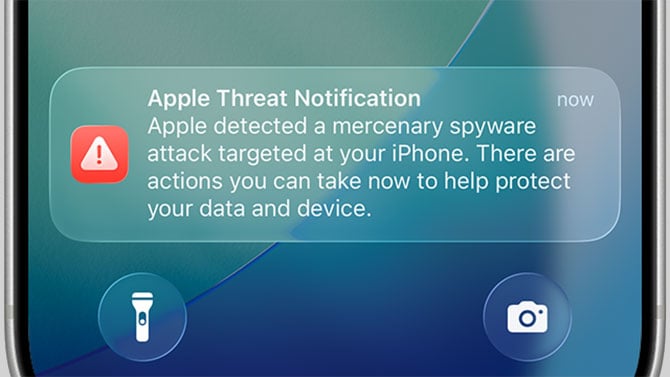
Image credit: Apple
A genuine alert will never ask you to click a link, open a file, install an app, or hand over your Apple Account password. If a message asks for any of that, it's a scam impersonating the real thing. You can double-check any alert by signing in directly at account.apple.com; a real Apple threat notification shows up at the top of the page once you're logged in.
If you get a verified notification, Apple recommends turning on Lockdown Mode, which sharply restricts the features spyware relies on, and contacting the Digital Security Helpline at the nonprofit Access Now, which Apple names as a resource for notified users.
For everyone else, this week's alerts are a reminder rather than a warning. Apple advises that the "vast majority of users will never be targeted by such attacks." But it's still smart practice to keep your iPhone's software updated, since Apple patches security flaws mercenary spyware exploits as it finds them.
Read next: Best antivirus software 2026: free and paid picks

